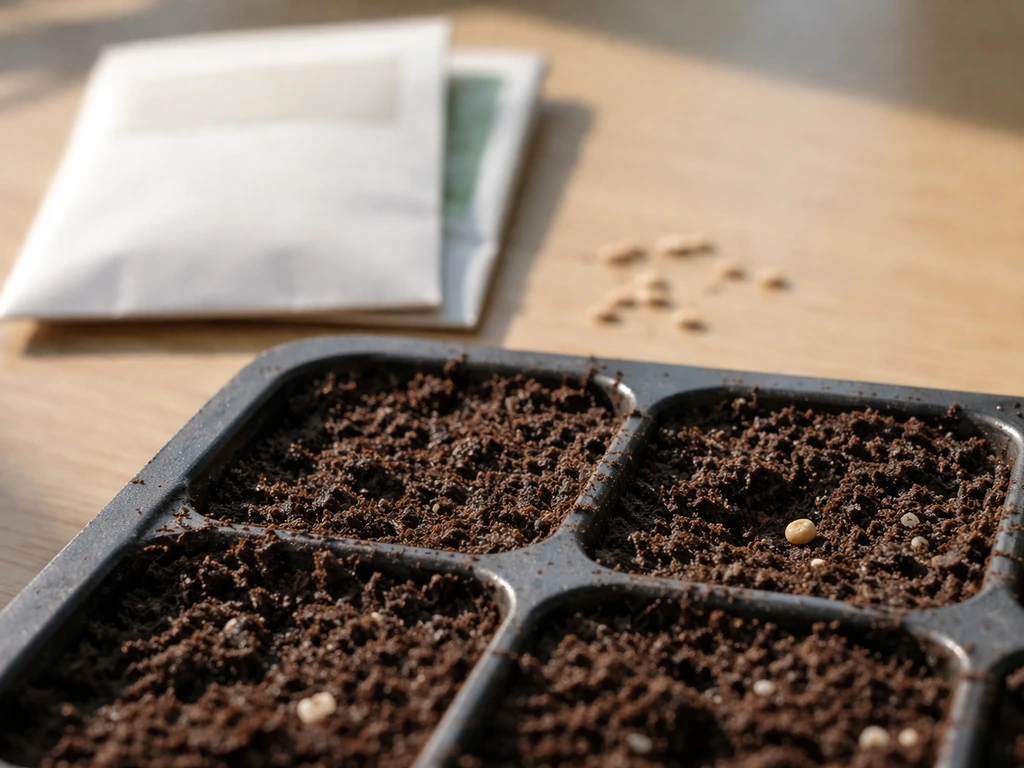
Yes, seeds saved from a hybrid plant will almost certainly germinate and grow. If you are wondering about a specific store-bought source like Dollar Tree seeds, you will still have the same hybrid-seed variability once those seeds sprout and grow hybrid seeds. That part works fine. The real issue is what you get when they do: the plants often look and perform nothing like the parent you saved them from. Some will be smaller, some will produce less, and a few might surprise you in a good way. Whether that matters depends entirely on what you were hoping for.
Will Hybrid Seeds Grow? Germination and Saving Guide

Marcus Weir
23 Jun 2026
What 'hybrid seed' actually means (and why people get nervous)
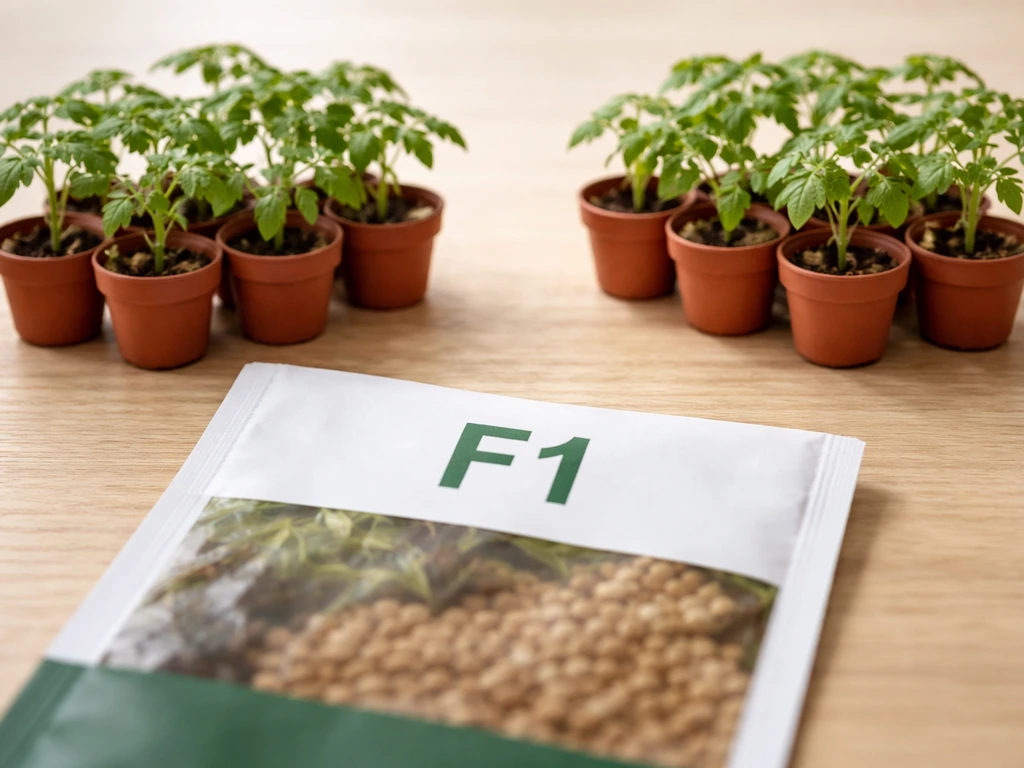
A hybrid seed, usually labeled F1 on the packet, is the result of crossing two distinct parent plants that have been carefully selected and inbred over many generations. The breeders cross Parent A with Parent B to get a first-generation offspring with predictable, often excellent traits: uniform size, disease resistance, high yield. That first generation is the F1 hybrid you buy at the garden center.
The nervousness around hybrid seeds usually comes from two places. First, some gardeners confuse hybrid with genetically modified (GMO). They are not the same thing. Hybrids are created through traditional plant breeding and have existed for over a century. GMO plants involve laboratory-level gene editing and are a completely separate category. Second, people have heard the phrase 'won't breed true' and assume that means the seeds are somehow sterile or broken. They aren't. They just carry a mixed deck of genetic cards.
This is also worth separating from open-pollinated and heirloom varieties, which are the types you'd want to save seed from if consistency matters. Open-pollinated plants reproduce true to type, meaning the seeds reliably produce offspring that look and behave like the parent. Hybrids don't have that guarantee, which is the entire reason extension offices like Oregon State University recommend saving seeds from open-pollinated or heirloom plants rather than hybrids. Oregon State University Extension recommends saving seeds from open-pollinated or heirloom types and avoiding hybrid plants unless you are doing an experiment open-pollinated or heirloom plants.
Will hybrid seeds actually germinate and grow?
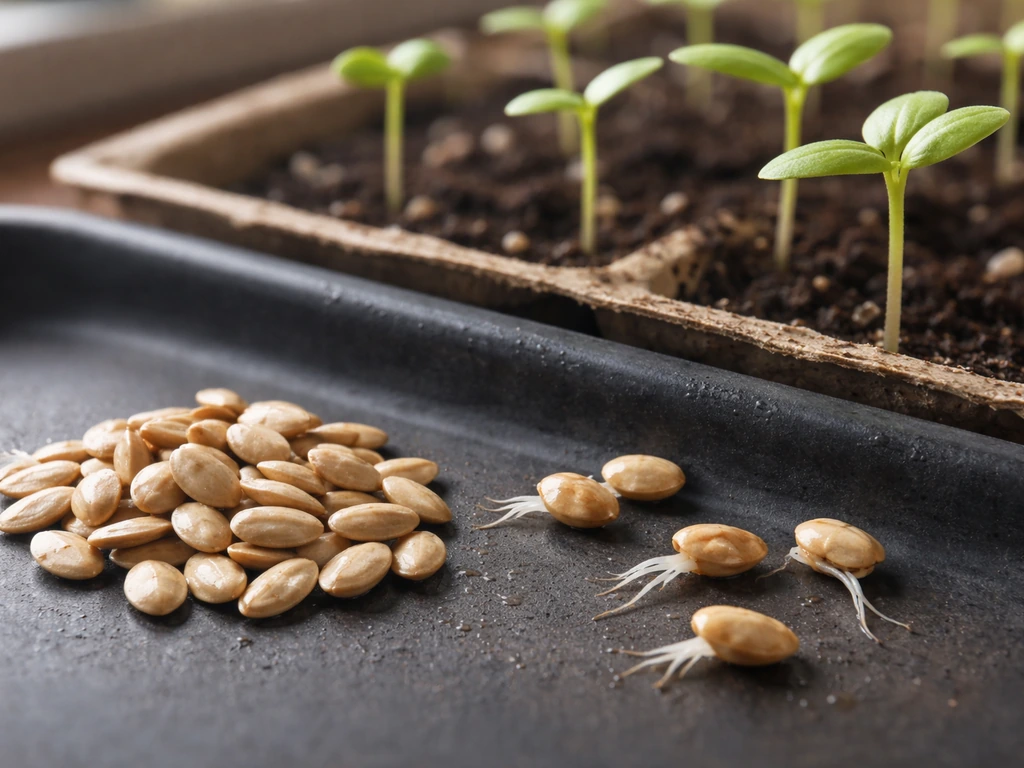
Yes, and usually well. Germination is a physical process that depends on moisture, warmth, and seed viability, not on whether the parent was a hybrid or an heirloom. A healthy, properly stored seed from an F1 hybrid tomato will sprout just as readily as one from an heirloom. In my own garden, I've had F2 tomato seeds (saved from an F1 hybrid) germinate at rates comparable to open-pollinated varieties when conditions were right.
The distinction you need to hold in your head is germination versus performance. Germination: will the seed sprout? Almost certainly yes, assuming the seed is viable. Performance: will the plant look and produce like the parent? That's where things get unpredictable, and that's the real question most people are asking when they search 'will hybrid seeds grow.'
When you plant seeds from an F1 hybrid, you're now growing what breeders call the F2 generation. According to University of Maine Extension, this F2 population spans the genetic range of both original parent lines rather than producing uniform plants like the F1 did. South Dakota State University Extension is blunt about it: the progeny tend to be less vigorous, more variable in form, and can produce smaller blossoms and lower yields. That's not a guarantee of failure, but it is a realistic expectation you should plan around.
Why your saved seeds probably won't look like the parent plant
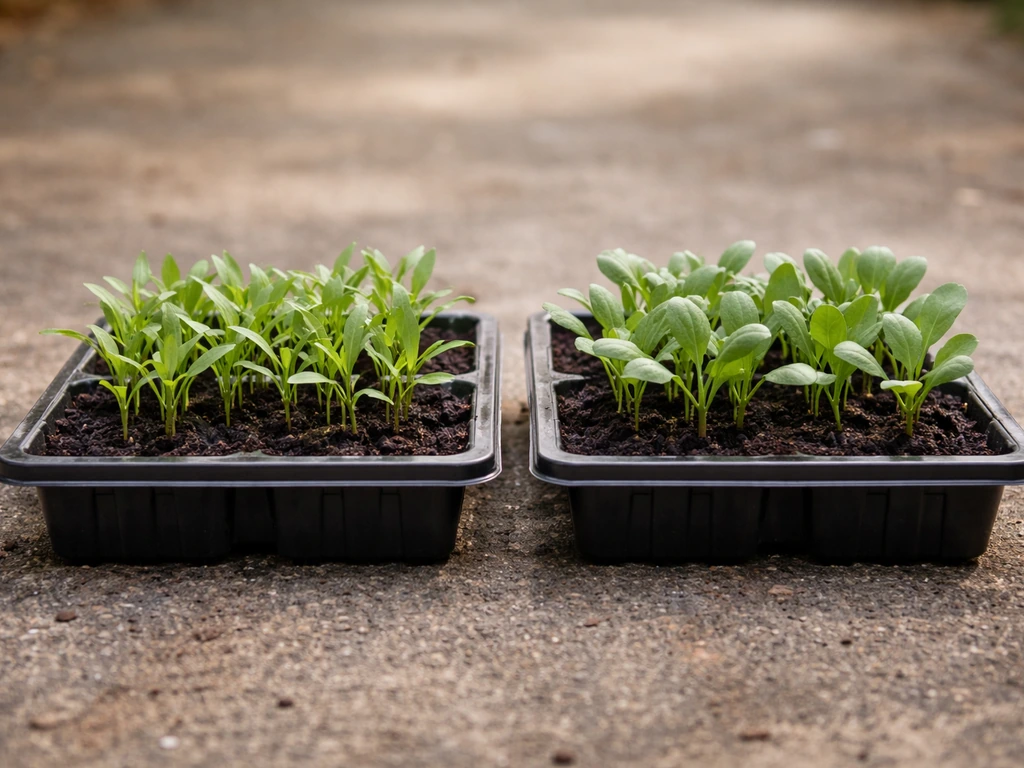
Here's the genetics in plain terms. The F1 hybrid is uniform because both parents were highly inbred lines, so when you cross them the offspring all carry one copy of each parent's traits. That combination produces the consistent, high-performing plant you bought the seed for. But when that F1 plant reproduces, its genes shuffle and recombine. The F2 seeds carry all kinds of combinations from both grandparent lines. University of Maryland Extension puts it simply: seed collected from F1 hybrid cultivars will not produce plants identical to the F1 hybrid.
In practice this means you might plant 10 saved seeds from a hybrid beefsteak tomato and get some plants that produce large, meaty fruit, some that produce small cherry-sized tomatoes, some that are more disease-susceptible than the parent, and a few that might actually be interesting in their own right. It's not random chaos, but it's far from predictable. The traits you loved about that hybrid were the result of a very specific genetic combination that doesn't reliably reassemble itself in the next generation.
This variability isn't always a bad thing. Plant breeders actually use this generation to start selecting new varieties. If you're curious and patient, growing out F2 seeds and selecting the best performers over several seasons is how you can eventually develop your own stable open-pollinated line. But if you needed that exact disease resistance or that particular fruit size, you're rolling dice.
How to save seeds from a hybrid plant (if you want to try anyway)
Saving hybrid seeds is worth doing if you're experimenting, curious about what the offspring will look like, or don't have budget to rebuy seed. Here's how to do it properly.
- Wait for full maturity. Seeds need to reach physiological maturity inside the fruit or seed pod before you harvest them. For tomatoes, let the fruit go past eating-ripe to fully soft and almost overripe. For peppers, let them turn their final color (red, orange, yellow). For beans and peas, let the pods dry on the plant as long as weather allows.
- Separate seeds from pulp. Wet-process seeds (tomatoes, squash, cucumbers) should be scooped into a jar of water and fermented for 2 to 3 days at room temperature. This removes the germination-inhibiting gel coating and kills some seed-borne pathogens. Dry-process seeds (beans, peas, flowers) just need to be shelled and spread out.
- Rinse and dry thoroughly. After fermentation or shelling, rinse the seeds clean and spread them in a single layer on a non-stick surface (a ceramic plate or parchment paper works well) in a warm, airy spot out of direct sunlight. Let them dry for at least 1 to 2 weeks. Seeds must be completely dry before storage or they'll mold.
- Store correctly. Place dried seeds in a paper envelope or small glass jar with a tight lid. Label with the plant name, date, and the word 'F2' so you remember these are saved hybrid seeds. Store in a cool, dark, dry location. A refrigerator drawer works well if humidity is controlled. Most vegetable seeds stay viable for 2 to 5 years under good conditions.
- Think about cross-pollination. For crops that cross-pollinate easily (corn, squash, cucumbers), neighboring plants of the same species can introduce additional genetic variation into your saved seeds on top of the hybrid variability already present. Self-pollinating crops like tomatoes, peppers, beans, lettuce, and peas are much simpler because they pollinate themselves before the flower even opens, so you don't need to worry about bagging flowers or isolation distances.
How to check if your saved seeds will actually germinate
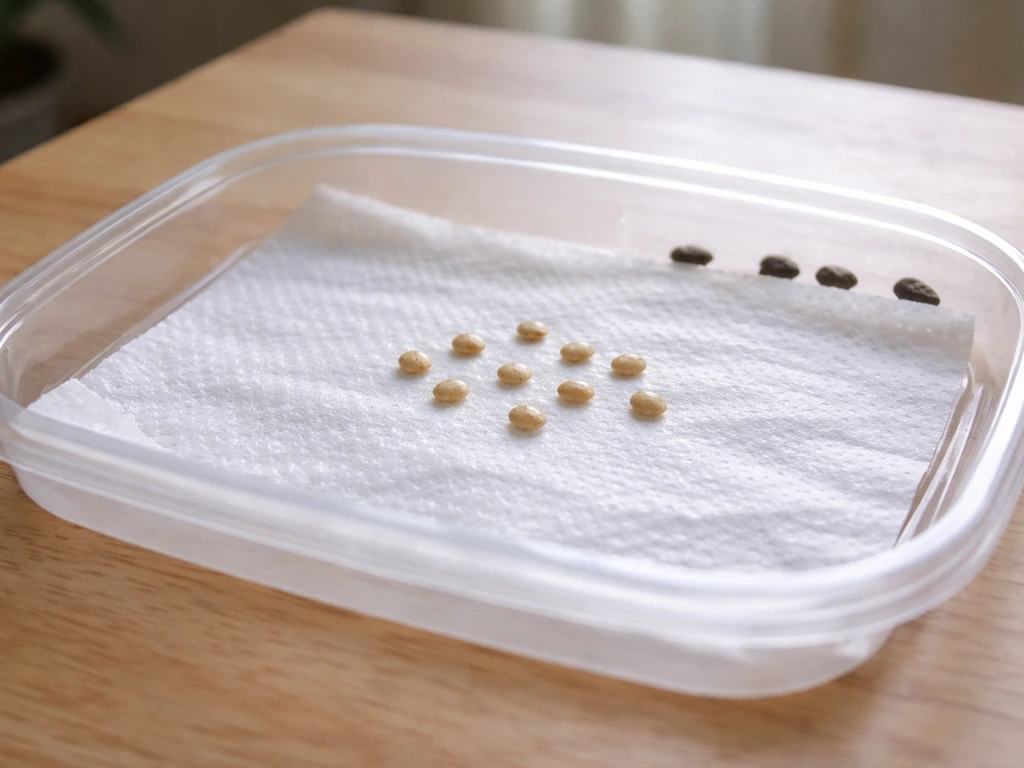
Before you commit a whole bed to saved hybrid seeds, run a quick germination test. It takes about a week to two weeks and tells you exactly what germination rate to expect so you can adjust how many seeds you plant per hole.
- Count out 10 seeds (a sample size of 10 makes the math simple).
- Dampen a paper towel until it's moist but not dripping. Lay the seeds on one half of the towel, fold the other half over them, and slide the whole thing into a zip-lock bag.
- Keep the bag in a consistently warm spot: around 65 to 75 degrees Fahrenheit for most vegetables, slightly warmer (70 to 85°F) for heat-lovers like peppers and tomatoes.
- Check daily starting at day 5. Count how many seeds have sprouted by day 7 for fast germinators like beans and radishes, and by day 14 for slower crops like peppers and parsley.
- Calculate your germination rate: 7 out of 10 seeds sprouted means a 70% rate. Below 50% is a sign you'll need to plant extra seeds per spot or consider starting fresh.
One thing to note: a good germination rate on hybrid-saved seeds doesn't tell you anything about how true-to-type the plants will be. It just confirms the seeds are alive and worth planting. The trait variation is baked into the genetics regardless of germination rate.
What to realistically expect by crop type
Not all hybrid seeds behave the same way when saved, and the crop type matters a lot for deciding whether it's worth the experiment. If you are asking can you grow rare flowers in ark, the same lesson applies: hybrid seed outcomes depend heavily on the crop and how predictable you need the results to be.
| Crop | Ease of seed saving | Pollination type | What to expect from F2 seeds | Worth saving? |
|---|---|---|---|---|
| Tomatoes | Easy | Self-pollinating | High variability in fruit size, color, texture; some plants may surprise you | Yes, if experimenting |
| Peppers | Easy | Self-pollinating | Variable heat level, fruit shape, and color; usually still productive | Yes, if experimenting |
| Beans / Peas | Very easy | Self-pollinating | Moderate variability; often still edible and productive | Yes, good starter crop |
| Lettuce | Easy | Self-pollinating | Leaf shape and color will vary; bolt timing may differ | Yes, low stakes |
| Cucumbers | Moderate | Cross-pollinating | High variability; cross-pollination adds more unpredictability | Only with isolation |
| Squash / Pumpkins | Moderate | Cross-pollinating | Extreme variability, especially if other squash varieties are nearby | Only with isolation |
| Corn | Difficult | Wind-pollinated, cross-pollinating | Very high variability; hybrid vigor disappears almost entirely | Not recommended |
| Hybrid flowers (annuals) | Easy to moderate | Varies | Color, form, and size will vary widely; can produce interesting results | Yes, if you enjoy variety |
When to rebuy hybrid seed and when saving makes sense
The honest decision framework comes down to what you're growing for. If you're farming for market and need uniform produce, consistent disease resistance, or specific days-to-maturity for a crop schedule, rebuy the hybrid seed every season. The performance advantage of a true F1 hybrid is real and the cost of seed is almost always lower than the cost of reduced yield or quality. This is especially true for crops like corn and cucumbers where seed saving is complicated by cross-pollination.
If you're a home gardener who wants to experiment, has limited seed budget, or just hates throwing away seeds from a great plant you grew last summer, saving hybrid seeds is absolutely worth trying. So what do rare seeds grow when you plant them, and how can you improve your odds of good results saving hybrid seeds is absolutely worth trying. Plant more seeds than you think you need to account for variability, label everything clearly as F2, and go in with an open mind. Some of those plants will disappoint you. A few might genuinely surprise you with interesting traits. I've grown F2 tomatoes that produced unusually sweet, small fruits I liked better than the original hybrid. I've also grown F2 squash that were mealy and hollow. Both experiences were educational.
If long-term seed security is your goal, switch to open-pollinated or heirloom varieties and save seed from those instead. They breed true, meaning each generation reliably resembles the last, and over time you can select for traits that perform well in your specific climate and soil. That's a different conversation from hybrid saving, but it's the more sustainable path for anyone serious about seed independence.
Common myths worth clearing up
- Myth: Hybrid seeds are sterile and won't germinate. False. Most hybrid seeds germinate just fine. Sterile seeds are a separate, specific issue (like seedless watermelons, which require a different setup entirely) and don't apply to most vegetable or flower hybrids.
- Myth: Hybrid means genetically modified. False. Hybrids are created through conventional plant breeding. GMO plants are produced using laboratory gene-editing techniques and are a legally distinct category with separate labeling requirements.
- Myth: The offspring will be completely useless. Not true. They'll just be variable. Some will perform poorly, some adequately, and occasionally one will be interesting enough to keep selecting from.
- Myth: You can't save seeds if your plant is hybrid. You can save and plant them. You just need realistic expectations about what grows from them.
- Myth: Organic seeds can't be hybrid. Wrong. 'Organic' refers to how the seed was grown (without synthetic inputs), not the breeding method. Organic hybrid seeds exist and are common.
FAQ
If hybrid seeds germinate, will every plant look like the hybrid you bought?
Not necessarily. Germination only tells you the seeds are viable, while “true-to-parent” performance depends on the genetic recombination you get in the next generation (often F2). To increase your odds of getting something close, save seeds from the best-looking individual plants in your garden (not from a whole mixed packet), then run selection over multiple seasons.
How can I tell whether my “hybrid seeds” are F1 before I save them?
Check the seed packet label for “F1,” and also note any “hybrid” wording. If the packet does not clearly state F1, assume the genetics may be mixed, which can make outcomes even less predictable. When in doubt, grow a small test batch first and label it as “unknown parent type” so you do not treat results as typical.
Are hybrid seeds sterile, or will they fail to grow?
They are not inherently sterile. The common problem is variability in traits, not an inability to sprout. Expect a range of plant size, flowering time, vigor, and sometimes disease susceptibility, even if germination rate is strong.
Will hybrid seeds come up true if I save them from an especially good plant in my garden?
Saving from a standout plant can help, but it still will not guarantee true-to-type like an open-pollinated variety. You are selecting within a mixed genetic pool, so results depend on which traits are heritable and how consistently they show up across multiple generations.
Should I do a germination test every time I save hybrid seeds?
Yes, especially if storage conditions were imperfect or seeds are older. A germination test lets you adjust planting density, but remember it does not predict how closely the plants will match the hybrid, only how many will sprout.
How many seeds should I plant when growing hybrid-saved seeds?
Plant more than you need, because variability means some seedlings may be less vigorous or produce smaller yields. A practical rule is to start with at least double the number of plants you ultimately want to keep, then thin to your best performers.
Does the variability get worse over generations?
Usually, yes. Planting saved seeds from an F1 typically produces an F2 with the widest range. If you keep saving from F2 plants without selection, later generations can become even more diverse. If your goal is stability, you generally need selective breeding over several seasons.
Are hybrid seeds and GMO seeds the same thing?
No. Hybrid seed refers to traditional cross-breeding between distinct parent lines, while GMO involves laboratory gene modification. Confusing these can lead to wrong expectations about behavior, but the main issue for seed saving remains genetic unpredictability across generations.
Do hybrid-saved seeds behave differently depending on the crop?
Yes. Some crops are more predictable in practice (for example, many home-garden vegetables), while others can be strongly affected by whether nearby plants cross-pollinate. For crops with cross-pollination risk, you may see outcomes that reflect both hybrid recombination and accidental pollen mixing.
If I want uniform crops for market, should I save hybrid seeds anyway?
Usually no. If you rely on uniform days-to-maturity, fruit size, and consistent performance, the cost of variability can outweigh the seed savings. Rebuying hybrid seed each season is the safer way to maintain the uniformity you expect.
What’s the biggest mistake people make when saving and planting hybrid seeds?
Assuming “it sprouted” means “it will match the parent.” Another common mistake is not labeling and not saving notes about which individual plants came from which seed batch and how they performed. Labeling a batch as “F2 from F1 hybrid, saved date” makes later selection and comparison much easier.
What should I do if a hybrid-saved plant is disappointing, can I still recover something useful?
You can, but do it through selection. Mark the best-performing individuals (based on what you care about, like vigor, fruit quality, or disease resilience), keep seed only from those plants, and repeat selection for multiple seasons. If the disappointing traits are widespread across many plants, it may not be worth continuing that line.
Next Article
Do Dollar Tree Seeds Grow? How to Test and Plant Them
Yes, Dollar Tree seeds can grow. Test viability fast, then plant with proper depth, soil, heat, and watering.