Ancient seeds can absolutely grow, but the honest answer to "when" depends on two things you need to figure out first: what plant the seeds actually are, and whether those seeds are still alive. Get those two answers right and the rest of the timing falls into place pretty quickly. Skip them and you can follow every sowing calendar perfectly and still get nothing.
When Do Ancient Seeds Grow? Planting Time and Germination Guide

Marcus Weir
3 Apr 2026
What 'ancient seeds' usually means (and why it matters for timing)
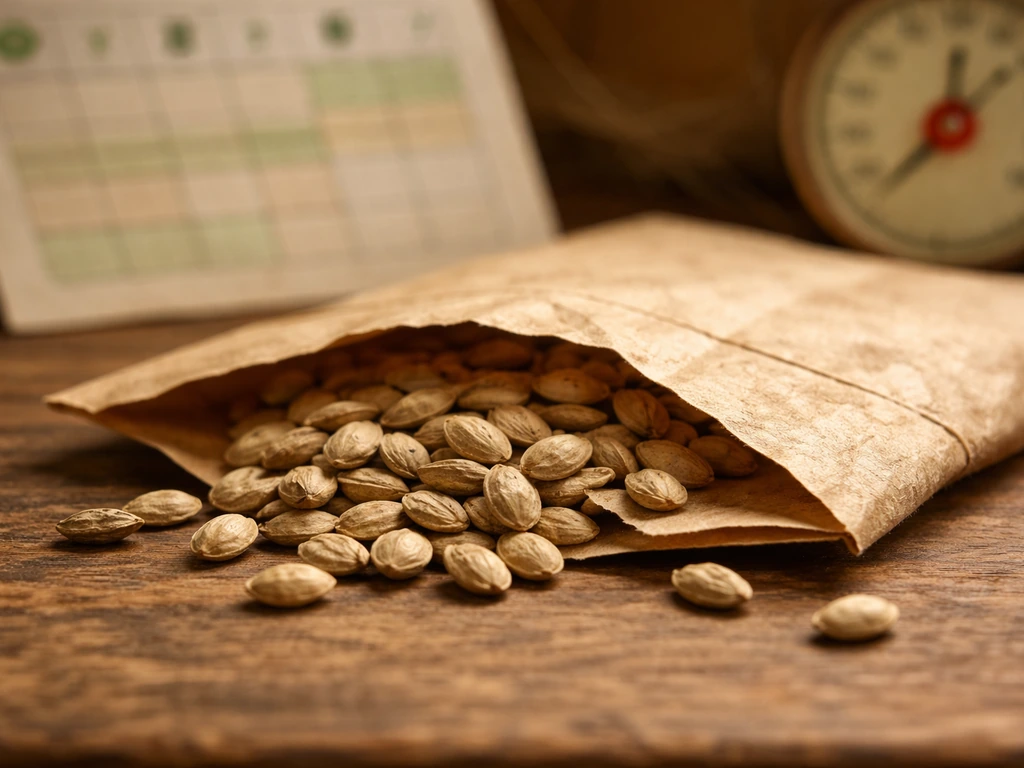
When most gardeners say "ancient seeds," they mean one of a few things: seeds pulled from an old envelope in a drawer, heirloom or heritage varieties passed down through families, seeds bought years ago and forgotten, or genuinely antique specimens from heritage seed collections. In rare cases people mean seeds found at archaeological sites or in old storage, but those are the exception. The common thread is age plus uncertainty about viability.
Age matters for timing because it changes your germination odds before you even put a seed in the ground. Research on long-term seed storage makes it clear that elapsed time since harvest is actually a poor measure of how viable a seed is. What determines survival is storage conditions, specifically temperature and moisture. Seeds dried below 5% moisture content and kept at freezing temperatures have been shown to retain nearly all their viability and vigor after 20 years.
Meanwhile, seeds stored warm and damp in a non-climate-controlled shed can lose viability in a single season. So "ancient" doesn't automatically mean dead, and it doesn't automatically mean the timing rules change. It just means you need to verify before you commit to a sowing date.
If you're also wondering what rare seeds grow into when they come from unknown or historical sources, the identity question and the timing question are really the same problem, so solving one solves both.
How to tell what plant your seeds are (and match the right growing window)
If you have any original packaging, start there. Even a partial label, a handwritten note, or a faded seed packet gives you a plant name to look up. Heritage seed packets often indicate whether a cold period is needed, which is one of the most important timing flags you can find. If the packet is long gone, examine the seed itself.
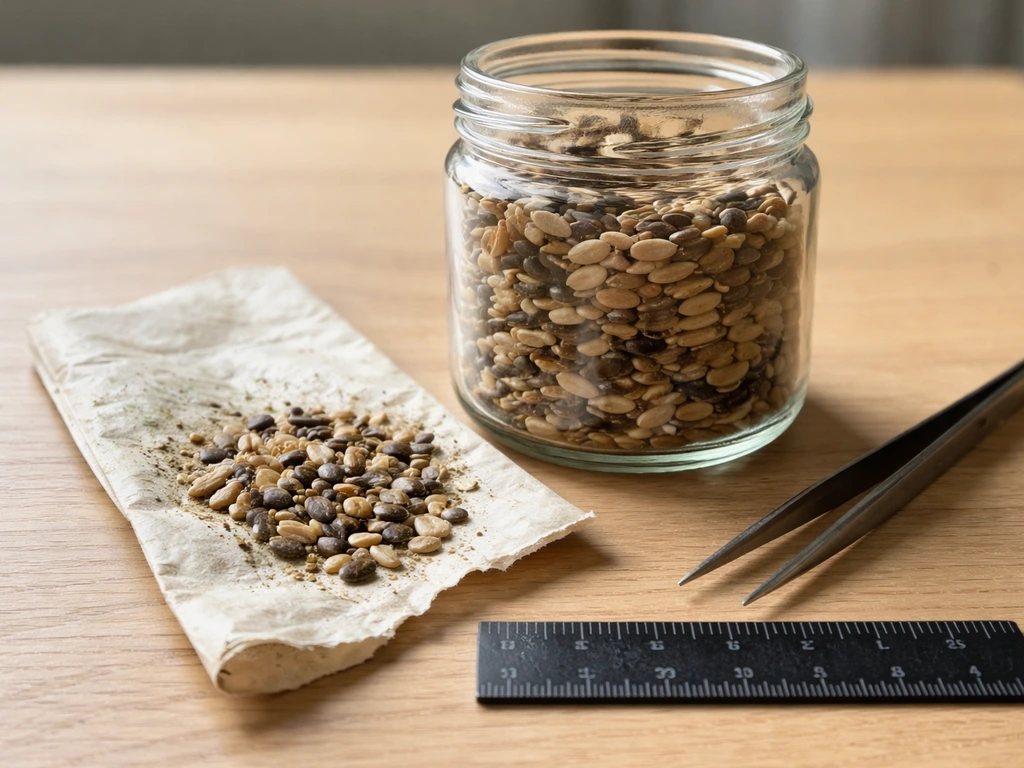
Seed morphology tells you more than most people expect. Flat, papery seeds with a wing (like maples or ashes) almost always need cold stratification. Round, hard-coated seeds the size of a pea or larger (think morning glory, lotus, or black locust) usually need scarification. Tiny dust-like seeds (orchids, begonias) have almost no food reserves and need light and warmth to germinate rather than cold treatment. Long, thin seeds with a pointed tip often belong to grasses or alliums. If you can narrow the seed down to a plant family, you can apply that family's general timing rules while you wait for seedlings to confirm the ID.
When morphology isn't enough, the seedling itself is your best identifier. Cotyledon shape, leaf texture, and early stem color are reliable ID tools for most vegetable and flower families. Grow a few seeds in a labeled tray and let the seedlings tell you what they are before you invest in a full bed. Knowing whether you have seeds that will actually grow from your collection is the first practical checkpoint.
When to plant: season and temperature rules for germination
Every seed has a temperature window it wants before it will germinate. This is non-negotiable and it's the reason planting calendars exist. Once you know (or strongly suspect) what plant your seeds are, matching them to the right season is straightforward.
| Seed/Plant Type | Preferred Soil Temp for Germination | Typical Sow Season (Northern Hemisphere) | Cold Stratification Needed? |
|---|---|---|---|
| Cool-season vegetables (spinach, lettuce, brassicas) | 45–65°F (7–18°C) | Early spring or fall | No — but soil above 85°F halts germination |
| Warm-season vegetables (tomatoes, peppers, squash) | 65–85°F (18–29°C) | Indoors 6–10 weeks before last frost | No |
| Hardy annuals (larkspur, poppy, bachelor's button) | 50–65°F (10–18°C) | Direct sow early spring or fall | No, but cold soil helps |
| Tender annuals (zinnia, basil, marigold) | 65–75°F (18–24°C) | Indoors 4–6 weeks before last frost | No |
| Native perennials (echinacea, milkweed, wild columbine) | 55–70°F (13–21°C) after stratification | Fall direct sow OR indoor start in winter | Yes, typically 4–12 weeks |
| Woody shrubs and trees (oaks, maples, viburnums) | Species-specific; many 50–70°F | Fall or after stratification in late winter | Yes, often warm + cold sequence |
| Tropical species | 70–85°F (21–29°C) | Indoors year-round or spring | No — some need scarification instead |
The table above covers the most common groups you'll encounter with ancient or heirloom seeds. The single most common timing mistake is treating all seeds like warm-season vegetables: waiting until it's warm outside and then planting directly. Native perennials and woody species almost never work on that schedule without preparation.
Today's date is April 3, 2026. If you're in a temperate Northern Hemisphere location, you're in a sweet spot for several categories: cool-season vegetables can go out now or within two weeks, warm-season vegetables should be under lights indoors if you haven't started, and native perennials that were cold-stratified over winter are ready to move to warmer conditions for germination. If your seeds haven't been stratified yet and they require it, your options are a refrigerator stratification run (4–12 weeks, then sow in late spring or early summer) or a fall direct sow outdoors so nature handles the dormancy break.
Why old seeds don't sprout on schedule (dormancy, viability, storage)
There are two different problems that look identical from the outside: a seed that is dead, and a seed that is dormant. A dead seed won't sprout no matter what you do. A dormant seed won't sprout until specific conditions are met, but it's perfectly alive and waiting. Confusing these two is the main reason people give up on ancient seeds too soon.
Dormancy in trees and perennials can be surprisingly layered. Some species need a warm period first to break root dormancy, then a cold period, then another warm period for shoot emergence. Getting the cold treatment right but skipping the initial warm phase means the seed stays locked. This temperature-sequence requirement is why some seeds collected from forest trees take two full years to germinate when direct-sown in the wrong season.
Viability loss is a separate issue driven almost entirely by how the seeds were stored. High moisture content combined with warm storage temperatures accelerates deterioration fast. The University of Washington Botanic Gardens seedbank notes that freezing can harm seeds that retain too much water, while orthodox seeds tolerate low temperatures and low moisture as an adaptation for winter or dry-season survival [High moisture content combined with warm storage temperatures accelerates deterioration fast. ](https://botanicgardens.
uw. edu/science-conservation/rarecare/seedbank/saving/). Under fair to good conditions (cool and dry but not perfect), most orthodox seeds remain viable for 1–2 years. Under poor conditions, that window shrinks to months.
Under excellent conditions (frozen and dry), decades are possible. The important takeaway: storage quality predicts viability better than the calendar year on the envelope.
Test viability before you waste a whole season
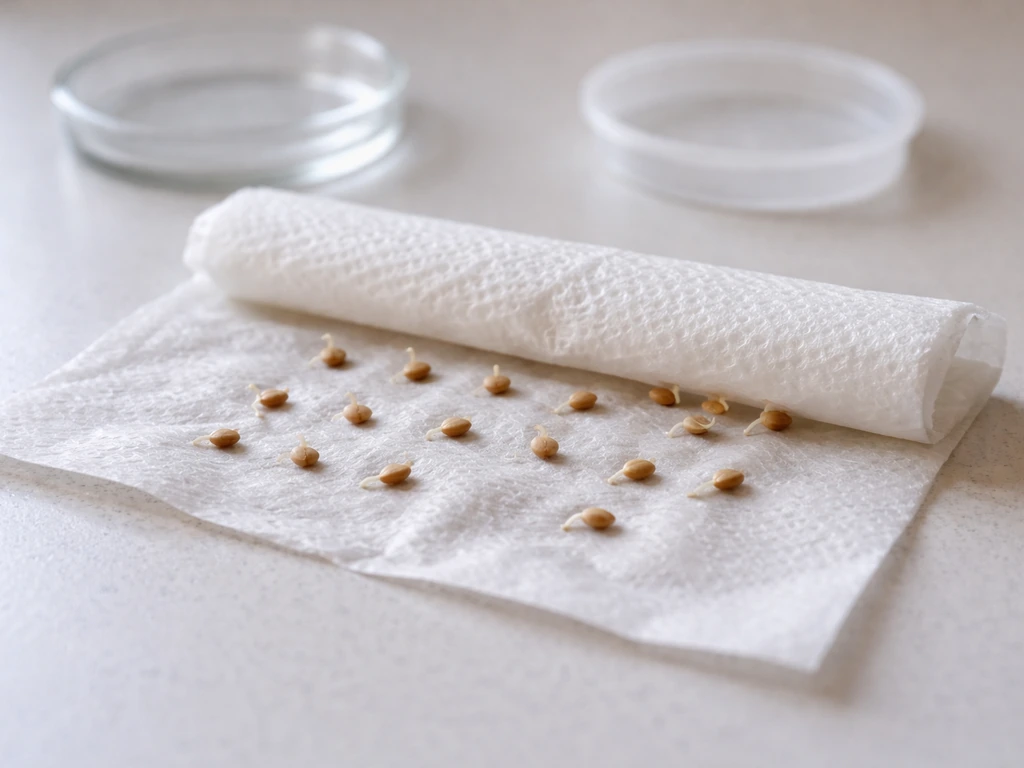
The paper towel germination test is the fastest low-tech method. Dampen a piece of germination paper or a standard paper towel, place 10 seeds evenly spaced, fold or roll it, seal it in a plastic bag, and keep it at the target temperature for the species. Check it at the species' normal germination window (anywhere from 5 days for fast germinators to 21+ days for slow ones). Count how many sprouted. If 7 out of 10 germinate, you have roughly 70% germination rate and you can sow at a normal density. If only 2 germinate, sow at 3–4 times the normal density or look for a better seed source.
For faster results, the tetrazolium (TZ) test done by a seed lab gives you a biochemical viability reading in about 24–48 hours. It doesn't test actual germination but it confirms whether the embryo tissue is metabolically active. University seed labs like Oregon State's offer this service, and it's worth the cost if you have a large quantity of valuable seed to evaluate. Professional germination tests, like those run at national seed laboratories, go further by predicting the probability that a seed lot will produce a normal plant under favorable conditions, which is exactly what you need when planning a serious planting.
Preparing and boosting germination (soak, stratify, scarify, by seed type)
The right prep method depends entirely on why the seed isn't germinating on its own. Hard seed coats, internal chemical dormancy, and embryo dormancy each need a different fix.
Scarification: for hard-coated seeds
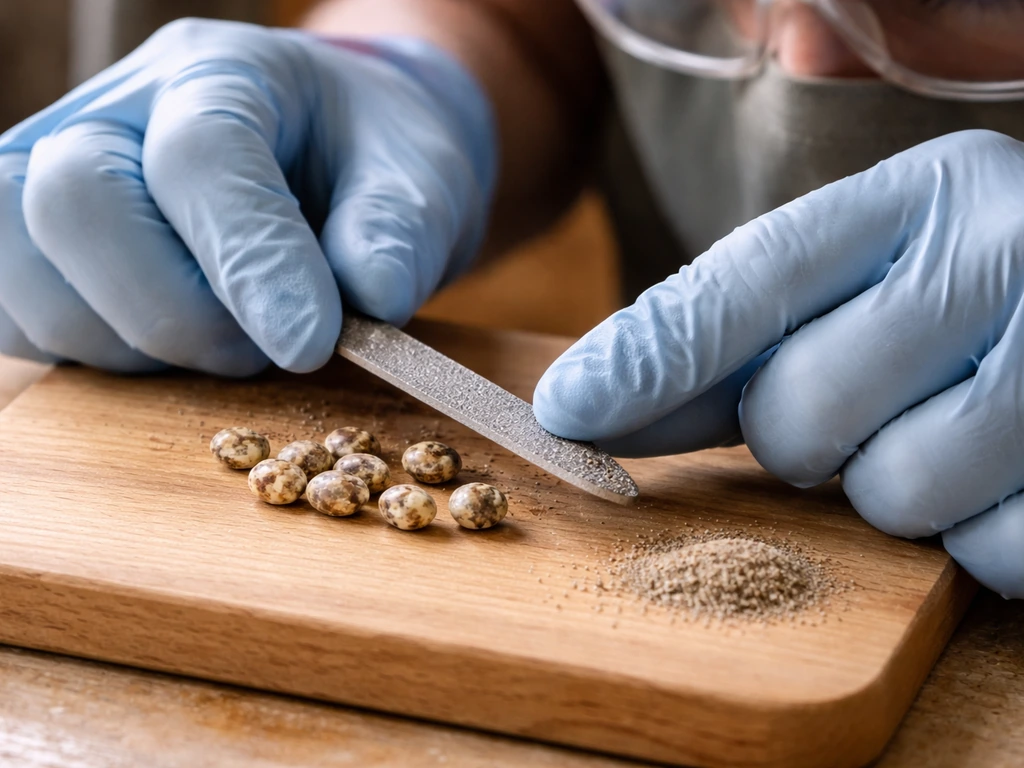
Seeds with a thick, impermeable coat (morning glory, lotus, sweet pea, most legumes) need the coat breached before water can enter and start germination. You have three options: nick the seed coat with a sharp knife or nail file at the point opposite the embryo scar; rub seeds between two sheets of sandpaper; or soak in hot (not boiling) water for 12–24 hours and let them cool naturally. The swelling of the seed after soaking tells you the coat is permeable. Unscarified seeds of these types can sit in warm, moist soil for weeks without germinating, which is often mistaken for a viability problem.
Cold stratification: for dormancy-breaking
Native perennials and most temperate tree and shrub seeds need a cold, moist period before germination. The standard approach: mix seeds with slightly damp vermiculite or sand, seal in a plastic bag, and refrigerate at 33–41°F (1–5°C) for the required number of weeks (typically 4–16, species-dependent). Check monthly and remove any seeds showing early sprouting. One interesting finding from Echinacea research: providing light during cold-moist stratification can reduce the time needed to break dormancy by up to four weeks. So if you're stratifying in a fridge with a small light source, you may see faster results than the standard duration suggests.
Warm stratification: for double-dormancy species
Some woodland species (trilliums, pawpaw, certain viburnums) need a warm period first, then cold, to break both root and shoot dormancy in sequence. Mix seeds with moist medium and keep at 68–77°F (20–25°C) for 60–90 days, then transfer to cold stratification. This mimics a full summer-to-winter cycle. Missing the warm phase is why these plants take years to germinate for people who skip the research and go straight to a cold treatment.
Simple soaking: for most vegetable and annual seeds
Most heirloom vegetable seeds and annual flower seeds don't need complex treatments. An overnight soak in room-temperature water (8–12 hours) softens the seed coat, accelerates imbibition, and often cuts a day or two off germination time. Don't soak longer than 24 hours or you risk oxygen deprivation in the seed. Drain, pat dry, and sow immediately.
Indoor vs outdoor start, and when to transplant seedlings
Whether you start inside or outside depends on three things: frost timing in your area, the seed's minimum germination temperature, and how much growing time the plant needs before it can handle outdoor conditions.
Hardy cool-season crops (kale, spinach, many annual wildflowers) can go directly into outdoor soil as soon as it's workable. Warm-season crops and most heirloom tomatoes, peppers, and squashes need indoor starts 6–10 weeks before your last frost date because they require warm soil to germinate (65°F and above) and a longer head start to reach transplant size. Starting ancient seeds indoors is generally safer because you can control temperature, moisture, and light precisely, which matters more when you're dealing with older seeds whose germination rate may already be reduced.
Use sterilized seed-starting mix rather than garden soil. Garden soil compacts in containers and often carries pathogens that are especially risky for slow-germinating or stressed seedlings. Plant at the correct depth: too deep and the seedling exhausts its food reserves before reaching light; too shallow and the seed dries out or washes away. As a rule, sow at a depth equal to twice the seed's diameter, except for seeds that require light to germinate (like lettuce or snapdragons), which should be pressed onto the surface and not covered.
When seedlings are ready to move outside, harden them off first. Start the process about 10 days before transplant day by setting them outside in a sheltered, partially shaded spot for an hour, then increasing exposure over the following days. SDSU Extension recommends at least one week of gradual hardening to prevent transplant shock, and the University of Alaska's guidance pushes that to 10 days for best results. Skipping this step is one of the most common reasons healthy indoor seedlings collapse after transplanting.
If you've been wondering whether hybrid seeds will grow on the same schedule as your heirloom or ancient seeds, the short answer is that hybrids often have more predictable germination rates but the same temperature and timing rules apply.
How long they take to grow, and how to troubleshoot slow or no germination
Realistic germination windows vary enormously by plant type. Fast germinators like radishes and lettuce can show radicles in 3–5 days under good conditions. Tomatoes take 7–14 days. Native perennials after stratification: 14–30 days, sometimes longer. Woody species with compound dormancy can take 60–90 days after the final treatment phase, and some (like pawpaw or trillium) may take two full growing seasons even when everything is done correctly.
With ancient seeds, add buffer time to whatever the standard germination window says. Lower-vigor seeds (even viable ones) tend to germinate more slowly and unevenly than fresh seeds of the same variety. Don't declare failure at the standard window's end. Give old seeds at least 1.5 to 2 times the normal listed germination period before writing them off.
Common reasons germination fails or stalls
- Soil too cold: the most common cause for warm-season crops started outdoors too early. Soil thermometers are cheap and worth using.
- Soil too hot: less obvious but real. Spinach and lettuce essentially stop germinating above 85°F soil temperature. Moving trays to a cooler spot often fixes this fast.
- Planted too deep: the seedling uses up its food reserves before breaking the surface. Most small seeds need to be within 1/4 inch of the surface.
- Soil too wet: wet, cold soil slows germination and dramatically increases damping-off risk. Damping-off is a fungal condition that collapses seedling stems at the soil line and kills plants that were germinating fine. It's far more common when germination is already slow due to cool temps or old seeds.
- Dormancy not broken: the seed is alive but waiting for a temperature signal you haven't provided yet. Review whether the plant needs stratification or scarification.
- Seed is dead: if your paper towel test showed 0 out of 10 after double the normal window, the seed lot is non-viable. Time to source replacements.
- Light requirement unmet: some seeds (notably lettuce) need light to germinate. Covering them with even a thin layer of soil can inhibit germination entirely. Others (onions, alliums) prefer darkness. Know which group your seeds fall into.
If you're seeing green sprouts but they're leggy, pale, or collapsing at the base, those are post-germination problems, not germination timing problems. Leggy seedlings need more light (move closer to the grow light or a sunnier window). Collapse at the base is damping-off and usually means overwatering combined with poor air circulation. Increase airflow with a small fan and let the top of the soil dry slightly between waterings.
If you've purchased seeds from a discount retailer and are unsure of their quality, questions about whether budget-priced seeds actually grow are worth investigating before you invest a full season in them, because viability testing applies equally to bargain seeds as to genuinely ancient ones.
For anyone working with genuinely unusual or heritage specimens, understanding whether rare flowers can be successfully cultivated from seed often comes down to the same three variables: viability, dormancy type, and temperature matching. The principles don't change with rarity, but the margin for error gets smaller.
Your practical planting plan for right now
Here's how to go from a mystery envelope of old seeds to a realistic sowing date. Follow these steps in order and you'll avoid the most common mistakes.
- Identify the seed: check any original label, then examine seed morphology (size, shape, coat texture, color). Narrow it to a plant family if you can't get to species.
- Run a paper towel germination test with 10 seeds at the appropriate temperature for that plant type. Wait the full germination window (plus extra time for old seeds) before counting.
- If viability is confirmed (5 or more out of 10 germinate), calculate your sowing date by working backward from your last frost date for warm-season crops, or forward from today for cool-season crops and pre-stratified natives.
- Apply the right pre-treatment: soak hard-coated seeds for 12–24 hours; cold-stratify dormancy-requiring perennials for 4–16 weeks in a damp, sealed bag in the fridge; use warm-then-cold stratification for double-dormancy species.
- Sow at the correct depth (2x seed diameter for most; surface-sow light-requiring seeds), in sterilized seed-starting mix, at the right temperature.
- Maintain consistent moisture without waterlogging. Bottom-watering (setting the tray in a shallow dish of water until the surface dampens) reduces damping-off risk compared to overhead watering.
- Begin hardening off seedlings 10 days before your target transplant date. Transplant after the last frost date for frost-sensitive plants.
- Track your germination window. Mark the date you sowed. If nothing has emerged after 1.5 to 2 times the normal listed germination period, the seed lot is likely non-viable and you should resow with fresh seed.
Ancient seeds are not a lost cause. The ones stored well are often just as good as anything you'd buy new. The ones stored poorly may test your patience and your paper towel supply before you get an answer. Either way, testing before sowing, matching the prep treatment to the seed type, and respecting the temperature rules for your specific plant gives you the clearest path from an old envelope to an actual plant growing in your garden.
FAQ
If my ancient seeds are viable, will they germinate whenever I plant them?
Not necessarily. Even viable seeds need the right dormancy-break conditions, for many plants that means a specific temperature sequence (warm then cold, or cold then warm). If you skip that step, you can get zero sprouts even though a TZ or paper towel test shows the embryos are alive.
How can I tell whether my seeds failed because of dormancy versus low viability?
Do two checks: run a paper towel germination test at the species’ target temperature, and inspect for any early swelling or radicle emergence. If none appear in a proper test window, viability is likely low. If your test produces sprouts but the soil planting does not, it’s usually a temperature, depth, moisture, or light mismatch.
What germination rate is “good enough” to plant ancient seeds without over-sowing too much?
A practical rule is to aim to plant so you end up with the target number of seedlings, not so you get 100% sprouts. If your paper towel count shows around 70% germination, sow at normal density. If it’s closer to 20% to 30%, increase sowing density (3 to 4 times) or plan for thinning after emergence.
Should I store old seeds longer in the fridge after testing, or sow right away?
If the seeds test viable and you want maximum success, sow soon after testing because dormancy behavior is time-dependent and handling reduces stored vigor. Keep the remaining seeds cool and dry, ideally frozen if they are orthodox seeds and you can prevent moisture pickup during storage.
Does the year on the envelope tell me when ancient seeds grow?
No. The calendar year is a weak predictor because viability depends more on moisture and temperature history. Two seed lots labeled with the same year can behave very differently, so the “when” decision should be based on identity, dormancy requirements, and a quick viability check.
How do I figure out the correct soil temperature target before planting?
Use a thermometer in the actual planting area, not just air temperature. Many warm-season seeds won’t germinate well when the soil is below their minimum germination temperature, so starting indoors or delaying outdoor sowing by a week or two can be the difference between uneven germination and total failure.
Are light-requiring seeds affected by stratification or cover depth?
Yes. Seeds that require light to germinate (often very small types) should not be covered, even if they need stratification for dormancy break. For these, keep them on the surface after treatment, and ensure the stratification setup does not bury them when they move to germination conditions.
What’s the fastest way to confirm seed identity without waiting for full season growth?
Start a small labeled tray and keep it under controlled conditions appropriate for the suspected plant group. Seedlings often show reliable early traits (cotyledon shape, early leaf texture, and stem color) before true leaves fully develop, giving you an answer quickly before committing to a bed.
Can I mix different ancient seed types in the same stratification bag to save space?
Usually not. Different species can require different temperature durations and moisture levels, and if you combine them you can accidentally overshoot the schedule for one kind. Use separate bags or clearly label and stagger species so you remove them based on their own progress.
If my seedlings germinate but look unhealthy, how do I know it’s not a timing issue?
If you see sprouting but then legginess, paleness, or collapse at the base, the cause is commonly post-germination conditions (insufficient light, overwatering, poor airflow), not the original germination timing. Improve light intensity and airflow and reduce watering between dry-down periods.
Why do some trees or perennials take two years to germinate even when I follow cold stratification?
Some species require a multi-phase dormancy break (an initial warm phase, then cold, then another warm phase for shoot emergence). If you start with only cold, the seeds can remain locked, so they appear to “wait” through a season or two before finally responding.
Next Article
Is Miracle-Gro Good for Mandevilla? How to Feed It Safely
Yes, Miracle-Gro can feed mandevilla safely. Get correct NPK choice, dilution, schedule, and signs to avoid burn.