Pitcher plants are not rare for home gardeners in most parts of the U. Rafflesia is not commonly grown as a home garden plant, because it is a highly specialized parasite with very specific host and environmental needs home gardeners. S. , UK, and Australia.
Is Pitcher Plant Rare? How to Grow and Find It

Marcus Weir
25 Jun 2026
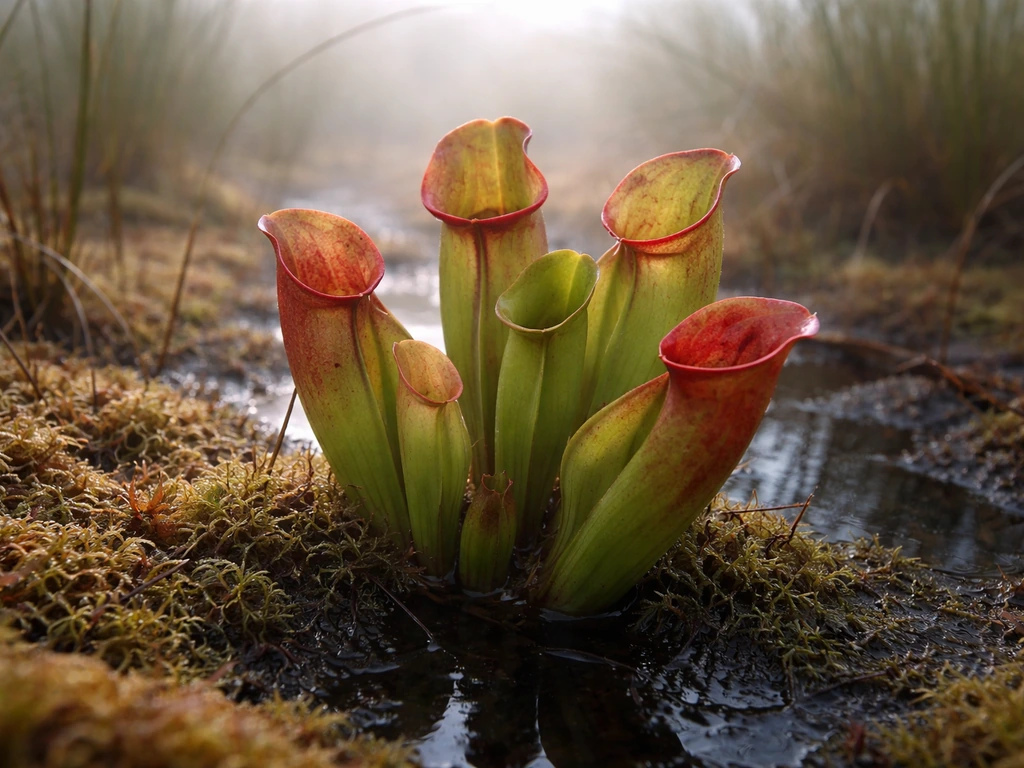
The most commonly grown species, Sarracenia purpurea (the purple pitcher plant), is widely available at specialist nurseries, carnivorous plant vendors, and even some garden centers for under $20. That said, rarity is a sliding scale: some species are federally protected in the wild, a handful require CITES permits to trade internationally, and certain Nepenthes (tropical pitcher plants) are genuinely hard to source and grow.
If you want to add a pitcher plant to your garden today, the short version is: common species are easy to find and easier to grow than most people expect, as long as you match the growing conditions.
Is pitcher plant actually rare, and does it depend on where you are?
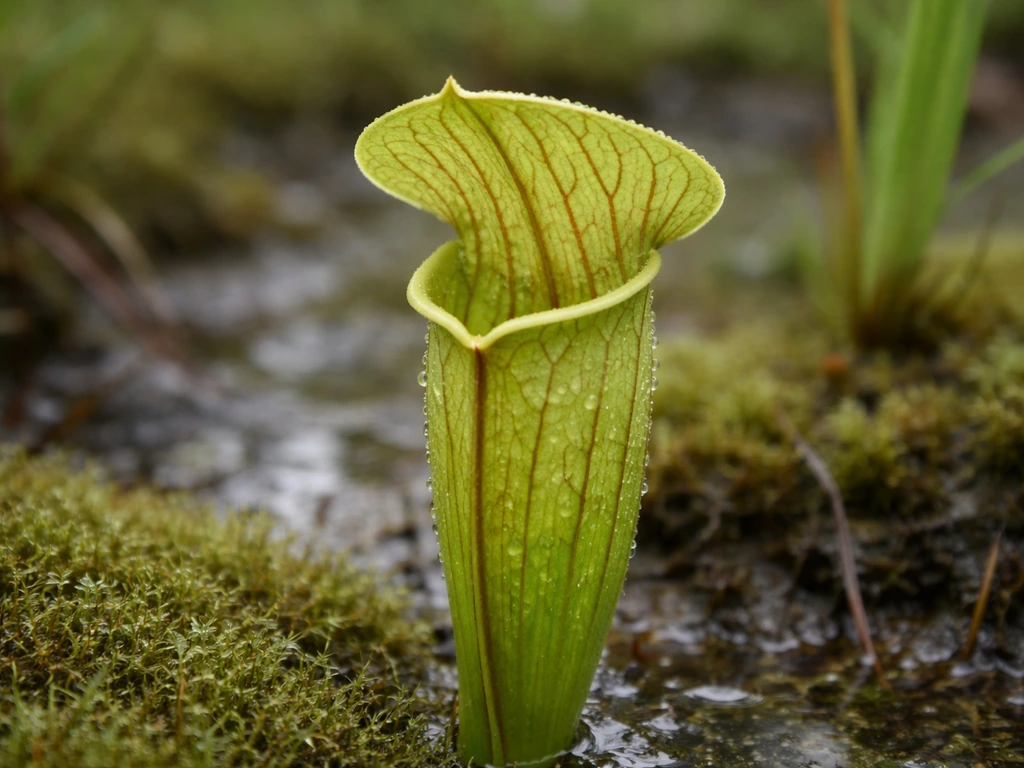
In the wild, yes, many pitcher plants are rare or threatened. Sarracenia oreophila (the green pitcher plant) is listed under CITES Appendix I, meaning international commercial trade is essentially banned to protect wild populations. Other Sarracenia species face significant habitat loss in the U.S. southeast. But wild rarity does not translate directly to garden rarity, because most plants sold legally are nursery-propagated, not wild-collected.
For gardeners in North America, Sarracenia purpurea is the easiest to find because it has the widest native range, tolerates cooler climates including Canada, and is extensively propagated in cultivation. In the UK and Europe, it is also commonly available and will overwinter outdoors in milder regions. Nepenthes, the tropical highland and lowland pitcher plants from Southeast Asia, are harder to find in general nurseries but are sold by specialist carnivorous plant growers. Nepenthes rajah and Nepenthes khasiana are on CITES Appendix I, making import/export tightly controlled. Nearly all other Nepenthes species fall under CITES Appendix II, which requires documentation for international trade but does not ban it outright.
In practice, if you are in the U.S. or UK, you will find a solid selection of nursery-grown Sarracenia and beginner-friendly Nepenthes without needing to navigate any permit requirements, because reputable domestic vendors handle the compliance side. USDA APHIS also enforces these CITES and ESA import/export rules through the requirement for businesses to have a USDA Protected Plant Permit under 7 CFR 355 USDA Protected Plant Permit for CITES/ESA-regulated specimens. Truly rare species like N. rajah or Sarracenia oreophila will either be unavailable commercially or very expensive, and that is by design.
How to identify pitcher plants and spot rare vs. common species
Pitcher plants fall into a few distinct groups, and it is worth knowing which you are dealing with before you buy, because their care requirements differ significantly. You may also notice that some flowering plants used as bedding, like parasol flowers, are often treated as one-time season plants in many gardens before you buy.
| Genus | Common name | Pitcher shape | Native range | Garden availability |
|---|---|---|---|---|
| Sarracenia | North American pitcher plant | Upright, trumpet-shaped tubes, often with a hood or lid | Eastern U.S. and Canada (S. purpurea extends north) | Very common; easy to source |
| Nepenthes | Tropical pitcher plant / monkey cup | Dangling cup-shaped pitchers on tendrils, often colorful | Southeast Asia, Madagascar, Australia | Moderate; specialists stock many species |
| Darlingtonia | Cobra lily | Cobra-head shape with translucent patches and a forked tongue | Oregon and northern California only | Uncommon but obtainable from specialist nurseries |
| Cephalotus | Australian pitcher plant | Small, round pitchers with ribbed lid, low to ground | Southwest Australia | Uncommon; available from specialty growers |
| Heliamphora | Sun pitcher | Simple funnel shape, no lid, from South American tepuis | Venezuela, Brazil, Guyana highlands | Rare in cultivation; mainly for advanced growers |
The most common mix-up is between Sarracenia species. S. purpurea has short, squat, purple-veined pitchers that sit in a rosette and partially fill with rainwater. S. leucophylla has tall white pitchers with dramatic red veining near the top. S. flava produces tall yellow-green tubes. If you buy a labelled plant from a reputable grower, you should get what you paid for, but an unlabelled 'pitcher plant' from a supermarket is almost always S. purpurea or a hybrid, not a rare protected species.
For Nepenthes, the pitcher shape and colour vary enormously between species, but the key visual identifier is that pitchers form at the end of leaf tendrils rather than forming the leaf itself. Lowland Nepenthes tend to have larger, rounder pitchers and need warm, humid conditions year-round. Highland species tolerate cooler nights and are often easier to keep as houseplants. If a plant is sold as 'Nepenthes' without a species name, assume it is a lowland hybrid until confirmed otherwise.
Why pitcher plants feel rare: the habitat requirements that trip people up
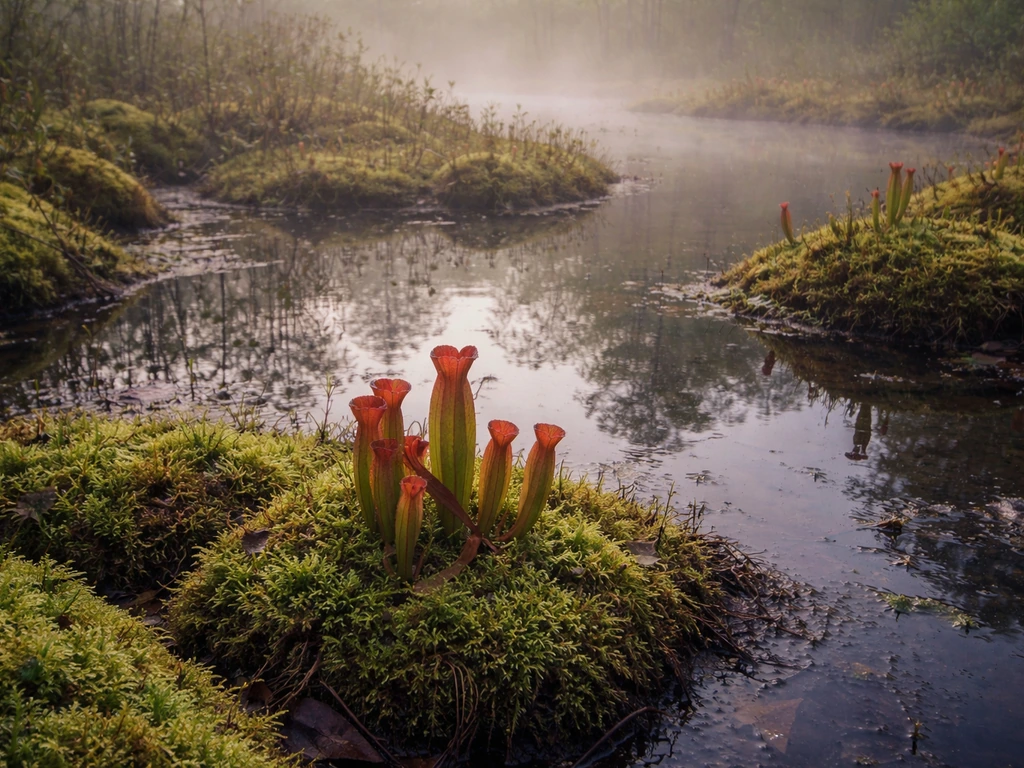
The reason pitcher plants feel rare in gardens has less to do with supply and more to do with conditions. They evolved in bogs and nutrient-poor wetlands where most other plants cannot survive, which means the typical garden environment is actually hostile to them. Get these factors wrong and the plant declines fast, which is why many gardeners give up and conclude the plant is just 'too difficult.'
- Water quality: Sarracenia and most other pitcher plants cannot tolerate tap water in most regions. Chlorine, fluoride, and dissolved minerals build up in the soil and essentially poison the roots. Only use rainwater, distilled water, or reverse-osmosis water.
- Soil: Standard potting mix is fatal. Pitcher plants need a nutrient-poor, acidic substrate. A 1:1 mix of peat moss and perlite or pure sphagnum moss is the standard. Never add fertilizer to the soil.
- Sunlight: Sarracenia need at least 4 to 6 hours of direct sun per day to produce healthy pitchers. In lower light, plants survive but pitchers become weak, pale, and less functional.
- Moisture: Sarracenia like to sit in a tray of water during the growing season, roughly 1 to 2 cm deep. They want permanently moist but not stagnant conditions. Letting them dry out is a common killer.
- Climate and dormancy: Temperate species like Sarracenia require a winter dormancy period of 3 to 5 months at near-freezing temperatures. Skipping dormancy weakens the plant and shortens its life.
- No fertilizer: Adding fertilizer causes root burn and kills the plant. Pitcher plants get their nutrients by trapping insects, not from the soil.
Tropical Nepenthes add another layer of complexity. Lowland species need temperatures above 20°C at night and high humidity year-round, which usually means a heated greenhouse or terrarium. If you are thinking about growing fluxweed in a greenhouse, the key is matching those temperature and humidity conditions consistently heated greenhouse. Highland Nepenthes are more forgiving but still need cool nights (around 10 to 15°C) and bright indirect light. This is why Nepenthes feel rarer: the conditions are harder to replicate in a standard home garden compared to growing something like Sarracenia outdoors in a bog garden.
Where to get pitcher plants without supporting wild collection
Always buy from specialist carnivorous plant nurseries or certified vendors who propagate their plants in cultivation. If you’re wondering can you grow waratahs in brisbane, the key is choosing a sunny spot and getting the soil and watering right for this Australian native. Wild-collected pitcher plants are often illegal to sell (especially for Appendix I species like S. oreophila) and wild-dug plants rarely survive transplanting well anyway. Reputable suppliers will clearly label species and state that plants are nursery-propagated.
- Specialist carnivorous plant nurseries: These are the best starting point. In the U.S., vendors like California Carnivores and Sarracenia Northwest sell a wide range of species with full care information. In the UK, Hampshire Carnivorous Plants is well-regarded. Most ship plants safely with bare-root packaging.
- Online carnivorous plant communities and forums: Groups dedicated to carnivorous plants (on platforms like Reddit's r/SavageGarden) often run plant swaps and seed trades. This is a great way to get divisions of healthy, well-grown plants at low cost from growers who have been cultivating them for years.
- Seeds: Sarracenia seeds are available from specialist seed banks and growers. Seeds are cheap and legal to ship across most borders without CITES documentation (check your specific country's rules), but they are slow: expect 3 to 5 years before a seed-grown Sarracenia produces meaningful pitchers.
- Propagation from divisions: If you or a friend already has a Sarracenia, the plant produces offshoots (called rhizome divisions) that can be carefully separated in early spring before new growth starts. This is free, low-risk, and produces a plant that is already acclimated to your local climate.
- Avoid supermarkets and generic plant shops: These often sell mislabeled or unhealthy specimens in peat-heavy compost with tap water care instructions. The plants are usually alive when purchased but set up to fail.
How to actually grow pitcher plants at home: the setup that works
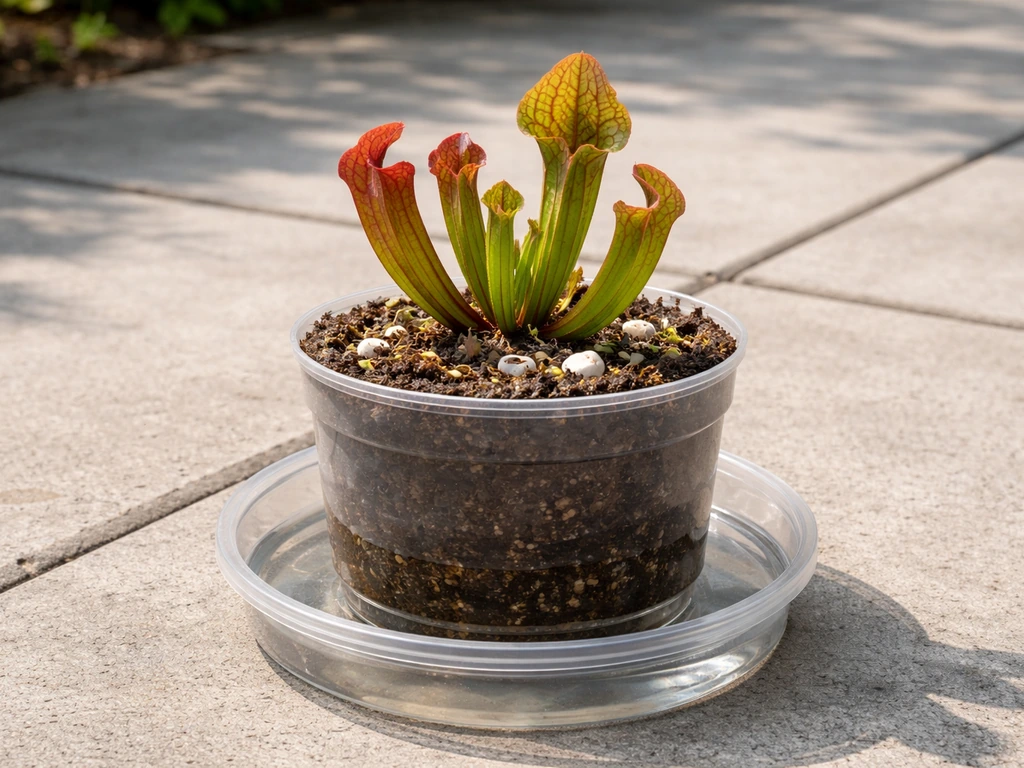
For Sarracenia, the setup is simpler than most people expect once you understand the logic. The goal is to recreate a low-nutrient bog: bright sun, acidic wet soil, and mineral-free water.
Container and substrate
Use a plastic pot with drainage holes, not terracotta (which leaches minerals) and not glazed ceramic (which can seal in too much moisture). A 15 to 20 cm pot is fine for a single Sarracenia. Fill it with a mix of 50% peat moss and 50% perlite, or use pure long-fiber sphagnum moss. Do not add compost, bark, or any standard potting mix. Some growers add a thin layer of live sphagnum on top, which helps retain surface moisture and signals to the plant that conditions are right.
The tray watering method
Place the pot in a plastic saucer or tray filled with 1 to 2 cm of rainwater or distilled water. The pot wicks water upward through the drainage holes. Refill when the tray runs dry. During peak summer, you may need to top up every 2 to 3 days in hot weather. In winter dormancy, reduce the tray water to just a light moistening every week or two, enough to prevent the substrate from drying out completely.
Light
Outdoors on a south-facing windowsill, patio, or in a greenhouse is ideal for Sarracenia. They need at least 4 hours of direct sun, and 6 or more produces the best pitcher development and the deepest colour. Indoors on a bright windowsill can work, but supplemental grow lighting (a full-spectrum LED positioned 15 to 30 cm above the plant, running 12 to 14 hours per day) makes a significant difference if natural light is limited.
Feeding and fertilizer
Do not fertilize the soil. If the plant is outdoors, it will catch insects naturally. If it is indoors and not catching anything, you can drop a small dead insect (a housefly or dried mealworm) into one or two pitchers every few weeks during the growing season. Do not use fertilizer pellets or liquid feed. Maxsea is sometimes used as a very diluted foliar spray by experienced growers, but for beginners the risk of overdoing it is high enough that it is better to skip it entirely.
Dormancy for temperate species
Sarracenia need a cold dormancy from around November to February (in the northern hemisphere). Move plants to an unheated greenhouse, cold frame, or sheltered spot outdoors where temperatures stay between just above freezing and about 10°C. The plant will die back to the rhizome and look dead, which is normal. Do not bring it into a warm house for winter: this disrupts the dormancy cycle and weakens the plant over time. Resume normal watering and full sun in early spring when new growth appears.
Common problems and why pitcher plants fail
Most pitcher plant failures trace back to one of five mistakes. Knowing which one is affecting your plant makes diagnosis much faster. Horsetail typically grows best in moist soil and spreads in spring, with new shoots emerging as temperatures rise.
| Problem | What it looks like | Likely cause | Fix |
|---|---|---|---|
| Root rot | Plant collapses, rhizome is soft and brown, musty smell | Stagnant water, wrong substrate retaining too much moisture, or fungal infection | Remove rotted tissue, repot in fresh peat/perlite mix, reduce tray water depth temporarily |
| Pitcher browning and collapse | New pitchers turn brown before opening or shortly after | Tap water mineral buildup, low humidity during new pitcher development, or underwatering | Switch to rainwater or distilled only; mist developing pitchers in dry weather |
| No pitchers forming | Plant produces leaves but no pitcher traps | Insufficient light, plant in dormancy, or stressed after repotting | Move to brighter location; wait 4 to 8 weeks after repotting before expecting new pitchers |
| Yellowing leaves | Older pitchers yellow rapidly; new growth is pale | Overwatering in winter, tap water minerals, or root damage | Check root health; ensure correct dormancy watering schedule; switch water source |
| Mold on substrate surface | White or grey mold growing on the soil surface | Poor airflow and too much moisture on the surface layer | Improve ventilation; add a top layer of live sphagnum which naturally resists mold |
| Plant fails after repotting | Rapid decline within 2 to 4 weeks of being moved | Root disturbance combined with wrong substrate or water quality shock | Repot only in spring using correct substrate; keep plant in shaded spot for 1 week after repotting to reduce transplant stress |
Tap water is far and away the most common silent killer. The damage is cumulative: the plant looks fine for weeks, then suddenly collapses as mineral salts reach a toxic threshold in the substrate. If you have been using tap water and your plant is declining, flush the pot thoroughly with several litres of distilled water, then switch permanently. In some cases this reverses the damage; in severe cases you may need to repot into fresh substrate.
Realistic timeline and how to pick your first plant
If you buy a healthy, established Sarracenia in a 10 to 15 cm pot in spring (April or May in the northern hemisphere), you can expect new pitchers to open within 4 to 8 weeks of arrival, assuming good light and correct watering. By midsummer the plant should be actively catching insects. Colour and pitcher size improve gradually over 2 to 3 growing seasons as the rhizome grows. A well-kept Sarracenia can live for decades. If you are asking about a different plant like parasol flower, check whether it is treated as an annual or a perennial in your climate, since that determines whether it comes back each year.
From seed, the timeline is much longer. Sarracenia seeds need a cold stratification period of about 4 to 8 weeks before they germinate. Seedlings take 3 to 5 years to reach a size where pitchers are impressive. Seeds are a great low-cost option if you are patient, but if you want results this season, buy an established plant.
For your first plant, S. purpurea is the best starting point. It is the most cold-tolerant species, survives in a wider range of light conditions than most Sarracenia, and is forgiving of minor care mistakes. S.
leucophylla or S. flava are good second plants once you have the watering and substrate dialled in. If you want to try Nepenthes, start with a lowland hybrid labelled 'easy to grow' or 'beginner-friendly' from a specialist vendor rather than jumping straight to a highland species or anything approaching the difficulty of the truly rare specimens.
For the same reason that truly rare specimens can be hard to source, horsetail rarity in grow-a-garden guides usually depends on which type you mean and whether it is native, invasive, or protected in your area.
Other carnivorous and unusual plants like rafflesia and the ember lily follow similar patterns in grow-a-garden contexts: the rarity question often comes down to cultivation complexity rather than actual supply. If you have the bog setup working for pitcher plants, you may find it opens the door to a wider range of specialist plants that thrive in the same wet, acidic, low-nutrient conditions.
Quick troubleshooting reference
- Pitchers turning brown: check water quality first, then light levels
- No new pitchers in summer: almost always a light problem, move to a sunnier spot
- Soft, mushy base: root rot, repot immediately and cut away affected tissue
- Plant looks dead in winter: this is normal dormancy for Sarracenia, do not throw it out
- Yellowing all over in spring: tap water damage or mineral buildup, flush with distilled water and repot if severe
- Mold on soil surface: improve airflow and top-dress with live sphagnum
- Plant not catching insects indoors: manually add one small dead insect to a pitcher every 3 to 4 weeks during the growing season
FAQ
If I see “pitcher plant” at a regular garden center, is it likely to be rare or protected?
Usually it is not. Most unlabelled “pitcher plant” sales are Sarracenia purpurea or hybrids, because nursery chains avoid CITES-compliance complexity. If it is truly a protected species, it will be species-named and typically sold by specialist growers, not as a generic label.
Can I grow pitcher plants in normal potting soil just to get them started?
No, it usually fails over time. Pitcher plants need low-nutrient conditions, so standard compost or fertilizer-based mixes encourage rot and weak growth. Use the bog-style setup (acidic, mineral-free water, and peat/perlite or live sphagnum) so the plant is not living in “rich food.”
What water should I use, and how do I know if my water is the problem?
Use rainwater or distilled water. Tap water contains dissolved minerals that build up slowly, the plant often looks fine for weeks, then collapses suddenly. If your plant declines and you have been using tap water, a thorough flush with several litres of distilled water, then switching permanently, is the first troubleshooting step.
How can I tell whether I’m buying a lowland or highland Nepenthes?
Look for species name and the vendor’s care notes, because lowland and highland needs differ most in temperature and humidity. If the listing only says “Nepenthes” with no species, treat it as a lowland hybrid for planning purposes, meaning warm nights (not cool) and consistently high humidity are expected.
Do pitcher plants need fertilizer to grow big pitchers?
For Sarracenia, no. Fertilizing is a common mistake because the bog substrate is meant to be nutrient-poor, and extra salts can harm roots and pitchers. If the plant is indoors and not catching insects, add only a small insect occasionally, and avoid liquid or pellet feeding unless you are experienced.
Will a pitcher plant survive winter if I keep it by a window indoors?
For Sarracenia, not reliably. They need cold dormancy with short moistening and reduced “tray water” to prevent drying, and they should not be moved into a warm living room for winter. If you do not provide dormancy conditions, plants commonly weaken and produce fewer pitchers the following season.
How do I handle dormancy if temperatures fluctuate in my unheated space?
Aim for a stable cold range, roughly just above freezing up to about 10°C for typical northern-hemisphere dormancy. If it gets much warmer for long stretches, growth can restart too early. If it risks freezing solid, provide extra shelter (for example, a cold frame) so the rhizome stays alive without overheating.
How long should I wait after buying a new Sarracenia before I panic?
Most healthy, established plants purchased in spring open new pitchers within about 4 to 8 weeks, assuming light and water are correct. If pitchers do not appear after two months, check the basics first (sun hours, mineral-free water, substrate, and whether dormancy is being triggered at the wrong time).
Can I grow pitcher plants outdoors year-round, and how do I choose the right setup?
Yes for many Sarracenia in appropriate climates, especially S. purpurea, but they still need bright sun and correct watering. In hotter summers, you may need more frequent tray top-ups. In climates with hard freezes, use an unheated greenhouse, cold frame, or sheltered outdoor spot rather than a warm indoor location.
Is it safe to buy rare pitcher plants online, especially those described as hard to get?
Only if they are clearly nursery-propagated, species-named, and sold by a compliant vendor. If an offer seems suspiciously cheap for a protected or hard-to-source species, or if you cannot confirm propagation and labeling, skip it. Legal and survival odds are usually worse with wild-dug plants.
Next Article
Are Parasol Flowers One-Time Use? How to Get More Blooms
Find out if parasol flowers rebloom or are one-time, and learn care, deadheading, and seed steps for more blooms.