Birds of paradise (genus Strelitzia) grow natively in southern Africa, and if you want to grow one at home, the short answer is: they need warmth, sun, and well-drained soil. Get those three things right and you are most of the way there. The rest of this guide fills in the details, starting with where they actually come from in the wild, then walking through exactly how to recreate those conditions in your garden or a container.
Where Do Birds of Paradise Grow: Wild and Home Tips

Marcus Weir
24 Mar 2026
Which plant are we actually talking about?
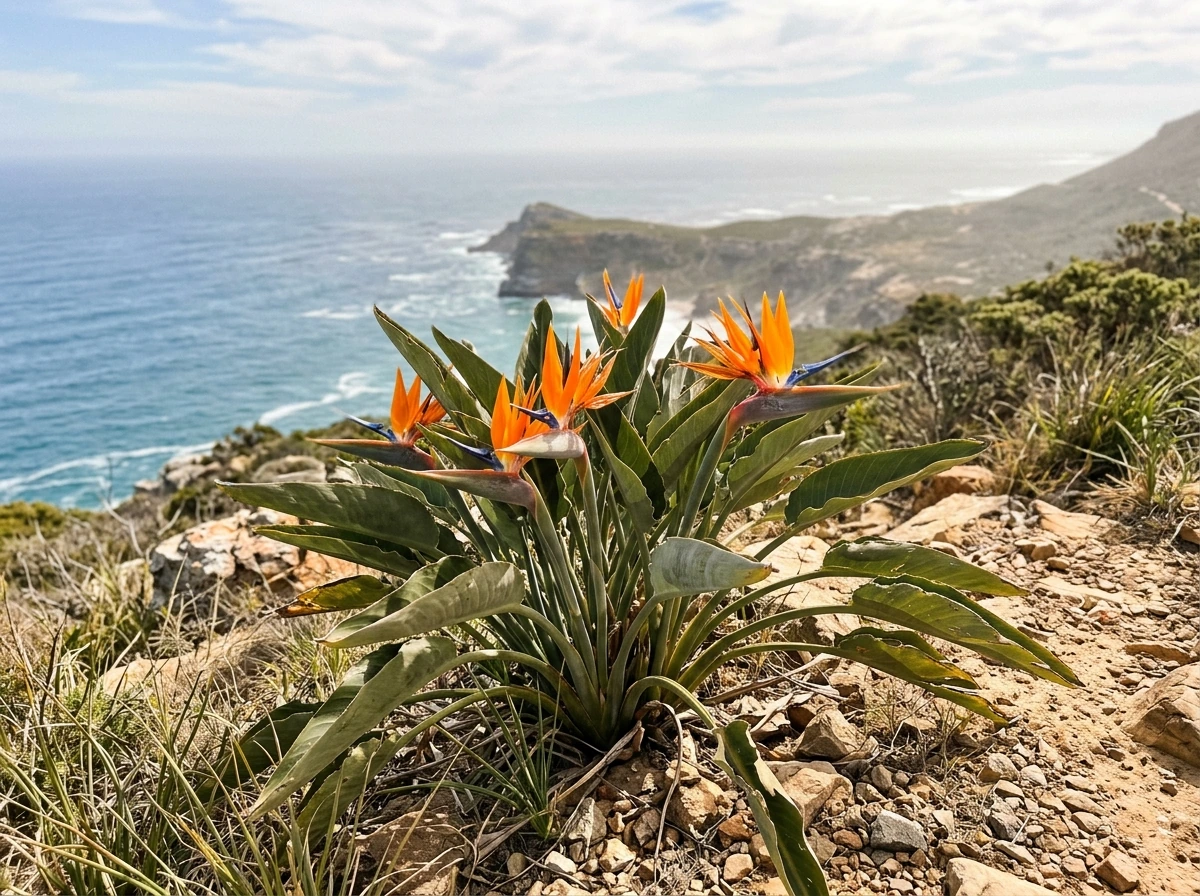
The name 'bird of paradise' most commonly refers to Strelitzia reginae, the species with the iconic orange and blue flower that looks like a tropical bird in flight. But there are five species in the Strelitzia genus, and a couple of them show up regularly in gardens and nurseries. Strelitzia nicolai (the giant white bird of paradise) grows into a large tree-like clump up to around 6 meters tall, while Strelitzia reginae stays compact at roughly 1 to 1.
5 meters. Two other species you might encounter are Strelitzia alba, a tall white-flowered species endemic to South Africa's Garden Route coast, and Strelitzia caudata, which grows in mountainous regions of Zimbabwe, Mozambique, and northern South Africa. Unless you specifically bought one of those rarer species, the plant on your patio or in your yard is almost certainly S. reginae or S.
nicolai, and the growing advice in this article covers both.
Natural habitat range and climate needs
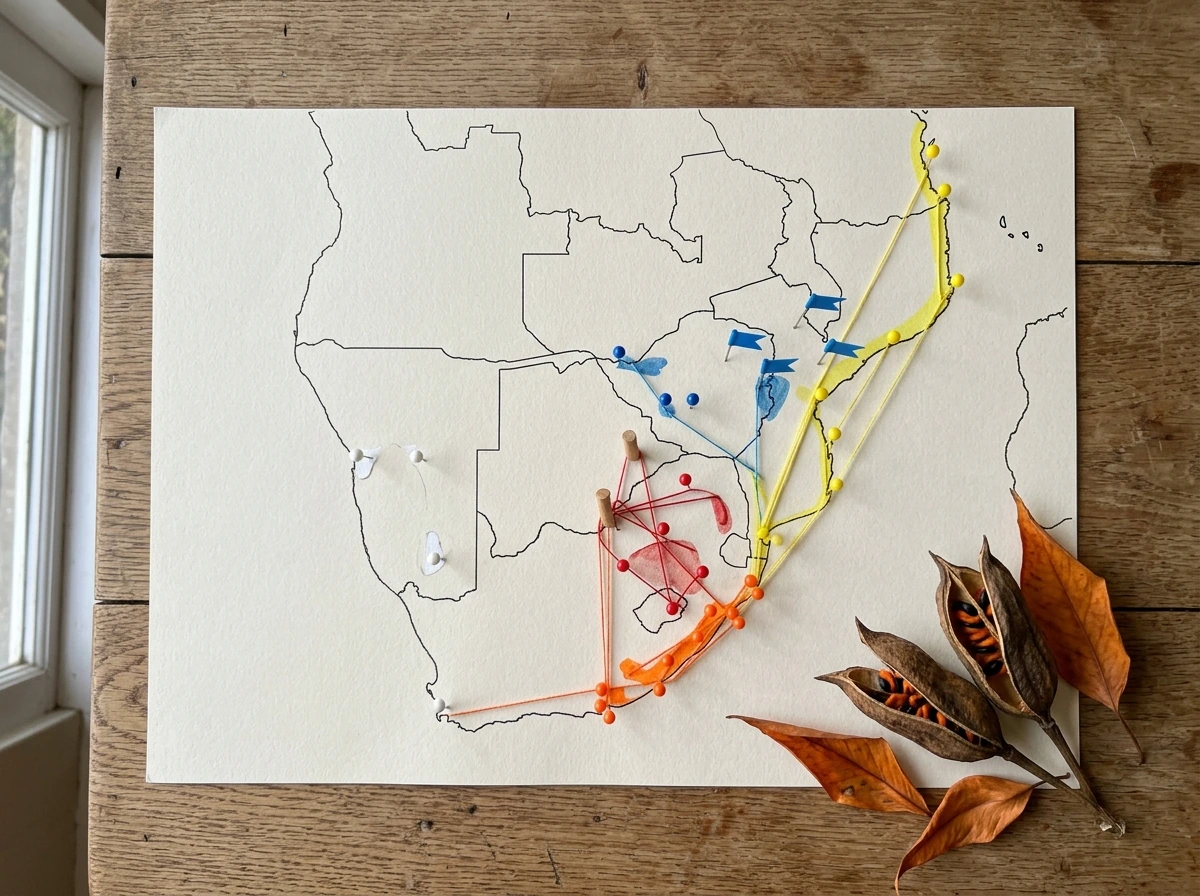
Strelitzias are native to a narrow climatic band in southern Africa where summers are warm and sunny, winters are mild, and rainfall is moderate but reliable. Strelitzia reginae, for example, comes from areas that receive roughly 1,000 to 1,250 mm of rain annually, falling mostly from spring through autumn with occasional winter rain. That pattern tells you something important: these plants are used to a wet growing season and a drier, cooler rest period, but never truly cold or frozen ground.
Cold is the biggest climate threat. Temperatures in the low to mid-20s °F (around -4 to -3 °C) can kill the plant to the ground, though established plants often resprout from the roots in spring. For consistent flowering and healthy foliage, you really want frost-free conditions. USDA Hardiness Zones 10 and 11 are where Strelitzia reginae thrives outdoors year-round without any protection. In cooler zones, growing in a container that comes indoors for winter is the practical solution.
Geographic locations where bird of paradise grows
In the wild, Strelitzias are concentrated in South Africa, with different species spreading into neighboring countries. Here is how the range breaks down across the genus:
| Species | Primary Wild Range | Habitat Type |
|---|---|---|
| Strelitzia reginae | Eastern South Africa (Eastern Cape, KwaZulu-Natal) | Rocky hillsides, open scrub, riverside margins |
| Strelitzia nicolai | Eastern South Africa (Richards Bay northward), coastal Mozambique, parts of Botswana and Zimbabwe | Evergreen coastal forest and thicket |
| Strelitzia alba | Garden Route coast, South Africa (Humansdorp District to Knysna, Western Cape) | Coastal forest, endemic to a small range |
| Strelitzia caudata | Chimanimani Mountains (Zimbabwe) south through Mozambique, northern South Africa, Eswatini | Mountain forest and woodland edges |
Outside their native range, birds of paradise have been widely planted in warm-climate regions around the world. California and Hawaii are considered the best locations in the United States for outdoor growth, where they bloom reliably and vigorously. Florida also supports them well enough to be worth planting in the landscape, with spring and summer flowering being typical there. They are also common in parts of Australia, the Mediterranean coast of Europe, and other subtropical and tropical regions worldwide.
Where they grow in the wild: forest, coast, or open ground?
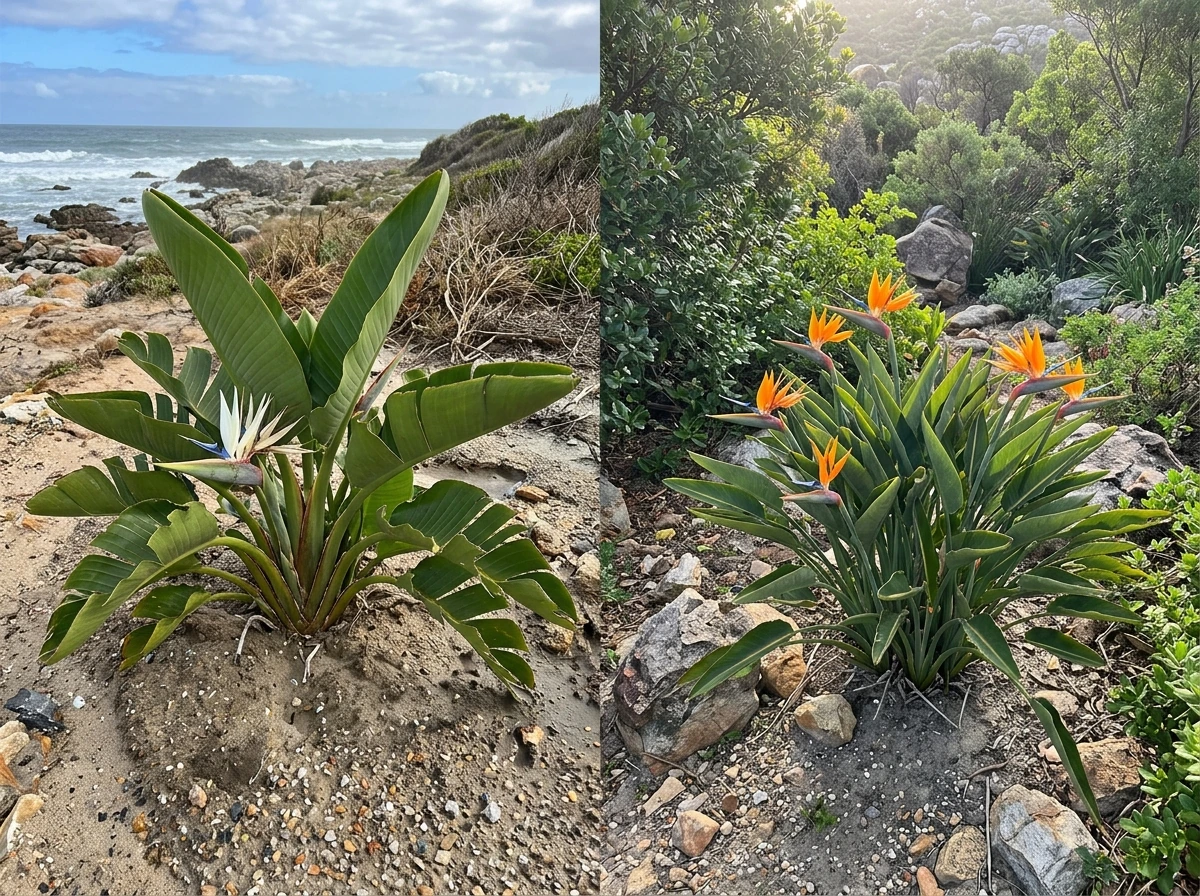
It depends on the species. Strelitzia reginae is not a forest plant. In the wild, it grows on open, rocky hillsides and along riverbanks where it gets full sun most of the day. That sun exposure is part of why it produces such vivid flowers.
Strelitzia nicolai, on the other hand, is genuinely a forest-edge species: it is restricted to evergreen coastal forest and thicket along the eastern coast of South Africa, from the area around Gonubie northward into southern Mozambique. Tree SA notes that S. nicolai is common in evergreen forests and dune bush near the coast, naturally occurring below about 600 m in the Eastern Cape and extending eastward and then northward through KwaZulu-Natal to regions including Richards Bay [S.
nicolai is restricted to evergreen coastal forest and thicket along the eastern coast of South Africa](https://treesa. org/strelitzia-nicolai/). It tolerates partial shade better than S. reginae, which makes sense given its forest background.
Strelitzia alba is even more specifically coastal, endemic to a small stretch of the Garden Route in the Western and Eastern Cape provinces of South Africa. Strelitzia caudata grows at higher elevations in mountainous regions, giving it slightly more cold tolerance than the coastal species. 1KSA’s species card for Strelitzia caudata reports that it occurs from the Chimanimani Mountains in Zimbabwe through Mozambique, the Northern Provinces of South Africa, and Eswatini Strelitzia caudata grows at higher elevations in mountainous regions. The takeaway for home growers is that S. reginae wants the sunniest spot you have, while S. nicolai has a bit more flexibility if your garden has some shade.
How to grow bird of paradise at home
Translating those wild habitat conditions into your garden or home is straightforward once you know what the plant is actually used to. Here is what matters most. what does nyjer seed grow into. will wild bird seed grow if planted
Light
This is the non-negotiable. For S. reginae, you need at least 3 to 4 hours of direct sunlight daily, and more is better. A south-facing position outdoors or a south-facing window indoors is the standard recommendation. S. nicolai tolerates part shade, but both species need good light to flower. If your plant has been sitting in a dim corner for months and refuses to bloom, light is almost certainly the reason.
Temperature
Outdoors year-round only works reliably in USDA Zones 10 and 11 (roughly, anywhere that stays above freezing through winter). If you are in Zone 9 or cooler, grow it in a container and bring it inside before nighttime temperatures drop into the 30s °F. The plant can handle a brief chill, but anything in the low to mid-20s °F is genuinely damaging. Even if it resprouts from the roots the following spring, cold damage sets your flowering timeline back significantly.
Soil and drainage
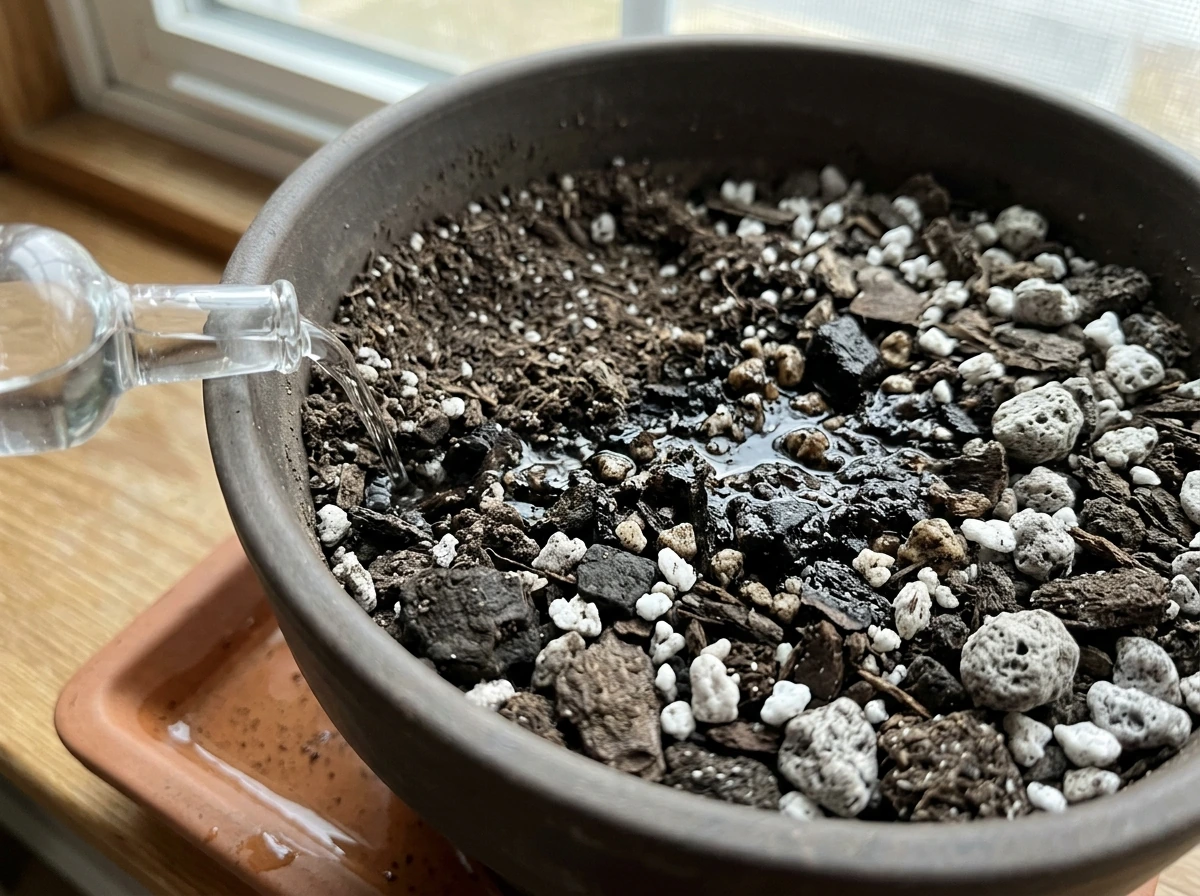
Well-drained soil is essential. These plants evolved on rocky hillsides and in coastal forests, not in waterlogged ground. In a container, use a deep, loamy, fertile mix that drains freely and does not stay wet between waterings. In the ground, amend heavy clay soil with coarse sand or grit before planting. For S. nicolai specifically, slightly acidic, evenly moist but well-drained soil is ideal. Soggy roots are a reliable way to kill a bird of paradise, and it happens more often than cold damage in many gardens.
Watering
Water regularly during the growing season (spring through summer), mimicking the seasonal rainfall pattern of their native habitat. Let the top inch or two of soil dry out between waterings, but do not let the plant fully dry out for extended periods during active growth. In winter, pull back significantly on watering. The plant is resting, it is not actively pushing out new growth or flower spikes, and overwatering during this period is one of the most common mistakes people make.
Planting and propagation basics
There are two reliable ways to propagate bird of paradise: division and seed. Division is faster and more predictable. seed is slower and takes considerably more patience.
Division
This is the method most gardeners use. Strelitzia reginae naturally develops multiple fans (clumps of stems from a shared rhizome), and you can divide these by carefully separating them at the base with a sharp spade or knife. S. nicolai forms spreading clumps that can reach up to 3.5 meters wide, so there is usually plenty of material to work with in a mature plant. Each division should have roots attached and at least a few healthy leaves. Plant divisions at the same depth they were growing before, water them in well, and keep them in a warm, bright spot. Expect a few months of establishment before you see new growth pushing out actively.
Growing from seed
Seed propagation works, but it is a long game. Germination takes 6 to 12 weeks and sometimes longer, even with good conditions. To speed things up, soak seeds overnight before sowing, or remove the orange aril (the fluffy covering around the seed) before planting. Sow into a warm, moist seed-starting mix and keep temperatures consistently warm. The bigger issue with seed is the timeline to first flower: expect to wait 4 to 7 years before a seed-grown plant blooms. That is not a reason to avoid it, but it is worth knowing before you commit.
Container planting
If you are in a cooler climate, containers are the practical solution. Use a pot that is large and deep enough to accommodate the fleshy root system, and choose one with drainage holes. Birds of paradise actually bloom more reliably when slightly root-bound, so do not rush to upsize the container. When you do need to repot, spring is the best time. S. nicolai grows substantially larger than S. reginae, so factor in how much indoor or sheltered space you have before choosing your species.
Common reasons it won't grow (and what to do)
Most bird of paradise problems come down to a small list of fixable issues. Here is how to diagnose what is going wrong:
- Not enough light: This is the number one reason a bird of paradise refuses to flower. If it is getting fewer than 3 to 4 hours of direct sun daily, move it to a brighter spot. A shaded corner or a north-facing window will produce leaves but no blooms.
- Too cold: If the plant was exposed to temperatures below 25 °F (-4 °C), even briefly, it may have suffered root or crown damage. Cut back dead foliage and give it time to resprout in spring. To prevent a repeat, bring container plants inside earlier in autumn.
- Overwatering: Soggy soil causes root rot, which shows up as yellowing leaves and mushy stems at the base. Pull back on watering immediately, improve drainage, and if the damage is severe, repot into fresh dry mix and let it recover.
- Wrong zone outdoors: If you are in Zone 9 or cooler and planted it in the ground expecting year-round survival, you may need to move it to a container for winter protection. In-ground plants in marginal zones can survive mild winters but will not bloom consistently.
- Root-bound container issues: Paradoxically, birds of paradise like to be somewhat root-bound for flowering, but if the plant is extremely cramped and the roots are circling or emerging from drainage holes heavily, it may need a slight size-up. Spring is the time to do this.
- Young plant patience: If you grew from seed or recently divided, the plant simply may not be old enough to flower. Seed-grown plants take 4 to 7 years to first bloom. Division-grown plants from mature stock typically flower sooner, often within a year or two of establishment.
- Nutrient deficiency: In containers especially, fertilize with a balanced slow-release fertilizer in spring and summer. A plant that gets no feeding over several years will slow down and may stop flowering.
One thing worth noting is that Strelitzia reginae naturally peaks in bloom during winter and early spring in its native South African seasonal cycle. Under garden conditions in Florida or California, spring and summer flowering is more typical. If your plant bloomed last year and seems slow this year, check whether it has had the right seasonal cues, particularly a slightly cooler, drier rest period in autumn and winter, which can actually trigger flower spike production when warmth and water return in spring.
FAQ
If I live where it does not freeze much, can I keep birds of paradise outdoors year-round in a protected spot?
Possibly, but protection has limits. Even brief exposure to low 20s °F (around -4 to -3 °C) can kill growth back. If you try it, use a microclimate that stays frost-free (heat-retaining wall, covered patio, wind shelter) and keep the roots in well-drained soil, because damp cold is more dangerous than dry cold.
Does birds of paradise need full sun to grow, or will it survive in shade?
They tolerate partial shade more if they are S. nicolai, but most will not flower well in dim light. If your plant is lush but not blooming, check for at least a few hours of direct sun daily and make sure it is not blocked by a taller plant as it matures.
What type of soil change actually helps if my yard has heavy clay?
Amend at planting, not just on the surface. Dig out enough soil to create a planting pocket and mix in coarse sand or grit to improve drainage, then avoid constant moisture around the roots. After planting, test by watering once and observing whether the soil stays wet for days.
How often should I water in winter if I keep it indoors?
Water less than you think, only enough to keep the mix from drying out completely. The key is to avoid frequent small waterings that leave roots wet. Let the top portion of the pot dry, then water thoroughly and drain completely, especially if indoor light is lower.
My bird of paradise is growing leaves but no flowers, what is the most common cause?
Insufficient seasonal cue and light. Many plants fail to bloom after spending months in low-light conditions or being kept wet during the supposed cooler, drier rest period. Create a slightly drier autumn to winter routine and resume regular watering when days warm and light strengthens.
Is it safe to put a newly planted or newly divided bird of paradise in direct sun immediately?
Give it time. After division or potting, keep it in warm, bright light and avoid harsh midday sun for the first couple of weeks, especially if the roots were disturbed. Once new growth shows, you can transition to the sunniest spot for better flowering.
Do birds of paradise handle salt air or coastal conditions?
They often do better near coasts than many tropicals, but drainage is still critical. For containers, salt can build up in the soil, so periodically flush with clean water and ensure the pot empties fully after watering to prevent root stress.
Should I remove dead flower parts or leaves to help it bloom again?
Remove only damaged or fully spent parts, and do it selectively. Cutting too aggressively can remove the plant’s energy and stress it, especially during the resting season. Focus on improving light and water cues first, then tidy as needed.
When propagating by division, what size division gives the best chance of success?
Use divisions with roots attached and at least a few healthy leaves, and avoid tiny splits. Small divisions take longer to re-establish and may take more than one growing season to restart active growth, even if temperatures are ideal.
Next Article
Can Bird Seed Grow? How to Plant It and What to Expect
Learn when bird seed sprouts, how to plant it, and what it grows into plus troubleshooting for no growth.