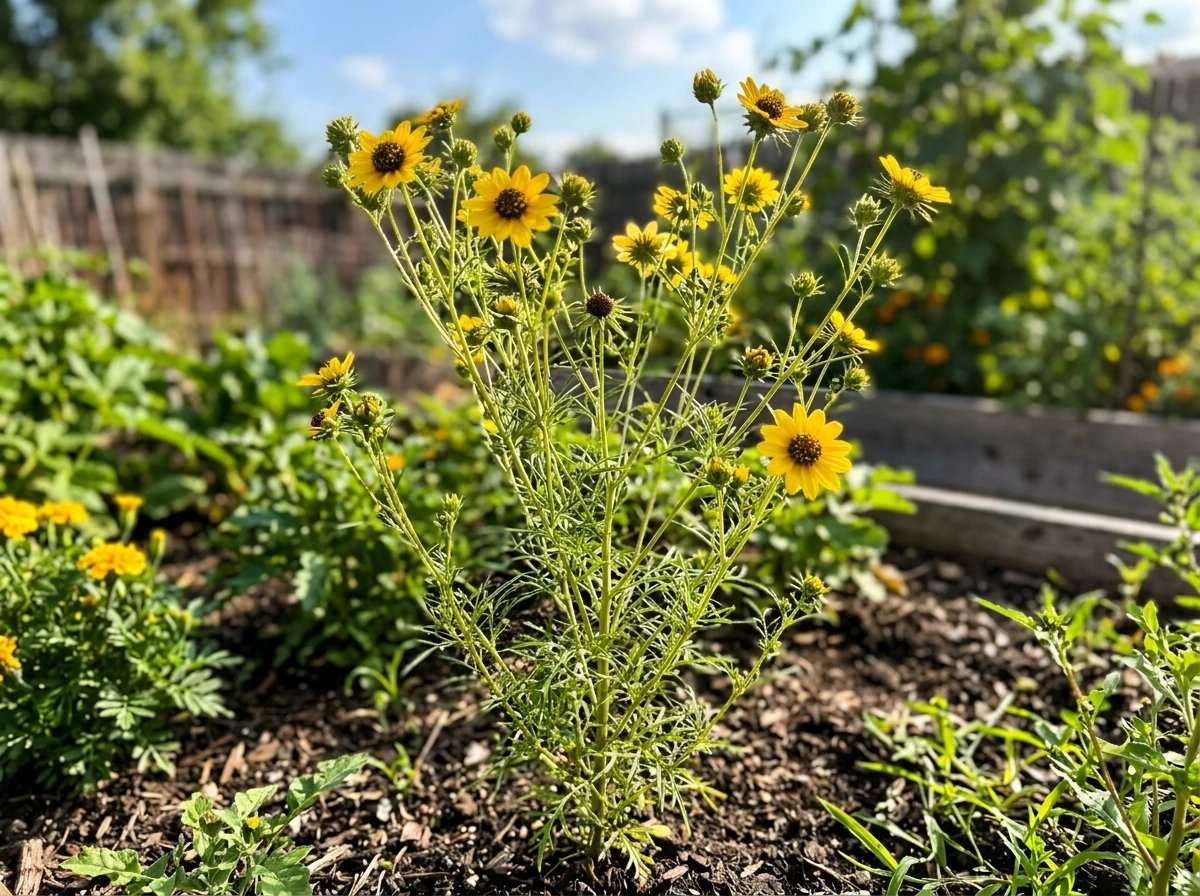
Nyjer seed grows into Guizotia abyssinica, a tall, bright-yellow-flowered annual herb in the daisy family (Asteraceae). If you have a bag of nyjer bird seed and you're wondering whether it will actually sprout, will wild bird seed grow if planted, the honest answer is: probably not, because virtually all imported nyjer sold in the U.S. is heat-treated specifically to prevent germination. This is also why many people ask, "can bird seed grow," but in most cases it won’t. But if you can get your hands on untreated seed, you absolutely can grow it into a striking garden plant that reaches up to 1.5 meters tall and produces a mass of cheerful yellow daisy-like flowers. will birdseed grow
What Does Nyjer Seed Grow Into? Planting and Care Guide

Marcus Weir
24 Mar 2026
What nyjer seed actually is
Nyjer is a trademarked brand name, registered by the Wild Bird Feeding Institute (WBFI), for the seed of Guizotia abyssinica. You'll also see it spelled niger, nyger, or thistle seed (though it has nothing to do with actual thistles). The plant is native to Ethiopia and other parts of East Africa, and it's cultivated commercially across Africa and India primarily as an oilseed crop. The WBFI requires that any packaging using the Nyjer® trademark also state the scientific name Guizotia abyssinica, so that's the name to look for if you're tracking down ungerminated seed for growing.
Botanically, Guizotia abyssinica is an erect, stout, branched annual herb. Annual means it completes its entire life cycle in one growing season: germinate, grow, flower, set seed, and die. That's actually good news for gardeners because you don't have to wait years to see results. What you get at the end of a successful season is a bushy plant covered in small, bright yellow flower heads that look very much like miniature sunflowers, which makes sense since both plants are members of the same family.
Will nyjer bird seed actually germinate?
This is the critical question, and the answer depends entirely on how the seed was treated before it reached the bag. Under USDA import regulations, blank" rel="noopener noreferrer">all nyjer seed brought into the United States must be heat-treated to prevent the introduction of foreign weed species. The WBFI documents the treatment schedule as heating at 248°F (120°C) for fifteen minutes. That kind of heat destroys the seed embryo. The seed is nutritionally intact (birds still love it) but it cannot germinate. You can plant it, water it, give it ideal conditions, and nothing will come up. If you’re wondering will birdseed grow outdoors, treated nyjer seed like this typically will not, so you may need viable, untreated seed instead.
This is also why you rarely see a weedy mess under your nyjer feeder even after seed accumulates on the ground, whereas sunflower or millet feeders can absolutely produce unwanted seedlings. The heat treatment is doing its job. So before you invest time in planting, it's worth doing a quick viability check.
How to test if your nyjer seed is viable
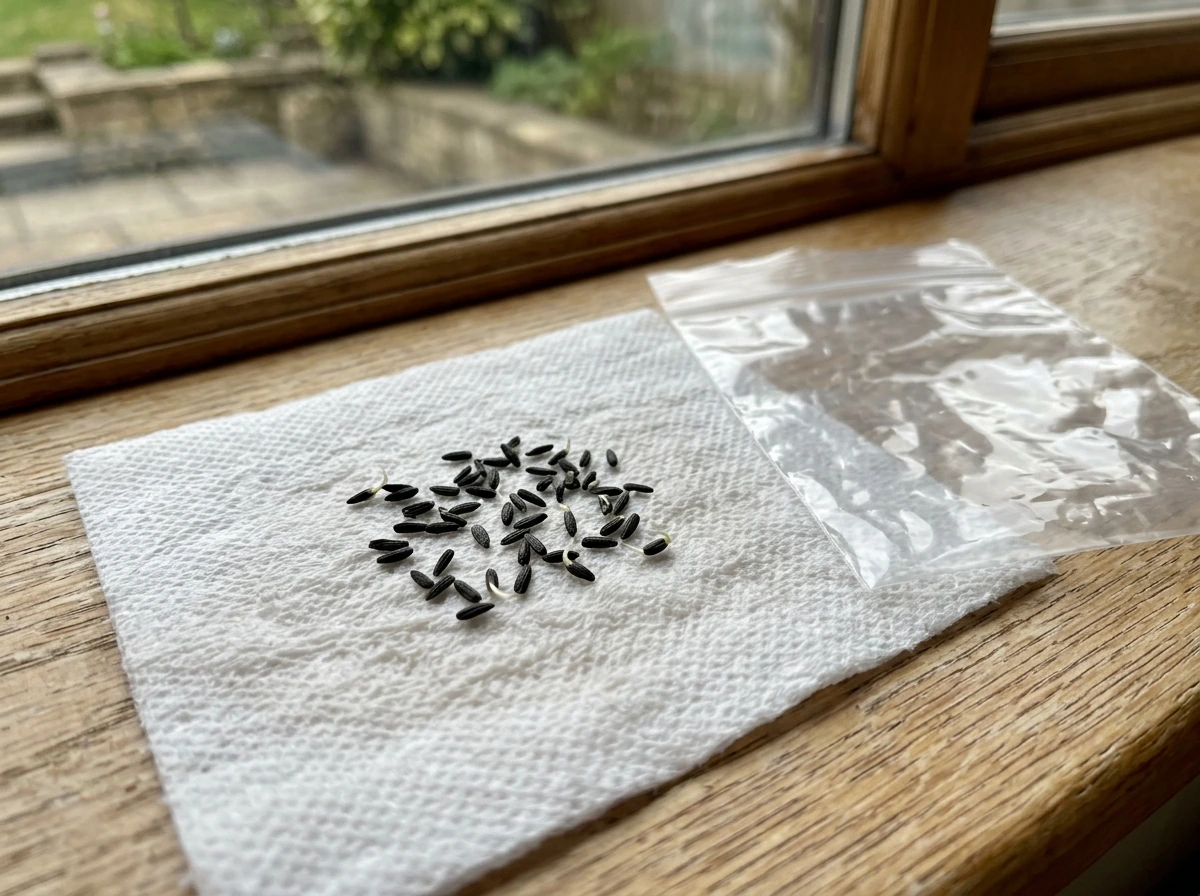
The simplest home test is the damp paper towel method. Take 10 seeds, wrap them in a moist paper towel, seal them in a plastic bag, and leave them somewhere warm (around 25°C or 77°F) for about a week. If any sprout, your seed has at least some viable fraction. With typical bagged birdseed, expect zero germination. If you're serious about growing Guizotia abyssinica, source fresh, untreated seed from a specialty seed supplier rather than relying on bird feeder bags.
Professionals use a tetrazolium (TZ) test, which stains live seed tissue and gives results in 24 to 48 hours, but that's a lab technique. For a home grower, the paper towel test gets you the same practical answer: sprout or no sprout.
What the plant actually looks like as it grows
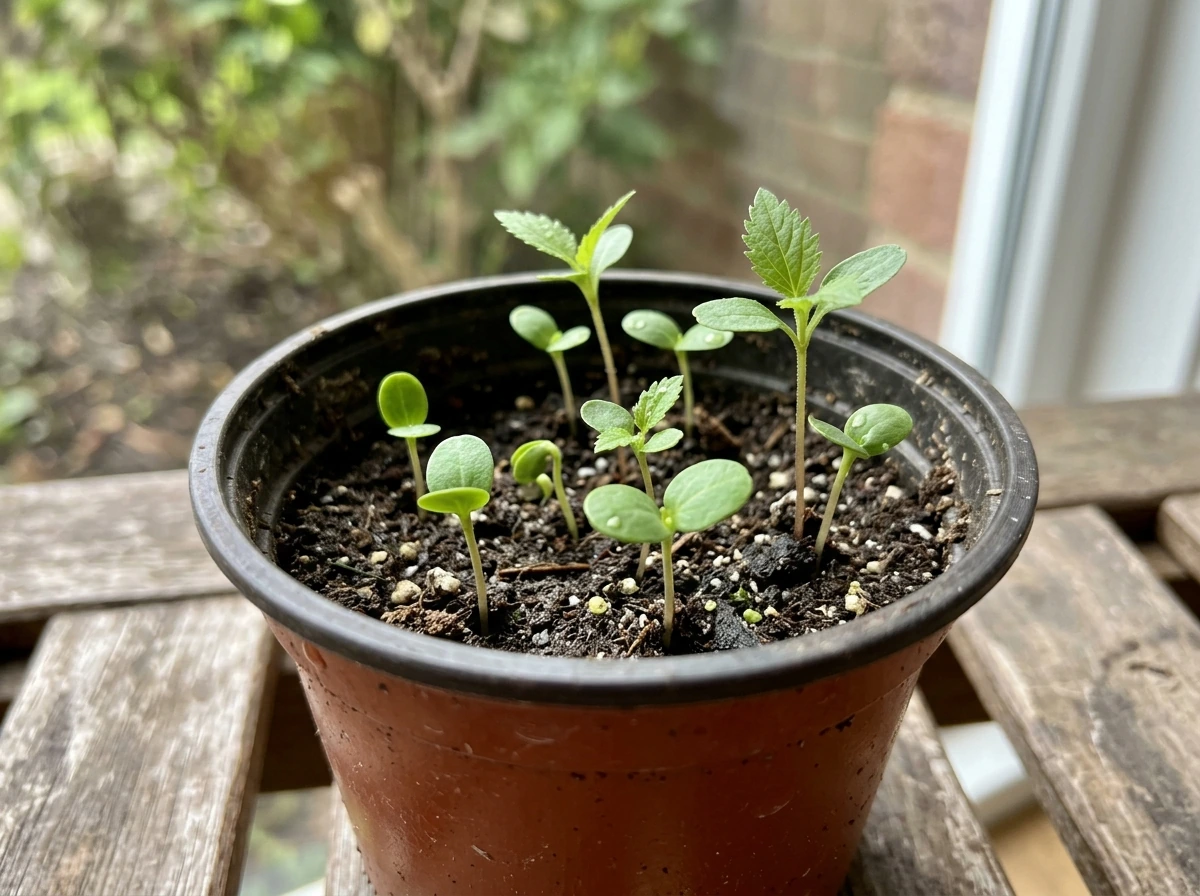
If you do get viable seed to germinate, here's what to expect at each stage. Germination in warm conditions (around 25°C) can happen in as little than 3 to 4 days. You'll see a thin, upright seedling with small, slightly rough leaves. For the first few weeks it grows slowly and looks fairly unremarkable, just a green upright stem with paired leaves. By around four to six weeks, it starts to branch and fill out. The plant has a stout central stem with multiple branching side shoots, and leaves that are opposite, lance-shaped, and feel a little coarse to the touch.
At maturity, Guizotia abyssinica stands between 0. 5 and 1. 5 meters tall, with most well-grown plants in a home garden settling around 1 to 1. 2 meters under good conditions.
The flower heads are capitula, which is the botanical term for the composite daisy-type heads you see in sunflowers and coneflowers. blank" rel="noopener noreferrer">Each head is about 1 to 3 cm in diameter, with bright yellow ray florets (the strap-shaped outer petals) surrounding a central cluster of yellow disk florets. But if you are wondering what color yellow chicks grow up to be, the answer is that they do not apply here because nyjer is a seed, not a type of bird what color do yellow chicks grow up to be.
They open in sequence from the outer florets inward, so a single head has a bloom period of several days. A mature plant in full flower is genuinely ornamental and will attract pollinators, particularly bees, which is relevant because the plant needs bee pollination to set seed reliably.
How to plant nyjer for the best chance of germination
Assuming you've sourced viable, untreated seed, here's how to give it the best start. Guizotia abyssinica is not a fussy plant in terms of soil, but it does have clear preferences around temperature and light.
Soil
Use well-draining soil with moderate fertility. Sandy loam or a standard garden bed mix works well. The plant is tolerant of poorer soils but does not like waterlogging. If you're starting in containers, use a peat-free potting mix and make sure the pot drains freely. Overly rich or compacted soil tends to promote leafy growth at the expense of flowering.
Light and temperature
This is a full-sun plant. Give it the sunniest spot you have. For germination, temperature matters more than you might expect. Research shows that germination is significantly hampered below 15°C, while 20°C to 30°C is the effective range, with around 25°C (77°F) being close to ideal. A preferred growing temperature range is roughly 16 to 20°C for vegetative development. In practical terms: don't start seeds outdoors until your soil temperature is reliably above 15°C. In most temperate climates that means late spring, typically late April to May in the Northern Hemisphere.
Sowing depth and method
Nyjer is a small seed, so sow it shallowly, about 1 cm (roughly half an inch) deep. Direct sowing outdoors works fine once temperatures are right. You can also start seeds indoors 3 to 4 weeks before the last frost date and transplant after hardening off. Either way, water gently after sowing so you don't displace seeds.
Caring for your nyjer plant as it grows
Watering
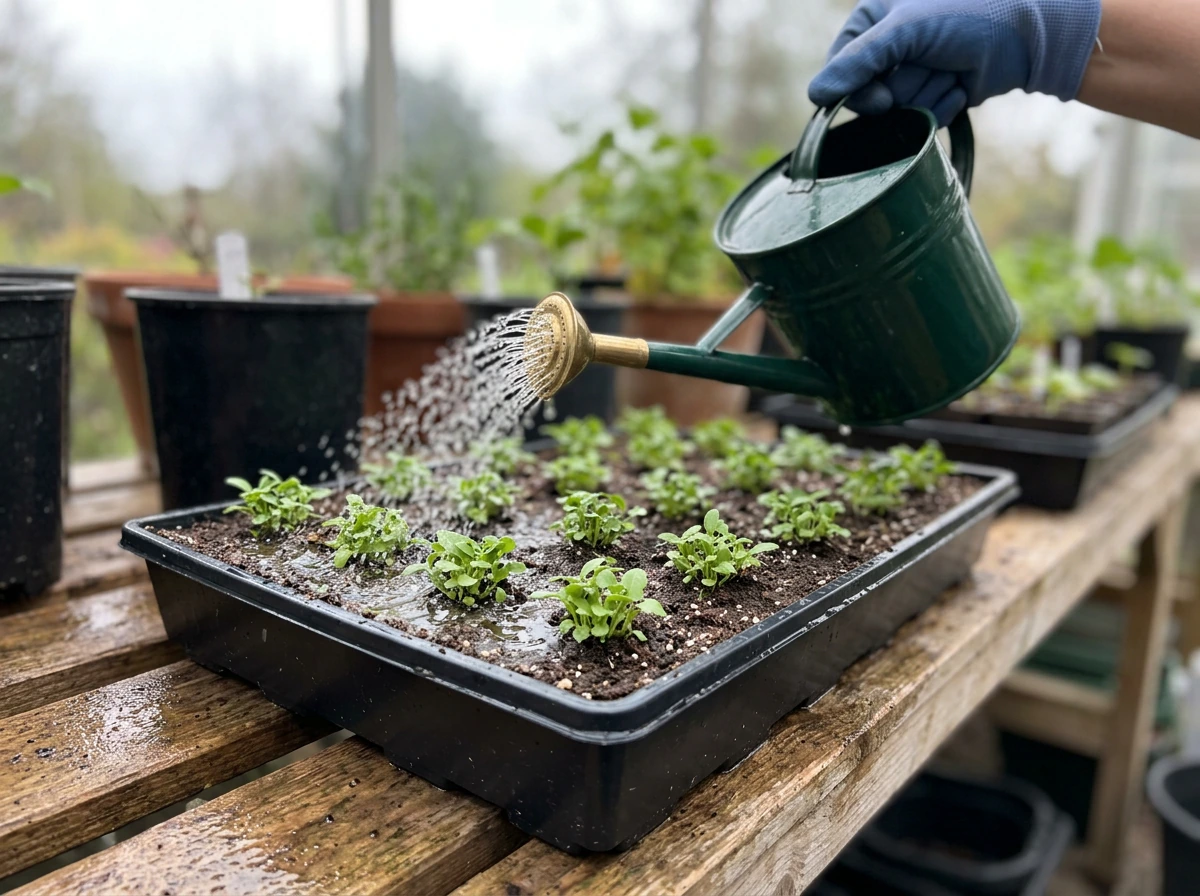
Keep the soil consistently moist but not wet during germination and early establishment. Once the plant is a few weeks old and has developed a proper root system, it becomes moderately drought-tolerant. Water deeply but infrequently rather than giving it a light sprinkle every day. In hot summer conditions, check soil moisture every two to three days. Soggy soil at any stage is a bigger risk than dry soil.
Thinning and spacing
If you direct-sowed in a row or scattered seed, thin your seedlings at around 15 days after germination, once they have their first set of true leaves. Thin to approximately 10 cm between plants at this stage. As plants grow larger you can thin further if they seem crowded, aiming for roughly 20 to 30 cm between mature plants. Crowded plants compete for light and air circulation, which can reduce flowering and invite fungal issues. Thinning feels wasteful but it genuinely improves results.
Other care notes
- No regular fertilizing is needed if your soil is reasonably fertile. A single application of balanced granular fertilizer at planting is plenty.
- The plant is generally pest-resistant. Aphids can appear on young shoots; knock them off with a strong water spray rather than reaching for chemicals.
- Staking taller plants (over 1 meter) in exposed or windy spots prevents stem breakage once the plant is loaded with flower heads.
- Avoid overhead watering once plants are in flower, as it can damage the delicate florets and reduce pollinator visits.
When it flowers and what happens after
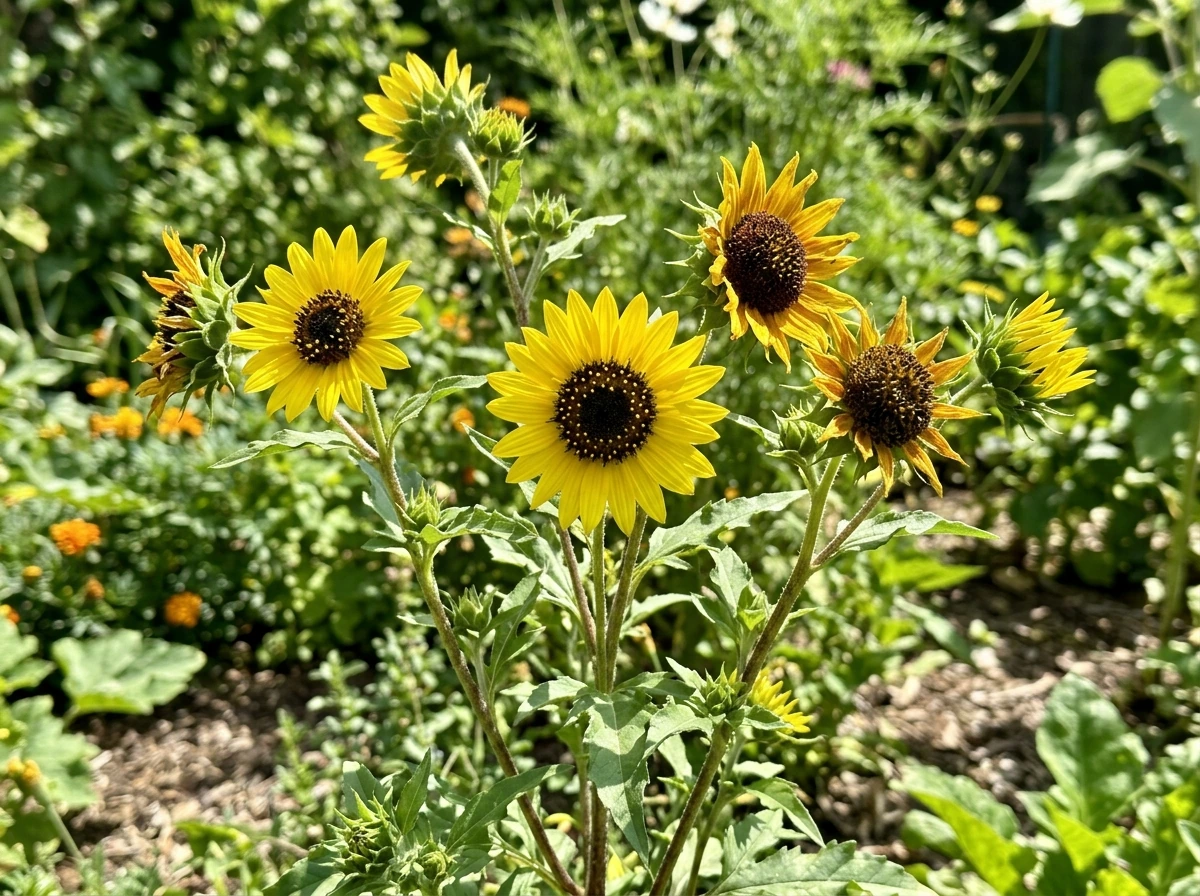
Guizotia abyssinica is a short-day plant, meaning it begins to flower when day length drops below around 12 hours. Greenhouse Management explains that for short-day plants, the “critical photoperiod” is the day length at or below which flowering is induced.
In practical terms in the Northern Hemisphere, this means flowering typically begins in late summer to early autumn, regardless of when you sowed. Field research reports flowering beginning roughly 90 days after sowing under favorable conditions, though in Ethiopian conditions the range can be 50 to 100 days to first flower and full maturity can arrive anywhere from 120 to 180 days after sowing depending on sowing date and climate.
For a typical temperate garden, expect flowers from August through October if you sow in May.
Once flowers appear, each head blooms progressively from the outer ray florets inward over several days. A well-established plant can carry dozens of flower heads simultaneously, and finches and other birds will visit for the developing seeds. After pollination (primarily by bees), small, slender black seeds develop in the center of each spent flower head. These are the nyjer seeds. If you want to harvest your own seed for next year, let the heads dry on the plant until the petals have fully dropped and the seeds feel firm, then cut the heads and dry them further indoors before storing.
One important note about seed production from birdseed-origin plants: even if you somehow got treated birdseed to sprout (extremely unlikely given the heat treatment), the WBFI specifically notes that any resulting plants would be sterile unless pollinated by bees, and seed production from such plants cannot be counted on. This is one more reason to start with properly sourced untreated seed if seed harvest is your goal.
Treated vs. untreated nyjer: what you're actually working with
| Feature | Heat-Treated Birdseed Nyjer | Untreated Nyjer Seed |
|---|---|---|
| Will it germinate? | No (embryo destroyed at 248°F/120°C) | Yes, under correct conditions |
| Available at bird supply stores? | Yes, widely available | No, needs specialty seed supplier |
| Good for growing plants? | No | Yes |
| Good for feeding birds? | Yes | Yes (but birds eat both) |
| Expected germination time | None | 3–7 days at 20–25°C |
| Risk of spreading weeds | Very low (sterilized) | Possible if seed escapes garden |
The bottom line: if you want to grow Guizotia abyssinica as a garden plant, do not start with the bag you bought at a pet store or garden center for your bird feeder. Buy untreated seed from an oilseed or specialty herb seed supplier. Once you have viable seed, this is an easy, rewarding annual that rewards minimal effort with a long season of yellow flowers and a built-in bird-attracting bonus when seeds mature in autumn.
Common myths worth clearing up
- Myth: Nyjer is a type of thistle. It is not. It belongs to the daisy family (Asteraceae), and it is not related to thistles. The 'thistle seed' label stuck because goldfinches, which love actual thistle seeds, also love nyjer.
- Myth: Nyjer bird seed will sprout under your feeder and cause weeds. Because imported birdseed nyjer is heat-treated, it almost never sprouts. This is by regulatory design.
- Myth: If you plant nyjer bird seed it just needs more time to germinate. More time will not help. The heat treatment is irreversible. If the embryo is dead, no amount of water, warmth, or waiting will bring it back.
- Myth: Nyjer plants require tropical conditions. While native to Africa, Guizotia abyssinica grows perfectly well in temperate summers as long as it gets full sun and warm soil temperatures above 15°C.
- Myth: The plant will produce lots of seed without bees. Bee pollination is important for reliable seed set. If you want seed production, plant in a spot that gets good pollinator traffic and avoid pesticides nearby.
FAQ
Why won’t my nyjer seed sprout even though I planted it correctly?
The most common reason is that imported nyjer is heat-treated to prevent germination, so the embryo is destroyed. If nothing sprouts after 7 to 10 days at warm temperatures, it is usually nonviable rather than a planting-depth or watering issue.
Can I use bird feeder nyjer to grow a plant for flowers, even if it is unlikely to sprout?
You can try if you want, but in most cases it will not grow at all because the seed is treated for weed prevention. If you want guaranteed plant growth, use seed that is explicitly sold as untreated Guizotia abyssinica.
How warm does the soil need to be for nyjer (Guizotia abyssinica) to germinate?
Germination is greatly reduced below about 15°C (59°F). Aim for consistently warmer conditions, roughly 20°C to 30°C, and in temperate areas start outdoors only when the soil temperature has reliably passed that threshold.
What if I start nyjer indoors, will it flower sooner?
It can, but only if your seedlings establish early and you still provide full sun. Even with early starts, Guizotia abyssinica tends to flower as a short-day plant when day length drops, so the main timing shift is usually earlier vegetative growth, not drastically earlier blooms.
Does nyjer need fertilizer to bloom well?
Not usually, because overly rich soil can push leafy growth at the expense of flowering. Use moderate fertility, and if plants look lush but few flower heads form, reduce feeding and ensure they are in full sun with adequate spacing.
How deep should I sow nyjer seed, and what happens if I bury it deeper?
Sow shallowly, about 1 cm (half an inch). If you bury much deeper, small seeds often struggle to reach the surface, and seedlings may fail even when seed is viable.
Do I need to thin seedlings, or can I leave them crowded?
Thinning improves flowering and airflow. If you skip it, plants compete for light and can stay smaller with fewer flower heads, and the denser canopy can raise the risk of fungal problems.
Is it possible to harvest seeds from the plants I grow for next year?
Yes, if your plants are producing fertile seed, but pollination is key. Since pollination is primarily by bees, isolated gardens without pollinators may produce fewer viable seeds, so you may need to encourage pollinators or ensure bee access.
Will nyjer plants grown from birdseed be able to set seed?
Even if treated seed somehow germinated, WBFI notes those plants would be sterile unless bees pollinate them, so seed set may not be reliable. For dependable seed harvesting, start with properly sourced untreated seed.
How can I tell if my nyjer seed is viable before I plant a whole bed?
Do the damp paper towel test with about 10 seeds, keep them warm around 25°C (77°F), and check after about a week. Any sprout indicates at least some viable seed fraction, but if none sprout, expect near-zero germination in the garden.
Next Article
Where Do Birds of Paradise Grow: Wild and Home Tips
Find where birds of paradise grow in the wild and how to recreate warm light, drainage, and watering at home.