Yellow chicks most commonly grow up to be white, buff, or light golden adults, but that's only part of the story. The actual adult color depends heavily on the breed, the genetics behind the yellow down, and even the sex of the bird. Yellow down at hatch is one of the least reliable color predictors in poultry keeping, and a lot of backyard keepers find that out the hard way when their 'yellow' chicks molt into something completely unexpected. Here's what you actually need to know to make a solid, informed guess, and what to do when guessing isn't good enough.
What Color Do Yellow Chicks Grow Up To Be? Adult Plumage Guide

Marcus Weir
24 Mar 2026
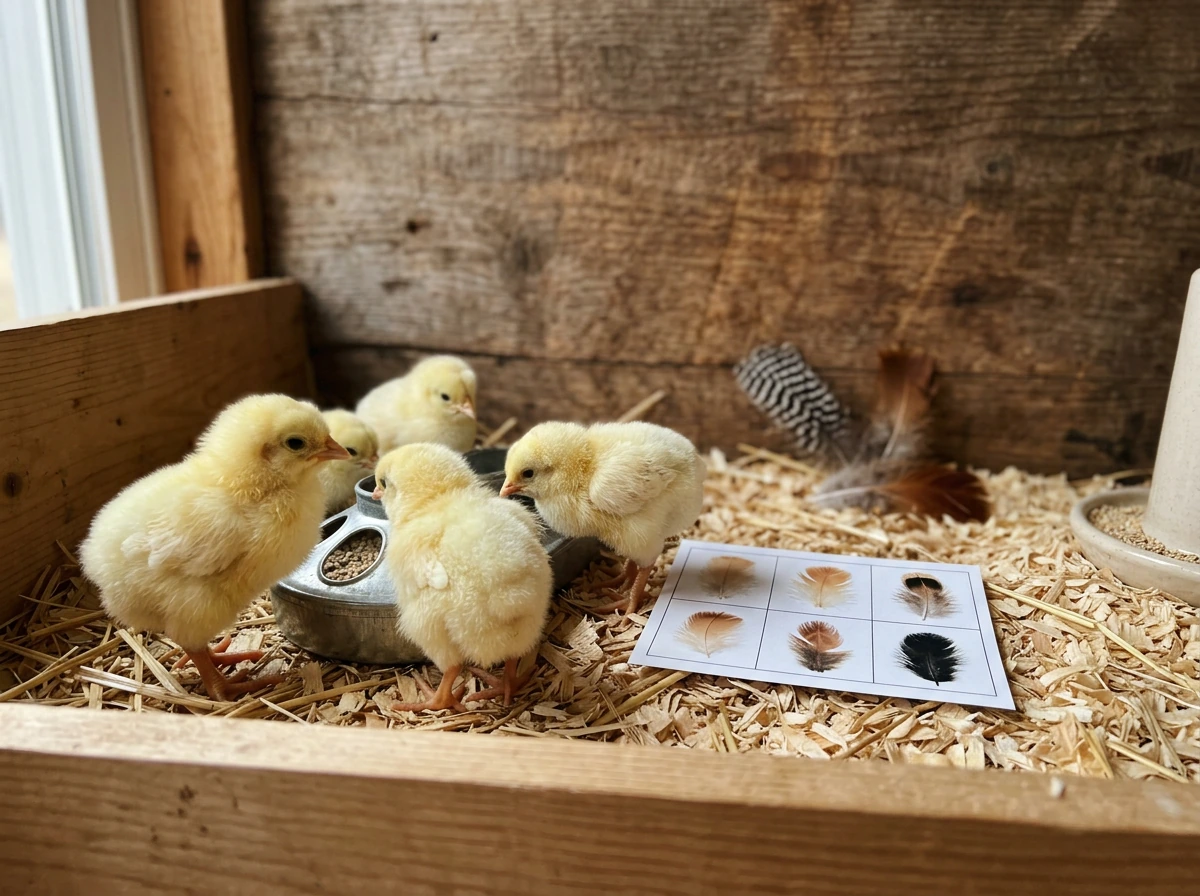
Typical adult colors for yellow chicks, broken down by breed
Yellow down at hatch shows up across a wide range of breeds, and the adult outcomes vary a lot. The connection between that fluffy yellow exterior and the adult plumage really comes down to which breed you're working with. Here are the most common scenarios you'll encounter.
Rhode Island Reds
Rhode Island Red chicks are often described as having an almost golden down coloring at hatch. Meyer Hatchery notes their skin color is yellow, and OSU Extension materials describe them as hatching 'buttery gold' (males) or 'reddish-gold' (females). Despite that yellowish start, adults develop into a dark mahogany red, often with some black in the tail. So if you've got a golden yellow chick that came from a RIR line, expect a deep reddish-brown adult, not a yellow or white one.
Buff Orpingtons and buff varieties
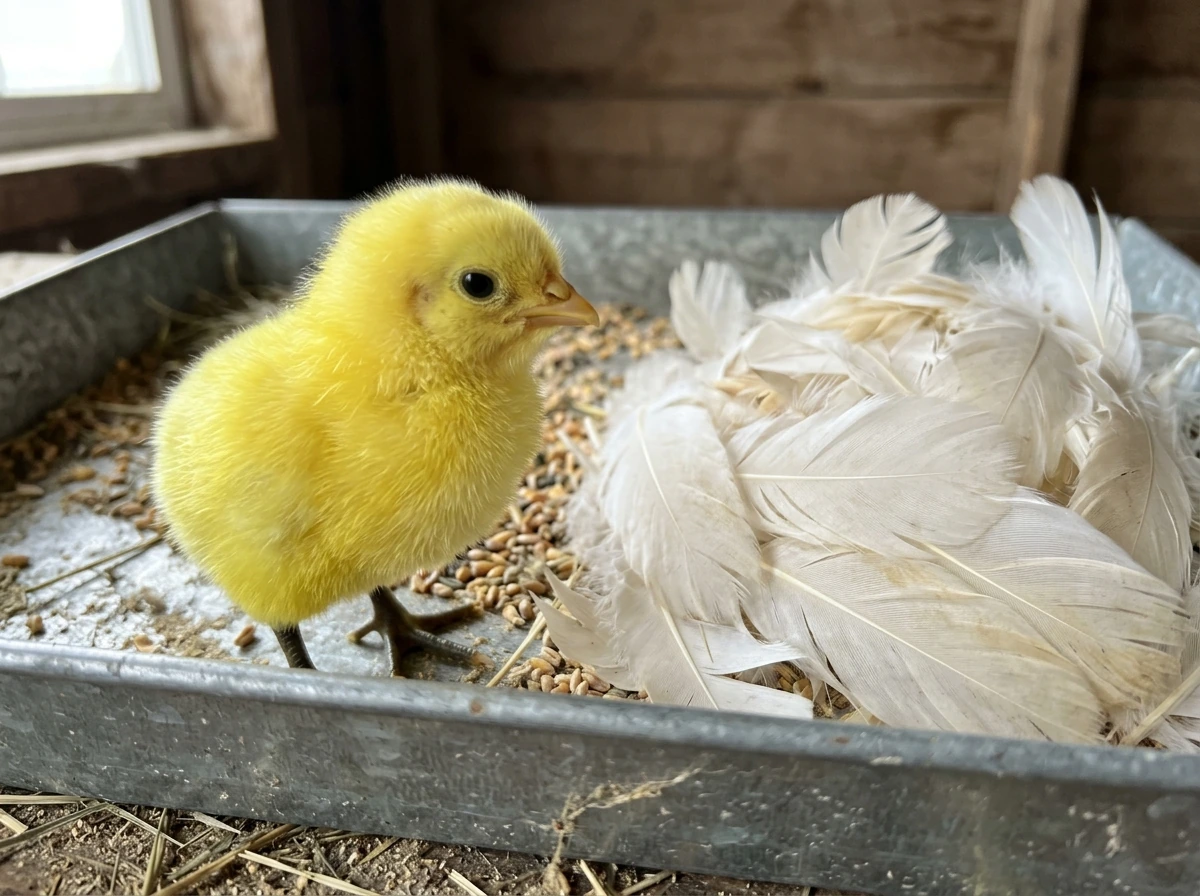
Buff Orpingtons hatch with a soft, warm yellow down that actually does carry through into adulthood in a meaningful way. The buff coloring in adults is essentially a diluted reddish-gold, so a true buff variety will generally deliver on the promise of that yellow down. If you're buying from a reputable hatchery and the chick is labeled as Buff Orpington, you can reasonably expect a warm golden-buff adult.
White Leghorns and other white breeds
Many white-feathered breeds hatch yellow. White Leghorns, White Plymouth Rocks, and white Cornish crosses all start with that bright canary-yellow down. Genetically, 'complete white' is associated with no visible melanin pigment in feathers, and the yellow down is simply the pigment present in the down layer before adult feathers take over. These birds grow up to look nothing like their yellow start, ending up pure white.
Red and Golden Sex Links
Here's where it gets interesting. Red Sex Link pullets hatch red or buff, while cockerels hatch white. These are hybrid crosses (often Rhode Island Red rooster over Delaware hen, per Cackle Hatchery), specifically bred so that hatch color tells you the sex right away. If you have a buff or reddish-yellow pullet from a sex-link cross, she'll grow into a reddish-brown or buff hen. The white cockerels grow into white or light-colored roosters. Sex-link chicks are one of the few cases where hatch color actually gives you reliable information.
What yellow chicks usually do NOT become
A yellow chick is unlikely to become a barred (black and white striped) adult, since barred breeds like Barred Plymouth Rocks hatch dark gray to black with white spots, not yellow. Similarly, blue/gray breeds like Ameraucanas don't hatch yellow. If a hatchery has labeled your chick correctly, a yellow hatch color generally rules out those darker, patterned adult outcomes.
Why yellow down is a rough clue, not a guarantee
The core issue is that chick down and adult feathers are two completely different structures, and their colors are controlled by separate biological processes. Down color reflects the melanin pigment (or lack of it) deposited during embryonic development, while adult feather color depends on melanin synthesis happening in feather follicles across multiple molt cycles after hatch. Research on bird integumentary melanins explains that there are two main melanin types involved: eumelanin (which produces blacks, grays, and browns) and pheomelanin (which produces reddish-browns and buffs). A chick can have minimal eumelanin in its down but still produce heavy eumelanin deposits in adult feathers weeks later.
Timing matters a lot here. Melanin pathway genes like TYR, TYRP1, and DCT ramp up significantly during weeks 4 through 6 after hatch, which is when you'll start seeing stable pigmentation traits emerge. The first week post-hatch is dominated by early melanosome signaling, not the full melanin production chain. So the yellow you see on day one is a snapshot of a very early developmental stage, not a preview of the finished product.
There's also a practical reality: hatcheries sell mixed batches, mislabeling happens, and unless you know the lineage of both parents, you can't be certain what genetic color instructions are hiding in that fluffy yellow chick. Backyard poultry guides frequently warn that down color is one of the poorest predictors of adult plumage specifically because multiple unlinked color gene systems can all produce yellow down while pointing toward completely different adult outcomes.
How to predict adult color from early signs
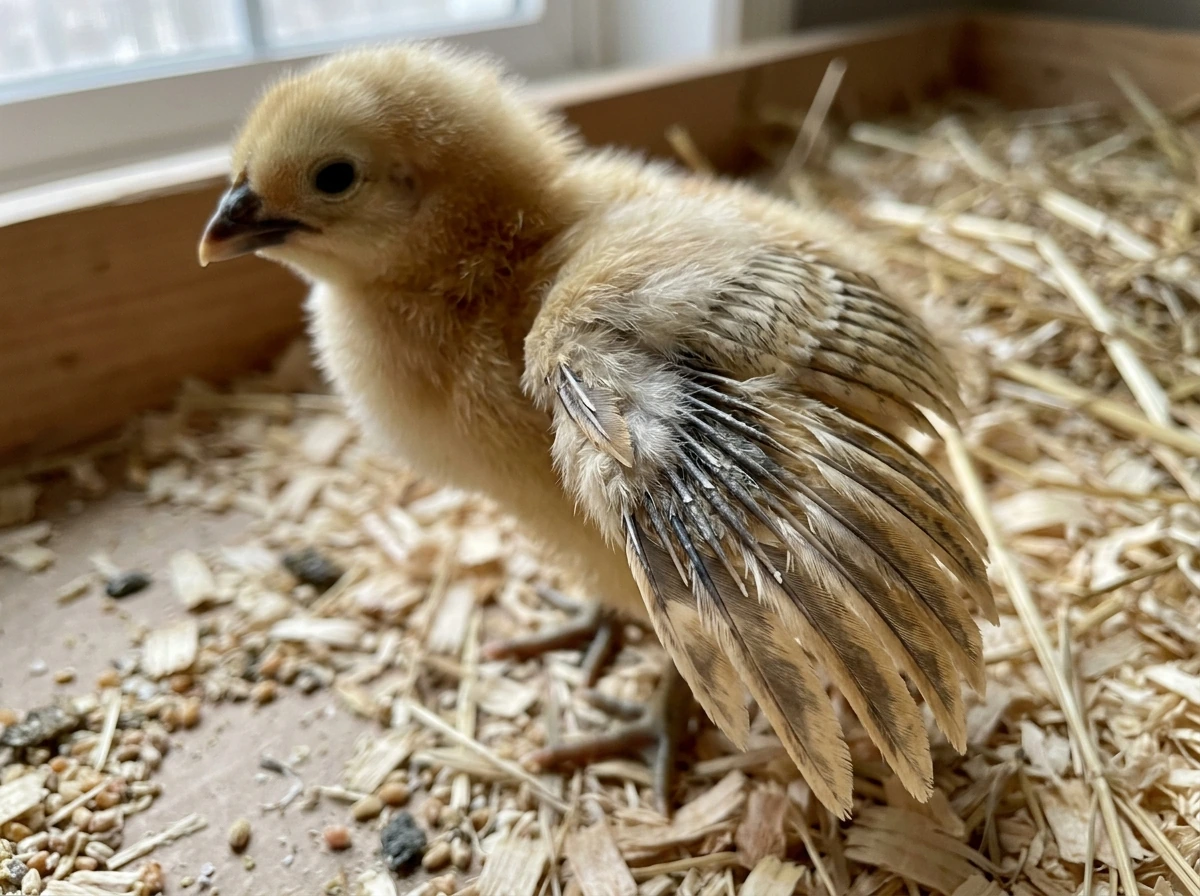
You don't have to wait until full maturity to get a better idea of where a chick's color is headed. Several early physical cues start appearing within the first two to four weeks, and reading them together gives you a much sharper prediction than down color alone.
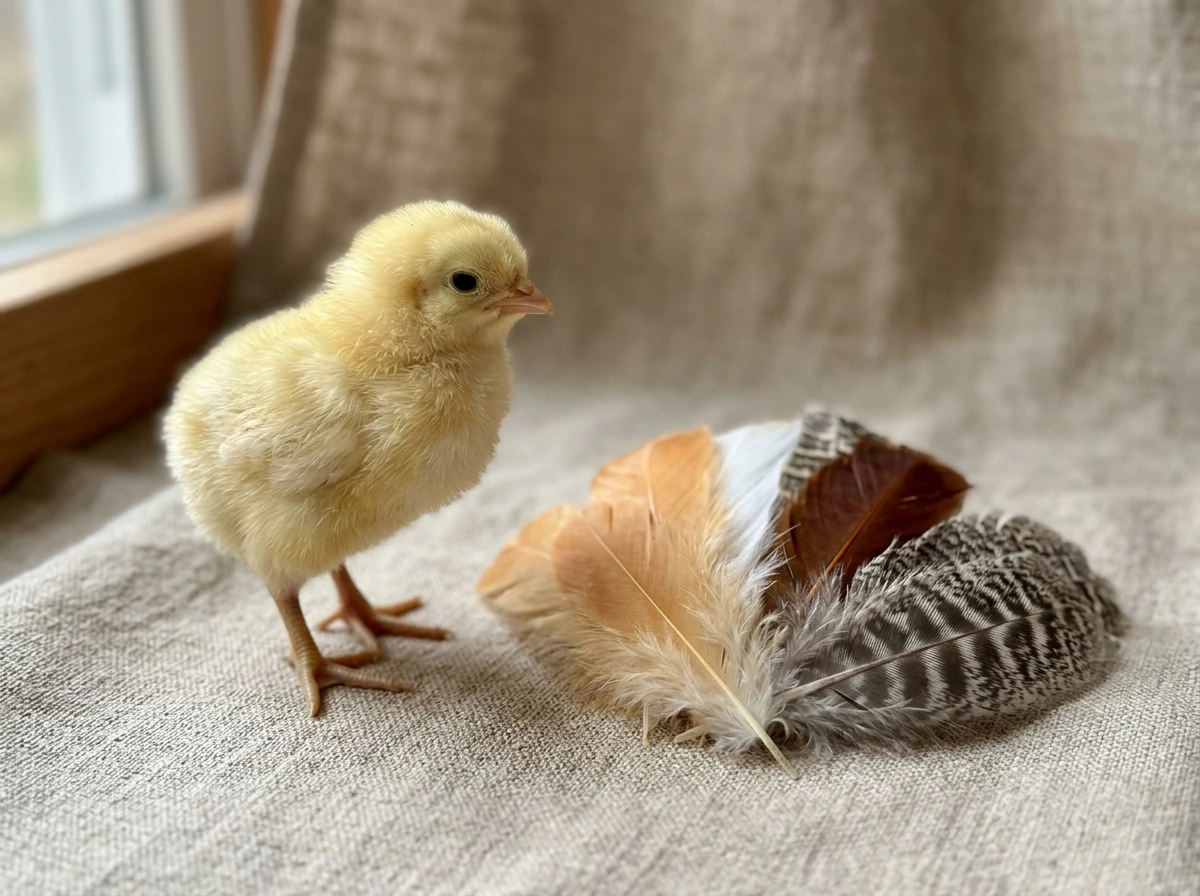
- Wing feathers at 7 to 10 days: Pin feathers begin appearing on the wings within the first week, and primary/secondary wing feathers are visible by two to three weeks. The color and patterning on these early wing feathers is often the first reliable indicator of adult plumage direction. Speckling, barring, or solid coloring here carries forward.
- Leg and shank color: Yellow shanks tend to indicate breeds that will remain lighter in color (buff, white, or golden adults). Shanks that darken toward black or slate in the first few weeks point toward darker adult plumage, as seen in black or blue varieties.
- Head spot patterns: In barred and sex-linked barred breeds, a white spot on top of the chick's head at hatch is a sexing and patterning cue. Males typically have a larger, more scattered spot while females have a smaller, more defined spot. This is useful for barred breeds but doesn't apply to yellow-down birds from non-barred lines.
- Striping or chipmunk patterning on the back: A darker stripe running down the back or faint chipmunk-style markings often indicate a breed that will develop patterned or laced plumage as an adult, not a solid color.
- Comb development speed: Faster comb reddening in the first few weeks is a sex indicator, not a direct color indicator. But knowing the sex early helps you consult the right adult reference for that breed (since roosters often show different coloration than hens).
- General down darkness: A chick that starts slightly darker yellow or shows smudgy patches around the wings or back is often heading toward a deeper adult color than a bright, clean yellow chick of the same breed.
The most reliable window for prediction opens between weeks three and six. By week three, primary feathers are well established on the wings. By weeks four to six, the melanin pathways that define stable adult pigmentation are actively running. If you're watching closely during this window, you'll catch the color trajectory before the bird is fully feathered.
How sex changes the color picture: hens vs. roosters
Sex has a real and sometimes dramatic effect on how adult color plays out, and it goes beyond just the obvious differences in comb size and saddle feathers. In sex-linked and autosexing breeds, color at hatch is literally determined by sex chromosomes, meaning the color trajectory is different from day one depending on whether you have a pullet or a cockerel.
In barred breeds like Barred Plymouth Rocks, the barring gene sits on the sex chromosome. blank" rel="noopener noreferrer">Males, being homozygous for the barring gene, show wider, clearer white bars in their adult feathers than females. Even as chicks, the head-spot size at hatch reflects this chromosomal difference. In non-barred breeds, the sex difference in color is usually more subtle, but it's still present. Rhode Island Red roosters often show darker, richer red plumage with more pronounced black tail and hackle markings compared to hens, whose mahogany coloring is somewhat more uniform.
For Sex Link hybrids, the sex-color connection is the whole point of the cross. A Red Sex Link pullet (reddish or buff at hatch) grows into a reddish-brown layer hen. A Red Sex Link cockerel (white at hatch) grows into a white or light-colored rooster. Getting this right depends entirely on knowing whether your yellow-ish chick is from a sex-link cross. If it is, hatch color is actually one of your most useful tools. If it isn't, treat hatch color as background information only.
| Breed/Type | Pullet adult color | Rooster adult color | Hatch color cue by sex |
|---|---|---|---|
| Rhode Island Red | Dark mahogany red | Deep red, black tail/hackle | Males more buttery gold, females more reddish-gold |
| Buff Orpington | Warm golden buff | Same buff (slightly richer) | Both hatch similar warm yellow |
| White Leghorn | Pure white | Pure white | Both hatch bright yellow; no sex color difference |
| Red Sex Link (hybrid) | Reddish-brown to buff | White to cream | Pullets red/buff at hatch; cockerels white at hatch |
| Barred Plymouth Rock | Barred black/white (narrower bars) | Barred black/white (wider, clearer bars) | Males have larger scattered head spot; females smaller, defined spot |
How to actually verify what your chick will become
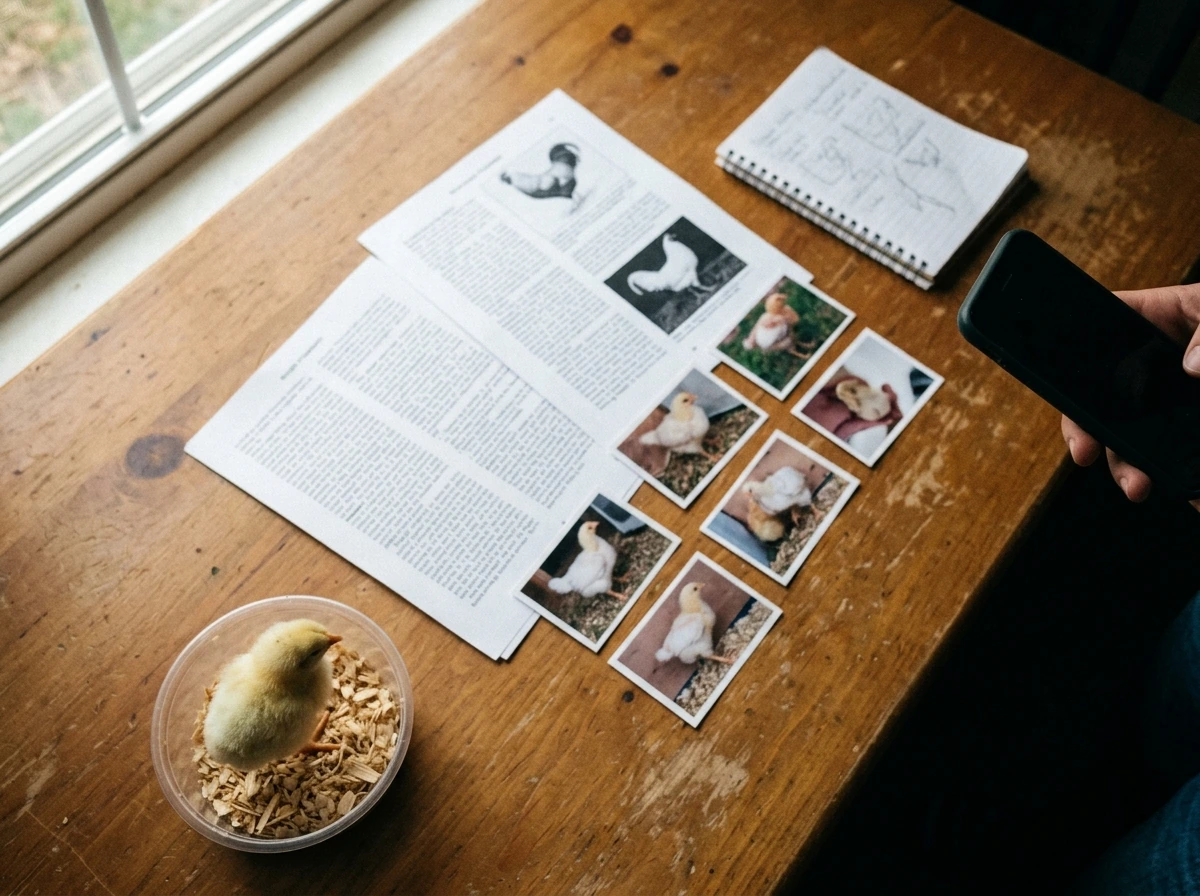
Early feather observation is useful, but the most reliable verification tools come from matching your chick to documented breed standards and growth photos. Here's how to put together a solid verification process.
Use breed-specific hatchery identification resources
Good hatcheries publish day-old chick identification photos with breed-specific notes. Meyer Hatchery, for example, has a dedicated day-old chick identification resource that includes images and descriptions by breed. If you know which breeds were in your hatchery order, compare your chick's down pattern, leg color, and head markings directly against those reference images. Hatcheries also use leg band color charts to track breeds, so if your chick arrived with a band, that's your most direct identification tool.
Compare growth photos for the same breed
Search for breed-specific chick growth photo sequences, ideally from hatcheries or poultry clubs, that show the same breed from hatch through full feathering. Backyard poultry forums often have photo threads showing week-by-week feathering for common breeds. Matching your chick's week-three or week-four wing feathers against confirmed photos of the same breed is far more reliable than guessing from yellow down alone.
Check breed and color standards
The American Poultry Association publishes breed standards that describe adult plumage in detail, covering hackle, breast, shank, and tail color for each recognized variety. University extension resources like UF IFAS and Ohio State's 4-H poultry materials translate these standards into practical language. For example, a Barred Plymouth Rock adult should show alternating light and dark bars with yellow shanks and toes, while a Rhode Island Red should show dark mahogany body feathers with black in the tail. Using these as your 'target' description and working backward from your chick's early feather signs gives you a structured way to confirm or rule out breeds.
Lineage documentation
If you ordered from a hatchery, request breed confirmation in writing. Most hatcheries will tell you exactly which breeds were in your straight-run or sexed batch. If you got chicks from a feed store, ask which hatchery they sourced from, then contact that hatchery directly. Knowing both parent breeds is the only way to predict hybrid outcomes accurately, especially for sex-link crosses where the hybrid combination defines adult color.
What to do when you need a precise answer
Sometimes a rough prediction isn't enough. If you're planning a breeding program, entering birds in a show, or just really need to know exactly what you'll end up with, here's how to get a reliable answer rather than an educated guess.
- Call or email the hatchery before ordering and ask specifically: what breed(s) could produce yellow down in a mixed order, what adult colors should I expect, and do you offer autosexing or sex-link varieties that give color-at-hatch sex identification?
- Ask the hatchery for the parent stock breeds if you're ordering hatching eggs or planning to hatch your own. Knowing both parents (not just one) is essential for predicting hybrid color outcomes.
- Request breed-specific photos of day-old chicks from the hatchery's website or customer service, and compare against what arrived. Most reputable hatcheries have these on file.
- If color predictability matters most, choose established pure breeds with well-documented color varieties (like Buff Orpington for buff, White Leghorn for white) rather than mixed or mystery batches. Pure breeds from reputable sources will grow into what the breed standard describes.
- For sex-linked color prediction, specifically order a sex-link hybrid variety (Red Sex Link, Black Sex Link) where pullets and cockerels are color-identifiable at hatch. This gives you both sex and approximate adult color information on day one.
- Keep a photo log starting from hatch and note wing feather color at weeks two, three, and four. Sharing these photos in poultry breed identification communities can get you a fast, crowd-sourced confirmation from experienced keepers.
- Be aware that sexing accuracy from hatcheries is typically around 90%, meaning some birds will be the 'wrong' sex, which can shift color expectations for sex-influenced breeds. Factor this in if color matters for your flock planning.
One practical mindset shift that helps: think of chick-to-adult color development the same way you'd think about watching a seedling grow into a mature plant. The seed or sprout gives you some information about what's coming, but the real picture only emerges across weeks and months of development. Yellow down is just the sprout stage. The feathers that grow in over the first six weeks are your first real look at the adult plant, so to speak, and that's where your most accurate predictions live. where do birds of paradise grow
If you're tracking other growth-related questions in your flock or garden, this site also covers topics like whether birdseed can sprout and grow if it lands in your yard, which connects the same careful-observation mindset to the plant side of your outdoor space. If you want the same kind of expectation setting for your outdoor space, see will birdseed grow so you know what conditions actually make it sprout. will wild bird seed grow if planted
FAQ
If my chick is yellow, can I just assume it will become a white chicken?
Yes, but only when hatch color is paired with breed or parentage. For most “yellow-down to adult” cases, the safest approach is to verify the breed using leg color, head markings, and (if available) hatchery ID photos, then watch primary wing feathering around weeks 3 to 6 for the first clearer trajectory.
What are the best tells that a yellow chick will grow into a buff versus white adult?
Not reliably. Multiple breeds can hatch with yellow down, and some will develop into buff, golden, or even deep red-brown adults. If you want a white outcome specifically, treat “yellow” as weak evidence until you confirm the hatchery’s breed and compare day-old markings to confirmed reference photos.
My chick’s down looks very yellow, but feathering is patchy. Does that change how I should predict adult color?
If your chick molts early or you see patchy feathering, down color can mislead even more than usual. Use feather growth cues instead, especially the color in emerging wing primaries (weeks 3 to 6) and then the first full body feather set after that, because that’s when melanin deposition stabilizes.
How much does sex matter for the final adult color when the chick starts out yellow?
Yes. In sex-linked and autosexing lines, hatch color often reflects sex and therefore adult color direction. In non sex-linked breeds, sex still affects plumage richness (for example, roosters often look darker or more patterned), but the hatch color is not a dependable sex indicator.
Could a yellow chick still grow into a barred (striped) adult if the pattern shows up later?
Barred patterns usually do not “convert” from yellow down. If you hatch a chick that was truly yellow on day one, it is unlikely to end up as a barred adult, since barred birds typically show dark mottling or gray/black pattern cues very early. The exception is mislabeling or mixed batches, so confirmation matters.
At what age is the best time to guess what color my yellow chicks will become?
Age and molt stage matter. Color prediction improves during the weeks 3 to 6 window because adult-feather pigment pathways are becoming active. If you’re checking only at day one or before wing feathers set, your “read” is more likely to be wrong.
Why does chick down color fail so often as a predictor?
Down can be misleading because feather color later depends on different pigment processes and molt cycles. A practical way to reduce error is to confirm the breed first (hatchery documentation, leg band, or reference images) and then use a short observation checklist during weeks 3 to 6 (wing primaries color, shank and toe color, head pattern).
What should I do if my chicks came from a feed store and I do not know the hatchery or parents?
Yes, especially when the hatch batch is mixed or the label is wrong. If you can, request breed confirmation in writing from the hatchery, or contact the hatchery that supplied the feed store. Without knowing the parent breeds, hybrids and sex-linked crosses are hard to predict accurately.
What if my yellow chick does not match the breed I expected by week 4?
If you are seeing early signs that suggest a different breed than expected (for example, unexpected leg color, head spotting, or early feather pattern that does not match your target standard), update your prediction early rather than waiting for full maturity. If they do not match by weeks 4 to 6, assume your initial ID was likely wrong.
Does the prediction approach change if I’m raising chicks for showing or breeding versus just for a backyard flock?
Yes, and it changes what prediction you should use. If your goal is showing or breeding, confirm exact variety and sex as early as possible, then track color during wing development and the first major feather set. If your goal is just general expectations, you can keep the prediction broader, like “buff versus red-brown versus white,” rather than insisting on one exact shade too early.
Next Article
Is Miracle-Gro Good for Mandevilla? How to Feed It Safely
Yes, Miracle-Gro can feed mandevilla safely. Get correct NPK choice, dilution, schedule, and signs to avoid burn.