Gran Canaria grows bananas, tomatoes, potatoes, grapes, cut flowers, aloe vera, avocados, mangoes, citrus, and peppers across a surprisingly varied landscape. The island's strong north-south climate split and its range of elevations (from sea level up past 1,800 m) mean you can find tropical plantations on the coast and cool-climate vineyards on terraced hillsides within the same afternoon's drive. Most commercial production sits below 500 m, but traditional potato farming and viticulture push well into the medianías (the mid-altitude interior) and beyond.
What Do They Grow in Gran Canaria: Crops, Gardens & Zones

Marcus Weir
22 Jul 2026
What Gran Canaria grows and why it matters
The island punches well above its size in agricultural output. Bananas grown here carry EU-protected Geographical Indication status under the 'Plátano de Canarias' label, organised through the industry body ASPROCAN. Tomatoes from the southeast lowlands have historically been exported to northern Europe by the tonne. Traditional potato varieties, called papas antiguas, are conserved and certified by the regional food quality institute ICCA, with roughly 3,355 hectares of potato cultivation and around 78,304 tonnes produced across the Canary Islands in 2023 alone. Grapes go into wines under the island's own Denominación de Origen Gran Canaria. Flowers supply European cut-flower markets. And aloe vera is grown commercially for the cosmetics and health industries, supported by specific EU agricultural aid. Understanding what thrives here helps any gardener or smallholder figure out what might work in a similar climate at home.
The engine behind all of this is the island's climate diversity. The south is hot, sunny and bone dry, which suits bananas, tomatoes and aloe vera under drip irrigation. The north is cooler, wetter and greener, favouring avocados, citrus and subtropical fruits. The medianías (roughly 400 m to 900 m) sit in cloud-influenced zones with moderate temperatures and decent rainfall, perfect for potatoes and some vine cultivation. Go higher still, into the pine-forested peaks, and agriculture thins out into scrubland and native flora. If you have read about what grows in Tenerife, you will notice strong parallels: both islands share the same north-south exposure principle and many of the same crop families, though Gran Canaria's D.O. wine sector and greenhouse tomato history give it its own agricultural identity.
The main commercial crops at a glance
| Crop | Main growing zone | Cultivation method | Primary use |
|---|---|---|---|
| Banana (Plátano de Canarias) | Coastal lowlands, below 500 m | Drip irrigation, fertigation | Export, domestic consumption |
| Tomato | South/southeast lowlands | Plastic greenhouses, drip irrigation | Export to Europe, local markets |
| Potato (papas antiguas) | Medianías, 400–900 m | Terraces, rain-fed or supplemental irrigation | Local consumption, certified sales |
| Grapes / wine | Medianías and higher terraces | Terrace viticulture, various altitudes | D.O. Gran Canaria wines |
| Cut flowers / ornamentals | Coastal and mid-altitude | Greenhouses, open nurseries | European export, local florists |
| Aloe vera | Dry lowlands, south and east | Open field, drip irrigation | Cosmetics, health products, export |
Bananas: the island's flagship crop
The Plátano de Canarias is a Cavendish-group banana (Musa acuminata, AAA group) and it is the single largest permanent crop in the Canary Islands by cultivated area. All production certified under the EU Geographical Indication must come from agricultural land below 500 m altitude. On Gran Canaria, plantations concentrate along the warmer western and southern coastal strips, though you also find them in sheltered northern valleys where frost risk is low. I have walked through some of these plantations near the coast and the sheer density of the plants is striking: tightly spaced pseudo-stems pushing up broad, paddle-like leaves that funnel the sea breeze.
Commercial growers rely heavily on drip micro-irrigation and fertigation (delivering dissolved nutrients directly through the irrigation lines). This matters a lot on Gran Canaria because surface water is scarce. The island's agricultural water comes from a mix of groundwater drawn from deep galleries and wells, small reservoirs, desalination plants, and increasingly from treated wastewater. Managing water salinity is a live concern: research from the Universidad de Las Palmas de Gran Canaria has shown that banana yields are sensitive to salt build-up in the root zone when desalinated and recycled waters are mixed incorrectly, so growers monitor electrical conductivity in their irrigation carefully. An experimental study titled 'Banana production irrigated with treated effluent in Canary Islands, ResearchGate' (Universidad de Las Palmas de Gran Canaria) documents banana production under drip irrigation using treated effluent and notes yields are sensitive to water quality and salinity management blank" rel="noopener noreferrer">Banana production irrigated with treated effluent in Canary Islands — ResearchGate (Universidad de Las Palmas de Gran Canaria / experimental study).
Canarian bananas are smaller and sweeter than the standard supermarket variety most northern Europeans are used to, and locals will tell you they taste completely different. They ripen slowly on the plant, and the cool nights that occasionally roll off the ocean actually help develop flavour. If you are a gardener trying bananas in a temperate climate, the lesson from Gran Canaria is clear: bananas need warmth, humidity and consistent water, but they tolerate more wind than most people assume, especially in sheltered spots.
Tomatoes and greenhouse vegetables
The southeast corner of Gran Canaria, around the municipalities of Agüimes, Santa Lucía de Tirajana, Ingenio, and the Los Llanos de Arinaga flats, developed into one of Spain's most intensive greenhouse tomato zones during the latter half of the twentieth century. The combination of year-round sunshine, low rainfall (meaning disease pressure is reduced), cheap flat land and proximity to the Las Palmas port made it ideal for export-oriented production aimed at northern European supermarkets in winter.
Most of these operations use low plastic tunnel houses or multi-span glasshouses rather than the tall glass structures you see in the Netherlands. Inside, drip irrigation lines run to every plant and fertigation programs are computer-controlled on larger farms. Tomato varieties used commercially are almost entirely hybrid types bred for shelf life and uniform appearance, but if you visit local markets you can still find flavoursome local varieties that smallholders grow for personal use or direct sale.
Beyond tomatoes, these same greenhouse systems are used for peppers (pimientos), cucumbers, courgettes, and aubergines. Home gardeners on the island grow all of these outdoors in the south without much trouble, starting seeds indoors in late winter (January to February) and transplanting from March onwards. In the north, where springs are cooler, start a month later and expect harvests to run into autumn rather than peaking in early summer.
Potatoes and the papas antiguas tradition
Ask any Canarian what sets their food culture apart from mainland Spain and papas arrugadas (wrinkled potatoes boiled in heavily salted water and served with mojo sauce) will come up immediately. The potato varieties behind this dish belong to the papas antiguas group, pre-industrial cultivars with colourful skins (some deep purple, some mottled red) and dense, waxy flesh that holds its texture when cooked. The regional Instituto Canario de Calidad Agroalimentaria (ICCA) runs formal certification and seed preservation programmes for these varieties, treating them as a heritage food product much like a protected cheese or wine.
Potato cultivation on Gran Canaria runs mostly through the medianías, from around 400 m to 900 m elevation, where temperatures are milder and soils are deeper and more moisture-retentive. Farmers work small terraced plots (locally called bancales) cut into the hillsides. These terraces slow rainfall runoff, reduce erosion and build up soil organic matter over decades of cultivation. Planting typically happens in two main seasons: an autumn/winter planting (October to November) for a late winter or spring harvest, and a spring planting for a summer harvest, though altitude shifts these windows by several weeks.
For home gardeners, the papas antiguas varieties are worth tracking down as seed potatoes. They are disease-resistant, adapted to warm-cool alternating conditions, and the flavour is genuinely superior to most commercial cultivars. You need free-draining, slightly acidic soil and consistent moisture through the growing season. On the island, supplemental irrigation tops up what limited rainfall provides during dry spells.
Grapes and the D.O. Gran Canaria wine scene
Gran Canaria has its own Denominación de Origen wine appellation, regulated under rules formally published in the BOE (Spain's official state gazette) and overseen by the island's Consejo Regulador. The vineyards are scattered across the interior highlands, typically on hand-built stone terraces that have been worked for centuries. Some plots sit at surprisingly high altitudes: viticulture across the Canary Islands has been recorded up to around 1,500 m, and Gran Canaria's own mountain viticulture reaches into the upper medianías.
The microclimates in these zones are far cooler than the coastal tourist strips suggest. Night temperatures drop significantly, especially in autumn, and this temperature swing between day and night is what helps grapes develop acidity and aromatic complexity. White varieties dominate production, with Listán Blanco being the most widely planted, joined by Moscatel, Malvasía, and Albillo Criollo. For reds, Listán Negro and Negramoll are the traditional workhorses. These are indigenous Canarian varieties not widely grown elsewhere, which gives Gran Canaria's wines a distinctive character that is genuinely hard to replicate outside the archipelago.
Vineyard work here is almost entirely manual because of the steep terrace topography. Most bodegas are small-scale operations producing relatively limited quantities, and visiting them is one of the better ways to understand the island's agricultural geography at first hand. If you are also curious about what grows in Tenerife, the vine story there shares similar altitude-driven patterns, though Tenerife's D.O. landscape is more fragmented across five separate appellations.
Key grape varieties grown in Gran Canaria
| Variety | Colour | Character | Notes |
|---|---|---|---|
| Listán Blanco | White | Fresh, citrus-led, light body | Most widely planted white |
| Moscatel | White | Aromatic, floral, medium sweetness | Used for sweet and dry styles |
| Malvasía | White | Rich, full, sometimes oxidative | Traditional Canarian type |
| Albillo Criollo | White | Soft, peachy, low acidity | Canary Islands endemic |
| Listán Negro | Red | Light-bodied, red fruit, fresh | Most common red variety |
| Negramoll | Red | Medium body, spice, good colour | Traditional blending grape |
Flowers and ornamental plants
Cut flower and ornamental plant production might not be what first comes to mind when you think of Gran Canaria, but it is a real and organised industry. The regional association ASOCAN coordinates producers and has worked with the Canary Islands government to secure co-funding for export promotion to European markets. Production happens across both greenhouse and open-field settings, depending on the crop and altitude. Tropical ornamentals like strelitzia (bird-of-paradise flower), anthuriums, and heliconias are grown in warmer lowland areas, while some temperate flowering plants and foliage nursery crops occupy the cooler medianías.
The island's year-round mild climate is a genuine advantage here. You avoid the winter fuel costs that northern European greenhouse growers face, and the natural light levels mean plants develop stronger stems and more saturated colours than those grown under glass in lower-light latitudes. For home gardeners, this also means that many ornamentals normally treated as houseplants in temperate countries can be grown outdoors on Gran Canaria year-round, including bird-of-paradise, cannas, and a wide range of succulents.
Aloe vera and other industrial crops
Aloe vera (Aloe barbadensis miller) is grown commercially across the drier, sunnier parts of Gran Canaria, particularly in the south and east where annual rainfall can drop below 100 mm. The plant is extraordinarily well-suited to these conditions: it is a succulent that stores water in its thick leaves, tolerates poor soils, and actually produces better quality gel when grown slowly under mild drought stress rather than being irrigated heavily. Commercial plantations use low-rate drip irrigation to keep plants productive without pushing excessive vegetative growth at the expense of gel concentration.
The regional government includes aloe vera in its POSEI agricultural aid programme, providing per-hectare support payments to producers, and it figures in Canary Islands export promotion as a value-added agro-product for cosmetics, skincare, and health food markets. Processing facilities on the island extract and stabilise the inner leaf gel for export in bulk or in finished products. Aloe is harvested by removing the outer mature leaves individually (a process called leaf harvesting), which allows the plant to continue producing for many years from the same rootstock.
Other industrial and medicinal crops grown on the island, though at smaller scale, include olives (included alongside aloe vera in Canary Islands government support orders), certain aromatic herbs, and some experimental tropical species. The olive sector is modest compared to mainland Spain but benefits from the same dry southern slopes that suit aloe. If you are growing aloe vera at home in a temperate climate, the Gran Canaria model gives you a practical template: full sun, very free-draining soil, minimal watering from late autumn through winter, and a warm wall or glasshouse to prevent frost damage.
Fruits and vegetables for smallholders and home gardens
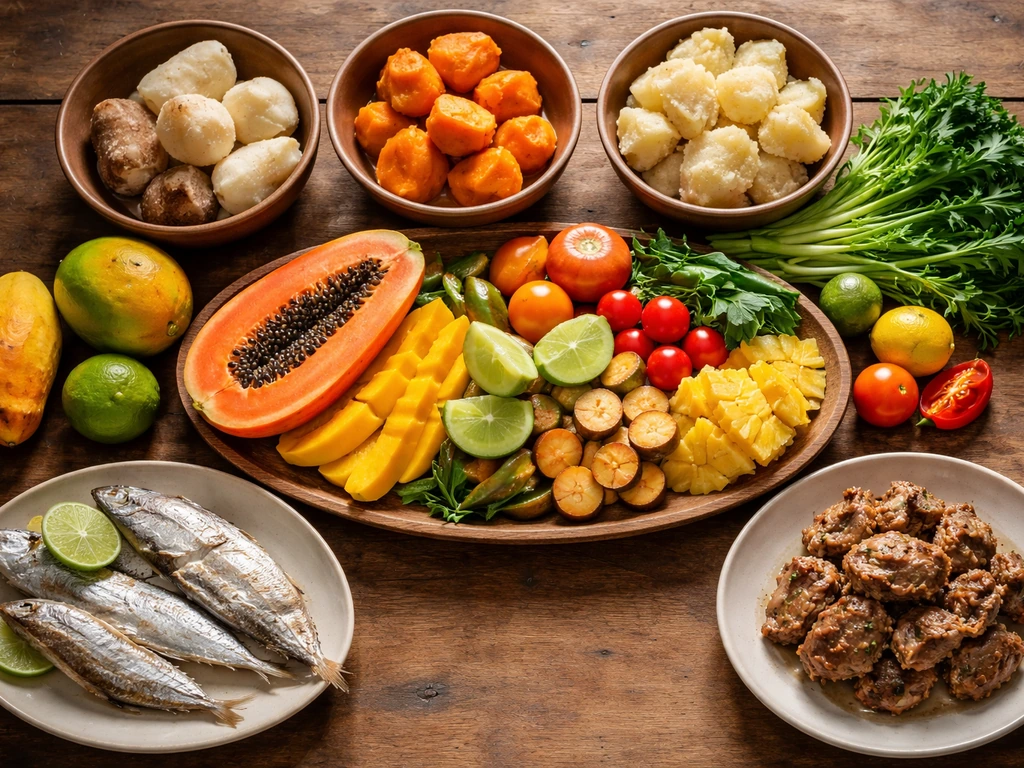
Beyond the main export crops, Gran Canaria supports a rich range of fruits and vegetables suited to smallholdings and kitchen gardens. For readers asking what do they grow and eat in Windward, the island's smallholdings produce many of the same fruits and vegetables, avocados, mangoes, citrus, papayas and home-grown vegetables, adapted to local exposures and microclimates. Avocados thrive on the north-facing slopes and in sheltered northern valleys where humidity is higher, typically between 100 m and 500 m altitude. Mangoes prefer the warm southern coast, ripening from July through September. Citrus (oranges, lemons, limes, kumquats) grows across much of the island below 600 m, with the northern valleys historically the main orange-growing zone. Papayas, guavas, and cherimoya (custard apple, a Canarian speciality) are also common in home gardens and small orchards in the warmer zones.
For vegetable growers, the south offers almost year-round outdoor production of peppers, aubergines, courgettes, and beans. The north suits brassicas, leafy greens, and root vegetables better in winter and spring. Chillies (pimienta picona) are grown widely for making the island's famous mojo picón sauce. Sweet corn, pumpkins, and onions are also common smallholder crops. The main limiting factor almost everywhere is water, which is why even home gardeners on the island often install small drip systems or soaker hoses rather than relying on overhead watering.
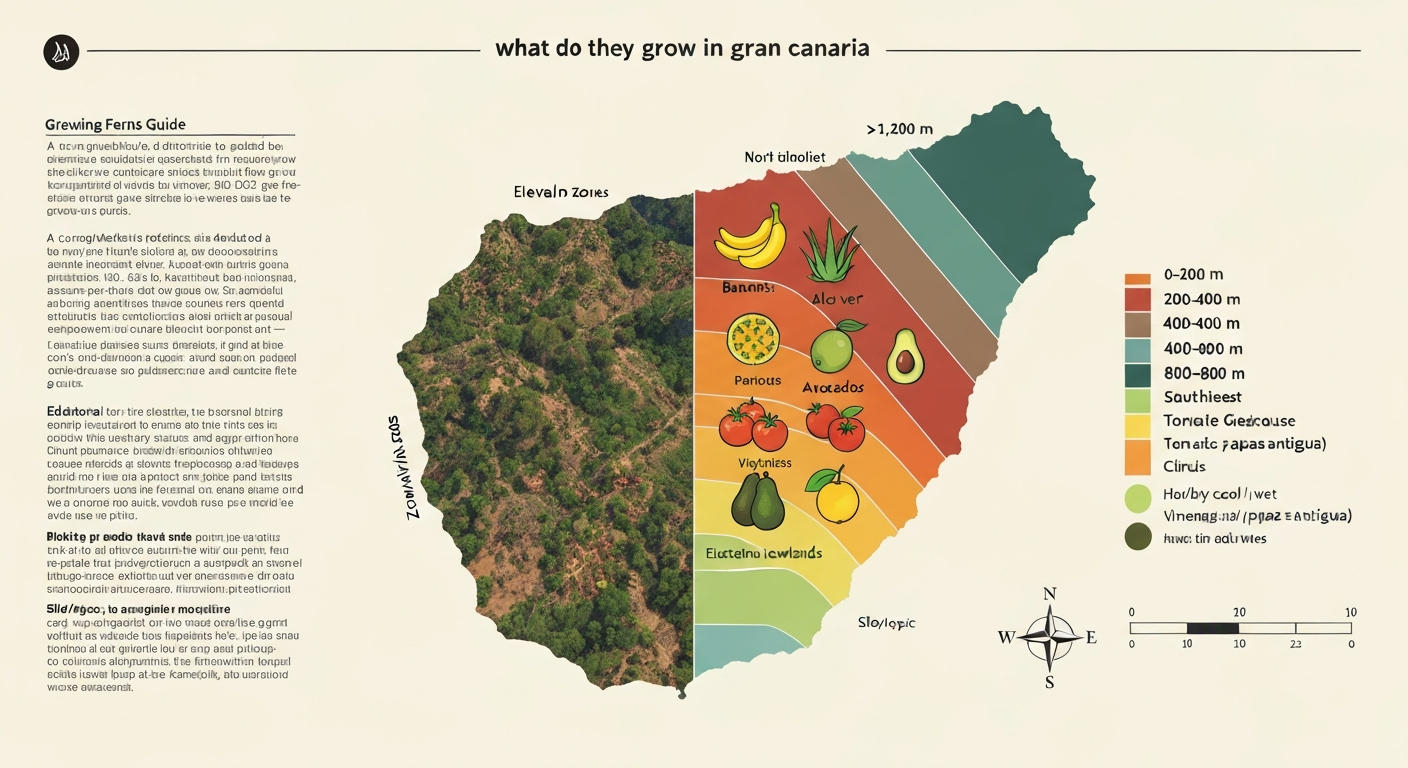
Growing zones by elevation
| Elevation band | Climate character | What grows well |
|---|---|---|
| 0–200 m (south/west coast) | Hot, dry, very sunny, minimal frost risk | Bananas, tomatoes, aloe vera, papaya, mango, peppers, aubergine |
| 0–400 m (north coast) | Warm, humid, more cloud cover, wetter | Citrus, avocado, subtropical fruits, potatoes, courgettes |
| 400–800 m (medianías) | Mild, moderate rainfall, cooler nights | Potatoes (papas antiguas), grapes, avocado, stone fruits, vegetables |
| 800–1,200 m (upper medianías) | Cool, occasionally foggy, some frost in winter | Grapes (some), cereals, hardy vegetables, native scrubland plants |
| Above 1,200 m (cumbre/peaks) | Cold, rocky, prone to frost | Native Canarian pine forest, sparse grazing, little cultivation |
Practical tips for gardeners working with Gran Canaria conditions
If you are gardening on the island or trying to replicate these conditions elsewhere, the single most important thing is water management. For practical lawn advice in similar climates, see how does St Augustine grow for specifics on water, shade tolerance and maintenance. Gran Canaria's agricultural infrastructure is built around the reality that rainfall is unreliable and unevenly distributed. Install drip irrigation before you plant anything for food production, and if you are using desalinated or recycled water, monitor salt build-up in your soil with a simple EC (electrical conductivity) meter once or twice a season. Mulching heavily with organic matter or stones reduces surface evaporation dramatically in the hot south.
- Start warm-season vegetables (tomatoes, peppers, aubergines) indoors in January or February in the south, March in the north. Transplant after the last cool snap, usually February to April depending on altitude.
- Plant potatoes in October to November for a spring harvest, or February to March for a summer harvest. Use papas antiguas varieties if you can source certified seed from local cooperatives.
- Bananas and aloe vera need no dormancy period; plant them any time spring through summer when soil temperatures are warmest.
- Grapevines are planted as bare-root cuttings in late winter (January to February) on terraces with good drainage. Expect the first modest harvest in year three.
- Avocados and mangoes prefer planting at the start of the warmer season (April to May) to let roots establish before any winter cool periods.
- In the dry south, always add a generous layer of volcanic gravel or coarse lapilli (the local volcanic pumice material called picón) as a mulch. It holds moisture near the root zone and insulates against temperature extremes.
The agricultural economy and visiting farms
Agriculture is a meaningful part of Gran Canaria's economy even in an era dominated by tourism. Regional agricultural statistics for cultivated area by crop and by island (including Gran Canaria) are maintained by the Instituto Canario de Estadística (ISTAC), dataset: 'blank" rel="noopener noreferrer">Superficie cultivada según grupos de productos agrícolas y sistemas de cultivo. Municipios e islas de Canarias. Desde 2007'. The banana and tomato export sectors support thousands of jobs in production, logistics and packing. The certified papas antiguas programme supports smaller traditional farmers in the interior, keeping those terraced landscapes maintained and inhabited. The wine sector, though boutique in scale, attracts growing interest from wine tourists visiting the island for reasons beyond beach holidays.
Farm visits are increasingly possible and genuinely worthwhile. Several bodegas in the medianías offer tastings and vineyard tours, which double as a good way to see the island's interior landscape. Some banana and aloe vera operations also receive visitors, particularly around agricultural tourism initiatives promoted by the island's Cabildo (local government). For historical context on mission-era agriculture, see what did Mission Santa Barbara grow. Local markets in Teror, Ingenio, and Las Palmas de Gran Canaria (particularly the Mercado Central and the Vegueta market) are excellent places to encounter the full range of what the island produces, from papas antiguas and cherimoyas to local honey, aloe products and small-batch wines.
Native plants and natural habitats
Gran Canaria is not only cultivated farmland. The island holds extraordinary native flora, and understanding it gives context to why certain crops succeed here. The Canarian dragon tree (Dracaena draco) and the Canary Island date palm (Phoenix canariensis) are iconic natives that gardeners worldwide grow as ornamentals. The native laurisilva (laurel forest) cloud forest in the north-facing Tamadaba and Inagua zones represents a relic of the subtropical forest that once covered much of southern Europe and the Macaronesian islands millions of years ago.
The Canary Island pine (Pinus canariensis) covers large areas of the upper slopes and is remarkable for its ability to regenerate after fire. At lower altitudes, native tabaibas (Euphorbia species) and cardones (Euphorbia canariensis, the giant candelabra cactus-like spurge) dominate the dry coastal scrub. These plants are perfectly adapted to the dry south and make excellent low-water garden subjects anywhere with a mild frost-free climate. They share growing conditions with aloe vera and are worth exploring for anyone interested in drought-tolerant horticulture beyond the usual suspects.
Common myths and quick troubleshooting
- Myth: Gran Canaria is just a beach island with no serious farming. Not true. It has EU-protected crop designations, a formal wine appellation, and certified heritage potato varieties.
- Myth: You can grow anything here without irrigation. Untrue in the south, which receives less than 100 mm of annual rainfall in many coastal areas. Even drought-tolerant crops like aloe vera benefit from supplemental drip water.
- Myth: Canarian bananas are a different species. They are the same Cavendish group as supermarket bananas elsewhere but grown more slowly under different soil and water conditions, which alters flavour and texture noticeably.
- Myth: The whole island has a tropical climate. The highlands above 800 m can see near-zero temperatures in winter, and frost is possible above 1,000 m. Many temperate crops work perfectly in the medianías.
- Troubleshooting: Yellowing leaves on bananas or tomatoes in Gran Canaria are often a sign of salt stress from over-use of desalinated or recycled water rather than nutrient deficiency. Flush the root zone with lower-EC water before adding fertiliser.
- Troubleshooting: Papas antiguas that produce small tubers and lots of foliage are usually getting too much nitrogen. Back off the fertiliser and let the plant stress slightly as tubers begin to set.
- Troubleshooting: Aloe vera that goes soft and translucent at the leaf base is almost always overwatered, even in a hot climate. Let the soil dry completely between waterings and ensure drainage is unobstructed.
FAQ
What are the main commercial crops grown in Gran Canaria?
The island's primary commercial crops are bananas (Plátano de Canarias), greenhouse tomatoes, potatoes (including traditional 'papas antiguas'), grapes/wine (D.O. Gran Canaria vineyards), cut/potted flowers and ornamentals, and aloe vera for cosmetic/industrial use.
Where on the island are these crops typically grown by elevation and exposure?
Bananas and greenhouse horticulture concentrate in lowland coastal zones below ~500 m—especially south and southeast (warm, sheltered). Tomatoes and flowers are common in irrigated lowlands and coastal plains (greenhouses). Potatoes and some vineyards occur higher up on medianías and terraced slopes (several hundred to ~1,000+ m depending on site). Wine grapes are often on terraces and mid-elevation slopes with varied exposure; native and dryland crops occur on drier south-facing ridges and coastal scrub.
Why do these crops thrive in Gran Canaria? (climate, soils, microclimates)
Gran Canaria has strong north–south and elevation microclimates: warm, dry southern coasts; cooler, moister north slopes and higher elevations. Mild temperatures year-round, long growing seasons, and varied exposures let tropical/subtropical crops (bananas, avocado, mango) succeed at low elevations while temperate crops (potatoes, some grape varieties) are grown higher up. Soils are volcanic, variable in depth and fertility; fertile alluvial lowlands and irrigated terraces support intensive horticulture, while rockier slopes favour vines and dryland species.
What growing methods are commonly used (irrigation, terraces, greenhouses)?
Commercial producers use terraces on slopes, plastic-covered greenhouses for intensive vegetables and flowers, and modern drip micro‑irrigation and fertigation systems. Water sources include wells/galerías, small reservoirs (balsas), desalinated seawater, and increasing reuse of treated wastewater. These methods control salts and nutrients to maintain yields.
What bananas are grown and are there special rules?
Gran Canaria grows Cavendish-type bananas marketed as 'Plátano de Canarias' under sector organisation rules (ASPROCAN) and an EU Geographical Indication. Production is largely on irrigated lowlands below ~500 m and follows quality and labelling standards for the IGP.
Which fruits and vegetables are suitable for smallholders and home gardens?
Easy, high-yield options: tomatoes, peppers, potatoes, citrus (oranges, lemons), avocados, and mangos (in warm sheltered spots). Aloe vera is also suitable for dry, sunny micro-sites. Choose varieties adapted to local microclimate and provide frost protection at higher elevations.
Next Article
What Do They Grow and Eat in the Windward Islands
What they grow and eat in the Windward Islands: staple crops, fruit, veg, fish and meat, plus what to plant in tropical