Tenerife grows bananas, tomatoes, grapes, potatoes, and flowers as its main agricultural crops, with bananas leading the pack by a wide margin. But the full picture is much richer than that. Depending on where you are on the island, you can grow everything from tropical fruit to cold-hardy mountain herbs, because Tenerife packs more climatic variety into one island than most people realise. Altitude and which side of the island you're on determine almost everything about what will succeed in your garden or field.
What Do They Grow in Tenerife: Fruits, Vegetables, Flowers

Marcus Weir
6 Jun 2026
Tenerife's climate: why where you are matters more than anything
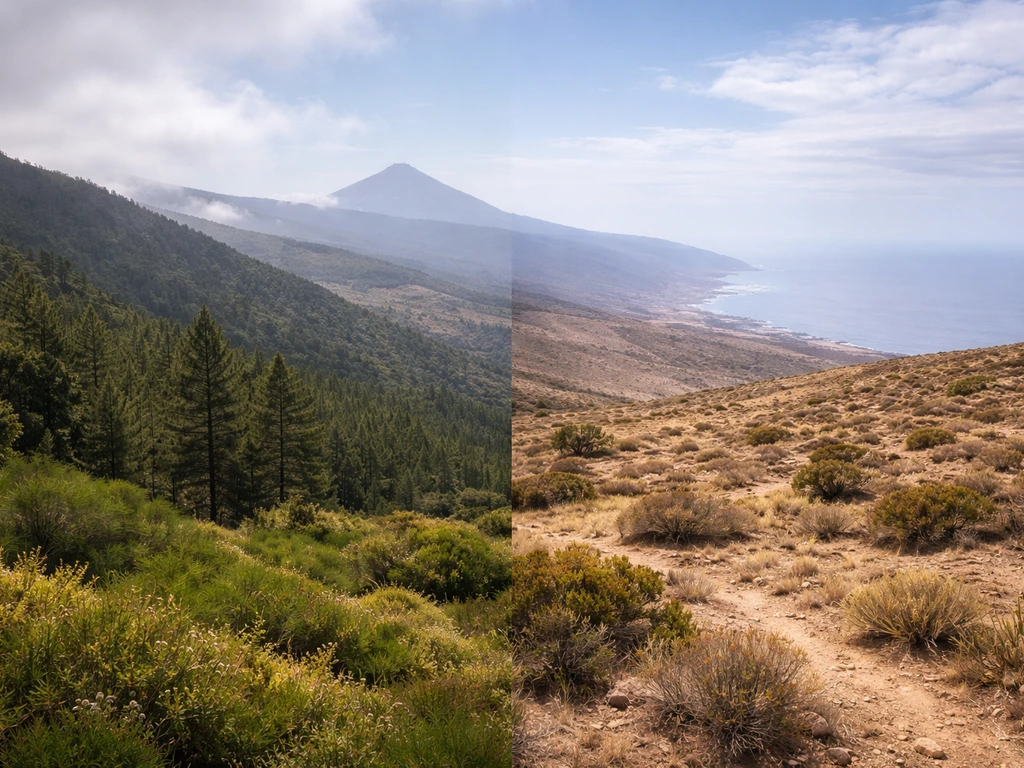
The island sits at roughly 28 degrees north latitude, which puts it in a subtropical sweet spot. But latitude alone tells you almost nothing useful. What really shapes plant life here is altitude and the trade-wind cloud layer. The northeast trade winds carry moisture that condenses at roughly 600 to 1,500 metres, creating a band of cloud and drizzle that keeps the north and northeast sides of the island noticeably cooler and greener. Below and above that band, conditions are drier and sunnier.
The south is a completely different world. Southern coastal areas like those near Tenerife Sur airport can receive under 100 mm of rain per year in many years, which is essentially desert-level rainfall. The north gets several times that. So when you read advice about what grows in Tenerife, the first question to ask is always: which Tenerife?
There are broadly four climate zones stacked by altitude. The warm, dry coastal belt sits at sea level to around 400 metres. Above that, up to roughly 1,200 metres, is the laurel forest and agricultural zone that benefits from cloud moisture. Higher still, above 1,500 metres, the cloud layer breaks and you get a drier, cooler subalpine environment around the slopes of Mount Teide. And at the very top, Teide itself sits above 3,700 metres in near-alpine conditions. For practical gardening and farming purposes, the coastal and mid-altitude zones are what matter most.
What people actually grow in Tenerife
Agriculture on Tenerife is centred mainly on the northern slopes, where rainfall and cooler temperatures create better soil conditions. In Windward Tenerife, you can expect the cooler, wetter conditions to support a lot of crops like tomatoes, bananas, and leafy greens. The coastal zones, both north and south, are where you find the commercial banana and tomato plantations. Moving inland and upward, potatoes, tobacco, and maize have traditionally dominated an intermediate drier zone. Onions are particularly important in the south, where irrigation from regenerated water supplies keeps farming viable in an otherwise arid landscape. The island's agricultural priorities, ranked roughly by importance, look like this:
- Bananas (plátano de Canarias) — the dominant crop, representing a major share of the archipelago's agricultural output
- Tomatoes — the leading export after bananas, grown extensively in coastal areas
- Grapes — cultivated mostly at mid to high altitudes for wine production
- Potatoes — a staple grown at various elevations
- Flowers and ornamentals — a significant commercial sector alongside food crops
Beyond commercial agriculture, home gardeners and smallholders grow a much wider range. Native and endemic plants fill gardens and roadsides, and the island's microclimates genuinely do allow you to grow things you'd never expect from a small Atlantic island, as long as you pick the right spot.
Fruit trees and orchards
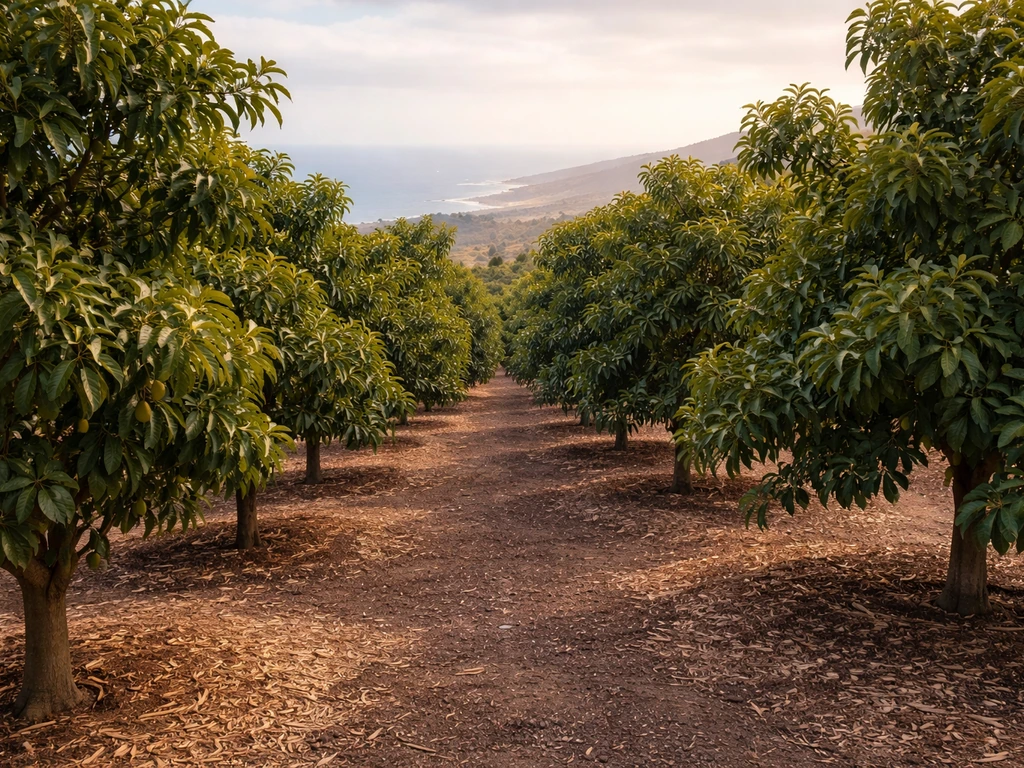
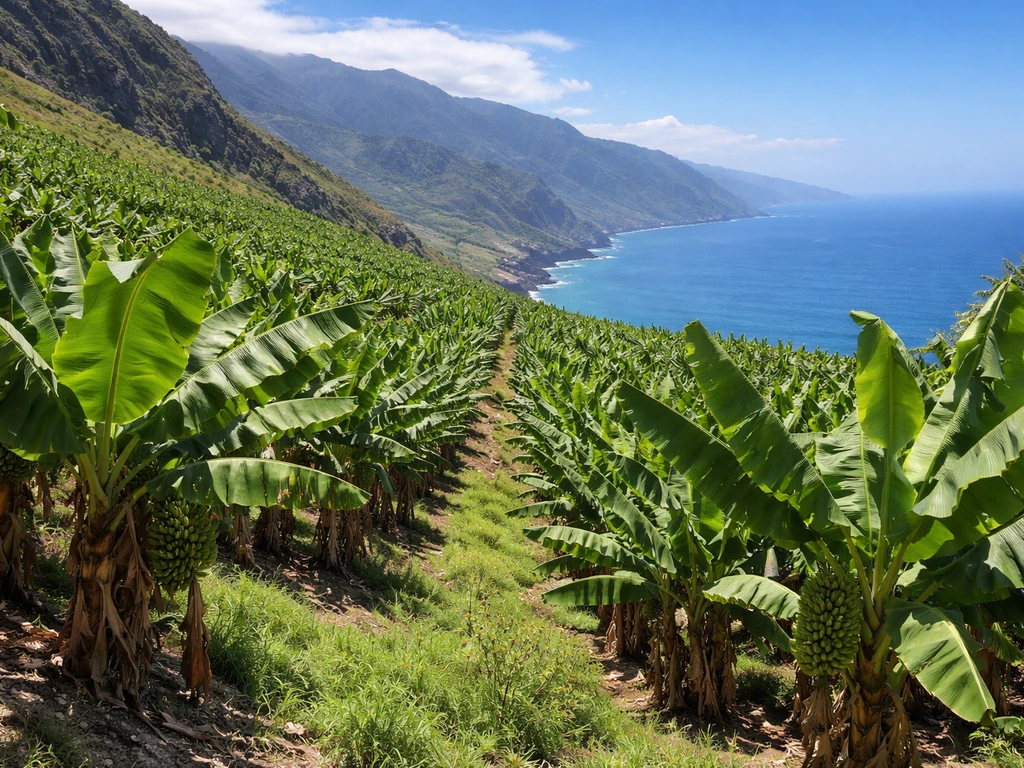
Bananas are everywhere and for good reason. The Canary banana (plátano de Canarias) thrives in coastal and low-altitude areas with reliable warmth and irrigation. If you have a sheltered spot below around 400 metres, bananas are one of the easiest large crops you can attempt. They need consistent moisture, so drip irrigation is the standard approach, especially in the south.
Beyond bananas, the list of fruit trees that genuinely perform well on Tenerife is long. Avocados love the mid-altitude north-facing slopes. Mangoes, papayas, and chirimoyas (custard apples) do well in sheltered coastal spots. Citrus, including lemons, oranges, and mandarins, are widely grown in gardens across the island. Figs tolerate the dry south well once established. Loquats (nísperos) are common in mid-altitude gardens and produce reliably without much fuss. Peaches, apricots, and even apples can succeed above 600 metres where winters are cool enough to satisfy their chilling requirements.
Grapevines deserve a special mention. Tenerife has a serious wine culture, particularly around Tacoronte-Acentejo in the north and El Hierro-adjacent areas. The volcanic soils and altitude combine to produce wines with real character. If you have land at 300 to 800 metres and want a long-term orchard project, vines are worth considering seriously.
Vegetables, grains, and herbs
Tomatoes are a cornerstone crop and grow year-round in coastal areas, though summer heat in the south can stress plants at the height of July and August. The bigger threats to watch for are whitefly (mosca blanca, particularly Bemisia tabaci) and fungal diseases like powdery mildew and grey mould (Botrytis). In greenhouse or tunnel conditions these pests build up fast, so ventilation and monitoring matter from day one.
Potatoes grow well at various elevations, with the intermediate drier zone being their historic heartland. Onions are reliable in the south with irrigation. Courgettes, peppers, aubergines, and beans all perform strongly in the warm coastal zone. Broad beans are worth noting for timing: staggered sowings can give you harvests from late spring right through to early October, which makes them a useful kitchen-garden staple.
At higher elevations, cool-season crops like lettuce, chard, spinach, broccoli, and cauliflower become more practical, especially from autumn through spring when lower areas can be too hot. Maize has been grown traditionally at mid-altitude, and tobacco still appears in some areas, though it is far less common now than it was historically.
Herbs thrive almost everywhere. Rosemary, thyme, lavender, and oregano handle the dry south without irrigation once established. Basil loves the coastal warmth but needs watering. Coriander bolts quickly in the heat, so grow it in autumn and spring at lower elevations, or in summer at altitude. Lemon verbena and mint grow vigorously wherever they have moisture.
Flowers and ornamental plants
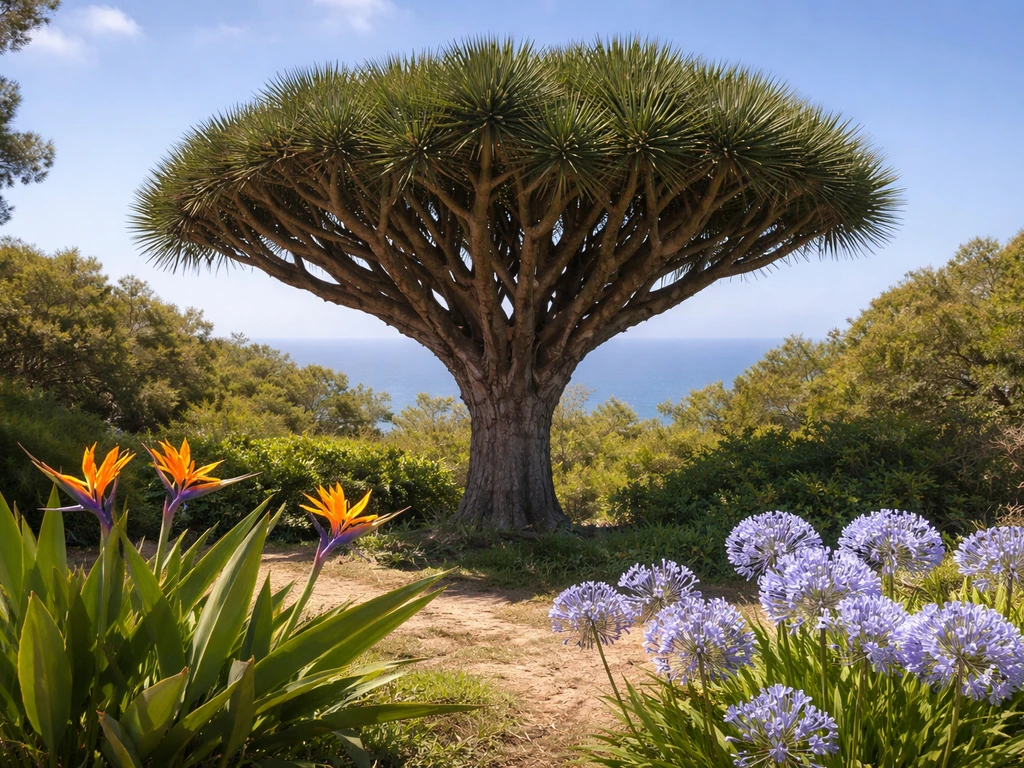
The dragon tree (Dracaena draco) is the island's botanical icon. Wild populations exist at altitudes of roughly 100 to 600 metres, but you'll find them grown ornamentally in town squares, parks, and private gardens all over the island. They're slow-growing but virtually indestructible once established, and they make a dramatic statement in any landscape.
Strelitzia (bird of paradise) and agapanthus are everywhere in coastal gardens, tolerating heat and low rainfall beautifully. Bougainvillea scrambles over walls across the south and lower north. Hibiscus, plumbago, and lantana fill warm-climate gardens with colour year-round. Succulents, including aeoniums (which are native to the Canaries), fit naturally and ask almost nothing from you.
At higher elevations, the endemic red bugloss (Echium wildpretii) is one of the most spectacular plants on the island. This biennial produces towering red flower spikes and is found naturally in the subalpine zone around Teide National Park, in rocky ravines and slopes at high altitude. It also appears in areas like Vilaflor and the high zones of Arafo and Arico. It prefers cool, dry, sunny conditions on free-draining volcanic ground, so trying to grow it in a humid coastal garden usually ends in disappointment. If you're gardening above 1,000 metres in a sunny, well-drained spot, it's worth attempting.
For cut flowers and commercial ornamentals, the sector is well established on Tenerife. Proteas, strelitzia, and various tropical foliage plants are grown for export. If you want a productive ornamental garden rather than just a pretty one, these are proven crops with real market demand.
Picking the right plants for your specific spot
The biggest mistake beginners make on Tenerife is treating the island as a single climate. Your exact location, altitude, and which direction your land faces will define your options more than any general advice. Use this table as a starting framework:
| Zone | Altitude | Rainfall / Water | Best plant choices | Watch out for |
|---|---|---|---|---|
| South coast | 0–400 m | Under 100 mm/yr; irrigation essential | Bananas, tomatoes, onions, peppers, succulents, drought-hardy ornamentals | Irrigation failure; whitefly; heat stress on seedlings |
| North coast | 0–400 m | Moderate; trade-wind moisture | Bananas, tomatoes, avocados, citrus, tropical fruits, herbs | Humidity-related fungal disease |
| Mid-altitude (north) | 400–1,200 m | Higher rainfall; cloud influence | Avocados, citrus, grapes, potatoes, leafy veg, broad beans, laurel-forest natives | Overwatering; laurel rot in heavy soils |
| Mid-altitude (south) | 400–1,200 m | Drier; some seasonal rain | Grapes, potatoes, maize, drought-tolerant herbs, figs, loquats | Irrigation dependency; late-season dry spells |
| High altitude | 1,200–2,000 m | Dry above cloud layer; cool winters | Echium wildpretii, cool-season veg, apples, peaches, cold-hardy herbs | Frost risk in winter; rocky volcanic soils |
Aspect matters almost as much as altitude. A south-facing slope at 500 metres behaves more like a coastal garden than a mountain one. A north-facing slope at the same height stays cooler and moister. If your land catches the afternoon sea breeze, salt tolerance becomes a factor for anything exposed.
Soil on Tenerife is volcanic and varies enormously. The dark basaltic soils of the north are often rich but can be heavy and waterlogged if drainage is poor. Southern soils tend to be sandier and more alkaline. Whatever your soil type, adding organic matter in the form of compost consistently improves it. Container growing is a surprisingly practical option for anyone with limited or very rocky ground, especially in the south.
Drip irrigation is the standard and the smartest choice for most situations. It conserves water, which matters across most of the island, and it reduces fungal problems by keeping foliage dry. Sprinkler irrigation uses significantly more water and is harder to justify in the drier zones. The Cabildo actively supports irrigation water supply for southern farmers through reservoir management, but for home growers, installing an efficient drip system from the start saves money and headaches.
Where to get seeds and seedlings, and how to start
Tenerife has good local nursery options, and using them is strongly recommended over ordering from mainland Spain. Several mainland online seed retailers do not ship to the Canary Islands at all, so confirm delivery zones before ordering online. For in-person shopping, a few reliable options include:
- Jardeco Garden Center (Guargacho, Arona): a solid full-range garden centre in the south
- Jardinería El Castillo (Los Realejos): one of the island's longer-established nurseries, founded in 1981, with centres in both north and south Tenerife
- Succulent Valley S.L. (Arona): focuses on succulents but also sells seeds, substrates, and garden accessories
- Roots Macaronesia: a Tenerife-based garden centre that caters specifically to urban gardens, vegetable seedbeds, and horticultural growing, with home delivery available
For online seeds, Planeta Semilla is an option that sells ecological and traditional varieties and may be worth checking for delivery to the Canary Islands. Always verify shipping terms before purchasing.
How to start: direct sow or buy seedlings?
For most vegetables, buying seedlings from a local nursery saves time and reduces the risk of early failure, especially if you are new to Tenerife's conditions. Tomatoes, peppers, and aubergines are almost always better started as seedlings. Direct sowing works well for root crops like potatoes, beans, courgettes, and herbs. Broad beans can go in direct from late summer onward for a long harvesting window into the following year.
Timing is year-round on Tenerife in many zones, which is one of the great advantages of the island. At coastal elevations you can plant tomatoes in both spring and autumn, giving two productive seasons per year. The summer heat peak in the south (July and August) is the hardest time for many vegetables, so many growers treat that as a rest or soil preparation period rather than a planting window.
Common beginner mistakes to avoid
- Assuming the whole island has the same climate: always calibrate advice to your altitude and side of the island
- Underestimating irrigation needs in the south: plants can fail within days without water in summer
- Planting without improving volcanic soil: add compost before planting, especially in the sandy south
- Ignoring whitefly on tomatoes: check the undersides of leaves weekly and act early, as populations explode fast in warm conditions
- Choosing plants based on what looks good at the nursery rather than what suits your zone: a plant thriving at a coastal nursery may struggle at 800 metres
- Overwatering in humid northern zones: fungal root problems are as common as drought stress on the north side
- Not using drip irrigation from the start: overhead watering wastes water and increases disease risk, particularly for tomatoes and other fruiting crops
Tenerife rewards growers who pay attention to its microclimates. If you are wondering what Mission Santa Barbara grew, the same idea applies: it depends on the specific climate, soil, and irrigation conditions in that place. If you are wondering how do St Augustine grow, focus on choosing the right warm, sunny spot and setting up consistent watering early on Tenerife rewards growers who pay attention to its microclimates. .
The island's plant diversity is genuinely extraordinary, and if you have ever looked at what grows in a comparable subtropical island environment like Gran Canaria, you will notice strong similarities in the coastal crop mix, though Tenerife's greater altitude range gives it a broader palette overall. Work with your zone rather than against it, source plants locally, set up efficient irrigation early, and Tenerife will grow almost anything you ask of it.
FAQ
Can I grow the same things on the whole island, or does it really depend on location?
Yes, but only if you match the plant to the elevation and exposure. For most vegetables, the workable window is the coastal to mid-altitude bands, and for heat-sensitive crops you typically need the cooler, cloud-moister north-facing side or higher ground (around and above 600 m). If you plant the same crop in a hot, sunny south plot, varieties that “should grow” on Tenerife often fail during July and August.
What matters more for choosing crops, altitude or which side of the island I’m on?
You can, but start by defining your microclimate, not just your altitude. A south-facing slope at 500 m often behaves more like a coastal garden than a mountain site, while a north-facing slope at the same height stays cooler and wetter. If you are choosing varieties, pick by aspect and shelter first, then by watering needs, because sun exposure and afternoon sea-breeze effects can flip which crops succeed.
Do bananas need irrigation year-round in Tenerife?
For banana trees, the key constraint is steady moisture. In practice, that means installing drip irrigation and keeping it consistent through dry spells, especially in the south where rainfall can be very low. If you rely on occasional watering, you may get plants that look alive but produce poorly or suffer leaf damage.
Is there one best time of year to plant everything?
If you want vegetables to actually produce, aim for a plan that matches the planting rhythm of your zone. Tomatoes and many warm crops can be planted in spring and autumn at coastal elevations, but the south often becomes a stress period in midsummer, so treating July and August as a maintenance or soil-prep phase prevents repeated crop failures. At higher elevations, start shifting to cool-season crops from autumn onward.
What’s the most common reason tomato crops fail in Tenerife?
Because Tenerife’s biggest plant-health issues are driven by humidity pockets and watering style, pests like whitefly and diseases like powdery mildew and grey mold are worse when foliage stays wet or airflow is poor. If you grow in a greenhouse or tunnel, set up ventilation early, monitor underside leaves frequently, and avoid heavy overhead watering. The goal is to keep plant surfaces dry and to catch problems before they spread.
Can I grow Echium wildpretii, the red bugloss, in a coastal garden?
Yes, but treat free-draining soil as non-negotiable. The red bugloss (Echium wildpretii) is adapted to cool, dry, sunny conditions and volcanic, well-drained ground. In humid coastal gardens it often declines, so if you are below about 1,000 m or your soil holds moisture, you may need a raised bed with coarse drainage material (or it may still not work).
Should I buy seedlings or start from seed in Tenerife?
Local nurseries are usually the safest choice when you are new because plants are more likely to already be adapted to local conditions and timing. Seed can work for many crops, but verify Canary Island shipping, and expect that direct sowing is more reliable for some root crops than for demanding transplants. A practical approach is to buy seedlings for tomatoes, peppers, and aubergines, and direct sow root crops and herbs.
How do I know whether my Tenerife soil is too heavy or too alkaline for what I want to grow?
Use compost, then check drainage behavior before adding more inputs. Northern soils can be rich but heavy, and poor drainage can cause waterlogging even if you add organic matter. Southern soils can be sandier and more alkaline, so you may need to adjust expectations for crop types and focus on moisture management and soil structure, especially in containers.
Does the sea wind affect what I can grow, and how can I plan for it?
Salt-laden wind can stress exposed plants, especially on open coastal slopes. If your garden gets afternoon sea breeze, choose salt-tolerant ornamentals and hardy herbs first, and consider wind protection for vegetables. This is one of those factors that can matter as much as temperature for whether “the same crop” thrives.
Is container gardening a good solution on Tenerife, and will it change my plant choices?
A container can be very effective in Tenerife when ground is rocky, shallow, or awkward for drainage. The fresh advantage of containers is that you can control soil mix, watering frequency, and drainage, which is important in drier southern areas and in heavy northern soils. Just remember that pots dry out faster in exposed sun, so drip systems or scheduled deep watering become more important than in-ground planting.
Next Article
Is Miracle-Gro Good for Mandevilla? How to Feed It Safely
Yes, Miracle-Gro can feed mandevilla safely. Get correct NPK choice, dilution, schedule, and signs to avoid burn.