Yes, Miracle-Gro can work well for oleanders, but the formula you pick matters a lot. The water-soluble All Purpose Plant Food (24-8-16) and the Shake 'N Feed Flowering Trees & Shrubs granular (18-6-12) are both solid choices if you follow label rates carefully. What you want to avoid is over-applying high-nitrogen formulas, which pushes leafy growth at the expense of flowers and can set you up for real problems down the road. Use the right product at the right rate, and your oleander will respond well.
Is Miracle-Gro Good for Oleanders? Safe Fertilizing Guide

Marcus Weir
27 Jun 2026
Which Miracle-Gro formulas to use (and which to skip)
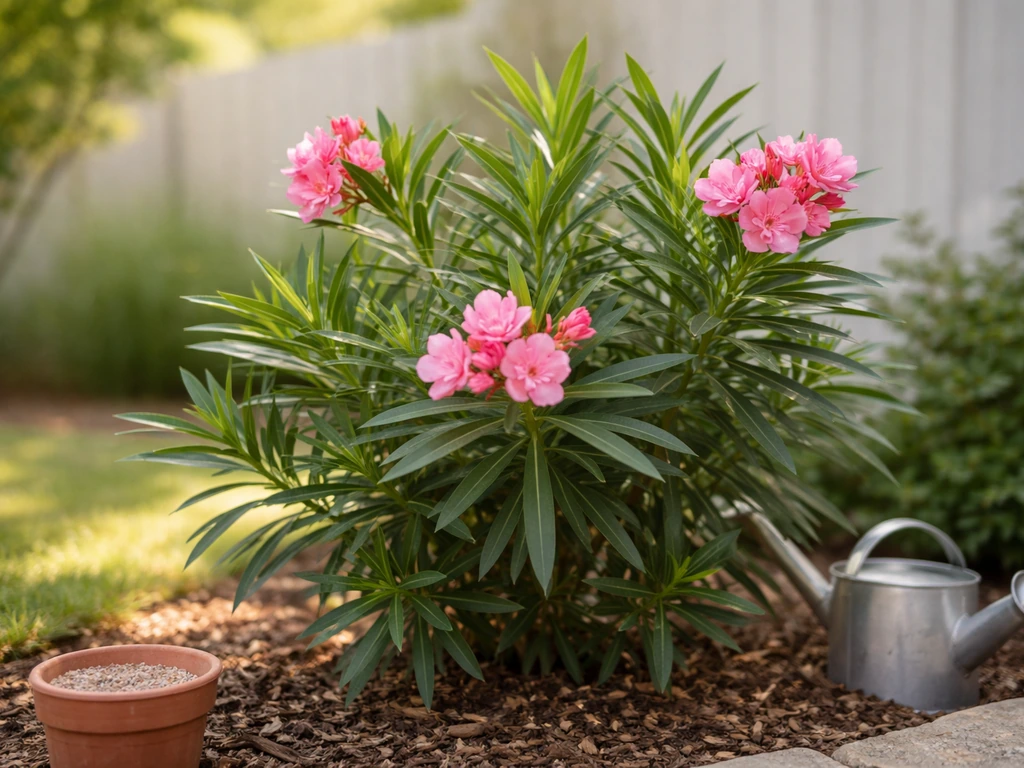
Not all Miracle-Gro products are created equal for oleanders. These are drought-tolerant, flowering shrubs that thrive on a moderate, balanced diet. They don't need to be pushed hard, and they'll punish you with fewer blooms if you dump on too much nitrogen.
| Product | NPK | Format | Verdict for Oleanders |
|---|---|---|---|
| Miracle-Gro All Purpose Water Soluble Plant Food | 24-8-16 | Water-soluble powder | Good choice at correct dilution — balanced enough if not overused |
| Miracle-Gro Shake 'N Feed Flowering Trees & Shrubs | 18-6-12 | Continuous-release granular | Best option — feeds slowly over ~3 months, lower risk of burn |
| Miracle-Gro All Purpose Granules (general) | varies, often high N | Granular | Use with caution — easy to over-apply nitrogen |
| Miracle-Gro Bloom Booster | 15-30-15 | Water-soluble | Situational — very high phosphorus, overkill for established plants |
| Miracle-Gro Lawn Fertilizer | high N, no P | Granular | Avoid — not formulated for shrubs, will push foliage over flowers |
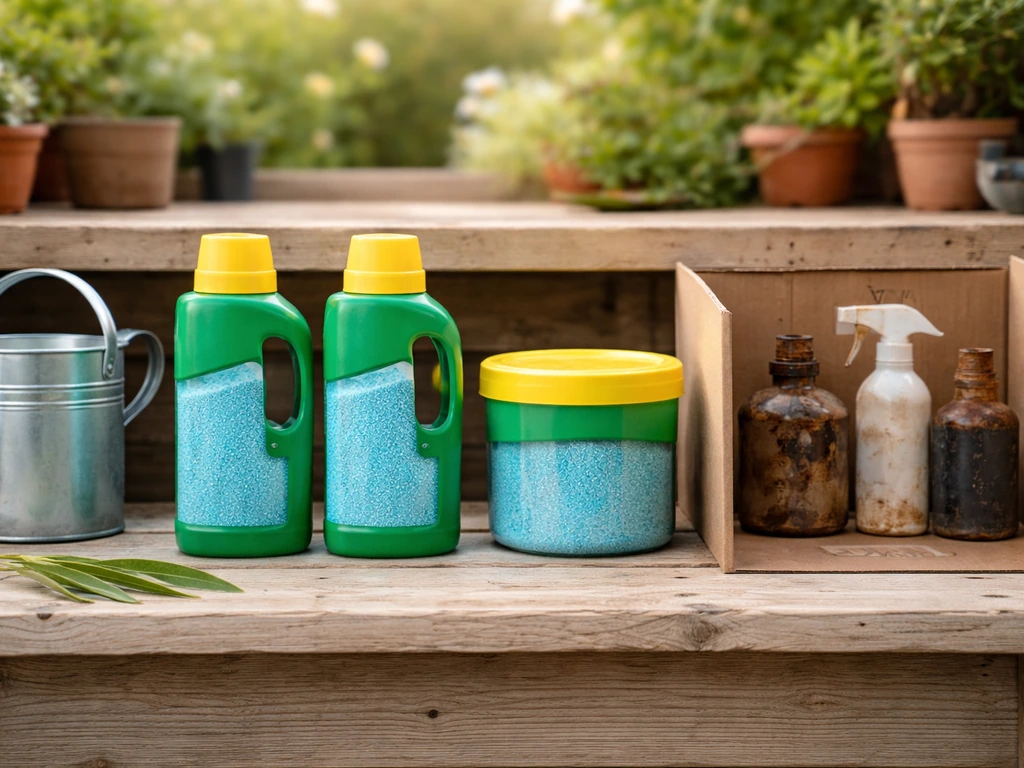
If I had to pick one Miracle-Gro product for oleanders, I'd go with the Shake 'N Feed Flowering Trees & Shrubs. The 18-6-12 ratio is well-suited to a flowering shrub, the slow-release format reduces burn risk significantly (especially important if you're growing in containers), and one application covers about three months. That's a lot less room for error than mixing and applying a water-soluble product every couple of weeks.
The 24-8-16 water-soluble formula is fine too, particularly if you want more control or you're trying to correct a deficiency quickly. Just respect the dilution, more on that in the next section.
How to fertilize oleanders step by step
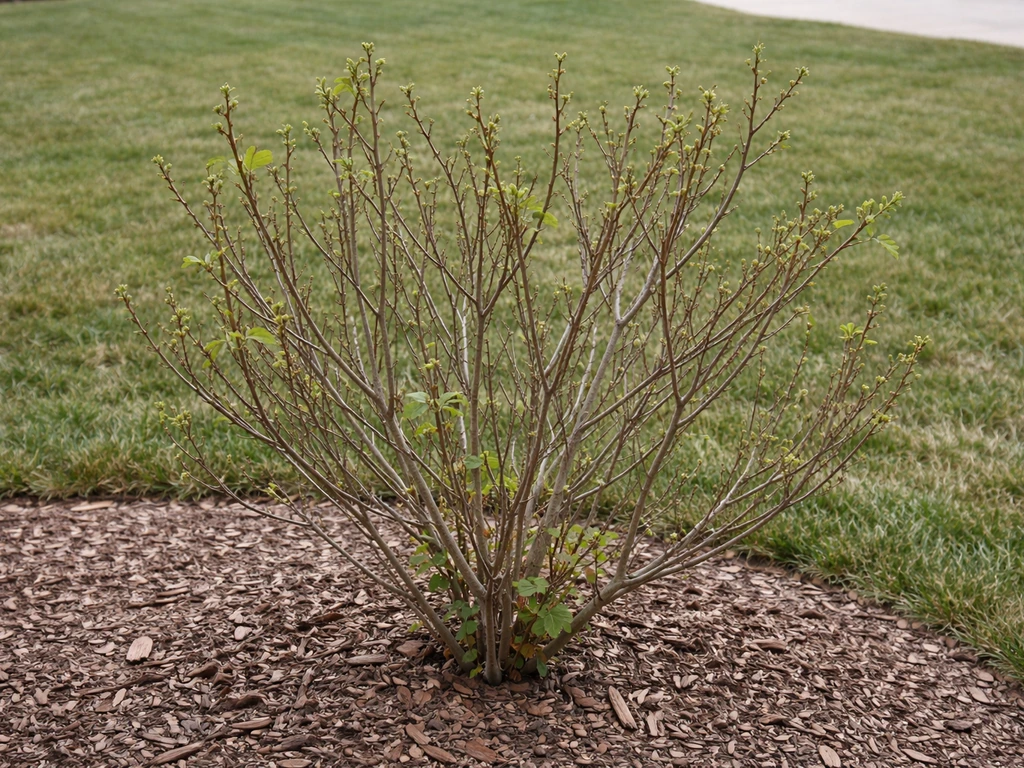
Timing is everything with oleanders. They're actively growing from spring through early fall, and that's when feeding pays off. Crepe myrtles do best with a balanced fertilizer applied during the growing season, then tapered off as growth slows feeding pays off. Fertilizing outside that window, especially in late fall or winter, is wasted effort at best and harmful at worst, since roots won't absorb nutrients efficiently and you're just loading the soil with salts.
Timing across the season
Clemson Extension advises timing shrub fertilizer applications to match active plant demand: that means spring to early summer and again in late summer to early fall. For oleanders, a practical schedule is three applications per year for established plants: once in early spring as new growth starts, once in late spring or early summer, and once in late summer (no later than about 6 to 8 weeks before your first frost). For young oleanders in their first or second year, two applications (early spring and midsummer) are plenty.
Application rates and dilution
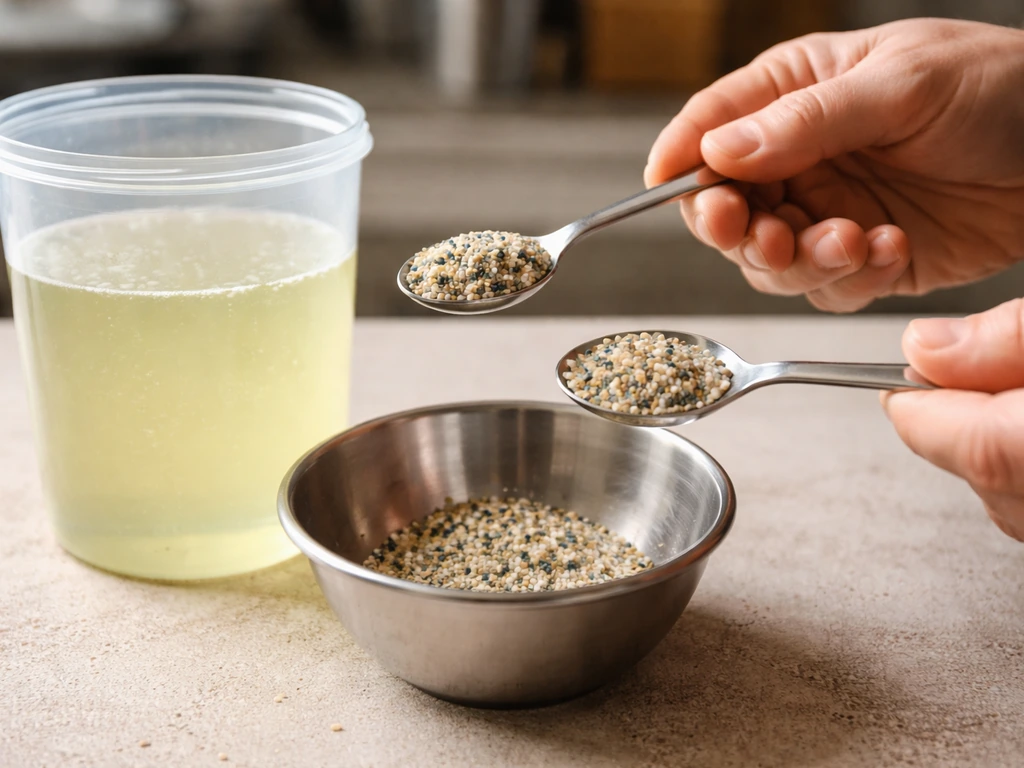
- Water-soluble 24-8-16: Mix 1/2 teaspoon per gallon of water for smaller plants or pots, or 1 tablespoon per gallon for large in-ground shrubs per label guidance. Always start at the lower end if you're unsure.
- Shake 'N Feed granular 18-6-12: Follow label rates by plant size. For a mature oleander, this is typically 1 to 1.5 cups scattered around the drip line, worked lightly into the soil surface.
- Container plants: Use about half the recommended rate. Pots concentrate salts faster than open soil, and roots have nowhere to escape if you overdo it.
- Never apply dry granules against the stem — keep all fertilizer at least 6 inches away from the base of the plant.
The watering piece
Water plays a direct role in whether your fertilizer helps or hurts. If your crepe myrtle still won't grow, focus on causes like insufficient light, poor watering, or too much fertilizer before changing products why won't my crepe myrtle grow. For water-soluble products, you're applying the nutrient solution directly, so the soil should already be moist beforehand, don't feed a bone-dry plant.
For granular products, water thoroughly immediately after application to start dissolving the granules and move nutrients into the root zone. Iowa State Extension recommends applying just before a light rain (not heavy rain) or watering in right after, the goal is gentle soil movement, not runoff. Don't fertilize the day before a heavy storm or on a windy day, as the EPA specifically calls out both of those conditions as high-runoff risk situations.
EPA guidance on implementing management measures for urban nutrient runoff emphasizes scheduling nutrient application around favorable conditions and reducing runoff risk high-runoff risk situations.
Reading your oleander: too much vs. too little fertilizer
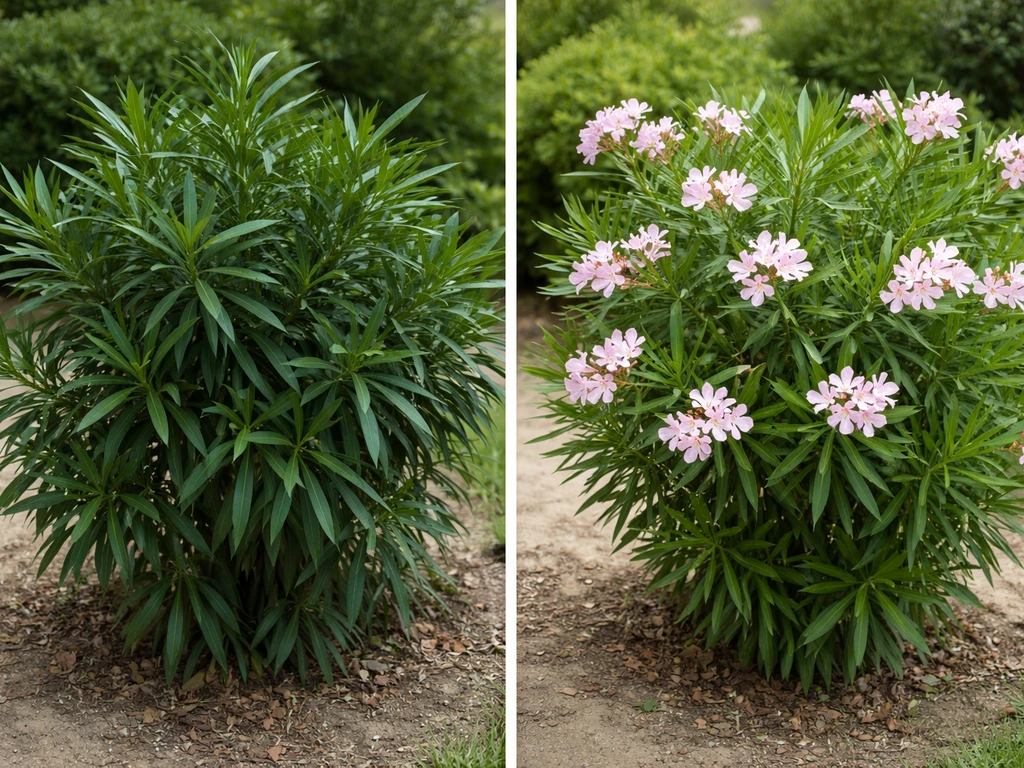
Oleanders are pretty communicative if you know what to look for. Getting the nutrient balance wrong in either direction shows up in predictable ways, and catching it early saves you from a lot of trouble.
Signs of overfertilizing (too much nitrogen especially)
- Lush, very dark green leaves but few or no flowers — this is the classic high-nitrogen response that UC IPM documents: excess nitrogen promotes foliage at the expense of flowering
- Leaf margin and tip burn: yellow, brown, or gray scorching around the edges of leaves, often appearing evenly distributed across the plant (WSU Hortsense describes this pattern for fertilizer burn)
- Wilting despite adequate watering — a sign of salt stress affecting root water uptake
- Crusty white deposits on pot soil surface (container plants) — salt accumulation
Signs of underfertilizing (nutrient deficiency)
- Pale or yellowing leaves overall, especially older lower leaves — nitrogen deficiency
- Slow growth, small new leaves, weak stems
- Sparse flowering even during prime growing season
- Purple or reddish tinge on undersides of leaves — can signal phosphorus deficiency
If you see burn symptoms, flush the soil with plain water (a lot of it, several times the pot volume for containers) and hold off fertilizing for at least 4 to 6 weeks. If you see deficiency symptoms and you know you've been fertilizing, it might be a pH problem rather than a feeding problem: oleanders prefer soil pH between 6.0 and 7.5, and nutrients lock out of range.
Safety and handling: this plant is not forgiving
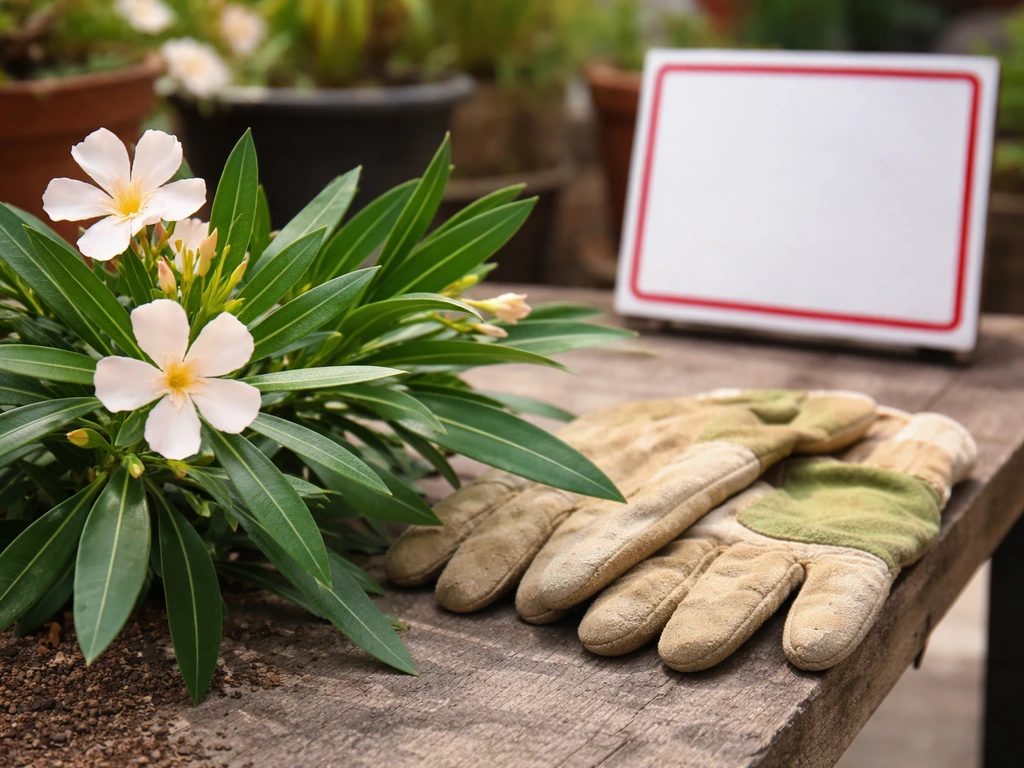
Here's something that gets skipped a lot in oleander fertilizing guides: the plant itself is seriously toxic. Every part of Nerium oleander is dangerous to people and animals. The ASPCA lists oleander as toxic to dogs, cats, and horses, with ingestion capable of causing severe effects. If you're wondering about dogwood trees specifically, it's important to use a dogwood-appropriate fertilizer and avoid heavy, high-nitrogen feeding. If you're applying fertilizer and get sap on your hands from handling pruned stems or leaves, wash thoroughly before touching your face. Wear gloves. This isn't excessive caution, it's just basic handling protocol for a plant that the ASPCA flags as a genuine emergency-call situation if eaten.
Fertilizer-specific safety practices
- Keep pets and children out of the area during and immediately after application — both the fertilizer and disturbed plant material are hazards
- Don't fertilize near drainage ditches, streams, or hard surfaces where runoff can carry nutrients into waterways (EPA guidance is explicit on this)
- Never fertilize a stressed plant: drought stress, recent transplanting, root damage, or disease makes a plant far more vulnerable to fertilizer burn — the roots can't process nutrients normally
- For container oleanders, flush the pot with plain water every 4 to 6 weeks during the growing season to prevent salt buildup, especially if you're using water-soluble products regularly
- Store Miracle-Gro products out of reach of children and away from pet areas — the powder/granules are attractive and can cause GI irritation if ingested
Alternatives to Miracle-Gro for oleanders
Miracle-Gro is convenient and effective, but it's not the only option, and for some setups it genuinely isn't the best choice. If you're growing oleanders organically, or you've had burn problems with synthetic products, or you just want something lower-maintenance, there are solid alternatives.
| Option | Type | Best For | Notes |
|---|---|---|---|
| Balanced slow-release granular (e.g., 10-10-10 or 14-14-14) | Synthetic slow-release | In-ground established oleanders | Apply once in spring, low burn risk, widely available |
| Osmocote Flower & Vegetable (14-14-14) | Controlled-release synthetic | Containers and in-ground | Feeds for 4 months, very low burn risk, easy to use |
| Fish emulsion (4-1-1 or similar) | Organic liquid | Quick green-up, soil health | Lower N than Miracle-Gro, apply more frequently, strong smell |
| Compost (well-aged) | Organic amendment | Soil conditioning + mild feeding | Top-dress 2–3 inches around drip line each spring, improves drainage and biology |
| Aged cow or chicken manure | Organic amendment | Long-term soil health | Work in lightly before growing season, avoid fresh manure (too hot) |
| Espoma Plant-tone or Holly-tone | Organic granular | Acid-leaning soils, organic gardens | Slow release, good micronutrient profile, safe around pets once watered in |
Compost is honestly underrated for oleanders. A 2 to 3 inch top-dressing of finished compost in early spring does double duty: it feeds the plant slowly through the season and improves soil structure so water and nutrients move more efficiently. You'll see slower results than a water-soluble fertilizer, but the plant's health over multiple seasons is noticeably better. I've had oleanders on a compost-only program produce just as many flowers as ones fed with synthetic fertilizers, and with far less risk of burning or runoff.
If you're also growing other flowering shrubs nearby, the fertilizing approach that works for oleanders overlaps pretty well with what you'd do for crepe myrtles and magnolias. Magnolia trees can also benefit from balanced, label-rate fertilizer, but it's best to avoid high-nitrogen feeding that can cause problems later crepe myrtles and magnolias. These are all moderately heavy feeders that prefer a balanced NPK over excessive nitrogen, and the same principles around timing, runoff prevention, and avoiding stressed plants apply across all of them.
Common myths worth clearing up
- Myth: More fertilizer means more flowers. Not true for oleanders. Excess nitrogen, in particular, does the opposite — it drives leaf production and suppresses blooming. Stick to balanced formulas and proper rates.
- Myth: Oleanders are tough so they don't really need fertilizer. They're drought-tolerant, but that doesn't mean they perform well unfed. In poor or sandy soil especially, a twice-yearly feeding makes a real visible difference.
- Myth: You can skip watering after granular fertilizer application. You can't — unwatered granules sitting on dry soil don't just wait patiently. They can concentrate on the surface and cause burn if rain doesn't come.
- Myth: Any Miracle-Gro will do. As the formula table above shows, some products are genuinely better suited than others. A lawn fertilizer is not appropriate for a flowering shrub, period.
FAQ
Can I use Miracle-Gro on oleanders year-round, or should I stop at some point?
Stop feeding when oleanders start to slow down, typically in late fall. A common mistake is fertilizing late, which can push tender growth that gets damaged by cool weather. If your region has warm spells, keep feeding only until about 6 to 8 weeks before the first frost, then switch to plain watering and mulching.
How do I tell if my oleander needs fertilizer versus more light or water?
If the plant looks pale but the stems and growth are weak, fertilizer alone might not fix it. Oleanders usually need full sun to bloom well, and they also dislike inconsistent moisture. Before changing fertilizer brands, check for low light (long gaps between blooms), soggy roots (yellowing with poor growth), or drought stress (drooping and leaf curl).
Should I prefer water-soluble Miracle-Gro or granular for oleanders in containers?
Granular slow-release is often safer in containers because it reduces the chance of nutrient burn from a too-strong dose. If you use a water-soluble product, water the pot first, then apply diluted fertilizer, and avoid repeating too frequently. Also, container soil dries and concentrates salts faster, so expect more frequent flushing.
What dilution or rate mistakes cause the most problems with Miracle-Gro on oleanders?
The biggest issues come from using a higher concentration than the label and feeding too often. For water-soluble products, do not “top up” with extra applications after you already fed recently. For granular products, avoid guessing with “a little extra,” and use the labeled spread rate for the plant size or container volume.
If my oleander shows leaf burn after using Miracle-Gro, what should I do right away?
Flush the root zone with plain water and let it drain fully, then stop fertilizing for at least 4 to 6 weeks. For containers, you may need enough water to replace a significant portion of the pot water, not just a light rinse. If burn is severe and new growth is stalling, check drainage holes and consider repotting into fresh mix.
Can pH cause fertilizer issues even if I’m using the right Miracle-Gro formula?
Yes. Oleander prefers soil pH roughly between 6.0 and 7.5, and outside that range nutrients can become unavailable. A practical next step is to test your soil or container mix, then adjust with appropriate amendments rather than switching fertilizers repeatedly. If salts are building up, flushing and improving drainage can help even before a pH adjustment.
Is it okay to fertilize before a forecasted rain, and how can I avoid runoff?
Apply only when you can expect gentle moisture movement, not heavy runoff. A common safe approach is to water the plant first (so it is not bone-dry), apply fertilizer, then provide a light rain or immediate watering to start dissolving and moving nutrients into the root zone. Avoid fertilizing right before storms, and don’t fertilize on windy days to reduce product loss.
How often should I feed young oleanders versus established ones?
Young plants usually need less. A practical guideline is about two applications during active growth for first or second-year plants (early spring and midsummer). Established oleanders can often handle around three feedings during the growing season, spaced from early growth through late summer.
Will Miracle-Gro help oleanders bloom more, or can it actually reduce flowers?
It can help bloom if the fertilizer is balanced and used at label rates, but high-nitrogen feeding can reduce flowering by driving leafy growth. If you see lots of green growth with few buds, pause feeding and reassess sun exposure and pruning timing before increasing nitrogen.
Are there safer alternatives to synthetic Miracle-Gro if I want lower risk of burn or runoff?
Finished compost used as a light top-dressing in early spring can provide slow, steady nutrition with less salt risk. It may show slower results than a water-soluble product, but it often improves soil structure and reduces the urgency of frequent feeding. If you try compost-only, give it a full season before judging results.
What precautions should I take around oleanders and fertilizer handling?
Oleander is toxic if ingested, so keep pets and children away and avoid letting any plant material contaminate food prep areas. If you handle cut stems or leaves while fertilizing or pruning, wear gloves and wash hands thoroughly before touching your face. Dispose of trimmings safely so animals cannot access them.
Next Article
Why Won’t My Crepe Myrtle Grow? Fix It Fast With Checks
Diagnose why your crepe myrtle won’t grow and fix sunlight, soil, watering, pruning, cold damage, pests fast.