Plant boxwoods 12 to 18 inches apart, prune them in late winter to early spring to trigger branching, feed them once in spring with a balanced slow-release fertilizer, water deeply once or twice a week during the first year, and keep mulch thin and away from the stems. Do all of that consistently and most boxwood hedges will knit together into a dense, continuous mass within two to three growing seasons. If yours still look patchy or leggy after a season of good care, something specific is blocking new growth, and this guide will help you find and fix it.
How to Get Boxwoods to Grow Together: Fix Patchy Fill-In

Marcus Weir
11 May 2026
Why boxwoods won't fill in
People often blame one thing, but boxwood stagnation is almost always a combination of factors. University of Maryland Extension calls it 'decline,' a catch-all term that describes stunted growth, small leaf size, yellowing of interior foliage, premature leaf drop, and dieback. Penn State Extension’s boxwood disease guide explains that decline can involve stunted growth and dieback, and that stress from poorly drained sites can make winter injury worse. The causes stack on top of each other: drought stress, waterlogged roots, soil compaction, excessive mulch piled against the stems, planting too deep, or root injury from old construction work nearby. Winter desiccation adds another layer, killing outer branch tips and making a hedge look permanently patchy even after warmer weather arrives.
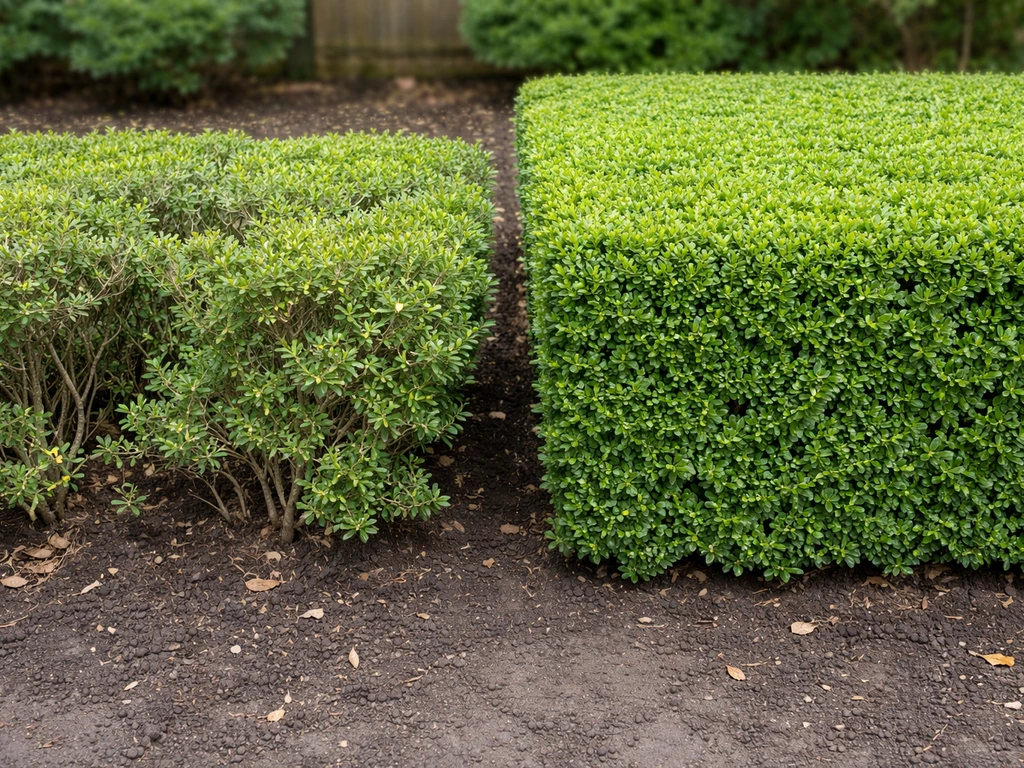
The other common culprit is excessive shearing. When you shear boxwoods the same way every season without thinning the interior, you create a dense shell of outer growth that blocks light from reaching the inside of the plant. The inner branches gradually go bare, and the hedge looks thick from a distance but is hollow and weak at its core. This is the opposite of what you want, and it is one of the main reasons established hedges stop filling in over time.
Spacing matters too, especially for new plantings. If your boxwoods are planted too far apart, they simply cannot reach each other at the rate they grow. On the other hand, planting them too close without pruning to manage airflow creates conditions that invite fungal diseases like Volutella canker and Macrophoma leaf spot, which eat away at new growth just as fast as it appears.
Check your planting setup first
Before you prune or fertilize anything, walk your hedge and look at the basics. A lot of corrective effort goes to waste if the site itself is working against the plants.
Spacing
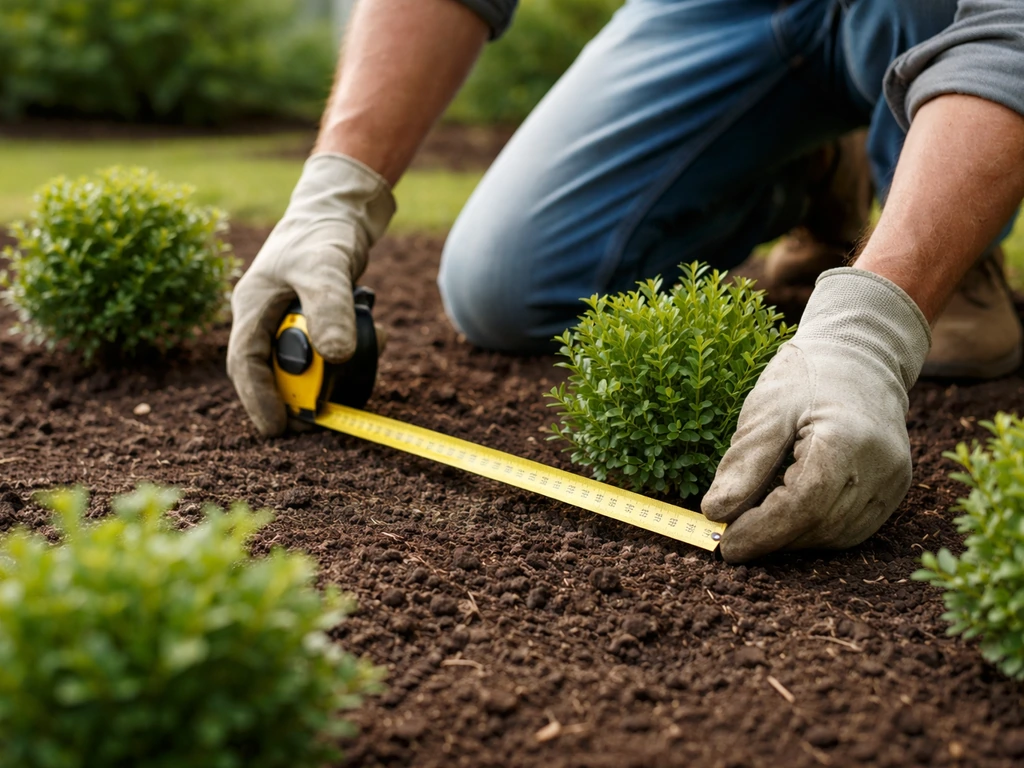
For a formal hedge that closes in quickly, plant boxwoods 12 to 18 inches apart. The Tree Center’s planting guide similarly recommends about 12 inches between small English boxwoods for a hedge, with wider spacing (around 18 inches) for larger hedge sizes plant boxwoods 12 to 18 inches apart.
A useful rule of thumb: measure the mature width of your specific cultivar and plant at roughly half that distance. If your boxwoods are already in the ground and spaced at 3 feet or more, they will eventually grow together, but it takes much longer and you may want to add plants in between to speed things up.
Varieties vary enormously in mature size, so matching the cultivar to the intended hedge height saves you years of fighting against the plant's natural growth rate.
Soil pH and quality
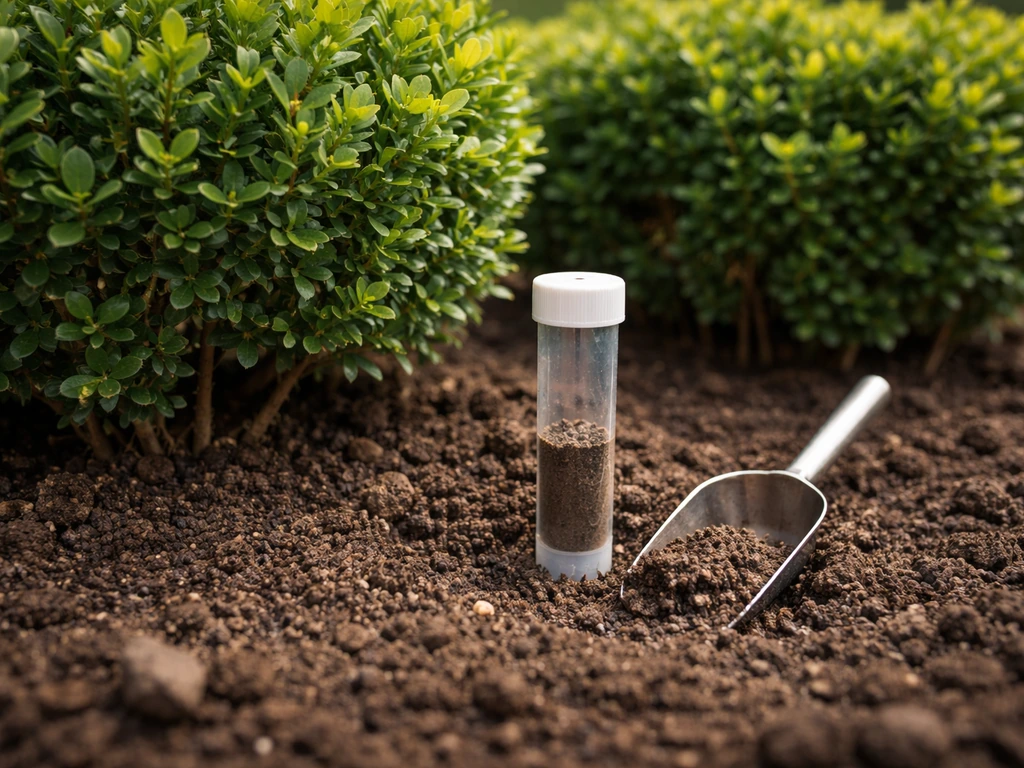
Boxwoods grow best in soil with a pH of about 6.5 to 7.5, slightly acidic to slightly alkaline. Outside that range, nutrient uptake slows even if you are fertilizing correctly. Get a simple soil test before you do anything else. If the pH is off, lime raises it and sulfur lowers it, but you need to know what you are working with. Compact, heavy soil also suffocates feeder roots, which sit mostly in the top 12 to 18 inches. If your soil clumps into a hard ball and cracks when dry, work in compost before planting or, for established plants, top-dress with compost and aerate around the root zone.
Sun and light
Boxwoods handle full sun to part shade, but as shade increases, the plants become less vigorous and more open. If your hedge runs under a dense tree canopy or along a north-facing wall where it gets fewer than four hours of direct light, expect slower, looser growth. You can improve the situation somewhat with good soil and consistent fertilizing, but you cannot fully compensate for deep shade. Relocating or thinning overhead trees is worth considering if light is genuinely the limiting factor.
Drainage
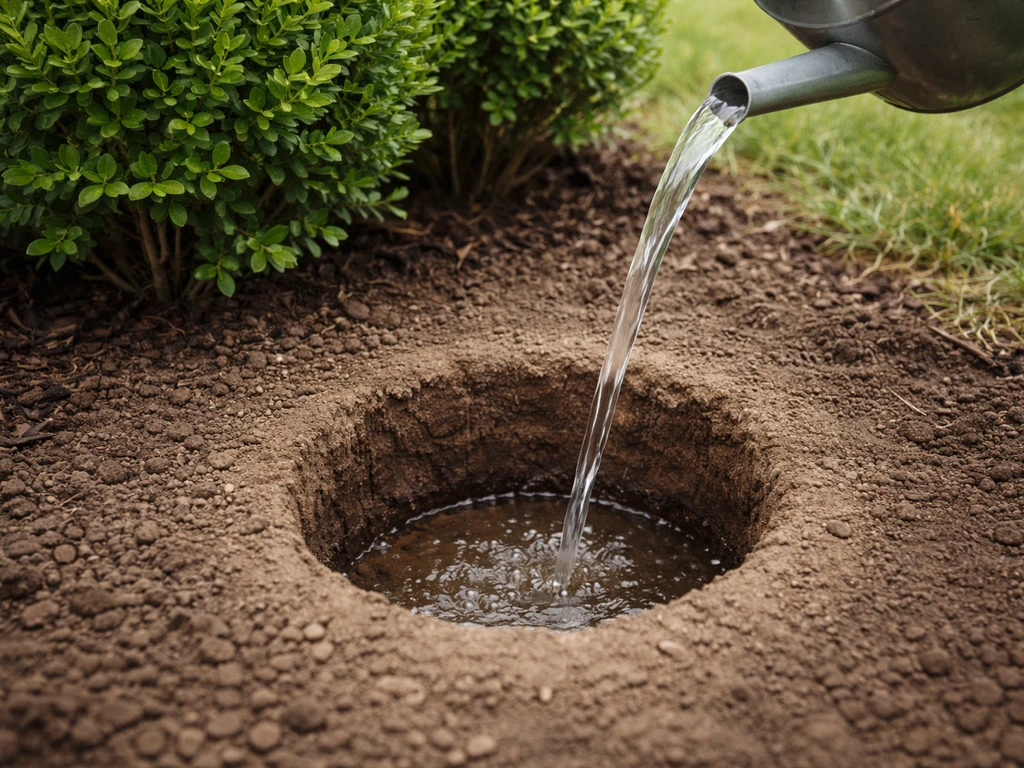
This is the one site factor most people overlook. Dig a hole about 12 inches deep near your boxwoods, fill it with water, and watch. In good soil, the water level should drop about 1 inch per hour. If it is still sitting there after several hours, you have a drainage problem. Waterlogged roots suffocate and become vulnerable to Phytophthora root rot, which looks almost identical to drought stress and winter damage from the outside. Raised planting beds, French drains, or simply choosing a different spot are your options. Avoid planting anywhere near downspouts.
Pruning and shaping for fuller shrubs
When to prune
The best window for major pruning is late winter to early spring, just before the plant breaks dormancy. Pruning at this time stimulates a flush of new growth as the season kicks in, and that new growth has the entire warm season to harden off before frost. Avoid pruning after August. Any tender shoots triggered by late-season cuts often do not have time to harden before the first freeze, and you lose that new growth entirely. Late-fall shearing is a common mistake, especially for people trying to tidy up a hedge before winter.
How to prune for density
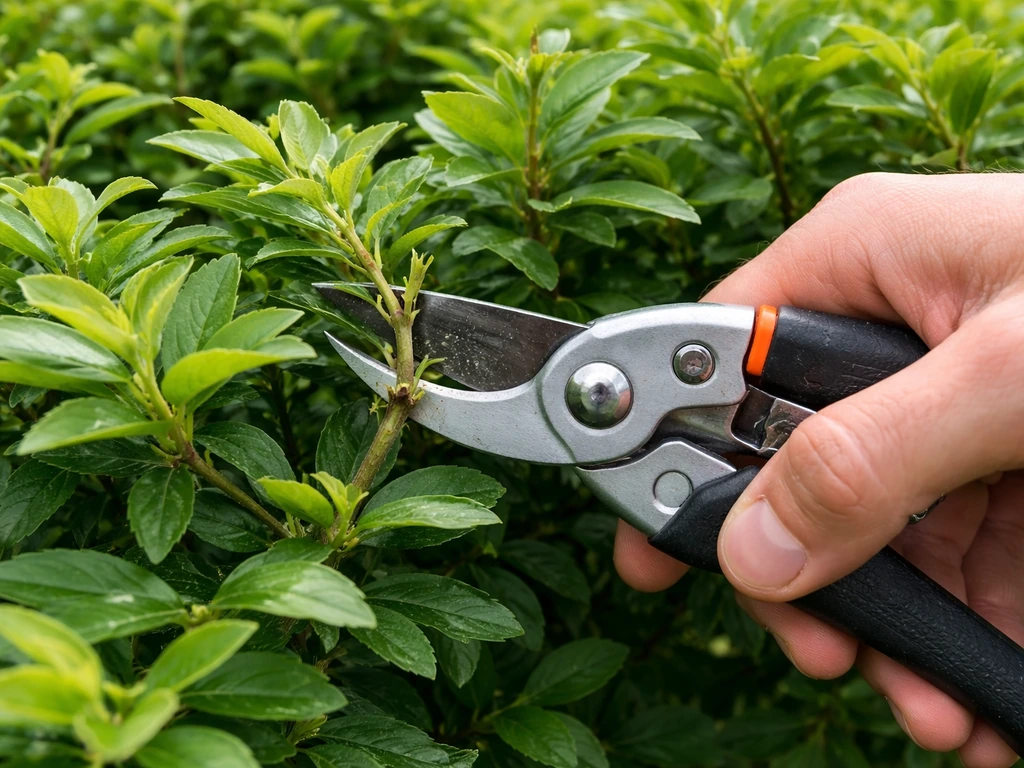
The goal is to encourage branching, not just reduce size. Always cut back to a side shoot rather than cutting into bare older wood with no foliage. New growth comes from active growing tips, so if you cut into old, leafless wood, those stems often will not re-sprout and you end up with dead stubs. For a hedge you want to thicken up, make your cuts just above a leaf node or side branch, which signals the plant to push new lateral shoots from that point.
If your hedge has developed that hollow-shell problem from years of surface shearing, thin the interior selectively with hand pruners to let light reach the inner branches. Do this gradually over two or three seasons rather than all at once. Removing too much at once exhausts the plant and opens it up to disease. The idea is to gradually retrain the growth pattern, not perform surgery.
Rejuvenation pruning for severely overgrown plants
For very old, woody, and leggy boxwoods that have lost all interior foliage, a hard rejuvenation cut in late winter can reset the structure. Some gardeners cut plants back to as low as 4 inches above the ground. This is a dramatic move and the plant will look rough for a full season, but healthy root systems usually push vigorous new shoots from the base. Do not do this every few years or you exhaust the plant. Reserve it for the genuine 'nothing else is working' situation, and only attempt it on plants that are otherwise healthy at the roots.
Fertilizing for density
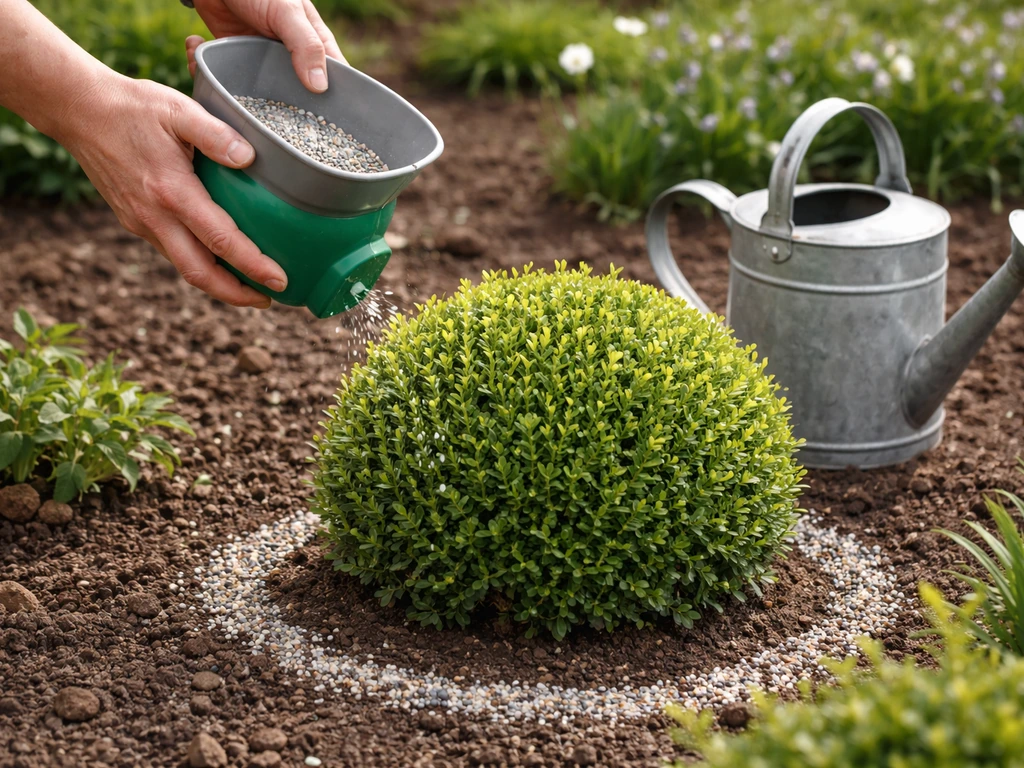
Boxwoods are not heavy feeders, and overfeeding is actually a common problem. If you are also wondering about other fertilizers, check whether Miracle-Gro products are suitable for junipers before applying them near your shrubs is miracle grow good for junipers. Miracle-Gro products are not usually the best choice for ferns, so it is worth checking the fertilizer type and strength before feeding them Miracle-Gro for ferns. Too much nitrogen pushes soft, fast growth that is attractive to pests and vulnerable to disease and frost damage. The goal is steady, moderate growth, not a sudden surge.
Feed boxwoods once in early spring with a balanced, slow-release granular fertilizer formulated for broadleaf evergreens or shrubs. Because gardeners often use similar plant-feeding products across landscape beds, you may wonder whether miracle-gro is good for pachysandra as well. You might also wonder whether Miracle-Gro products are good for boxwoods, and the answer depends on the specific fertilizer and how you apply it balanced slow-release fertilizer.
Apply it according to the package rate for the shrub's size, water it in well, and that is generally enough for the season. If your soil test shows a specific deficiency (low magnesium is common in boxwoods and causes yellowing), address that separately based on the test results. A second light feeding in early summer is acceptable for young plants trying to fill in, but skip any feeding after midsummer.
If you are also using fertilizer products on nearby plants like azaleas or arborvitae, keep in mind that boxwoods prefer neutral to slightly alkaline soil, while acid-loving plants like azaleas need a lower pH. If you are also feeding arborvitae, make sure the fertilizer matches arborvitae needs since products like Miracle-Gro can be too strong depending on your soil and timing. If you are also fertilizing azaleas, skip products that push the soil too alkaline for their needs. Using the same fertilizer on everything in the yard can pull your boxwood soil pH in the wrong direction over time.
Watering and root health for thick growth
Consistent, deep watering during the establishment period is one of the biggest factors in how quickly a hedge fills in. Most of the feeder roots sit in the top 12 to 18 inches of soil. Your watering should wet that entire depth, not just the surface. Shallow, frequent watering keeps roots near the top and makes the plants more vulnerable to heat and drought.
For the first year after planting, aim for about 1 inch of water per week from rain or irrigation. Water deeply once or twice a week rather than a little every day. Drip irrigation is excellent for boxwoods because it delivers water slowly at root level, reducing splash that can spread fungal spores. During heat waves or drought, increase frequency. Before the ground freezes in late autumn, give the plants a thorough, deep watering. Going into winter dry is a major cause of desiccation damage that shows up as browning the following spring.
Mulch matters here too. A 2 to 3 inch layer of wood chip or shredded bark mulch over the root zone retains moisture, moderates soil temperature, and suppresses weeds. But keep it to no more than about 4 inches total, and never pile it against the main stems. Mulch touching the stem keeps that tissue constantly moist, which invites rot and disease. Pull it back a few inches from the base of each plant. University of Maryland Extension recommends no more than 1 inch of mulch directly over the root zone, so spread it wider rather than deeper.
Weed and pest/disease control
Weeds compete directly with boxwood roots for water and nutrients, which slows the growth you are trying to encourage. Keep the area around your hedge clear, especially during the first two or three years when the plants are putting energy into root and canopy establishment. Proper mulching handles most of this automatically.
Pests to watch for
Two pests deserve close attention because they directly destroy the new growth you are trying to encourage. Boxwood mites cause stippling, which shows up as fine white or yellow dots on leaves early in the season, eventually giving the foliage a grayish, unhealthy look. Check the undersides of leaves with a hand lens if you suspect mites.
Box tree moth is more aggressive: caterpillars chew leaves and bark, leave behind silk webbing and dark green-black frass pellets inside the shrub, and can cause rapid defoliation and girdling if left unchecked. Look inside the canopy for webbing, especially in spring and early summer. This is an invasive pest spreading through the northeastern US, so check your plants regularly.
UMD Extension’s IPM Alerts has also reported a confirmed box tree moth detection in Washington County, Maryland in July 2025, highlighting ongoing spread in the Mid-Atlantic invasive pest spreading through the northeastern US. Boxwood leafminer is another common culprit, with larvae mining inside leaves and causing blistered, distorted foliage.
Diseases to diagnose correctly
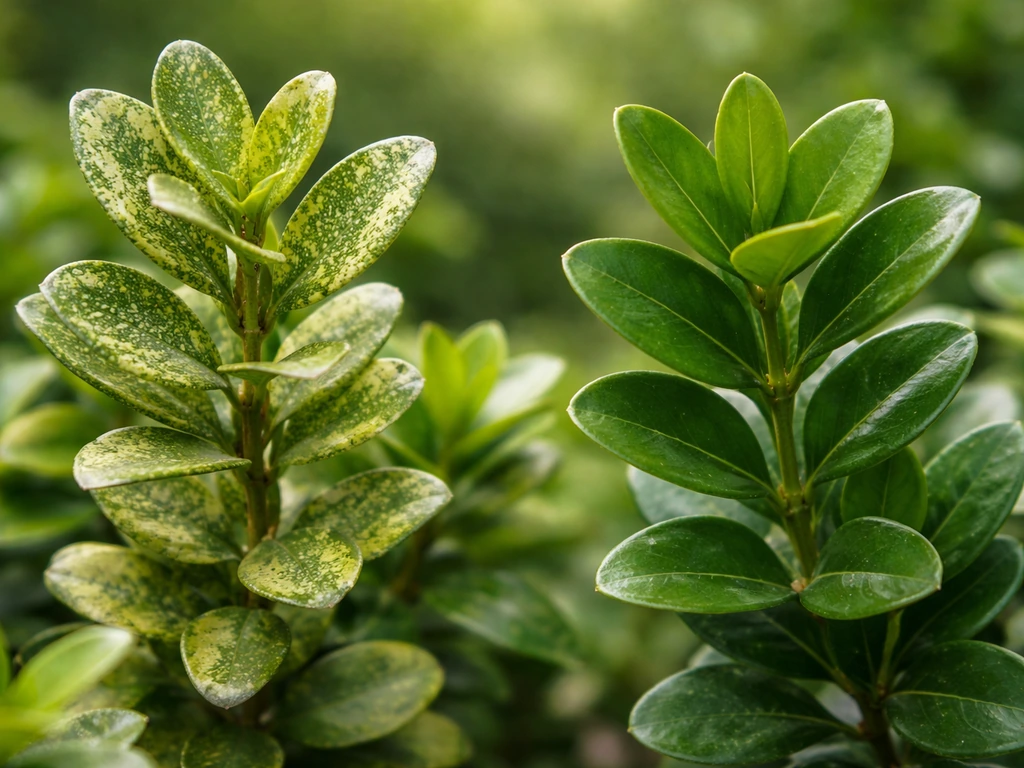
Getting the diagnosis right before you act saves a lot of effort. Use this quick symptom guide:
| Symptom | Likely cause | Key action |
|---|---|---|
| Fine white/yellow stippling on leaves | Boxwood mite | Treat with miticide; improve airflow |
| Leaf chewing, webbing, dark frass pellets | Box tree moth | Remove caterpillars; apply appropriate insecticide |
| Circular brown leaf spots, rapid defoliation, black streaks on stems | Boxwood blight | Remove and bag affected material; apply fungicide to nearby plants |
| General yellowing, small leaves, dieback with no clear spots or streaks | Decline (stress-based) | Correct water, mulch, drainage, and compaction issues |
| Browning in late winter/early spring, outer branch tips | Winter desiccation | Deep water before freeze next fall; consider burlap screen |
Boxwood blight deserves special caution. It spreads through contaminated plant material, tools, and even clothing, and it moves fast once established. If you see the combination of circular leaf spots, rapid upward-moving defoliation, and narrow black streaks on the stems, remove affected material carefully, bag it, and do not compost it. Disinfect your tools between cuts. If you are buying new boxwoods to fill gaps in an existing hedge, quarantine them for about a month and watch for symptom development before putting them in the ground near your established plants.
Dense growth actually raises disease risk slightly because airflow decreases inside the canopy. As your hedge fills in, open up the interior a little each season during your late-winter pruning session to maintain some airflow and reduce the warm, moist conditions that fungal diseases love.
Step-by-step plan to get boxwoods to grow together this season and next
Here is how I would approach this in practical terms, split across two seasons.
This season (now through end of summer)
- Do a site assessment: check spacing, soil pH (test kit or send a sample), drainage using the 12-inch hole test, and light levels. Write down what you find.
- Diagnose any existing problems using the symptom table above before you do anything else. Treat pests or diseases first.
- Prune in late winter/early spring (if you have not already): cut to side shoots to stimulate branching, and thin the interior of dense outer shells to let light in. Skip pruning if it is already past August.
- Fix mulch immediately: pull back any mulch piled against stems and reduce depth to no more than 3 to 4 inches, spread wide.
- Correct drainage if needed: redirect downspouts, add a raised bed, or plan to relocate plants in fall.
- Apply a slow-release balanced fertilizer in early spring. If it is already mid-season, apply a light feeding now and skip late-season applications.
- Set a watering schedule: 1 inch per week total, applied in one or two deep sessions rather than daily surface watering.
- Clear weeds from the root zone and maintain that clear space through summer.
- Scout weekly for box tree moth webbing and frass inside the canopy, and check leaf undersides for mite stippling.
Next season (fall through the following spring)
- Water deeply before the ground freezes in late fall to prevent winter desiccation.
- In early spring, do your main pruning session again to build on the branching you triggered last year.
- If gaps in the hedge are still large, add new plants in the spaces. Space them to meet the existing plants at mature half-width distance, quarantine them first if buying from a nursery.
- Repeat the fertilizer and watering routine from season one.
- Reassess soil pH if growth is still slow despite good conditions. Adjust with lime or sulfur based on the test.
- Continue interior thinning each spring to maintain airflow as the hedge fills in.
When to give up on a plant and start fresh
Not every boxwood is worth saving. If a plant has extensive root rot confirmed by soggy, blackened roots when you dig around it, or if boxwood blight has stripped it repeatedly despite treatment, or if it has been declining for three or more seasons despite correcting every site stressor, it is reasonable to pull it and replant. Replacing one or two failing plants in an otherwise healthy hedge is better than letting them drag down the surrounding plants through disease spread or resource competition.
Before you replant in the same spot, fix the underlying problem. If root rot killed the original plant, improve drainage first or you will lose the replacement too. If boxwood blight is in the soil debris around the root zone, remove as much old leaf litter and soil as practical and start with a blight-resistant cultivar. Some newer cultivars have been bred specifically for improved resistance, and matching the cultivar's mature size to your hedge target, as Virginia Tech's selection guidance points out, means far less corrective pruning over the long run.
Rejuvenation pruning, cutting hard back to near the ground in late winter, is a middle option for plants that still have a healthy root system but have completely lost their interior structure. Give a rejuvenated plant at least one full growing season before deciding it failed. If you see vigorous new shoots from the base by midsummer, the plant is responding and worth keeping. If nothing comes up by late summer, the root system is likely compromised and replacement is the right call.
FAQ
How long does it usually take for boxwoods to knit together into a solid hedge?
Most hedges visually start closing within 1 to 2 growing seasons, but true “solid” fill often takes 2 to 3 seasons. If you are planted correctly (about 12 to 18 inches apart for hedge closure), then patchiness after a full second growing season usually means a site stress issue (drainage, pH, winter desiccation) or a pruning pattern that prevents interior branching.
My boxwoods are close enough, but the inside still looks bare. What should I check first?
Start by checking whether you have created a “sheared shell,” where the outer growth is dense but interior light is blocked. Then look for two more drivers: whether you are pruning too late (after August) and whether deep shade is limiting new lateral buds. If the interior has no foliage, consider selective interior thinning over 2 to 3 seasons rather than trying to force a full fill all at once.
Can I speed up hedge closure by planting closer than 12 inches?
You can plant at the low end if airflow is adequate, but going much tighter increases the chance of fungal disease and keeps foliage wet longer. A safer acceleration method is adding plants in between existing ones, then managing pruning to encourage interior branching, instead of crowding every plant from day one.
What if my boxwoods were planted too deep, will pruning fix it?
Pruning cannot correct planting depth. If the trunk or stem flare is buried, feeder roots can struggle and plants may decline even with good feeding and watering. Fix by reassessing the planting depth, improving conditions around the root zone, and ensuring mulch stays off the stems, then prune only during the late-winter to early-spring window to trigger branching.
How do I tell if the issue is drought stress versus waterlogged roots?
Look at the pattern and do a drainage test. Drought stress usually tracks with dry conditions and wilting without soggy soil, while waterlogged problems show up as slow growth plus soil that stays wet after a fill-and-watch test near the roots. Winter desiccation can mimic both, so confirm site drainage early, before you increase watering or fertilizer.
Should I fertilize again if the hedge still looks patchy after spring?
Avoid reflexively adding more nitrogen. If you already fed once in early spring, wait for evidence of deficiency from a soil test before doing a second feeding. A light second feeding in early summer can help young plants, but skip feeding after midsummer because late growth is more likely to be lost to frost.
Is drip irrigation always better than sprinklers for boxwoods?
Drip is often easier on foliage and helps water soak into the top 12 to 18 inches where most feeder roots live. If you use sprinklers, water early in the day, avoid soaking the hedge leaves repeatedly, and make sure the total depth reaches root level rather than just wetting the surface. The main goal is deep, infrequent watering, not just frequent surface moisture.
What mulch thickness should I use to help boxwoods fill in faster?
A 2 to 3 inch layer over the root zone is generally ideal, but do not build it higher than about 4 inches total. Keep mulch a few inches back from each stem, because mulch touching the base stays too moist and can promote rot. If you want to follow a conservative approach, think roughly “around 1 inch directly over the root zone,” then spread wider rather than deeper.
How do I prune so the hedge grows together, without leaving dead stubs?
Always cut back to a living side shoot or leaf node, avoid cutting into older bare wood, because leafless wood often will not re-sprout. For thickening, make cuts that stimulate lateral branching. If you inherited years of surface shearing, thin interior branches gradually first so light reaches where new shoots can form.
Can I fix patchiness on an established hedge by doing a hard rejuvenation cut?
Only if the roots are healthy and you have a true “nothing else is working” situation. Hard cuts can reset structure, but the plant may look rough for a full season and you should not repeat it frequently. If there is no vigorous new growth from the base by midsummer, the root system may be compromised and replacement is often the better option.
My boxwoods look fine in the sun, but worse on one side. What causes uneven fill?
Uneven light and micro-site conditions are common. Check for drainage differences along the hedge line, root disturbance from nearby construction, downspouts, and wind exposure that can drive winter desiccation. Also inspect whether that side gets fewer than about four hours of direct light, because deep shade slows growth and increases openness.
Should I quarantine new boxwoods before planting them into gaps?
Yes. Even if the new plants look healthy, quarantine them about a month and monitor for symptoms before placing them near established hedges. This is especially important for diseases that spread through contaminated plant material, tools, and clothing, and it reduces the risk of introducing issues like boxwood blight.
What are the fastest “high impact” actions if I want the hedge to close sooner this year?
Prioritize the factors most likely to block interior branching: correct spacing if you can add plants, prune in late winter to early spring to stimulate lateral growth, address drainage if water sits near the roots, keep mulch off the stems, and ensure at least moderate direct light. Then manage pests early (mites, box tree moth, leafminer) because severe defoliation can set fill back by a full season.
Could pests or disease be the reason my boxwoods refuse to fill in?
Yes, heavy feeding on new growth can keep a hedge patchy even when watering and pruning are correct. Look for mites (fine stippling early), check the undersides of leaves, inspect inside the canopy for box tree moth silk and frass, and monitor for blistered distorted foliage from leafminer. If you suspect boxwood blight, remove affected material carefully and do not compost it, then disinfect tools between cuts.
Next Article
Is Miracle-Gro Good for Ferns and Boston Ferns?
Get clear guidance on using Miracle-Gro on ferns and Boston ferns, including dilution, frequency, and overfeeding signs.