Yes, Miracle-Gro can work for ferns, including Boston ferns, but you have to use it at half the normal indoor rate and only during active growth. Ferns are salt-sensitive, so the standard formulation at full strength can scorch fronds and build up harmful salts in the soil faster than with most houseplants. Dial it back, time it right, and Miracle-Gro becomes a perfectly reasonable tool. Use it carelessly and you'll get brown, crispy tips and a plant that looks worse than before you started.
Is Miracle-Gro Good for Ferns and Boston Ferns?

Marcus Weir
29 Apr 2026
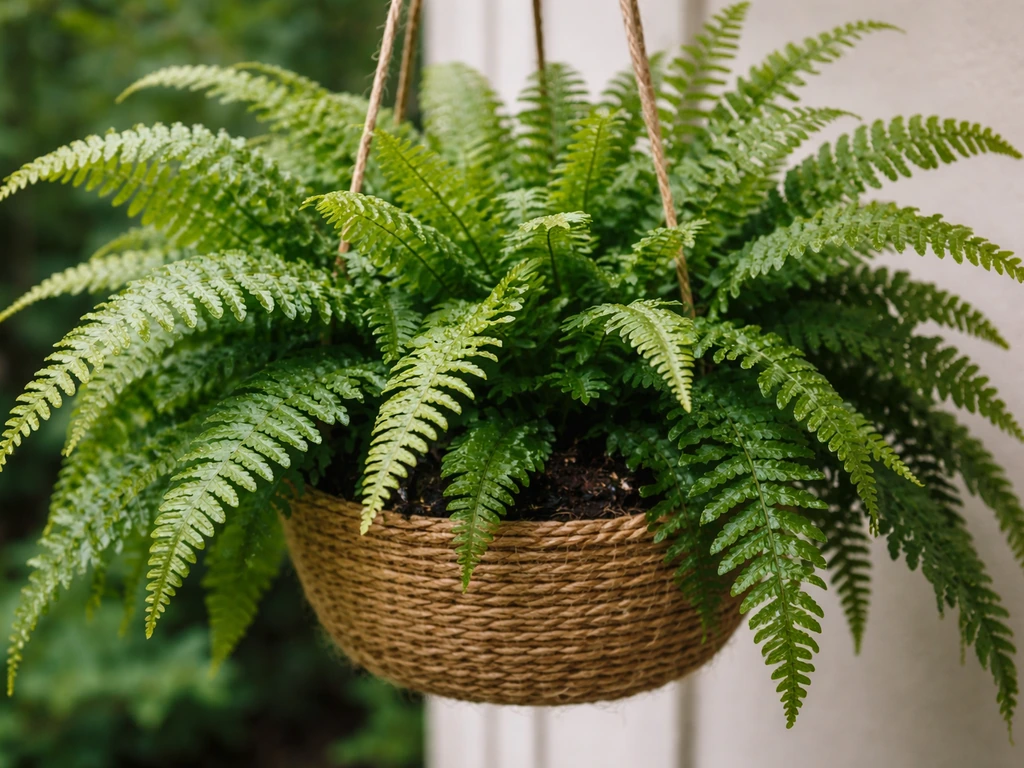
The direct answer for ferns and Boston ferns
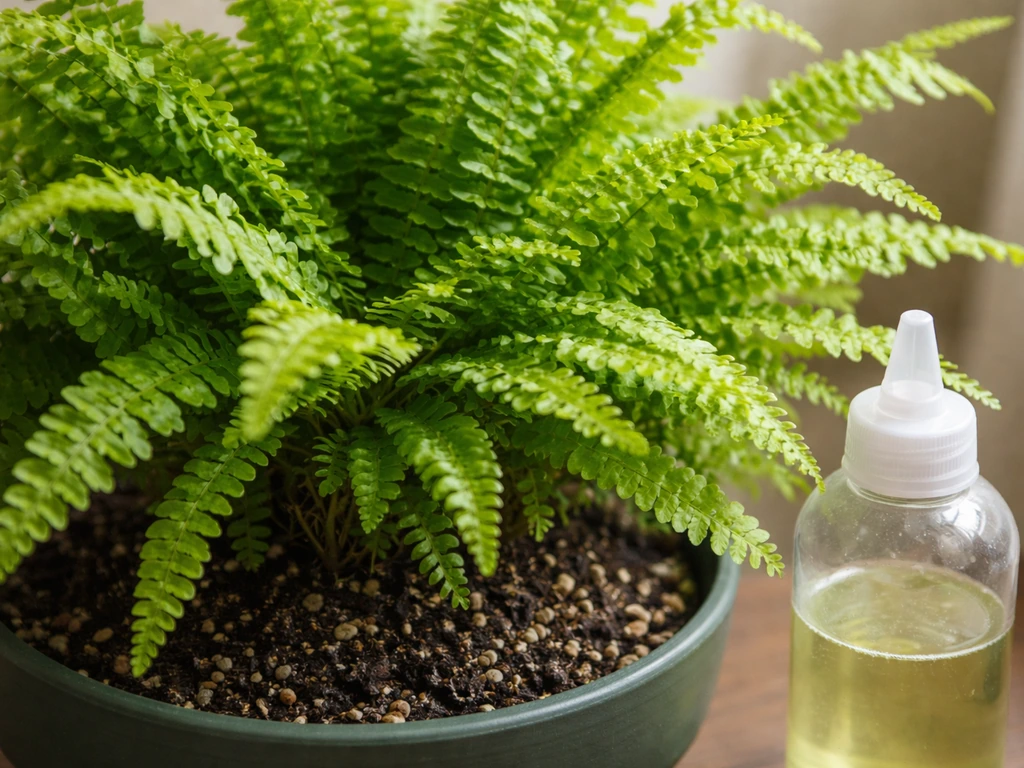
Ferns are light feeders. Boston ferns (Nephrolepis exaltata 'Bostoniensis') especially so. They grow naturally on forest floors where nutrients are present but never concentrated, which means they've never developed tolerance for the kind of fertilizer punch that a tomato or rose would happily absorb. blank" rel="noopener noreferrer">Miracle-Gro Water Soluble All Purpose Plant Food is formulated at 24-8-16 (N-P-K), which is a relatively high-nitrogen product. At the indoor label rate of 1/2 teaspoon per gallon of water, it's already on the gentle side for most houseplants. For ferns, you want to cut that again: use roughly 1/4 teaspoon per gallon, and feed no more than once every four to six weeks during spring and summer. Use the indoor Miracle-Gro directions of about 1/2 teaspoon per gallon and feed about every two weeks, according to the label directions in the Miracle-Gro PDF blank" rel="noopener noreferrer">about 1/4 teaspoon per gallon. In fall and winter, stop feeding entirely or feed only once every two months if the plant is still showing active growth.
The short version: Miracle-Gro works for ferns when heavily diluted and used sparingly. If you are also wondering about boxwoods, Miracle-Gro can be workable for them too, but the key is using a conservative amount and avoiding salt buildup in the root zone is miracle grow good for boxwoods. It is not the ideal fertilizer for them, but it won't hurt them if you respect the sensitivity.
Why Miracle-Gro can be tricky with ferns
The main issue isn't the product itself, it's the salt load. All synthetic soluble fertilizers, including Miracle-Gro, introduce soluble salts into your potting mix every time you water with them. Ferns are particularly vulnerable to salt accumulation. Too many salts in the root zone pull water away from roots through osmosis, essentially dehydrating the plant from the inside. The result is frond tip burn, yellowing, and eventually frond dieback that looks almost identical to underwatering.
The Miracle-Gro 24-8-16 formula is nitrogen-heavy, which encourages fast leafy growth. That sounds ideal for a fern, but rapid growth pushed by high nitrogen without matching light and humidity conditions can produce weak, pale fronds. Boston ferns grow best when fed moderately, matching a consistent care environment rather than being force-fed. Miracle-Gro does claim on its product page that the formula won't burn plants when used as directed. That's true for most plants at the labeled rate, but ferns sit outside the average tolerance range, so following the fern-specific dilution below matters.
It's also worth knowing which Miracle-Gro product you're working with. The 20-20-20 formulation is more balanced but still concentrated. The indoor plant food spikes (6-12-6 N-P-K) are lower-strength and gentler in delivery. Shake 'N Feed (12-4-8) is a slow-release granular. Each of these behaves differently around fern roots, and the water-soluble liquids carry the highest risk of salt buildup if overused.
| Product | N-P-K | Risk for Ferns | Verdict |
|---|---|---|---|
| Water Soluble All Purpose 24-8-16 | 24-8-16 | High if used at full rate | Use at 1/4 tsp per gallon, every 4-6 weeks |
| Water Soluble Plant Food 20-20-20 | 20-20-20 | Moderate to high | Same dilution rules apply; balanced but still strong |
| Indoor Plant Food Spikes 6-12-6 | 6-12-6 | Lower risk | More fern-friendly; use every 60 days max |
| Shake 'N Feed All Purpose 12-4-8 | 12-4-8 | Low to moderate | Slow release reduces salt spikes; safer option |
| Moisture Control Potting Mix (0.21-0.11-0.16) | 0.21-0.11-0.16 | Very low | Background feeding only; fine as a base medium |
How to fertilize ferns safely with Miracle-Gro
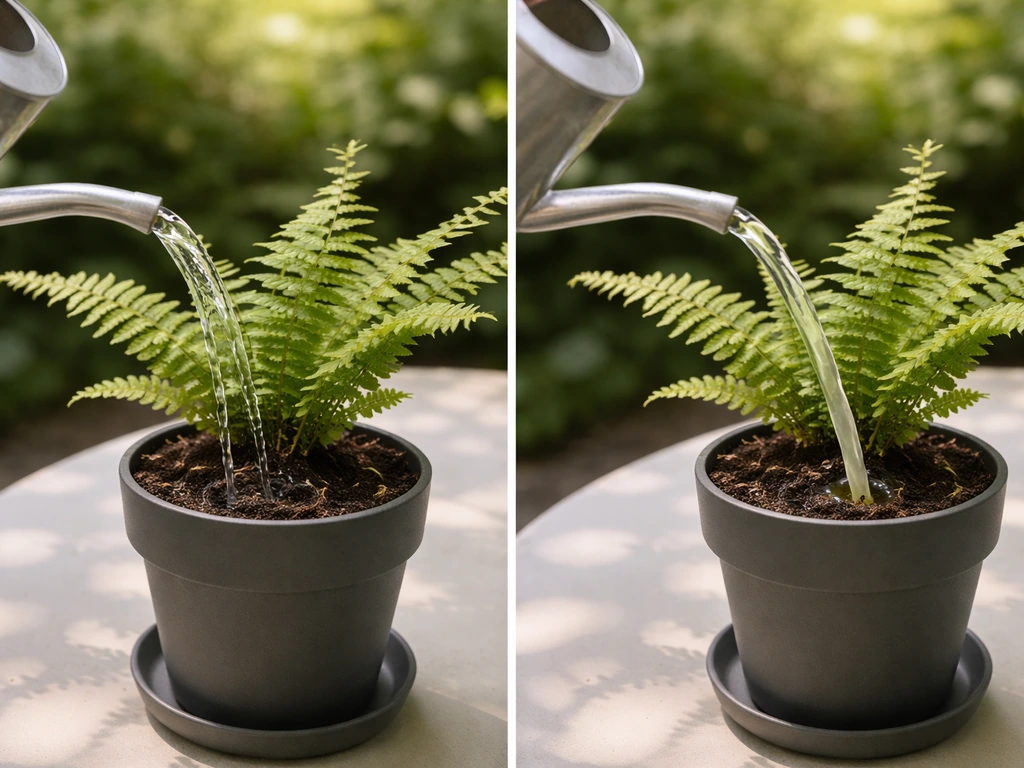
The key principles are low concentration, infrequent application, and always watering the soil before you feed. Never apply any soluble fertilizer to dry fern soil. Dry roots are already stressed, and introducing concentrated salts at that point accelerates damage.
- Water your fern thoroughly first with plain water and let it drain. This hydrates roots before nutrient contact.
- Mix Miracle-Gro Water Soluble All Purpose at 1/4 teaspoon per gallon of water (half the indoor label rate of 1/2 tsp per gallon).
- Pour the diluted solution evenly over the soil surface. Avoid splashing fronds directly, especially with the high-nitrogen 24-8-16 formula.
- Allow the pot to drain freely. Do not let ferns sit in fertilizer runoff in a saucer.
- Repeat no more than once every four to six weeks during spring and summer (March through August, roughly).
- In fall and winter, skip liquid feeding entirely unless your fern is in a warm, bright spot and actively pushing out new fronds.
- Every two to three months, flush the potting mix with plain water (run water through the pot slowly for a couple of minutes) to wash out accumulated salts before they reach damaging levels.
If you're using Indoor Plant Food Spikes instead, push them into moist soil (not dry), keep them away from the crown and main stems, and replace them every 60 days. The lower 6-12-6 concentration makes spikes a more forgiving option for ferns than the liquid products.
Signs you're overfeeding or underfeeding your fern
One of the most frustrating things about fertilizing ferns is that overfeeding and underfeeding can look similar at first glance. Both cause frond yellowing and dieback. Here's how to tell them apart.
Signs of overfeeding
- Brown or tan leaf tips and margins that look scorched, often appearing within a day or two of feeding with soluble fertilizer
- White crusty deposits on the soil surface or around drainage holes (visible salt buildup)
- Yellowing that starts at frond edges and moves inward
- Wilting or limp fronds even when the soil is moist (roots damaged by salt can't uptake water properly)
- Fronds dropping or dying back faster than new ones emerge
- Overall dull, pale green color despite regular feeding
Signs of underfeeding
- Uniformly pale or light yellow-green fronds across the whole plant, not just at tips
- Slow or stalled growth during spring and summer when conditions are otherwise good
- Smaller-than-normal new fronds emerging over several weeks
- Older fronds yellowing and dropping while very few new fronds appear
If you see white salt crust on the soil and browned frond tips after recent fertilizing, that's a clear overfeeding signal. Stop feeding immediately, flush the pot thoroughly with plain water two or three times over a week, and let the plant recover for a month before feeding again. Fertilizer burn from soluble products like Miracle-Gro can show up fast, sometimes within 48 hours of application.
Better fertilizer options for ferns if Miracle-Gro isn't working
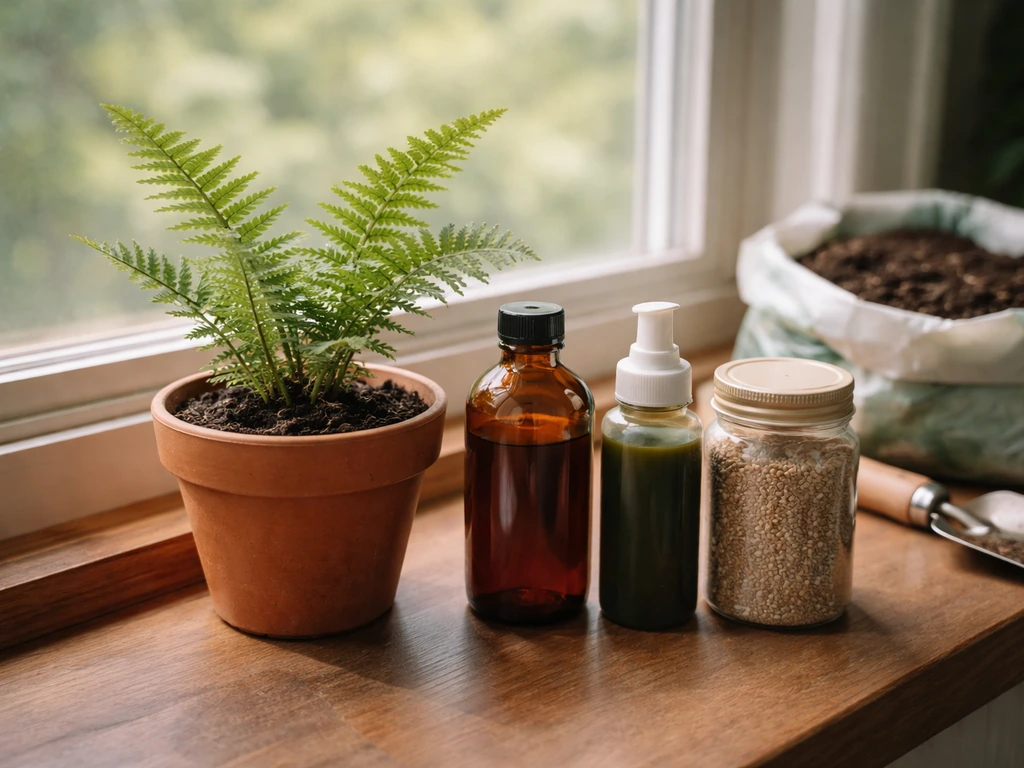
Miracle-Gro is widely available, which is why so many people reach for it. But ferns genuinely do better with lower-analysis, organic-based fertilizers that release nutrients slowly and don't spike salt levels. Here are the alternatives worth considering. If Miracle-Gro feels a bit fussy for ferns, you may also be wondering is miracle grow good for junipers, since that same salt and nutrient-strength issue can matter for other sensitive plants. For pachysandra, you generally want a gentle, slow-release approach rather than frequent high-nitrogen feeding.
- Fish emulsion or liquid seaweed fertilizer: These are low-analysis organic options (typically around 2-3-2 to 5-1-1 N-P-K) that feed gently and also supply trace minerals. The smell isn't great indoors, but your fern will reward you for it.
- Worm castings (vermicompost): Mixed into the top layer of potting mix or brewed into a liquid tea, worm castings provide slow, balanced nutrition with virtually zero salt risk.
- Balanced slow-release granules at low rates: Products with an N-P-K around 5-5-5 or lower, applied at half the labeled rate, give ferns a steady low-level supply without peaks.
- Fern-specific or foliage plant fertilizers: Some brands sell fertilizers labeled for ferns and palms with lower nitrogen and higher micronutrient content. These are formulated with salt-sensitive plants in mind.
- Miracle-Gro Moisture Control Potting Mix as a base: If you're repotting, this mix contains a very low-level built-in fertilizer (around 0.21-0.11-0.16) that provides background nutrition for up to six months without any concentrated salt load. Starting fresh in this medium means you may not need to feed at all for the first few months.
Compared to salt-sensitive plants like azaleas (which share a similar fertilizer sensitivity to ferns), ferns are arguably even less forgiving of concentrated synthetic products. If you've been reading up on fertilizing other landscape plants, the approach for ferns is meaningfully more conservative.
What to do right now
If you're reading this in spring (which is right now as of late April), you're actually at the best possible time to adjust your fern care routine. Here's a clear action plan depending on what situation you're in.
- Check the soil for salt buildup first. Look for white or grayish crust on the soil surface or around the pot's drainage hole. If you see it, flush the pot with plain water before doing anything else.
- If your fern is in old, compacted potting mix, repot it into fresh mix before fertilizing. A fresh medium resets the salt level and gives roots room to respond to gentle feeding. Miracle-Gro Moisture Control Potting Mix works well here and provides months of low-level nutrition on its own.
- If the plant looks healthy and is pushing new fronds, mix Miracle-Gro Water Soluble All Purpose at 1/4 tsp per gallon (not the full indoor rate) and feed once now. Set a reminder to feed again in 4-6 weeks.
- If fronds look burned or yellow at the tips, hold off on any fertilizer. Give the plant a good flush, check that it's in bright indirect light (not direct sun), and make sure it's being watered consistently enough to maintain humidity. Boston ferns want 40-50% humidity minimum.
- If growth is very slow and fronds are uniformly pale, the plant is likely underfed. Start the diluted feeding schedule and give it 4-6 weeks to show a response. New fronds emerging is the green light that it's working.
- Match feeding to light and watering. If your fern is sitting in a dim corner, cut feeding frequency in half even during summer. Low light means slow growth, and slow growth can't use the nutrients you're adding, so they just accumulate as salts.
The honest bottom line: Miracle-Gro is not the perfect fern fertilizer, but it's not a disaster either if you treat ferns like the sensitive, moderate feeders they are. Cut the dose, flush the pot regularly, and match feeding to the season. Do those three things and your Boston fern or any other fern variety will grow well whether you're using Miracle-Gro or a gentler alternative. If you're also growing boxwoods, focus on consistent watering and pruning to help new growth knit the plant into a fuller, more even shape how to get boxwoods to grow together.
FAQ
Can I use Miracle-Gro on ferns if they are outdoors or kept in a greenhouse?
Yes, but only if conditions are stable. Outdoors, rain and cooler temperatures often dilute salts, but if you fertilize on a dry spell, the same tip-burn risk applies. Use the fern dilution (about 1/4 teaspoon per gallon for the water-soluble) and avoid feeding when nights are cold or growth has slowed.
What potting mix makes Miracle-Gro less risky for ferns?
Choose a mix with strong drainage and limited ability to hold fertilizer salts. Dense, peat-heavy mixes can trap soluble salts around the roots. If your fern is in a water-retentive mix, increase flushing frequency (without over-saturating) and consider switching to a lighter, fern-friendly potting blend before continuing fertilization.
How do I flush the pot correctly after fertilizer burn?
Run plain water through the pot until excess drains out freely, repeat 2 to 3 times over about a week. Let the top layer dry slightly between flushes so roots get oxygen. After the final flush, pause feeding for several weeks, because new fronds take time to replace damaged tips.
Is it better to fertilize weekly with a tiny amount or monthly with the recommended dilution?
Monthly, or every 4 to 6 weeks during active growth, is generally safer for ferns. Weekly feeding, even at reduced concentration, can still build up salts because ferns cannot tolerate frequent pulses of soluble nutrients.
Can I combine Miracle-Gro with compost tea or other fertilizers?
Avoid mixing. Combining Miracle-Gro with additional liquid nutrients increases total nitrogen and soluble salts, making burn more likely. If you want organic matter, use it separately (for example, top-dressing lightly) and give the fern time to reset before resuming any synthetic fertilizer schedule.
Does Miracle-Gro work for maidenhair fern the same way as Boston fern?
The approach is similar, but maidenhair types are often even more sensitive to salt stress. Use the same low-frequency plan, but if you notice browning at the first sign of feeding, reduce further (or switch to a slow-release, low-analysis option).
How can I tell whether my fern needs fertilizer versus just water?
Underwatering usually shows drooping and crispness that starts more broadly, while fertilizer burn often follows recent fertilizing and presents with browned tips and sometimes white crust on the soil surface. If the plant looks worse right after feeding or you see salt residue, treat it as fertilizer stress and flush.
What should I do if the soil surface develops a crust even when I dilute correctly?
Stop soluble feeding immediately and flush the pot with plain water. After that, switch to a less salt-prone method, such as slow-release or a much lower concentration, and make sure you always water through fully so salts do not stay concentrated near the roots.
Can I use Miracle-Gro on ferns during dormancy in fall and winter?
Prefer no feeding during fall and winter when growth slows. If the fern is actively pushing new fronds indoors under good light, you can feed very sparingly (roughly once every two months), still using the reduced concentration, because salt buildup continues as long as you add soluble nutrients.
Are fertilizer spikes like Miracle-Gro Shake 'N Feed safer than the water-soluble liquid for ferns?
They can be safer because they release more gradually, which reduces rapid salt spikes. Still, keep them out of the crown area, place them properly into moist soil, and replace on schedule (about every 60 days), since long delays can lead to inconsistent nutrient availability.
Next Article
Is Miracle-Gro Good for Azaleas? What to Use and When
Find out if Miracle-Gro helps azaleas: choose the right formula, timing, rates, and avoid pH and burn issues.