Yes, you can grow skeleton flowers (Diphylleia grayi, also accepted as Podophyllum grayi in current taxonomy) in most temperate gardens, provided you can give them the cool, shaded, consistently moist woodland conditions they demand. They are hardy from USDA zones 4a through 7a, which covers a wide stretch of North America and similar climates elsewhere. If you are outside that range or gardening in a hot, sunny spot, you will fight the plant the whole way and probably lose. But get the conditions right and skeleton flower is surprisingly rewarding and not especially difficult.
Can You Grow Skeleton Flowers? Practical Cultivation Guide

Marcus Weir
14 Jul 2026
What are skeleton flowers? Key species and identifying features
Skeleton flower most commonly refers to Diphylleia grayi, a perennial rhizomatous herb native to cool mountain forests in Japan and parts of China. Its current accepted botanical name in Kew's Plants of the World Online is Podophyllum grayi (F. IPNI records the nomenclatural combination Podophyllum grayi (F.Schmidt) Christenh. & Byng | International Plant Names Index (IPNI). Schmidt) Christenh. and Byng, with Diphylleia grayi treated as a synonym under modern taxonomic standards. For practical gardening purposes, you will find it sold under both names, and both refer to the same plant.
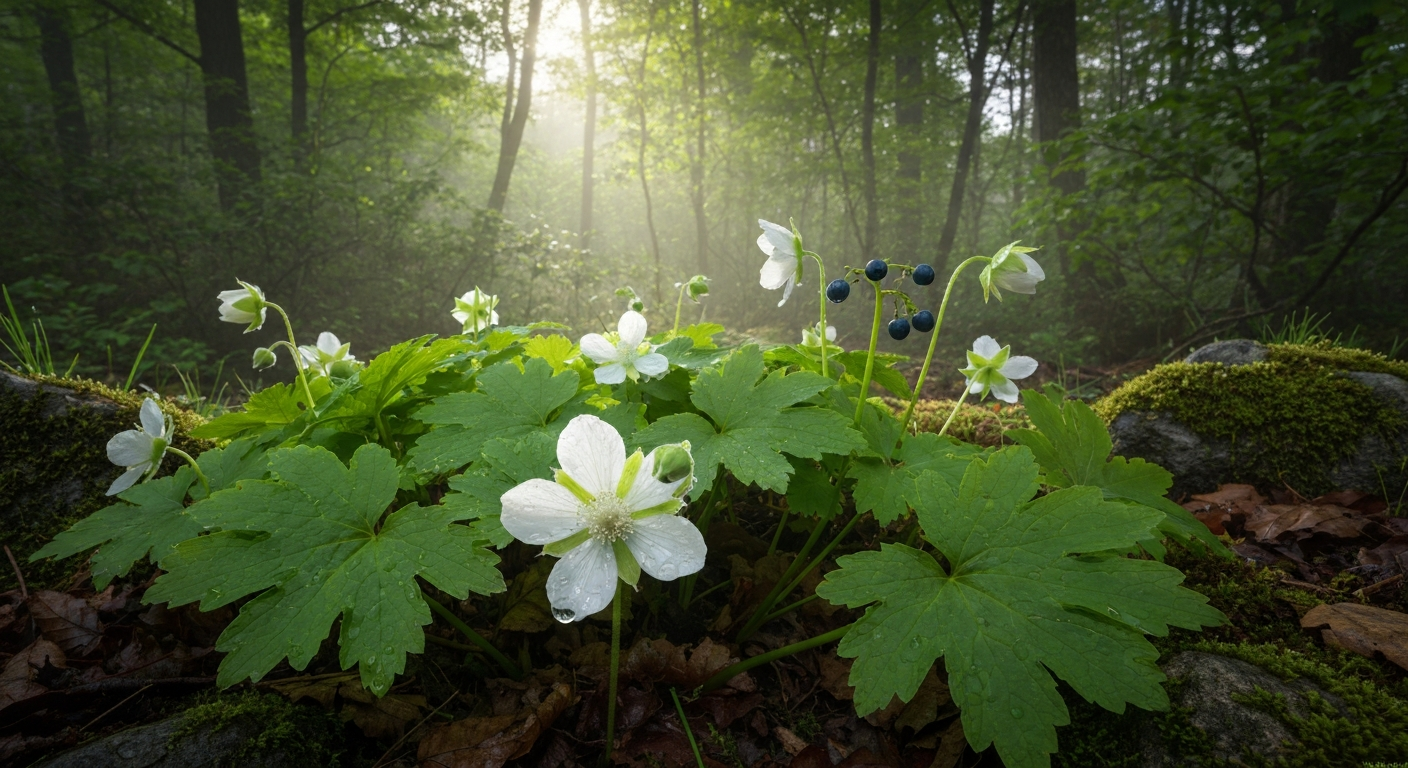
The plant grows 50 to 60 cm tall and produces large, umbrella-like leaves with deeply lobed margins, almost tropical-looking for a woodland perennial. In May through July it sends up clusters of small white flowers. Those flowers are the reason everyone wants to grow it: when rain hits the petals, they turn completely transparent, like frosted glass, then turn white again as they dry. Scanning electron microscopy research on the petal surface confirms this is a structural effect, the flower's cell layers filling with water and losing their light-scattering opacity, not a pigment change. The KAKEN report documents SEM and surface‑morphology analyses of Sankayō (Diphylleia grayi) petals, supporting the anatomical explanation that water‑filled cell layers cause the transparency KAKEN (Japanese research report) — petal surface morphology study on Sankayou (Diphylleia grayi). The fruits ripen to deep blue-black berries by mid to late summer.
There is also Diphylleia cymosa, a North American relative sometimes called umbrella leaf or American skeleton flower, native to the southern Appalachian mountains. Its transparency effect and growing requirements are similar, though it tends to be slightly more heat-tolerant given its range. A third species, Diphylleia sinensis, occurs in China at higher elevations. When you are buying plants or seeds, confirm which species you have, but Diphylleia grayi is by far the most widely available.
Name confusion: skeleton flower vs. corpse flower, ghost pipe, bone blossom, and others
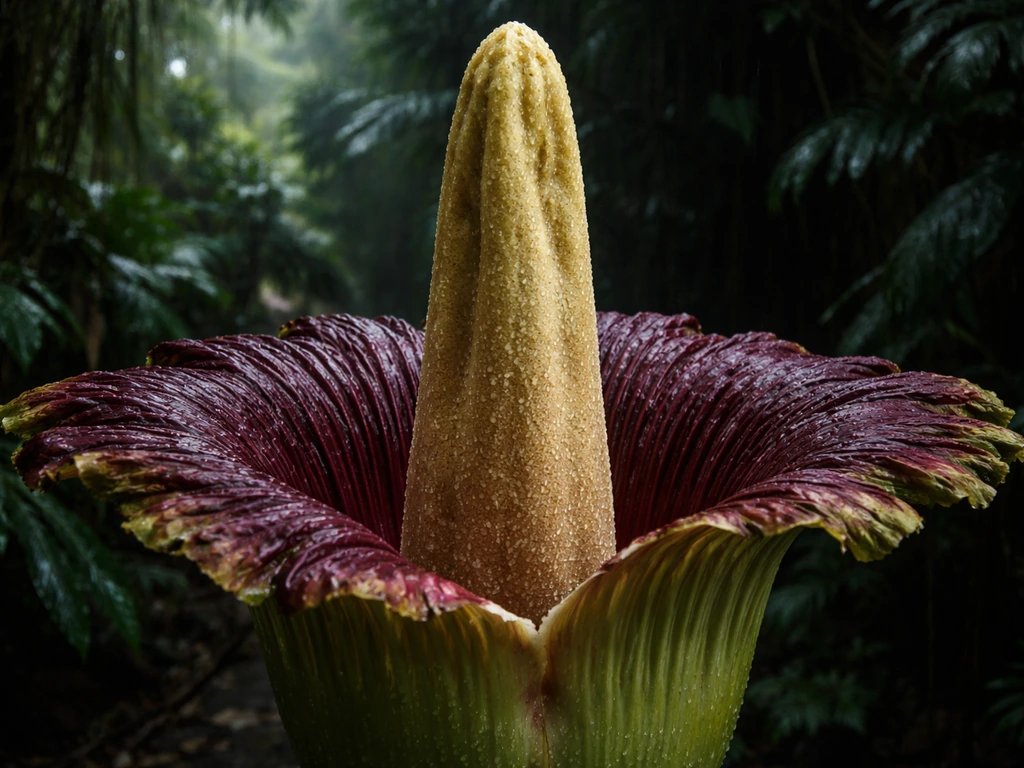
The name 'skeleton flower' sounds like it should belong to a whole family of macabre plants, and the internet happily conflates several of them. If you're also curious about similarly named plants, see can you grow spore blossoms for information on growing spore-associated flowering plants. For details on 'bone blossom', what type of plant it is and how to grow it in a garden, see the related internal page. If you were actually looking for advice on the unrelated corpse flower (Amorphophallus titanum), see can you grow a corpse flower for its very different cultivation requirements and challenges. Corpse flower (Amorphophallus titanum) is a completely unrelated species famous for its massive spathe and rotting-meat smell during bloom, not for translucent petals. Ghost pipe (Monotropa uniflora) is a small white parasitic plant that lacks chlorophyll, giving it an eerie pale appearance, but it has nothing to do with Diphylleia. Bone blossom is a term that turns up in fictional or game contexts more than in botany, and it is worth double-checking that you are not confusing cultivation guides for a real plant with lore about a fictional one. If you are curious about that overlap, it is worth reading up on what distinguishes real oddly-named plants from their fictional namesakes.
The practical takeaway: if you search 'skeleton flower' and end up reading about smell, parasitism, or giant spathes, you are on the wrong species. Diphylleia grayi has no scent worth noting, is fully photosynthetic, and tops out at about 60 cm. Keep that image in mind and you will filter out the noise quickly.
Where skeleton flowers grow wild: native habitat and hardiness limits
In the wild, Diphylleia grayi grows in montane to subalpine forests from central Honshu north through Hokkaido in Japan, extending into Sakhalin. Flora of China records it in moist deciduous and coniferous forest, in shaded and wet places on slopes, at mid to higher elevations. These are cool, humid, often foggy environments with cold winters and summers that stay mild. The plant is adapted to deep leaf litter, reliable soil moisture often boosted by snowmelt, and broken canopy light.
Plant Delights Nursery, one of the few specialty U.S. nurseries that has carried it consistently, lists the hardiness range as USDA zones 4a to 7a and explicitly notes the plant does not like hot summer temperatures. That upper zone limit of 7a is meaningful: in zone 7b and above, summer heat becomes the main obstacle, not cold. If you are in the southern U.S., the Pacific Northwest lowlands (which tend to be mild and damp rather than cold and snowy) can work if you keep summers cool and shaded, but this is more of a stretch.
| Factor | Wild habitat | Garden requirement |
|---|---|---|
| USDA hardiness | Equivalent to zones 4–6 in Japan/China mountains | Zones 4a–7a |
| Summer temperature | Cool montane, rarely hot | Avoid prolonged heat above ~27°C (80°F) |
| Light | Dappled to full forest shade | Light shade, no hot midday sun |
| Soil moisture | Consistently moist, streamside or slope seepage | Evenly moist, never waterlogged |
| Soil type | Deep humus-rich forest leaf litter | Humus-rich, well-drained woodland soil |
| Winter | Cold with snow cover | Frost-hardy; mulch in colder zones |
Picking the right spot: light, shelter, and microclimate
Choosing where to plant is probably the single most important decision you will make for skeleton flower. Think in terms of a north-facing slope under deciduous trees, or the east-facing side of a structure that gets morning light but is shaded by noon. Dappled light filtering through a tree canopy is ideal. Direct afternoon sun in summer will scorch the leaves and stress the roots, and in my experience plants that spend too many hours in full sun simply stop performing well after their first season.
Elevation and air movement matter too. A low-lying frost pocket is usually fine given this plant's cold hardiness, but a spot that traps heat in summer is a problem. If you are gardening in a warmer zone, look for a microclimate that benefits from cool air drainage off a hill or from proximity to a water feature. The north or east side of a large rock can also provide useful shade and keep root-zone temperatures lower.
- North-facing or east-facing slopes work best in zones 5–7
- Deciduous tree canopy provides ideal dappled light and autumn leaf fall that feeds the soil
- Avoid south or west-facing walls that reflect afternoon heat
- Proximity to a pond, stream, or rain garden helps maintain humidity
- A sheltered spot reduces wind desiccation on the large leaves
Getting the soil right: type, pH, drainage, and amendments
Skeleton flower wants what most woodland perennials want: deep, humus-rich, cool, moist but well-drained soil. The natural substrate is forest leaf litter over mineral soil, slightly acidic to neutral, teeming with organic matter. If your soil is heavy clay, compacted, or alkaline, you will need to amend before planting rather than hoping the plant adapts. Sandy soils that drain too quickly are equally problematic because the roots dry out between waterings.
For a new bed, dig to about 30 cm (12 inches) and incorporate generous amounts of leaf mold, well-rotted compost, or a mix of both. Aim for a pH of roughly 5.5 to 6.5, which is the typical range in deciduous woodland soils. If your water source is very alkaline (hard water), it can gradually raise soil pH over years, so testing periodically makes sense. Avoid peat as a sole amendment; aged leaf mold or composted bark is a closer match to the natural substrate and more sustainable long-term.
Drainage matters even though the plant likes moisture. 'Moist but well-drained' is not a contradiction: it means water moves through freely after rain, never pooling for hours, but the soil retains enough organic matter to stay damp between events. If water sits on your bed surface for more than an hour after heavy rain, raise the bed slightly or improve the organic matter content to open up the structure.
Step-by-step outdoor planting guide
Planting from divisions or nursery plants
- Timing: plant divisions or nursery-grown plants in early spring (before growth emerges) or in autumn after the plant goes dormant. Spring planting in zones 4–6 typically means late March to early April.
- Spacing: space plants 45–60 cm (18–24 inches) apart. The rhizomes spread slowly over years and the large leaves need room to expand without competing for light.
- Planting depth: set the rhizome with the growing tip just at or 2–3 cm below soil surface. Planting too deep delays emergence; too shallow exposes the rhizome to drying.
- Backfill: use your amended woodland soil mix. Firm gently around the rhizome but do not compact heavily.
- Water in: water thoroughly at planting and keep the soil consistently moist through the first growing season while the root system establishes.
- Mulch immediately: apply a 5–7 cm (2–3 inch) layer of leaf mold or shredded leaves around (not over) the crown to conserve moisture and moderate soil temperature.
Starting from seed outdoors
Seed germination requires cold, moist stratification. The easiest method is autumn sowing: scatter seeds 6 mm (about 1/4 inch) deep in a prepared bed or cold frame in October or November and let winter do the work. Germination occurs the following spring. Because germination rates are typically low, sow more seed than you think you need, at least twice as densely as the number of plants you want. If you are starting indoors, refrigerate moist seeds in a sealed bag with slightly damp peat or coir for 8 to 12 weeks before sowing in late winter. Seedlings are slow: expect to wait two to three years before a seed-grown plant flowers.
Seasonal outdoor care through the year
Watering
Consistent moisture is non-negotiable. During the active growing season (spring through summer) the soil should never fully dry out. In dry spells, water deeply once or twice a week rather than frequent shallow watering, aiming to wet the soil to at least 15 cm. Rain gardens, drip irrigation, or a soaker hose set on a timer all work well. In autumn as the plant dies back, reduce watering naturally with the season. Overwatering in winter when the plant is dormant is not usually an issue outdoors, but avoid adding irrigation then.
Mulching
Apply a fresh layer of leaf mold or shredded leaf mulch each autumn, 5 to 10 cm thick. This mimics the natural leaf litter drop in forest environments, insulates roots through winter, suppresses weeds, and slowly feeds the soil with organic matter. In spring, pull the mulch back slightly from the crown as new growth emerges to prevent crown rot, then push it back in once shoots are a few centimetres tall.
Fertilizing
If your soil is well-amended with compost and you are topdressing with leaf mold annually, you may not need to fertilize at all. In soils that are less naturally rich, a light topdress of well-rotted compost or a small amount of balanced slow-release fertilizer in early spring as growth emerges is sufficient. Avoid heavy nitrogen applications, which push lush but structurally weak growth and can make the plant more susceptible to pest and disease issues. Think of feeding this plant the way you would feed any woodland perennial: lightly and organically.
Pruning and tidying
Skeleton flower is naturally tidy. The leaves die back to the ground in autumn and can simply be left in place as part of the leaf litter system, or cut back if you prefer a neater bed. Do not remove foliage while it is still green, because the plant is still moving energy back into the rhizome. After the first hard frost, the leaves collapse and can be cleared away or left as additional mulch.
Winter protection by zone
In zones 5 and warmer with reliable snow cover, the plant typically needs no extra winter protection once established. In zones 4 and 4a, where temperatures can drop well below -20°C (-4°F) with unpredictable snow cover, a thicker mulch layer of 10–15 cm over the crown before hard freezing provides useful insurance. Remove the bulk of this protective mulch in early spring as temperatures rise, keeping just a moderate layer in place.
Seasonal timeline at a glance
| Month (zones 5–6) | What to expect | What to do |
|---|---|---|
| March–April | First shoots emerge from soil | Pull mulch back from crown; water if dry |
| April–May | Leaves expand rapidly | Monitor soil moisture; watch for slug damage |
| May–July | Flowers open; test the transparency effect with water | Enjoy; keep soil consistently moist |
| July–August | Fruits ripen to blue-black berries | Collect seed if propagating; continue watering |
| September–October | Foliage yellows and dies back | Apply fresh leaf mold mulch; reduce watering |
| November–March | Dormant underground | No irrigation needed; mulch stays in place |
Growing skeleton flowers in containers
Container growing is possible but works better as a short-to-medium-term situation than a permanent arrangement. Skeleton flower prefers the stable moisture and temperature buffering of in-ground woodland soil, and containers can heat up quickly in summer and dry out between waterings. That said, if you are in zone 7b or 8 with hot summers and want to experiment, or if you simply have no suitable in-ground site, a large pot (at least 30–35 cm diameter and deep enough for the rhizome plus 10–15 cm of soil below it) filled with a humus-rich, moisture-retentive potting mix can work.
Keep container plants in a shaded, cool spot, never on a sunny south-facing deck. Water more frequently than you would in-ground plants because containers lose moisture faster. In zones colder than 6, bring containers into an unheated garage or shed for winter to prevent freeze-thaw cycles from damaging the pot and rhizome, or sink the pot to its rim in the ground and mulch heavily. Top-dress with compost each spring and repot every two to three years as the rhizome spreads.
Propagating skeleton flowers: division and seed
Division
Division is the faster and more reliable propagation method. In early spring, just as the first shoots are emerging, carefully dig up an established clump and use a sharp, clean knife or spade to cut the rhizome into sections, each with at least one growing point (bud). Replant the divisions immediately at the same depth as the parent plant and water well. Divisions typically establish in one season and may flower the following year. Autumn division after dormancy is also possible in zones 5 and warmer.
Seed propagation
Collect ripe berries in late summer, remove the pulp, and sow fresh seed in autumn outdoors or store in barely damp vermiculite in the refrigerator for 8 to 12 weeks before spring sowing. Sow about 6 mm deep. Germination rates are variable and can be low, so sow generously. Seedlings are slow-growing in the first year, often producing just one or two small leaves. Be patient and keep the seedling bed consistently moist. Expect two to three years from seed to flowering.
Where to buy skeleton flower plants and seeds
Skeleton flower is not a common nursery center plant, so your best bet is a specialty woodland or shade perennial nursery. Plant Delights Nursery in North Carolina is one of the most well-known U.S. sources and has carried Diphylleia grayi as small potted plants. Online specialty seed suppliers also sell seeds, though quality and stratification guidance vary. When buying seed, look for a vendor who explicitly describes cold stratification requirements rather than treating the seeds as a straightforward direct-sow species. If buying plants, confirm the species name (Diphylleia grayi or Podophyllum grayi) rather than relying solely on the common name, since 'skeleton flower' occasionally gets applied to other plants in careless listings.
Common pests, diseases, and troubleshooting
Skeleton flower is not dramatically pest-prone, but a few problems come up regularly. Slugs and snails are the main culprit, especially on emerging spring growth when the soft new shoots and young leaves are vulnerable. I use iron phosphate pellets around new growth in early spring and find it keeps damage minimal without harming other wildlife. The large leaves also attract earwigs in wetter seasons, though damage is usually cosmetic.
Root rot is the most serious disease issue and is almost always caused by waterlogged soil rather than by a pathogen on its own. If a plant collapses suddenly in mid-season with no drought stress, suspect poor drainage and check the rhizome for soft, dark areas. In that case, improve drainage before replanting a rescued section. Powdery mildew can appear on leaves in late summer if air circulation is poor, but it is rarely severe enough to require treatment beyond improving spacing.
| Problem | Likely cause | Fix |
|---|---|---|
| Ragged holes in young leaves | Slugs or snails | Iron phosphate bait in early spring |
| Plant collapses mid-season | Root rot from waterlogging | Improve drainage; rescue rhizome sections if viable |
| Leaves scorch or bleach | Too much direct sun or heat | Move to deeper shade; check microclimate |
| No flowers after several years | Too young (seed-grown) or too deep planting | Be patient; check planting depth; confirm rhizome is near surface |
| Poor germination from seed | Insufficient cold stratification | Extend stratification to 10–12 weeks; try autumn outdoor sowing |
| Powdery mildew on leaves | Poor air circulation, late summer humidity | Thin surrounding vegetation; treat only if severe |
Myths and misconceptions worth clearing up
- Myth: skeleton flowers need a bog or standing water. Reality: they want consistent moisture but in well-drained humus-rich soil, not waterlogged conditions.
- Myth: the transparency effect is a rare or unreliable trick. Reality: it happens reliably every time the petals get wet, as confirmed by petal micromorphology research. All you need is a rain shower or a gentle spray.
- Myth: skeleton flower is only for expert gardeners. Reality: in the right zone and site, it is a straightforward woodland perennial, no harder than a trillium or bloodroot.
- Myth: it needs full shade. Reality: light or dappled shade is ideal; deep, dry shade under shallow-rooted trees like maples can actually cause problems with root competition and drought.
- Myth: it is the same as corpse flower because of the name. Reality: these are entirely different plants in different families with different growing requirements.
FAQ
Can you grow 'skeleton flower' (Diphylleia grayi / Podophyllum grayi)?
Short answer: Yes. Skeleton flower (commonly called Diphylleia grayi; modern treatments often place it as Podophyllum grayi) can be grown by home gardeners in cool, shaded, moisture‑retentive woodland settings or in containers that mimic those conditions. It is a perennial, rhizomatous woodland herb that flowers in late spring; the distinctive translucent petals appear when wet.
Which species are called 'skeleton flower' and how do I distinguish them from other oddly named plants?
Common name 'skeleton flower' refers primarily to Diphylleia grayi (synonym Podophyllum grayi). Distinguishing features: 1) white, five‑petaled flowers that turn translucent when water fills petal cells; 2) basal, two‑lobed large leaves on 40–60 cm stems; 3) woodland, cool‑montane habit. Do not confuse with 'corpse flower' (Amorphophallus titanum or Rafflesia) or other sensational common names—those are unrelated and have very different size, smell, and biology.
What is the native habitat and USDA hardiness / climate limits?
Native habitat: cool, shaded, moist montane and subalpine forests (stream margins, damp slopes) in East Asia (Japan, China, Sakhalin). Climate limits: generally suited to cool temperate conditions; many grow reliably in USDA zones roughly 4–7 (some sources and growers report success in similar cool, shaded climates). Plants dislike hot, dry summers and need cool root conditions and consistent moisture.
Step‑by‑step outdoor planting instructions (site selection, planting depth, spacing):
1) Site: deep shade to dappled/light shade under deciduous or mixed canopy, away from hot afternoon sun. 2) Soil: humus‑rich, loose, well‑drained but moisture‑retentive (leaf mold/compost amended); pH neutral to slightly acidic. 3) Planting: dig hole twice as wide as root mass; set rhizome with crown slightly below soil surface; backfill and firm. 4) Spacing: 12–18 inches (30–45 cm) apart for clump development. 5) Water in thoroughly and add mulch to conserve moisture.
How do I manage soil, drainage, light, moisture, mulching, and fertilizing outdoors?
Soil/drainage: provide generous organic matter so soils hold moisture but are not waterlogged. Light: bright shade or dappled morning sun; avoid hot afternoon sun. Moisture: keep consistently moist—regular watering in dry spells. Mulch: 2–4 in (5–10 cm) leaf‑mold or shredded leaf mulch each year, but do not pile mulch against crowns. Fertilizer: light spring topdress of compost or a low‑N slow‑release fertilizer; heavy feeding unnecessary if soil is rich in humus.
Detailed indoor/container growing instructions (pots, mix, humidity, light, watering, winter care):
Pots: use large enough pots (at least 6–8 in / 15–20 cm for small plants; larger for clumps) with good drainage. Mix: loose, humus‑rich mix—equal parts high‑quality potting soil, leaf mold/compost, and perlite or fine orchid bark to improve drainage and air. Humidity/Light: bright indirect light or filtered shade; avoid direct hot sun. Watering: keep evenly moist but not waterlogged; allow top 1–2 cm to dry briefly between waterings. Winter care: most temperate specimens are hardy; in cold climates insulate pots or sink them into the ground/mulch heavily; in very warm regions provide cool, shady winter rest and reduced water. Repot every 2–3 years, refresh mix with compost.
Next Article
Can You Grow a Corpse Flower at Home How to Do It
Learn if you can grow a corpse flower at home, plus conditions, sourcing, planting steps, and dormancy troubleshooting.