What vivianite actually is (and what "growing" means here)
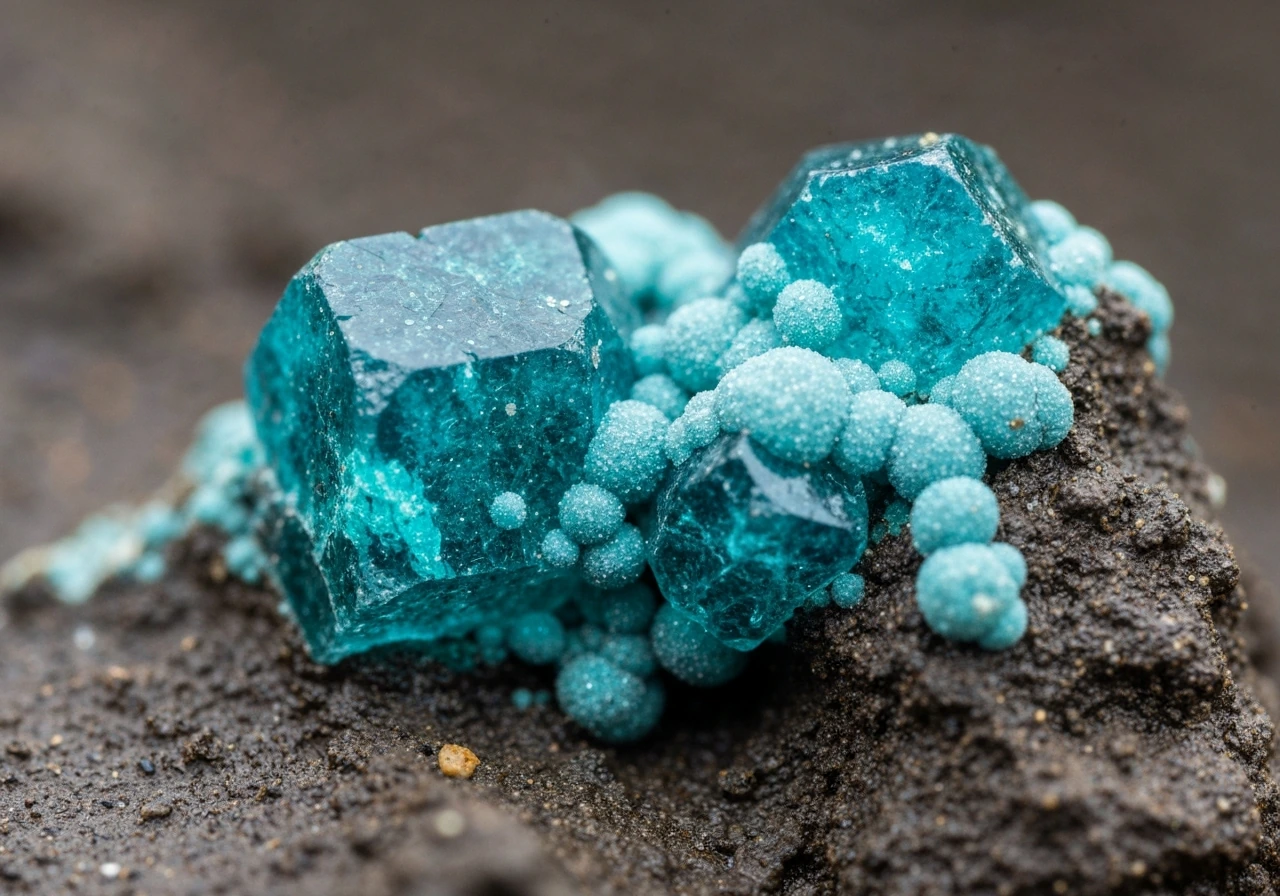
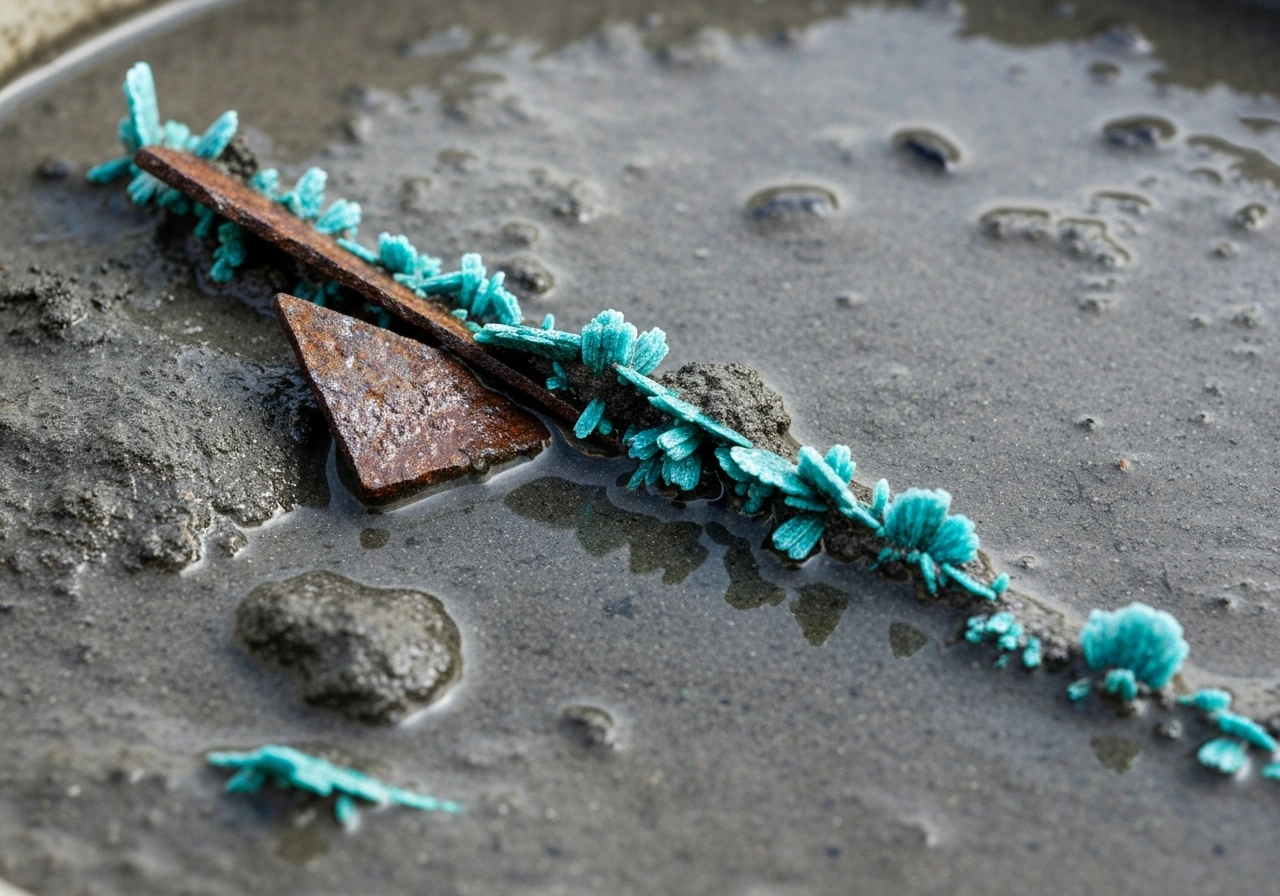
Vivianite is a ferrous iron (Fe2+) phosphate mineral. It belongs to a group of authigenic minerals, meaning it forms in place from the surrounding chemical environment rather than being transported from somewhere else. When people say it "grows" on a corpse, they mean it precipitates out of solution, crystallizing directly on or around decomposing material as the local chemistry shifts. That is a very different process from biological growth, but it is real and well-documented.
One of its most striking features is color change. Fresh vivianite crystals can appear nearly colorless or pale blue. Once exposed to air and light, ferrous iron oxidizes to ferric iron (Fe3+), transforming the mineral into products like metavivianite that range from deep blue-green to purple and eventually grayish-brown. Oxidation experiments have shown this color shift can happen quickly, which is why burial specimens pulled from the ground often look striking blue but may dull or change shortly after exposure. Its Mohs hardness is only about 1.5 to 2, making it extremely soft, and it leaves a white streak that can shift to blue or brown as it oxidizes on the streak plate.
So when you see references to vivianite "growing" anywhere, including on remains, just translate that mentally to: precipitating, crystallizing, or forming in place. The word "grow" is informal shorthand for a real geochemical process, not literal plant-style growth. With that cleared up, the chemistry actually gets fascinating.
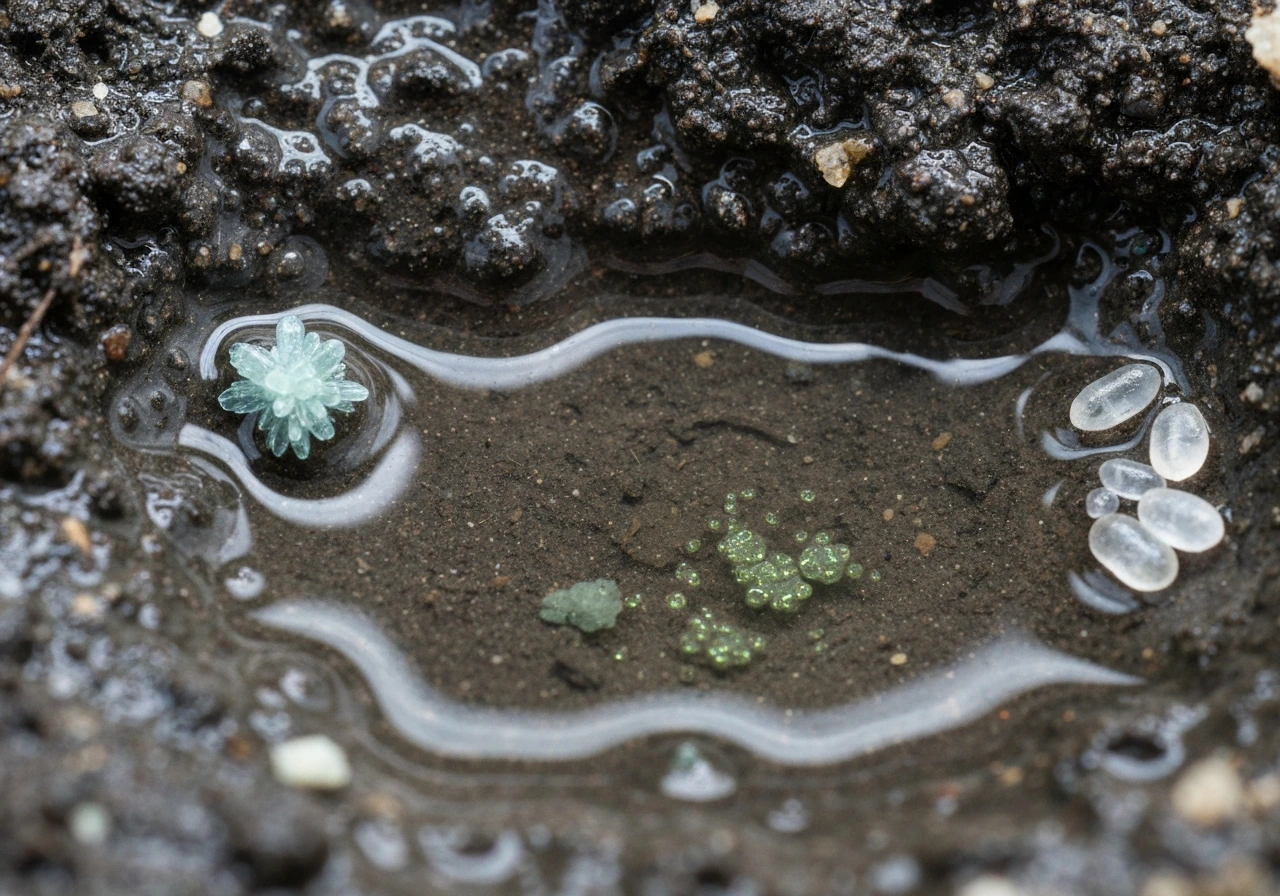
Vivianite formation is not complicated once you understand the three ingredients it requires. Get all three in the same place at the same time and vivianite becomes a predictable outcome.
- Soluble ferrous iron (Fe2+): This requires a reducing environment where iron exists in its reduced, dissolved form rather than locked up as insoluble rust (Fe3+ oxides). Microbial iron reduction, where bacteria strip oxygen from Fe3+ compounds as part of their metabolism, is one of the main ways Fe2+ becomes available in sediments and soils.
- Phosphate (PO4): A ready supply of dissolved phosphate in the surrounding pore water. Biological decomposition is one of the richest sources of phosphate in natural systems, but it also exists in fertilized soils, aquatic sediments, and organic-rich deposits like peat.
- Anoxic (low or zero oxygen) conditions: Oxygen destroys the process. If oxygen is present, Fe2+ quickly oxidizes back to Fe3+ and precipitates as rust rather than combining with phosphate to form vivianite. Waterlogged soils, deep sediments, bog environments, and anaerobic digesters all maintain the low-oxygen conditions vivianite needs.
When all three converge, precipitation can happen surprisingly fast. Controlled laboratory incubation studies have shown vivianite forming within sediments over just seven weeks under manipulated redox conditions. Even more striking, conversion of iron sulfide precursors to vivianite has been demonstrated within days under the right phosphate-rich, anoxic conditions. In full-scale wastewater treatment plants, vivianite was already detected in digester units with a retention time of just 1.1 days, with formation increasing as anaerobic time extended to 15 to 20 days. This is not a process that takes geological ages. Given the right environment, it moves fast.
Does vivianite only form on human remains? Absolutely not
This is probably the biggest misconception floating around. Vivianite has no special relationship with humans. It forms wherever iron, phosphate, and anoxic wet conditions come together, which happens across a wide range of environments that have nothing to do with death at all.
- Peat bogs and waterlogged soils: Vivianite is documented replacing organic material including peat, lignite, and bog iron ores. Bones and teeth of animals buried in peat bogs are sometimes gradually replaced by vivianite over time.
- Freshwater lake and river sediments: Studies of freshwater systems show vivianite occurrence tied to redox chemistry and iron-phosphorus interactions, completely independent of burial contexts.
- Deep-sea sediments: Methane-rich deep-sea sediment research from the South China Sea documents vivianite precipitating in zones where iron reduction and phosphate diffusion align.
- Intertidal and coastal sediments: Ferrihydrite-adsorbed phosphate in intertidal sediments has been shown to trigger vivianite formation in situ.
- Wastewater and sewage sludge: Perhaps the most industrial context, vivianite forms readily in anaerobic digesters where iron and phosphate are abundant. Some studies report that up to 90% of total phosphorus in digested sewage sludge can exist as vivianite.
- Agricultural and forest soils: Drained agricultural areas and reducing waterlogged soil zones are listed as formation environments in soil science literature.
The point is that vivianite is more of an environmental indicator than a death marker. Finding it tells you something about the local redox chemistry and phosphate availability, not necessarily that a body was there. That said, decomposing remains are an excellent source of both iron and phosphate, which is why the association exists.
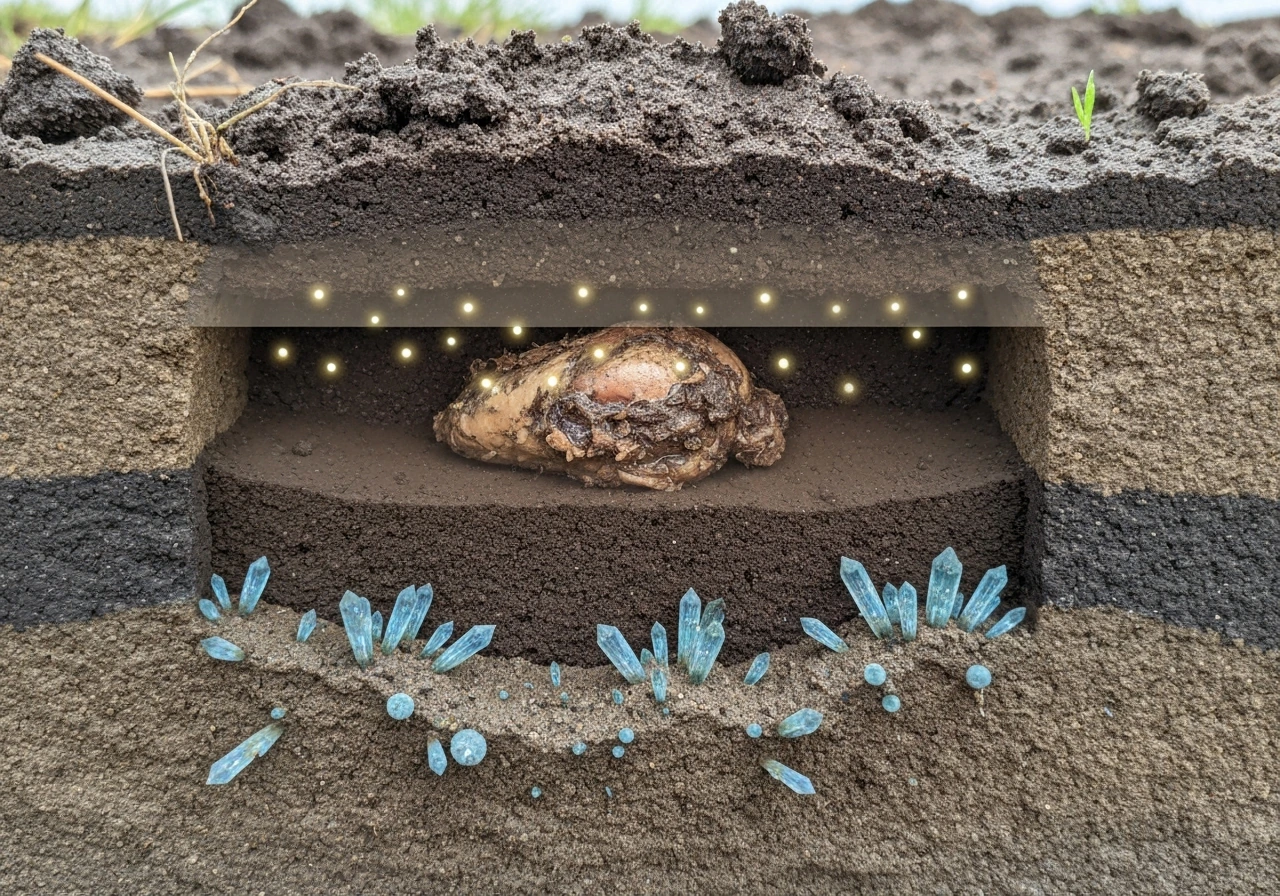
Here is where the corpse connection becomes genuinely scientific. A decomposing body, buried or submerged in a wet, low-oxygen environment, becomes a concentrated local source of both key ingredients vivianite needs.
Phosphate comes primarily from soft tissue and especially from bone. Bone is roughly 60 to 70 percent hydroxyapatite, a calcium phosphate mineral, and as it breaks down it releases phosphate into surrounding pore water. Iron can come from blood (hemoglobin contains iron), from surrounding iron-bearing soil minerals, or from both. As decomposition proceeds and oxygen is consumed by microbial activity, the local environment turns anoxic. Dissimilatory iron-reducing bacteria then begin using Fe3+ in soil minerals as an electron acceptor, converting it to soluble Fe2+. Now you have dissolved Fe2+ and dissolved phosphate in the same anoxic, wet space. Vivianite precipitates as a natural result.
A forensic case report documented blue encrustation identified as vivianite on the skeletal remains of American MIA personnel in Vietnam, noting the formation was unusual because it occurred over a relatively short time period. This kind of case is significant in forensic taphonomy (the study of how organisms decay and become preserved) because it shows vivianite can mark burial sites and even give clues about burial conditions and duration. It is not a common outcome, but it is a real one under the right conditions.
If you are curious about other plants and organisms that thrive around death and decay, it is worth knowing that the corpse flower uses a very different strategy, mimicking rotting flesh through smell rather than chemistry, to attract pollinators in its dramatic bloom cycle.
How to tell vivianite from other blue minerals and deposits
If you have found blue-green mineral deposits in a decomposition context (or near waterlogged organic material), distinguishing vivianite from lookalikes matters. Several other minerals and non-mineral materials can produce similar blue-green colors in soil and sediment environments.
| Material | Color | Hardness | Key Distinction |
|---|
| Vivianite | Pale to deep blue-green, darkens with oxidation | 1.5–2 (very soft) | Extremely soft, color deepens on exposure to air and light, forms nodules or crusts in anoxic organic-rich settings |
| Malachite | Bright green, banded | 3.5–4 | Much harder, associated with copper deposits, not with organic-rich reducing sediments |
| Turquoise | Blue to blue-green | 5–6 | Hard, associated with arid oxidized zones, not waterlogged organics |
| Glauconite | Olive to blue-green | 2 | Found in marine sediments, granular pellet form, does not oxidize rapidly to purple/gray like vivianite |
| Blue paint or pigment | Variable | N/A | Uniform coating, no crystal structure, does not streak white, does not change color on exposure |
Safe field verification steps
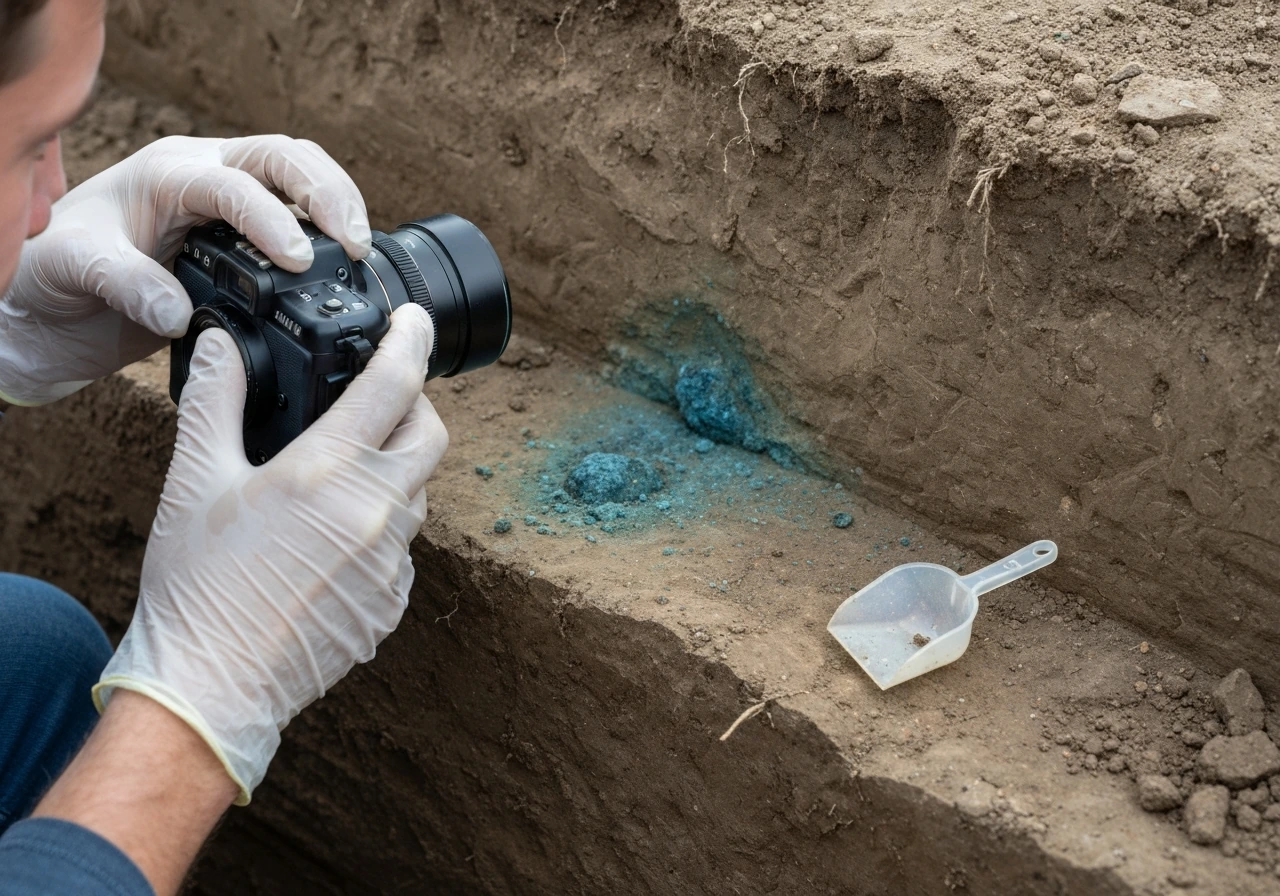
If you suspect you have found vivianite, follow these steps in order. Do not disturb the material unnecessarily, and if there is any possibility of human remains being involved, stop and contact local authorities before doing anything else.
- Photograph it in place before touching anything. Document color, location, depth, and surrounding material. Color in context matters a lot for vivianite identification.
- Test softness carefully with a fingernail (hardness approximately 2 or below means your nail should scratch it). Vivianite is one of the softest minerals you will encounter.
- Note color change. If the blue-green color deepens or shifts toward purple and then grayish-brown over minutes to hours after exposure to air and light, that is a strong indicator of vivianite-type oxidation behavior.
- Keep a sample wet and sealed if you plan to have it tested. Vivianite changes significantly once it oxidizes, which can complicate lab identification.
- Submit for laboratory analysis. X-ray diffraction (XRD) is the standard method for confirming vivianite crystallography. Raman spectroscopy is also used and has the advantage of being non-destructive. SEM-EDS (scanning electron microscopy with energy-dispersive X-ray spectroscopy) can confirm the iron-phosphate composition.
- Do not assume. Blue deposits have been mistaken for paint, modern contaminants, or other materials. In the forensic case from Vietnam, professional documentation and expert confirmation were essential precisely because the blue encrustation looked so unusual and could easily have been misidentified.
What to do if you find blue mineral deposits
The practical answer depends entirely on context. Most people who encounter vivianite will find it in one of a few situations: waterlogged garden soil, near old bone material in a yard or field, in sediment from a pond or wetland, or (rarely) in a forensic or archaeological context.
For garden and soil contexts: vivianite in your soil is actually a phosphorus reservoir. Research on circular economy approaches to phosphorus fertilization has examined vivianite specifically as a slow-release phosphorus source, though its effectiveness varies with soil properties. If you are finding blue nodules in a waterlogged, iron-rich garden bed, it is worth having a soil test done to understand your phosphorus cycling. You are not in any danger, and the deposit is likely a sign of reducing conditions that you may want to address through improved drainage.
For wetland or sediment contexts: vivianite in lake or river sediments is a natural part of iron-phosphorus cycling. Some restoration projects actually aim to encourage vivianite formation as a way to lock phosphorus in sediments and reduce algal bloom risk. If you are a student or researcher studying sediment chemistry, the sulfur-to-iron ratio in sediments has been shown to be a useful indicator of vivianite occurrence across different freshwater systems.
For any context involving possible human or animal remains: stop, document, and get expert help. Do not collect, disturb, or attempt to clean the material. Contact a forensic specialist, archaeologist, or your local authorities depending on the situation. The presence of vivianite can be meaningful forensic evidence and needs to be handled properly.
If you came to this topic through an interest in unusual growth patterns associated with death and decay in nature, there is a broader world worth exploring. For instance, skeleton flowers have their own remarkable transformation tied to environmental conditions, turning transparent when wet in a process that is purely optical rather than chemical. And if you are drawn to the idea of plants or organisms that seem to defy normal growth rules, understanding how spore blossoms develop gives a useful comparison for how reproduction and environmental triggers interact in non-standard ways.
Common myths about vivianite and dead bodies
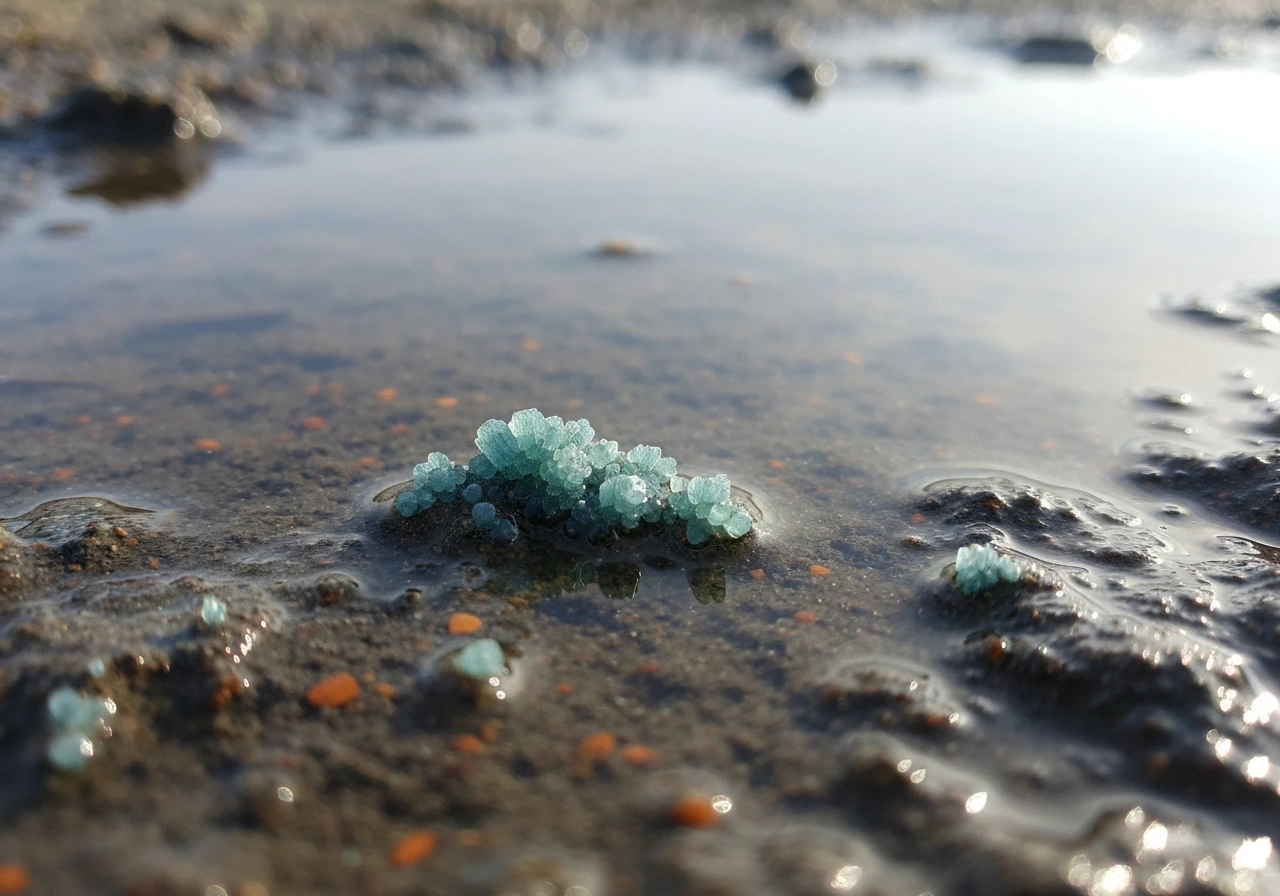
- Myth: Vivianite only forms on human corpses. False. It forms in any environment with iron, phosphate, and anoxic wet conditions, including peat bogs, lake sediments, and wastewater digesters.
- Myth: Vivianite "grows" like a living thing. False. It precipitates and crystallizes from solution. The process is driven by chemistry and microbiology, not biological growth.
- Myth: Finding blue deposits near remains always means vivianite. False. Blue-green minerals and materials can have many sources. Confirmation requires laboratory analysis, especially XRD or Raman spectroscopy.
- Myth: Vivianite takes thousands of years to form. False. Studies have demonstrated formation within days to weeks under the right conditions, and it has been documented in burial contexts spanning only a few years.
- Myth: Vivianite is rare and exotic. Partly false. It is not common in most surface environments, but it is widespread in reducing sedimentary environments globally and even forms routinely in wastewater treatment systems.
- Myth: The blue color is stable and permanent. False. Vivianite oxidizes readily in air and light, shifting from pale blue through deep blue-green to purple and eventually grayish-brown.
Whether you are approaching this from a forensic curiosity, a soil science angle, or just want to understand what that unusual blue crust in your garden might be, the core answer is the same: vivianite is a real mineral, it genuinely does form in association with decomposing remains under specific chemical conditions, and understanding those conditions is the key to understanding where it comes from. It is also worth noting that the intersection of bone, soil, and unusual growth forms a broader topic in natural history. Articles exploring whether bone blossom can grow in a garden or what type of plant bone blossom actually is touch on similar themes of how death-associated materials interact with living systems in ways that can surprise you.