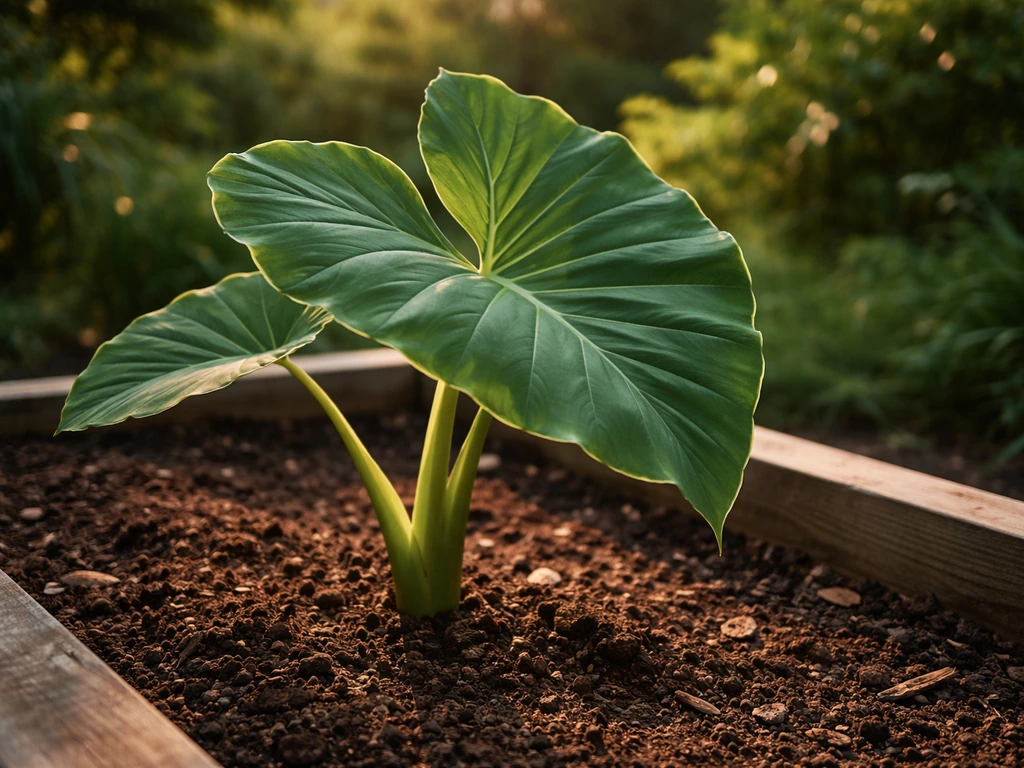
Yes, elephant ears are a great choice for a home garden, but only when the conditions are right. If you have a spot with partial shade or filtered morning sun, moist and rich soil, and you live somewhere warm (or you're willing to dig the bulbs up before frost), elephant ears will reward you with some of the most dramatic foliage in the garden. If your yard gets blasted by hot afternoon sun, drains poorly, or sits in a frost-prone region where you won't bother with winter storage, they're going to frustrate you.
Is Elephant Ears Good to Grow in a Garden

Marcus Weir
27 May 2026
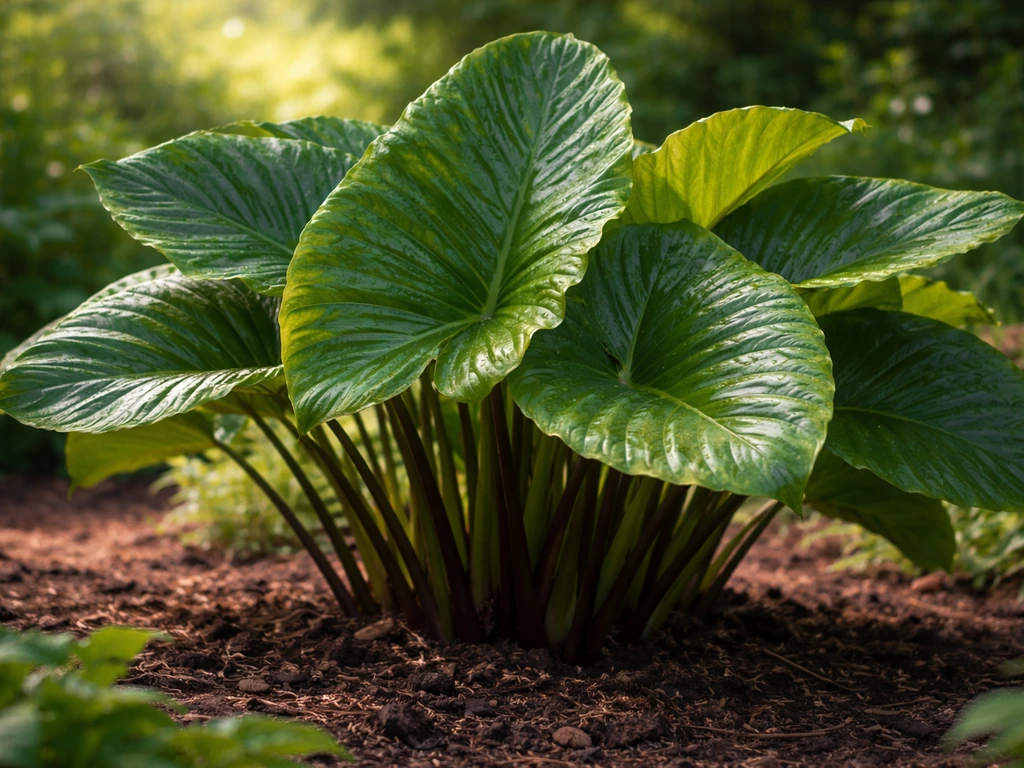
Are elephant ears a good choice for your garden?
For most home gardeners, elephant ears are absolutely worth growing. They're fast, bold, and almost impossible to ignore once they get going. A single corm planted in spring can produce leaves the size of a trash can lid by midsummer. That's the appeal: few plants give you that kind of tropical drama with so little fuss, as long as you meet their basic needs.
That said, they're not a set-it-and-forget-it plant. They're heavy feeders that need regular fertilizing, they want consistently moist soil, and in most of North America they won't survive winter in the ground without some protection. For beginner gardeners, that list might sound intimidating, but in practice, elephant ears are actually pretty forgiving once established. The main ways people fail with them are planting in the wrong light, letting the soil dry out, or ignoring winter storage in cold climates.
Worth noting: 'elephant ears' is a casual name that covers three different genera, mainly Colocasia, Alocasia, and Xanthosoma. They share the same general look but have slightly different preferences. Colocasia is the most common and adaptable for home gardens. Alocasia is a bit more finicky and less cold-tolerant (frost can damage it below about 45°F). Most of what's in this guide applies across all three, but if you're buying plants and want maximum flexibility, start with Colocasia.
Where elephant ears actually fit in a garden
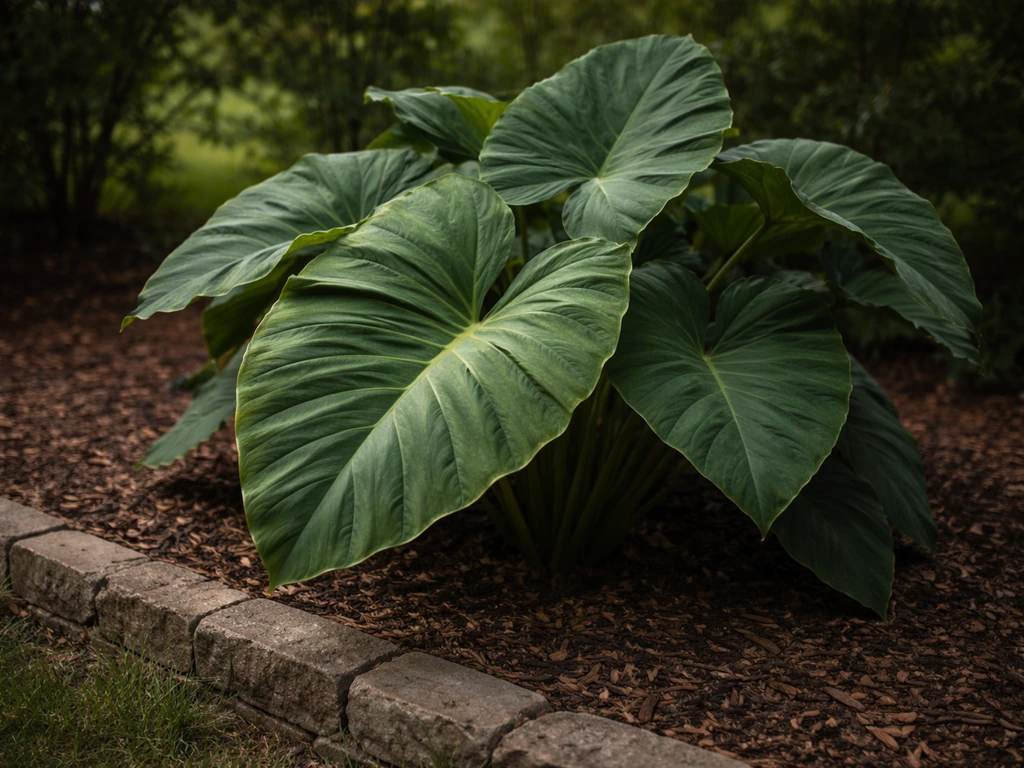
Elephant ears are purely ornamental in most home garden contexts. They're grown for their foliage, not for flowers, and their flowers are honestly underwhelming and quite rare in typical garden conditions. Elephant ears are grown for their dramatic leaves rather than for cut-and-dried flower production elephant ears are grown for their foliage. Because they are grown primarily for foliage, many gardeners never see elephant ears produce flowers do elephant ears grow flowers. What you're really after is the leaf: giant, architectural, and available in green, dark purple-black, and variegated forms depending on the variety you choose.
In terms of placement, they work best as a backdrop or anchor plant. Put them behind shorter flowering perennials, use them to fill a corner that needs visual weight, or plant them along a fence line where the big leaves can really show off. They're also excellent near a pond or water feature since they naturally love that edge-of-water environment. A clump at the back of a mixed border can make the whole bed look more lush and tropical.
Container growing is a totally viable option, especially if you're in a colder climate or don't have the right in-ground conditions. A large pot (at least 15–20 gallons for full-size varieties) filled with rich, moisture-retentive potting mix works well. Containers also make winter storage much easier: you can move the whole pot indoors rather than digging the corms out of the ground. The tradeoff is that containers dry out faster, so you'll be watering more often.
As a companion plant, elephant ears pair well with cannas, impatiens, caladiums, and ferns, things that also appreciate moisture and shade. Avoid planting them next to drought-tolerant plants that you'd be underwatering to keep happy, since their moisture needs will clash.
Light, soil, and water: what they actually need
Light
Most elephant ears do best in partial shade or filtered sun: think morning light with afternoon shade, or dappled light under high tree canopy. About 4 to 6 hours of indirect or morning sun is the sweet spot for most varieties. Full sun can work, especially for darker-leaf varieties like 'Black Magic,' but only if the soil stays consistently moist. When soil dries out under hot afternoon sun, the leaves scorch and the plant stalls. If your only sunny spot bakes all day, either plan on very frequent watering or choose a shadier location.
Soil
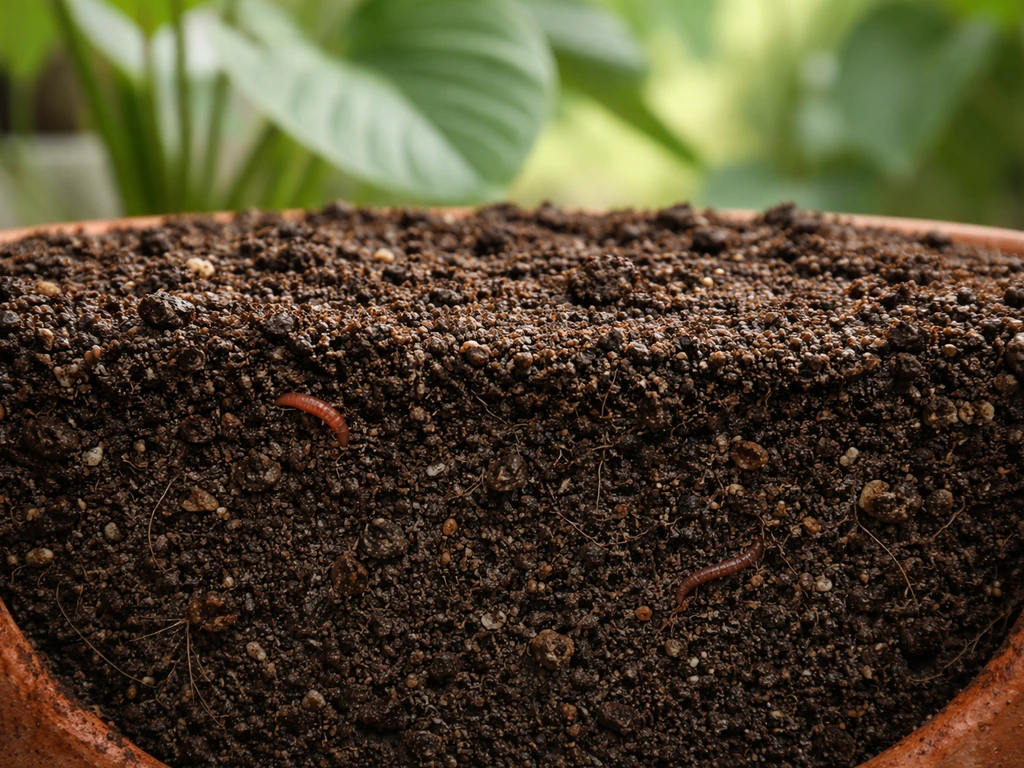
Rich, loamy, and moist, but well-drained. That combination is non-negotiable. Elephant ears evolved in wet, forested, tropical conditions, so they want soil that holds moisture without becoming waterlogged. Think of it like this: moist is good, soggy is death. Heavy clay that holds standing water will rot the corms. Sandy soil that drains immediately will leave the plant chronically stressed. The fix for both problems is the same: work in generous amounts of compost or aged organic matter before planting. That improves drainage in clay and moisture retention in sand.
Watering
Water consistently and don't let the soil dry out completely between waterings. In hot summer weather, in-ground plants may need water every 2 to 3 days; container plants may need it daily. If the leaves start to droop or curl at the edges, that's usually a sign of drought stress. The good news is they bounce back quickly once watered. Just don't overcompensate by flooding them, especially in lower-light spots where the soil takes longer to dry.
How to plant elephant ears (timing, depth, and spacing)
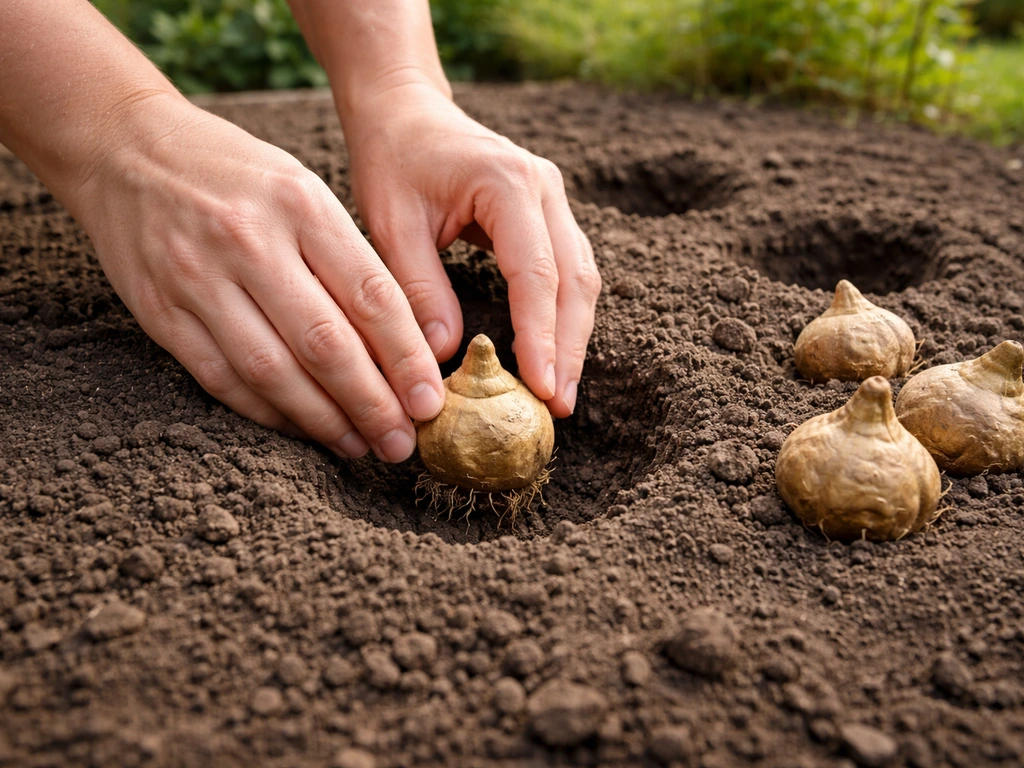
Elephant ears are planted from corms, rhizomes, or tubers depending on the variety, but the process is essentially the same. Wait until the soil temperature is consistently above 60°F and all frost risk has passed. Once you plant at the right time and depth, you can expect to start seeing new growth and then learn how elephant ear plants grow through the season how do elephant ear plants grow. In most of the U.S., that's somewhere between late April and early June depending on your zone. Planting into cold soil delays emergence and increases the chance of rot.
If you're in a warm climate (zones 8 to 11), you can plant in-ground and leave them year-round. If you're in zones 7 and below, treat them as tender summer bulbs: plant in spring, enjoy through summer, dig before frost.
- Prepare the bed by digging in 2 to 3 inches of compost and loosening the soil to at least 12 inches deep.
- Plant corms about 4 to 6 inches deep with the pointed side (if visible) facing up.
- Space them 2 to 4 feet apart, depending on variety size. Larger types need the wider spacing.
- Water well after planting, then keep soil consistently moist.
- Expect the first shoots to emerge in 2 to 4 weeks, depending on soil temperature. Don't panic if nothing happens in the first week or two.
If you're starting early indoors (4 to 6 weeks before your last frost date), pot the corms in containers and keep them somewhere warm and bright. This gives you a head start and you'll get bigger plants faster once they go outside. Just harden them off gradually over a week before moving them to their permanent spot.
Feeding and care through the growing season
Elephant ears are heavy feeders. This is the part people often skip, and then wonder why their plants look okay but not great. Illinois Extension is pretty direct about this: fertilize weekly with a high-nitrogen liquid fertilizer during the growing season. A balanced liquid feed (like 20-20-20) works fine early on to get establishment going, then you can lean into higher nitrogen once the plant is actively pushing out leaves. Don't fertilize when the plant is under heat stress or severely dry.
Mulch is your best friend here. A 3-inch layer of wood chips or shredded bark around the base of the plant keeps soil moisture stable, moderates soil temperature, and cuts down on how often you need to water. Pull the mulch back a couple of inches from the stem to prevent rot.
Pruning is minimal. Remove any yellowing, damaged, or dead leaves at the base as they appear. This keeps the plant looking tidy and improves airflow, which helps prevent fungal issues. You don't need to cut back healthy leaves unless they're diseased. The plant basically manages itself in terms of leaf production, pushing out new leaves as old ones age.
What can go wrong: pests, disease, and rot
Elephant ears are relatively problem-free, but a few things are worth watching for.
| Problem | Cause | What to do |
|---|---|---|
| Root/corm rot | Waterlogged or poorly drained soil | Improve drainage before planting; reduce watering; dig and inspect corms if plant collapses |
| Leaf spots or fungal patches | Overwatering, poor airflow, or splashing water onto leaves | Improve airflow, water at the base, remove affected leaves |
| Taro beetles / caterpillars | Chewing insects feeding on leaves | Hand-pick if minor; use appropriate organic insecticide for heavy infestations |
| Spider mites | Hot, dry conditions, especially on potted plants | Increase humidity, mist leaves, treat with insecticidal soap |
| Aphids | Common on new growth | Blast off with a hose; treat with neem oil or insecticidal soap |
| Yellowing leaves | Overwatering, underwatering, or nitrogen deficiency | Check soil moisture and adjust watering; resume weekly feeding if fertilization has lapsed |
The single most common problem I see is rot from overwatering or poor drainage, especially in shady spots where soil stays wet longer. NC State Extension notes that root rot and leaf spots in Alocasia can occur from overwatering rot from overwatering or poor drainage. If your elephant ear just sits there doing nothing after planting and eventually goes mushy at the base, the corm has likely rotted. Prevention is much easier than recovery: get the drainage right before you plant.
Getting them through winter
In zones 8 to 11, elephant ears can stay in the ground year-round with minimal protection. A thick layer of mulch over the root zone is usually enough to protect them through mild winters. In zones 7 and colder, you have two main options: dig and store the corms, or grow them in containers and bring them indoors.
Digging and storing corms
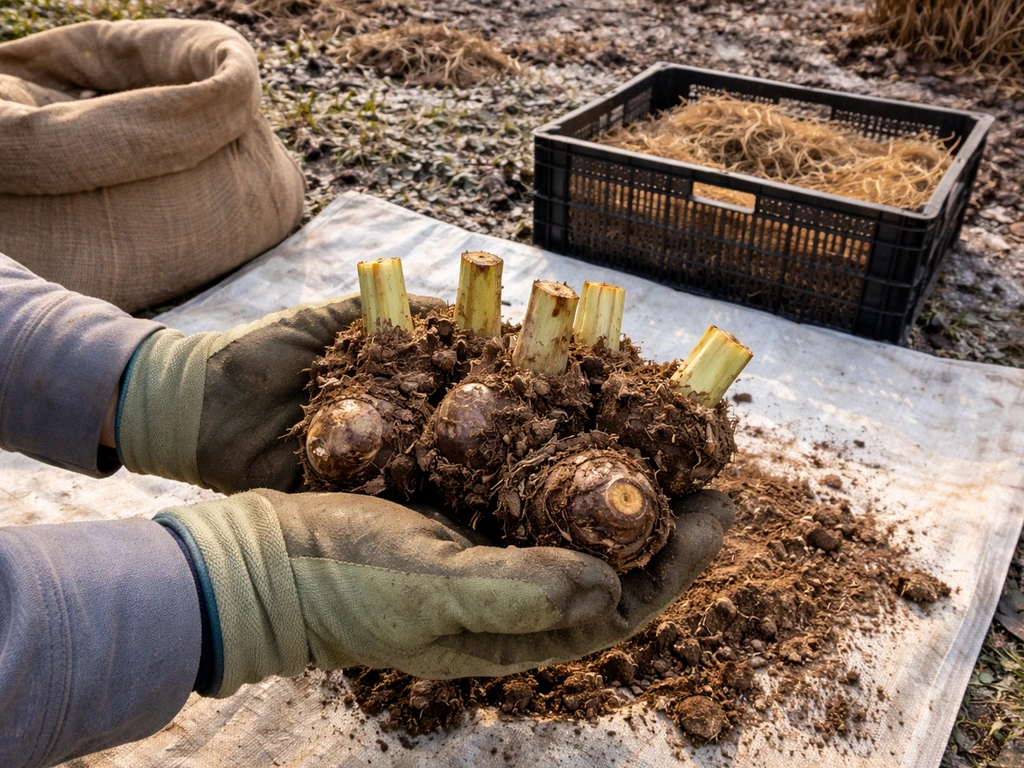
- Wait until the first light frost kills the foliage, then cut the stems back to about 2 to 3 inches above the corm.
- Carefully dig the corms out of the ground, trying not to nick or cut them.
- Let them cure at 60 to 70°F for 1 to 2 weeks in a dry, well-ventilated spot out of direct sunlight. This toughens the outer skin and reduces rot during storage.
- Once cured, store in a paper bag, cardboard box, or mesh bag filled with slightly dry peat moss or wood shavings.
- Keep them in a cool, dark location at around 45 to 55°F (some sources say up to 60°F is fine). A basement, garage, or cool closet works well.
- Check on them monthly and discard any that show signs of rot.
Container overwintering
If your elephant ears are in pots, you can simply bring the whole container indoors before the first frost. Cut the plant back, reduce watering dramatically (just enough to keep the corm from shriveling), and keep the pot in a cool, dark spot. This is the easiest method if you have the space for it. Resume watering and move to brighter light in early spring when you're ready to get them growing again.
Alocasia varieties are especially sensitive to cold and should not be exposed to temperatures below about 45°F at any point, so get those indoors earlier than you think you need to. Colocasia is slightly more tolerant but still can't handle hard freezes in the ground.
When elephant ears are NOT the right pick
Be honest with yourself about your conditions before buying a bag of corms. Elephant ears are a bad fit if your only planting spot gets hot afternoon sun and you're not going to water consistently, if your soil is compacted clay that drains poorly and you're not willing to amend it, if you're in a cold climate and won't bother digging the corms before frost, or if you want a low-maintenance plant you can ignore for months. In any of those situations, you'll end up with disappointment and rotted corms. There are better choices for those scenarios.
But if you've got a shady or partly shaded spot that stays moist, you're willing to fertilize regularly, and you can commit to basic winter prep, elephant ears are one of the most rewarding plants you can grow. They grow fast enough to see real progress week to week, which is satisfying in a way that slow growers just aren't.
Quick checks before you plant today
- Is your soil temperature above 60°F? If not, start corms in pots indoors and transplant later.
- Does your chosen spot get partial shade or filtered morning sun? If it's full afternoon sun, pick a different location or plan to water very frequently.
- Is your soil moist but well-drained? If it's clay-heavy or sandy, work in at least 2 to 3 inches of compost before planting.
- Do you have a plan for winter? Know your USDA zone and decide now whether you'll dig corms or bring containers inside.
- Do you have a liquid fertilizer on hand? You'll need it weekly once the plants are established and actively growing.
Elephant ears are tropical plants at heart, and understanding that framing makes everything else fall into place. They want warmth, moisture, rich soil, and regular feeding, the same conditions that make any tropical forest floor lush and productive. Match those conditions and you'll have a plant that's genuinely hard to kill and absolutely impossible to overlook.
FAQ
Is elephant ears good for a beginner, and what’s the biggest reason they fail?
They can be beginner-friendly, but the most common failure is corm rot caused by wet, poorly draining soil (often in shadier spots). If you only remember one thing, make sure the ground drains well and don’t let the area stay soggy for days after watering or rain.
Can I grow elephant ears in full sun if my soil stays moist?
Sometimes, especially for darker-leaf types, but heat is still a risk. If your afternoons regularly get very hot, plan on extra watering and use mulch to buffer soil temperature, otherwise leaves can scorch and growth can stall even when the plant looks watered.
How do I tell if elephant ears need more water or if they’re overwatered?
Drought stress often shows as drooping or leaf edges curling, and the plant usually perks up after watering. Rot or overwatering looks different, mushy growth at the base and a plant that essentially stalls and deteriorates, even though the soil stays wet. If the base is soft, prioritize drainage rather than just watering more.
What size pot should I use for elephant ears, and will smaller containers work?
For full-size varieties, aim for at least 15 to 20 gallons. Smaller pots can work for compact growth, but they dry out faster and make consistent moisture and winter storage much harder to manage.
Do elephant ears need winter protection in containers, or can I leave them outdoors?
In colder areas, don’t leave containers outdoors through freezing temperatures. Before frost, cut back foliage, move the pot to a cool dark location, and water only enough to keep the corm from shriveling. Freezing soil in a pot can damage corms even if the plant is stored.
When should I start elephant ears indoors, and how do I avoid transplant shock?
Start about 4 to 6 weeks before your last frost date in warm conditions and bright light. When moving outside, harden them off gradually over about a week so they adjust to outdoor sun and night temperatures before they’re left in their final spot.
How deep should I plant elephant ear corms, and why does depth matter?
Depth depends on the corm size, but a common issue is planting too deep, which slows emergence and increases rot risk. Plant so the top is just covered with soil and you still have good airflow around the base, then avoid disturbing the planting area while it’s establishing.
Are Colocasia, Alocasia, and Xanthosoma all the same to care for?
They share similar needs, but Alocasia is less forgiving with cold. If you’re in a region with cool nights, treat Alocasia as more tender by bringing it indoors earlier, because cold exposure below roughly 45°F can cause damage even if the corm might survive.
Do elephant ears grow better with fertilizer, and what should I avoid?
Yes, they’re heavy feeders, and frequent feeding during active leaf growth supports those giant leaves. Avoid fertilizing when plants are severely stressed from heat or drought because uptake can worsen stress, and overdoing nitrogen without adequate moisture can still lead to weak, stressed growth.
Will elephant ears survive winter if I just add more mulch?
Sometimes in mild regions, but mulch is not a guarantee where freezing is likely. If you regularly get hard freezes, mulch alone may not prevent corm damage. In zones 7 and below, the more reliable approach is digging and storing (or using containers that you move indoors).
Can elephant ears be used as a ground cover or do they spread aggressively?
They form clumps and can expand over time, but they’re not typically aggressive like true ground covers. If you want a controlled look, space them with room for a few growing seasons, and consider container planting where you want to limit spread.
Are elephant ears safe to plant around pets or children?
Not always. Elephant ears contain compounds that can irritate the mouth and stomach if chewed. If pets or kids may dig or nibble, keep them out of reach and consider choosing a different ornamental if ingestion risk is realistic.
Next Article
Is Elephant Ear a Tropical Plant? Grow a Garden Guide
Elephant ear is a tropical, warm-climate plant grown for big foliage; learn outdoor zones, overwintering, and fruit myth