Elephant ear plants grow from corms or rhizomes by pushing up large, arrow-shaped or heart-shaped leaves on thick stems, and they do it fast once they have warm soil, bright indirect light or full sun, consistent moisture, and regular feeding. Give them those four things and a single corm can go from bare soil to a 3-foot-wide leaf canopy in a single season. Skimp on any one of them and you get yellowing, stunted growth, or rot.
How Do Elephant Ear Plants Grow A Step-by-Step Care Guide

Marcus Weir
12 May 2026
What elephant ears actually need to grow well
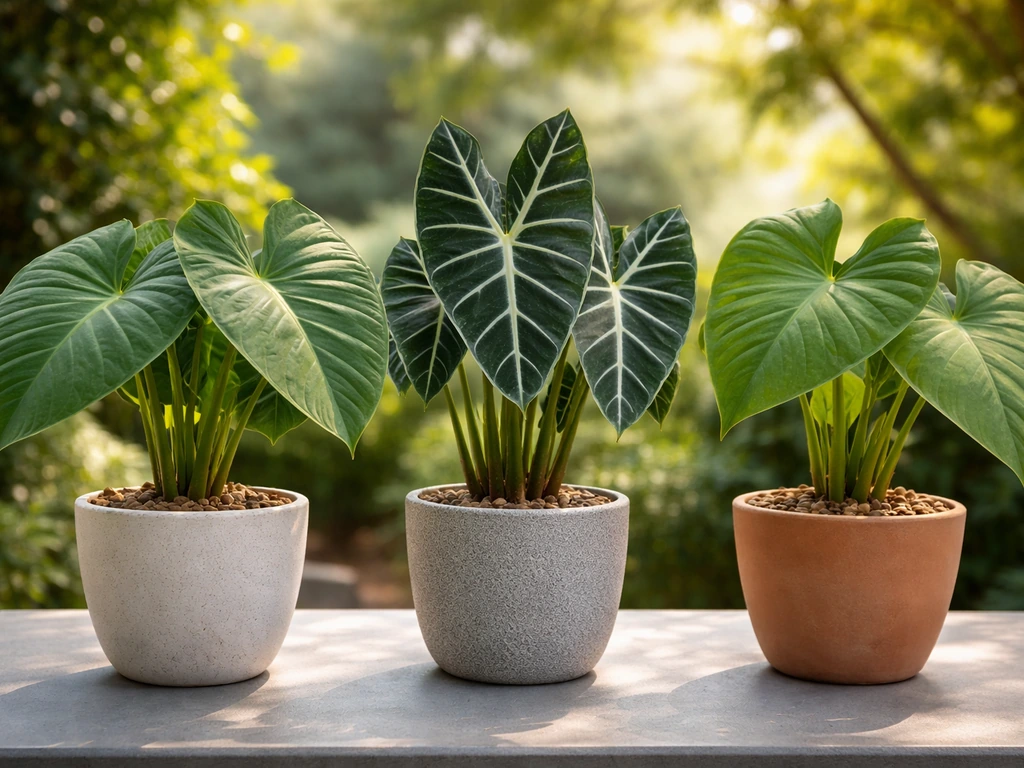
There are three main genera sold as elephant ears: Colocasia, Alocasia, and Xanthosoma. They share the same basic needs but differ slightly in how much sun versus shade they tolerate. Colocasia is the most sun-tolerant and can handle full sun outdoors. Alocasia prefers bright indirect light indoors and dappled shade outdoors. Xanthosoma sits somewhere in between. For most practical purposes, the growing advice below applies to all three unless I call out a difference.
Light
Outdoors, Colocasia does best in full sun to light shade. Indoors, the lighting target for a finished plant is roughly 1,500 to 3,500 foot-candles, which translates to a very bright window (south or west-facing) or a few feet under a grow light. If you put an elephant ear in a dim corner, it will stretch toward the light, produce thin stems and smaller leaves, and the wet soil will sit longer without drying out, which is exactly how rot starts. The fix for leggy, pale growth is almost always more light.
Temperature and humidity
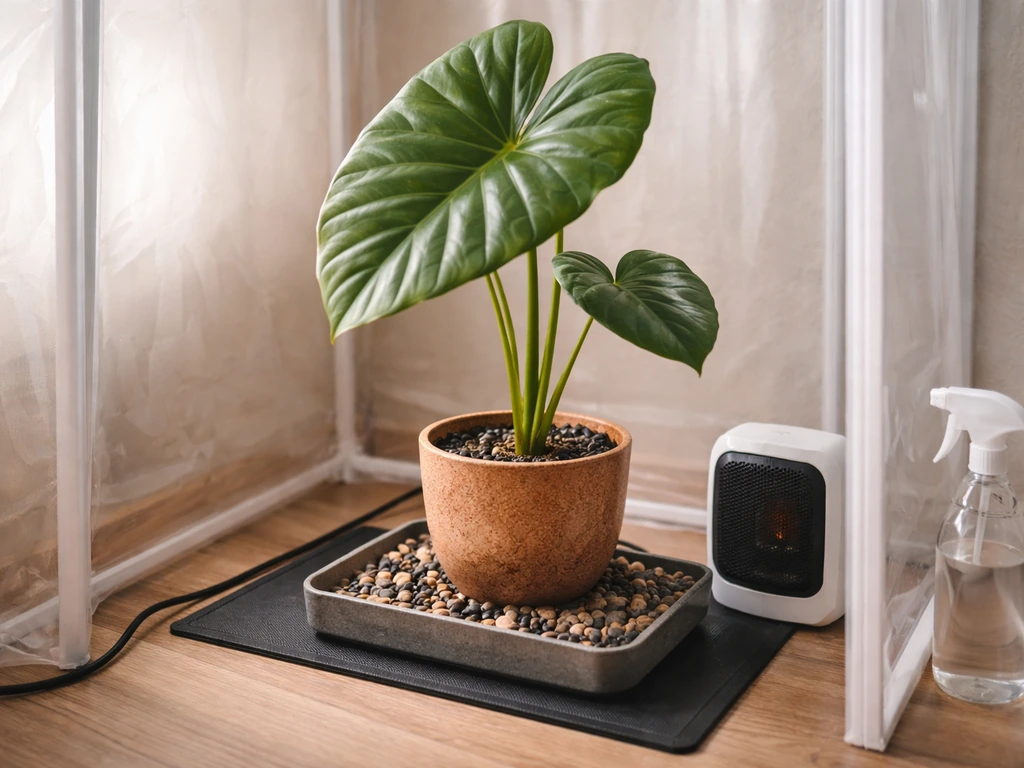
These are tropical plants and they really mean it. The minimum temperature for good growth is 68°F, and frost will damage or kill them outright. For the best results, aim for daytime temps of 68 to 72°F and nighttime temps no lower than 65°F. Higher temperatures combined with moist soil actively accelerate growth, so a warm summer with regular watering is when you will see the most dramatic leaf expansion. Indoors, average household humidity is usually fine, but in very dry climates or heated winter rooms, occasional misting or a humidity tray helps.
How to start elephant ears: corms, division, and seed
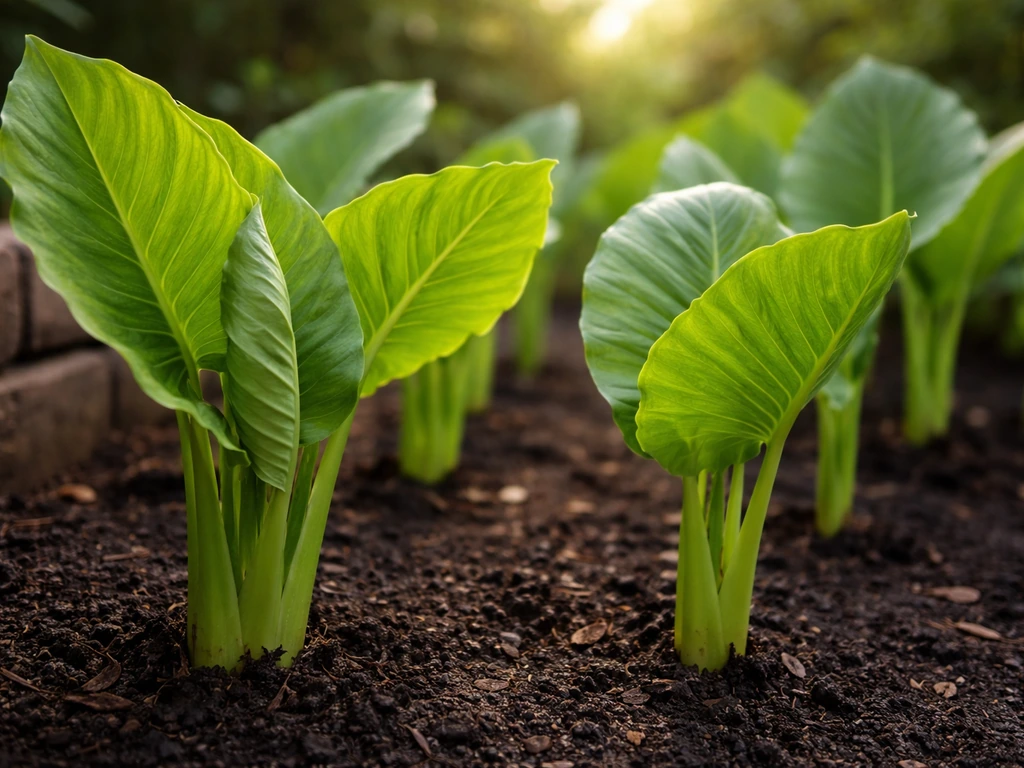
The fastest and most reliable way to start an elephant ear is from a corm or bulb. A corm is a rounded, slightly knobby structure that looks a bit like a rough potato. Plant it with the pointed or budded end facing up and the flat or rough base facing down. For Colocasia corms, a planting depth of about 2 to 4 inches works well in most garden soils. For Xanthosoma, sources put the planting depth at 5 to 10 cm (roughly 2 to 4 inches) with the growth bud oriented upward. Cover lightly, water in, and in warm soil (above 65°F) you should see the first shoot within 2 to 3 weeks.
Division is the next best method and is how you multiply an established clump. Wait until the plant has formed offsets (smaller plants at the base of the main clump), then dig the whole clump, separate the offsets with their own root mass, and replant immediately. Spring is the ideal time, right as new growth begins. Each division should have at least one visible growing point to succeed.
Growing elephant ears from seed is possible but genuinely slow and rarely worth it for home gardeners. Seeds need warm, humid conditions to germinate, and it can take months to get a plant large enough to transplant. If you want results this season, stick with corms or division.
Soil and pot setup that gets roots established fast
The single most important thing about soil for elephant ears is drainage. OSU Extension notes that elephant's ear (Colocasia esculenta) prefers blank" rel="noopener noreferrer">fertile, humus-rich soil conditions, which helps inform feeding and soil choice. Despite their love of moisture, they do not tolerate waterlogged roots. The ideal mix is porous and well-drained, something like a peat or coconut coir base blended with perlite or coarse sand. blank" rel="noopener noreferrer">A target pH of 5.5 to 6.5 suits all three genera, though Colocasia specifically performs well at pH 5.3 to 6.2. Avoid dense, compacted garden soil in pots because it holds water around the roots and creates exactly the anaerobic conditions that cause rot.
For container growing, pot size matters more than people think. A 6-inch pot is appropriate for starting a single corm indoors, but elephant ears grow quickly and will need a move to a gallon-sized pot or larger within 6 to 8 weeks. For large varieties outdoors, use a wide, stable container with drainage holes because the top-heavy leaves can tip a narrow pot. Never leave the pot sitting in a saucer full of water. Empty the saucer after watering every single time.
Watering and fertilizing: a schedule tied to the growth stage
Watering
Elephant ears want consistent moisture but not constant saturation. A useful trigger for Alocasia indoors is to water when the top 25 to 50 percent of the soil has dried out. For outdoor Colocasia in warm weather, the soil should stay evenly moist, and you may be watering every day or two during a heat wave. The key variable is how quickly your specific pot and mix dry out, not a fixed schedule. Check the soil with your finger before watering rather than going by the calendar.
In low-light indoor conditions, the plant uses water much more slowly, so the same amount of water that works in summer can cause rot in winter. When light drops and growth slows, water less, not more.
Fertilizing
During the active growing season (spring through summer), elephant ears are heavy feeders. A nitrogen-focused fertilizer applied every 2 to 4 weeks at roughly 150 to 200 ppm nitrogen is the professional cultivation target. For home gardeners, that translates to a balanced liquid fertilizer like a 20-20-20 diluted to half strength and applied every two weeks during peak growth. Stop or drastically reduce fertilizing in fall as the plant heads into dormancy. Feeding a dormant plant does nothing useful and can burn roots.
Why your elephant ear isn't growing (and how to fix it)
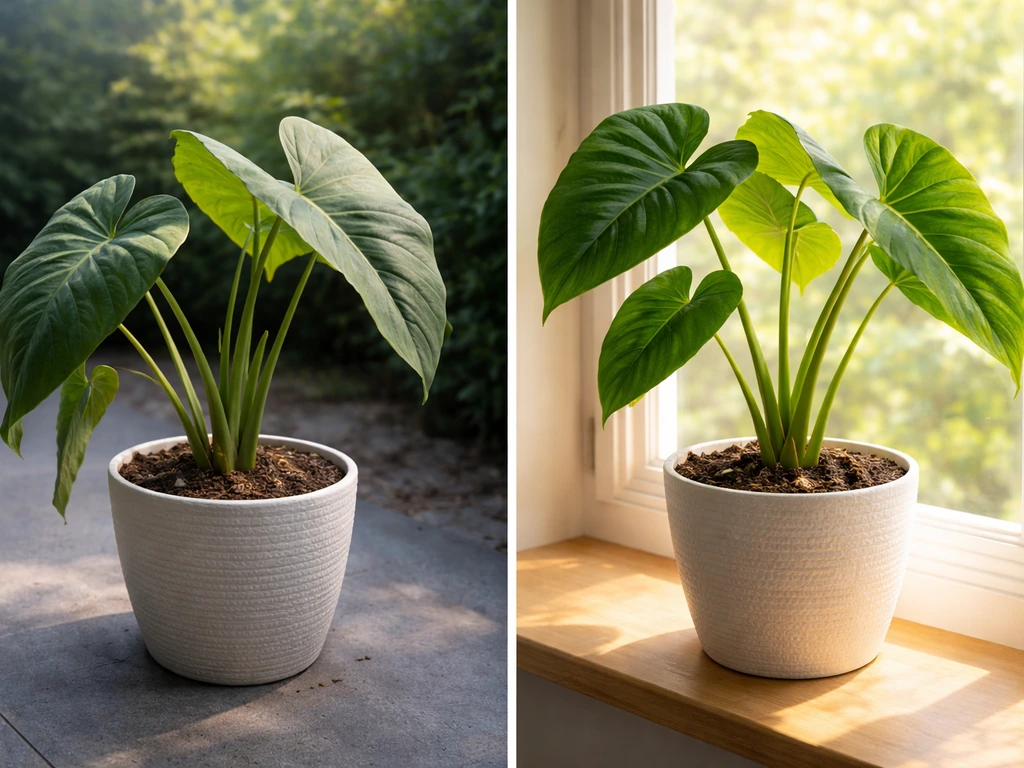
Most problems with elephant ears come down to a small set of causes. Here is what I see most often and what actually fixes them.
| Problem | Most Likely Cause | Fix |
|---|---|---|
| Yellow leaves (lower or all over) | Overwatering or low light slowing water use | Let soil dry more between waterings; move to brighter light |
| No new growth after planting | Cold soil (below 65°F) | Wait for soil to warm or use a heat mat; check corm is planted right-side up |
| Soft, mushy stem or base | Root rot from waterlogged soil | Unpot, trim rotted roots, repot in fresh well-draining mix, reduce watering |
| Leggy stems, small pale leaves | Insufficient light | Move to a brighter location or add a grow light 12–16 hours/day |
| White powdery or gray fuzzy patches on leaves | Powdery mildew or mold (often from poor airflow + humidity) | Improve air circulation, reduce leaf wetness, treat with a diluted neem oil spray |
| Stunted growth despite good light and water | Low temperatures or nutrient deficiency | Check soil temp is above 65°F; start a regular fertilizing schedule |
One pattern worth calling out specifically: the combination of low light and wet soil is by far the most common reason indoor elephant ears decline. In dim conditions the plant simply cannot transpire water fast enough, so the substrate stays wet for days, oxygen disappears from the root zone, and rot follows. More light fixes the watering problem indirectly by letting the plant actually use the water you give it.
Seasonal care: dormancy, overwintering, and when to repot
Outdoor elephant ears in temperate climates go dormant when temperatures drop below about 50 to 55°F in fall. The leaves yellow and collapse, which looks alarming but is completely normal. Do not try to fight dormancy with extra water or fertilizer. Instead, let the foliage die back, then dig the corms before the first frost, brush off the soil, let them air dry for a few days, and store them in a cool (but frost-free), dark, dry place in paper bags or peat moss. Aim for storage temperatures around 50 to 60°F. Replant in spring once soil temps are reliably above 65°F.
For indoor plants, dormancy is less predictable but still common, especially for Alocasia. When growth slows in fall and winter, reduce watering to roughly once a month or just enough to keep the corm from completely desiccating. Stop fertilizing. Resume normal watering and feeding when you see new growth pushing up in late winter or spring.
Repotting is best done in early spring just as new growth begins, before the plant invests energy in a full leaf flush. Go up one pot size at a time rather than jumping to a much larger container, which holds excess moisture around the roots and slows establishment. If the roots are tightly circling the bottom of the pot, it is definitely time.
How fast do elephant ears grow, and how big do they get?
Elephant ears are genuinely fast growers when conditions are right. From a corm planted in warm spring soil, you can expect the first leaves within 2 to 3 weeks and a full canopy of 2 to 3 feet within 8 to 12 weeks. By midsummer in a good season, large Colocasia varieties can reach 4 to 6 feet tall with individual leaves spanning 2 to 3 feet. Alocasia grown indoors is more restrained, typically reaching 2 to 4 feet in a container over a full growing season.
For propagation by division, the best time is spring when you repot or divide an established clump. Each offset division that has its own roots and a growing point will establish within 3 to 4 weeks in warm conditions. Divisions taken in fall rarely establish well because the plant is heading into dormancy and has little drive to push new roots. Time it right and one plant can become four or five healthy specimens in a single season.
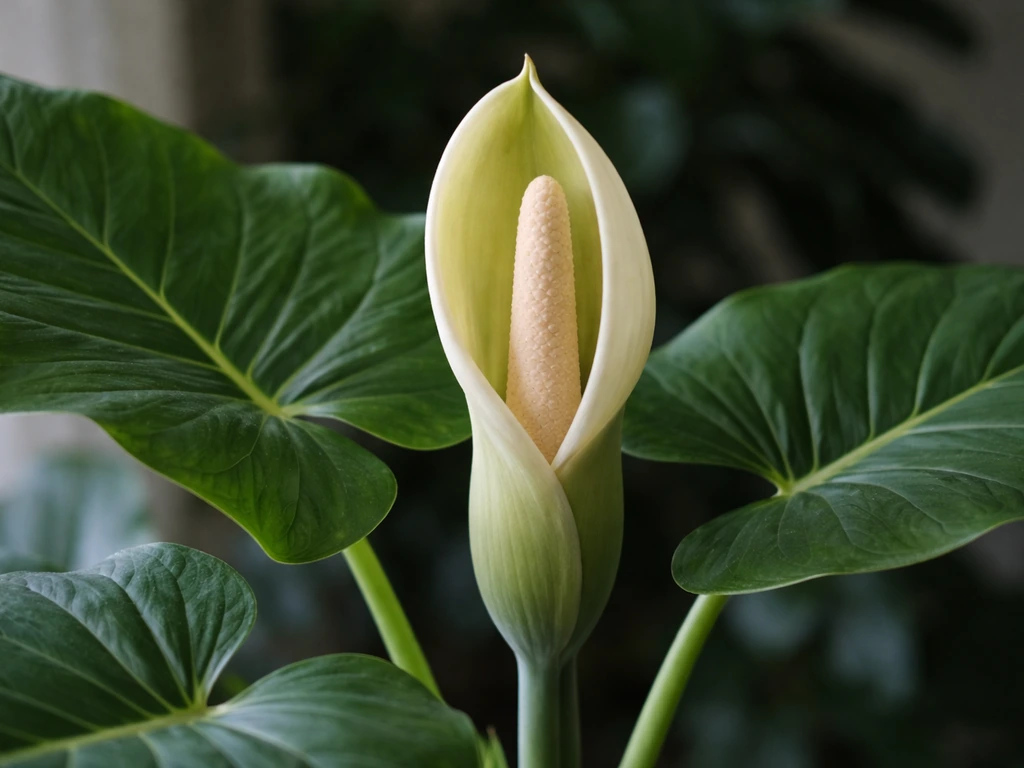
It is worth noting that elephant ears are primarily grown for their dramatic foliage rather than flowers, though flowering does occasionally occur. Even so, if you want to encourage elephant ear flowers, you need the right light, warmth, and consistent growing conditions so the plant can reach its best flowering potential. The plant's full energy in a good growing season goes almost entirely into producing those spectacular leaves, which is exactly what most gardeners are after.
Quick troubleshooting reference
- No growth after planting: soil is too cold. Wait for temperatures above 65°F.
- Yellow leaves indoors: too much water combined with too little light. Fix the light first.
- Mushy base: root rot. Unpot immediately, remove rot, repot in dry fresh mix.
- Leggy, stretched stems: not enough light. Move closer to a window or add a grow light.
- Mold or white powder on leaves: improve airflow and reduce leaf moisture. Neem oil helps.
- No growth in fall despite good care: the plant is going dormant. Reduce water, stop feeding, let it rest.
- Leaves stay small all season: likely underfed. Start a biweekly fertilizing routine with a balanced liquid feed.
FAQ
Can I grow elephant ear plants in a pot year-round indoors?
Yes, but only if you understand how to keep the pot from staying soggy. Use a drainage pot with holes, a well-draining mix, and never let water sit in a saucer. In winter or low-light periods, reduce watering substantially because the mix dries much slower indoors.
Why is my elephant ear not growing after planting the corm?
If a plant is stalling, check the big three first: temperature (aim for at least 68°F), light (bright window or grow light), and whether the corm or rhizome is planted correctly. Bulbs/corms that are too shallow, planted upside down, or placed in cold soil often rot instead of sprouting.
How often should I water elephant ears indoors if I do not know when the soil is dry?
For indoor plants, watering frequency should be adjusted to light and season, not strictly by a calendar. A practical rule is to wait until the top portion of the mix dries (more in summer, less in winter), then water thoroughly until excess drains out, then wait again.
Should I fertilize elephant ears in fall and winter?
Use nutrition in the active season, then stop before dormancy. A common mistake is continuing to fertilize in fall or winter, which can stress roots and worsen rot risk in slower growth. When you see new shoots again in late winter or spring, restart feeding at a reduced rate.
What should I adjust first if my elephant ear leaves are small or thin?
The fastest way to increase growth is to raise both light and warmth while keeping drainage excellent. If you already have bright light, the next lever is moisture consistency during active growth, not more fertilizer. Overfeeding in dim conditions often leads to weak, pale growth.
Can I replant elephant ear corms immediately after storage?
You should not replant a corm directly after removing it from dormancy storage if it has started to rot or mold. Discard soft or smelly corm pieces, let any intact ones air-dry briefly, then replant after outdoor soil reliably warms above about 65°F, or indoors once you can maintain warmth.
Is leaf yellowing and collapse always a problem?
It can be normal for the above-ground leaves to die back when temperatures fall, especially outdoors in temperate climates. The key sign is that the corm is still firm and not collapsing. If the corm feels mushy or smells bad, that is rot, not normal dormancy.
What pot size do I need for elephant ears to avoid growth problems?
Yes, but align pot size with the growth phase. A small pot can be fine for starting indoors, then move up to about a gallon-sized container within a couple months. Leaving a large clump in a small pot too long can also cause dry-down issues at the rootball center and slow establishment.
How deep should I plant my elephant ear corm, and does orientation matter?
Planting depth matters, but orientation matters just as much. Plant the growth bud or pointed end upward, keep the base downward, and avoid covering more deeply than recommended for your type. Too deep planting delays sprouting and increases the chance the corm stays wet longer.
Can cold temperatures or cold water affect elephant ear growth?
Cold water and cold soil can trigger slow growth and increase rot risk, especially indoors. If your plant sits near a cold window or floor vent, move it and use room-temperature water. For outdoor containers, protect the pot from rapid overnight temperature drops.
How do I know a division will succeed, and should I water right after dividing?
Yes, but treat it like a quick transplant, not a replanting experiment. If you divide, each division should have its own root mass and at least one visible growing point, then replant immediately and keep it lightly moist in warm conditions. Divisions without a clear growing point often fail.
Do Colocasia, Alocasia, and Xanthosoma sprout at the same speed?
Expect different timing by genus and conditions: Colocasia often grows more vigorously in sun, while Alocasia can be slower and more particular indoors. Even within a genus, warm soil, bright light, and consistent moisture are what determine how quickly leaves expand.
My elephant ear looks unhealthy, should I repot immediately?
A good next-step when you see decline is to inspect drainage and root-zone wetness before changing everything. If the plant looks pale or droopy and the soil stays wet for days, increase light and airflow and let the mix dry more between waterings. Only repot if you suspect rot and can improve the root-zone conditions.
Next Article
Do Elephant Ears Grow Flowers? How to Encourage Blooming
Do elephant ears (Colocasia and relatives) really flower? Learn what blooms look like and how to encourage them indoors.