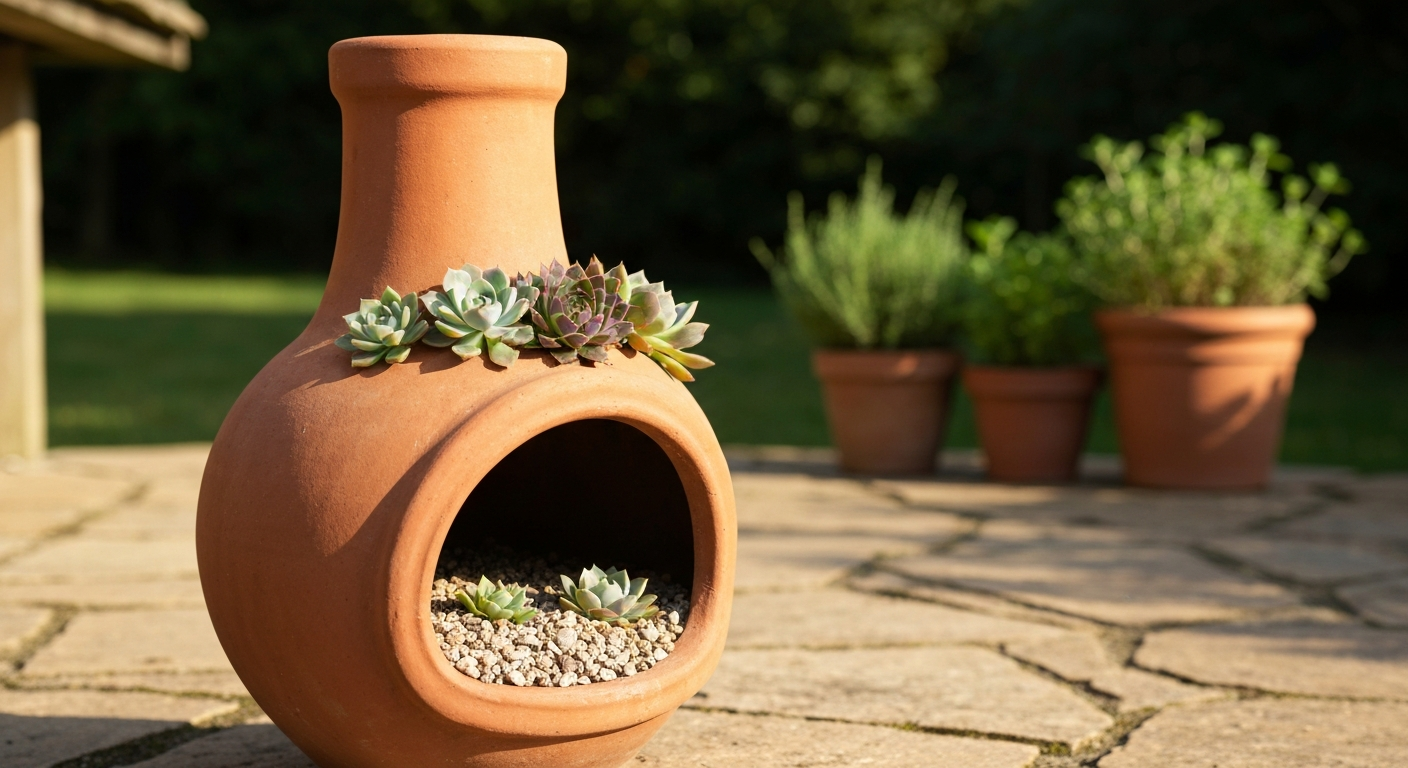
An old chiminea makes a genuinely useful planter, and the best candidates to grow in one are drought-tolerant succulents and cacti, compact alpine perennials, culinary herbs like thyme and rosemary, low-growing annual flowers, small spring bulbs, and, in shadier spots, shade-tolerant ferns. What you can grow depends heavily on the chiminea's material, condition, and how well you solve the drainage problem. Get those two things right and you have a characterful, raised planter that suits a huge range of plants.
What Can I Grow in an Old Chiminea: Best Plants & Care Tips!

Marcus Weir
19 Jul 2026
Quick verdict: is an old chiminea actually a good planter?
Yes, with conditions. The five things that determine whether your specific chiminea is worth using are material, condition, drainage, size, and placement. Unglazed clay and terracotta chimineas are the easiest to work with: their porous walls wick and evaporate moisture, which naturally reduces soggy-root risk and suits drought-tolerant plants well. The downside is that same porosity makes them vulnerable to freeze-thaw cracking if left outside wet in winter. Glazed ceramic chimineas retain moisture longer, which is useful for moisture-hungry plants but raises root rot risk if drainage is poor. Cast-iron models are extremely durable and heavy (think permanent fixture) but rust if protective coatings fail and offer no moisture-breathing benefit. Thin steel-sheet chimineas are lightweight but corrode at seams and vent openings, so inspect those points carefully before committing.
On size: a standard chiminea belly holds roughly 10 to 20 litres of growing media once you account for the opening and the tapering shape. That is a generous container for a single focal planting of herbs or succulents, but tight for anything with deep roots. Shallow-rooted plants win here. On placement: position matters because the tall chimney stack shades whatever sits directly inside the belly opening from directly overhead light, so factor that into your plant choice.
Checking your chiminea before you plant anything
Before you fill it with compost, give the chiminea a thorough structural and hygiene check. I learned this the hard way when I filled a terracotta chiminea with damp compost one autumn, left it outside, and came back in spring to find it had split along a hairline crack I had not noticed. The wet compost expanded during a freeze, and that was that.
Checking for cracks
Run your hands over the entire outer surface and tap it gently. A solid, resonant tap is good. A dull thud or a visible gap where two pieces meet suggests the structure is compromised. Hairline surface cracks on the outer wall only, ones that do not penetrate all the way through, are generally cosmetic and fine for planting. What to avoid: radial cracks that run from the rim inward, through-wall cracks where you can see daylight, missing chunks, or any separation at joints. A chiminea with those faults may hold dry soil but will shift and break unpredictably once it is carrying the weight of wet growing media. How to Repair a Crack in a Chiminea, EngineerFix (repair guidance and failure modes) explains that hairline surface cracks that do not penetrate fully are usually cosmetic, while radial or through‑wall cracks, missing pieces, or separation at joins indicate structural failure and a risk of sudden breakage, avoid planting if the structure cannot support the wet soil mass How to Repair a Crack in a Chiminea — EngineerFix (repair guidance and failure modes).
Stability and safe placement
Chimineas have a low centre of gravity when empty but become top-heavy if the belly is overfilled or if they are placed on an uneven surface. Set the chiminea on a level, hard surface (patio flags, a gravel bed, or a purpose-built stand) and press it gently from a few angles to check for rocking. If it is cast iron, weight alone will stabilise it, but a terracotta model on a wobbly base is a real risk. Keep it away from high-traffic areas, especially if children or pets are around.
Cleaning out ash and soot
Ash and soot from previous fires need thorough cleaning before planting. Ash from clean, untreated wood is chemically alkaline and can be used very sparingly as a minor soil amendment, but ash from painted, pressure-treated, or stained timber, coal, or charcoal briquettes may carry hazardous compounds and should not go near garden soil or edible plants. If you are not certain what was burned in your chiminea, sweep and rinse the interior completely and discard the residue. Do not add unknown ash to your planting mix.
Safety warnings you should not skip
A retired chiminea used as a planter is no longer a heat source, but a few risks carry over.
- Fire risk from residual ash: clean the firebox completely before planting. Even small amounts of live ash mixed into dry compost are a fire hazard in hot, dry conditions.
- Lead and cadmium in glazes: some traditional and inexpensive glazes leach metals. The FDA explicitly warns against using leachable glazed pottery for food or drink. If your chiminea has a glaze of unknown origin, do not grow edible crops in it without a professional leach test. Use it for ornamentals only.
- Creosote contamination: if the interior has a thick, tarry creosote buildup from years of use, do not repurpose it for edibles. Use it for strictly decorative, non-edible planting or dispose of it.
- Structural failure under load: wet growing media is surprisingly heavy. A 15-litre fill of damp compost weighs around 10 to 15 kg. Cracked or corroded chimineas can fail suddenly under that weight. If in doubt, use the inner-pot method (described below) to reduce stress on the chiminea walls.
- Metal corrosion: steel and cast-iron chimineas with failing paint or coating can leach rust compounds into soil. This is not acutely toxic to most plants but can affect pH and iron levels. Use a liner in metal chimineas.
Lining and drainage: the practical fixes
The biggest practical challenge with any chiminea planter is drainage. Most chimineas have no drainage hole at the bottom, and standing water at the root zone causes root rot in almost every plant. You have three main options: drill a drainage hole, use an inner nursery pot, or use a landscape-fabric liner with cut drainage slits. Manufacturers and extension guides recommend using a double‑pot/cachepot approach (placing a smaller, drained nursery pot inside the chiminea) when the chiminea cannot be drilled or if you want to protect the chiminea and avoid drilling, improving drainage control and allowing easy seasonal removal practical cachepot method. Each has trade-offs.
| Method | Best for | Pros | Cons | Drainage rating |
|---|---|---|---|---|
| Inner nursery pot (cachepot method) | All chiminea materials, especially metal and glazed ceramic | No drilling required; easy seasonal removal; full drainage control | Pot must fit the belly opening; slight gap can harbour slugs | Excellent |
| Drilled drainage holes (terracotta/clay) | Unglazed clay and terracotta chimineas | Permanent fix; drains freely; no extra pot needed | Risk of cracking if done incorrectly; needs masonry/diamond bit, water cooling | Excellent |
| Drilled drainage holes (metal) | Steel or cast-iron chimineas | Permanent; works well | Brittle cast iron may crack; corrosion at hole edges; needs HSS/cobalt bit and lubricant | Good |
| Pond liner or heavy landscape fabric | Any material when drilling is not an option | Protects porous clay walls; cheap | Must cut drainage slits; can pool water if slits are insufficient; not rigid | Moderate (with slits) |
| Rigid plastic pot elevated on bricks inside chiminea | Wide-bellied chimineas where a standard pot fits loosely | Easy; portable; drainage from pot holes unimpeded | Pot must be sized correctly; bricks add weight | Good |
If you choose to drill terracotta, use a masonry or diamond-tipped bit, apply masking tape over the drill site to stop the bit skidding, keep the area wet with a slow trickle of water throughout, use the lowest comfortable drill speed, and support the base on a sacrificial piece of timber to prevent blowout. Start with a small pilot hole and step up to the final size gradually. For metal chimineas, an HSS (high-speed steel) or cobalt bit works for thin steel sheet, with cutting lubricant and slow, steady pressure. Cast iron is brittle and corrodes into thin sections, so for cast-iron models I almost always recommend the inner nursery pot instead.
When to seal: if your unglazed terracotta chiminea is going into a dry, sunny spot with succulents, you probably do not need to seal the interior at all. The porosity actually benefits drought-tolerant plants by drying out quickly between waterings. If you want to grow moisture-loving plants in an unglazed clay chiminea, brush the inner walls with a food-safe masonry sealant or, for non-edible plants, a standard waterproofing compound. This slows evaporation through the walls and keeps the root zone more evenly moist.
The 6-step planting checklist
- Clean and inspect: remove all ash, soot, and debris. Check for through-wall cracks, corrosion, or missing pieces. Rinse and let dry completely.
- Choose your drainage method: drill, inner pot, or liner. Install drainage before adding any growing media.
- Add a drainage layer: put 3 to 5 cm of coarse gravel, grit, or broken pot shards at the bottom to keep the drainage hole from blocking with fine compost.
- Choose and add the correct growing mix: match the mix to your chosen plants (see mix guide below). Fill to within 5 cm of the chiminea opening so watering does not wash media straight out.
- Plant, firm in, and water: settle roots gently into the mix, firm the media around them without compacting, and give a thorough initial watering to collapse air pockets.
- Mulch the surface: a thin layer of grit, decorative gravel, or horticultural bark keeps the surface temperature stable, slows evaporation, and discourages weeds and pests.
Which growing mix to use
| Plant type | Recommended mix | Drainage amendment | Notes |
|---|---|---|---|
| Succulents and cacti | 1 part loam, 2 parts coarse grit or perlite, 1 part sharp sand | Maximum: 40-50% grit/sand | pH 6.0-7.0; low fertility; fast-drying |
| Alpines and rock plants | 1 part loam, 1 part grit, 1 part horticultural sand | High: 30-40% grit | pH 6.0-7.0; sharp drainage essential |
| Culinary herbs | Good-quality multipurpose compost with 20-30% added grit | Moderate-high | Mediterranean herbs (thyme, rosemary) prefer lean, gritty mix; mint and basil prefer richer, moister compost |
| Annual flowers | Multipurpose peat-free compost with slow-release fertiliser | Moderate: add 20% perlite | Water-retentive but not waterlogged |
| Spring bulbs | Multipurpose compost, 20% grit for drainage at base | Moderate | Grit layer beneath bulbs prevents basal rot |
| Ferns and shade-loving plants | Peat-free ericaceous or high-organic multipurpose mix, 10% perlite | Low-moderate | Retain moisture but must not waterlog; place in shade |
Plants that actually work: a practical guide by category
The key to picking the right plants is matching them to what a chiminea naturally provides: a relatively shallow, well-drained (once modified), often sunny microclimate with walls that can warm up quickly. Think of it like a raised stone trough in a Mediterranean garden. Shallow-rooted, sun-loving plants perform brilliantly. Deep-rooted, moisture-hungry ones struggle unless you compensate with mix and placement. Here is a full breakdown by category.
Succulents and cacti: the easiest and most forgiving choice
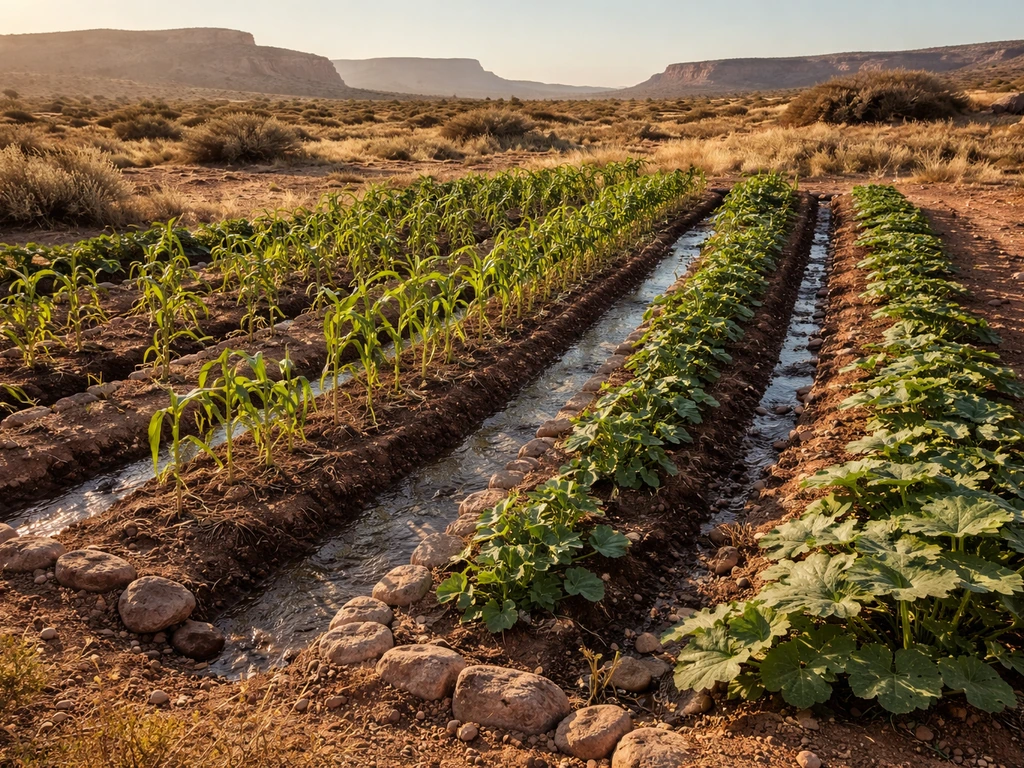
If you have an unglazed clay chiminea in a sunny spot and want a near-zero-maintenance planting, succulents and cacti are the answer. The porous terracotta walls and fast-draining gritty mix recreate the conditions these plants evolved in. The Anasazi people of the American Southwest grew crops under conditions of extreme drought and seasonal unpredictability, relying on species with deep drought tolerance. For details on the crops they cultivated, see what did the Anasazi grow. While chiminea planting is a very different scale, the underlying lesson applies: in a container that dries quickly, choose plants that have evolved to handle it.
Best species for a sunny, dry chiminea include Echeveria elegans (Mexican snowball), which forms neat rosettes up to 15 cm across and tolerates full sun and dry spells with no fuss. Sedum spurium (two-row stonecrop) spreads attractively across the surface and handles both drought and light frost. Sempervivum tectorum (common houseleek) is probably the most resilient choice for an outdoor UK or northern European chiminea: it is fully hardy, needs almost no water once established, and produces attractive offsets that fill gaps. For a statement plant, Aloe vera works well in a warm, sheltered spot, though it needs to come indoors if temperatures drop below about 5 degrees Celsius. Among cacti, Echinopsis chamaecereus (peanut cactus) is a compact, cold-tolerant species that can stay outside in mild winters. Avoid tall, heavy cacti like columnar species: the shallow belly depth will not anchor them safely.
Potting tips: use the gritty mix described in the table above. Plant in groups at slightly different heights for visual interest by burying some pots on a small gravel pedestal before you backfill around them. Topdress the entire surface with coarse gravel or decomposed granite to mimic a dry streambed aesthetic and prevent soil splash. Water deeply but infrequently: once every 10 to 14 days in summer is usually plenty. In autumn, cut back to once a month. In winter, barely water at all unless the chiminea is under cover.
Small perennials and alpines: compact plants built for tough conditions
Alpine plants are naturally adapted to thin, rocky soils with excellent drainage and high light: conditions a well-prepared chiminea planter mimics very well. They are also compact by nature, which suits the shallow, tapering belly shape. The trick is matching the mix to their preference for lean, gritty growing media rather than rich, water-retentive compost.
- Aubrieta deltoidea: spreads low and trails over the chiminea rim attractively; purple flowers in spring; fully hardy; drought-tolerant once established.
- Saxifraga (mossy types): forms tight cushions of foliage and tiny flowers; needs gritty, well-drained mix; perfect for partial shade positions.
- Dianthus alpinus (alpine pink): intensely fragrant flowers; compact and neat; full sun; lean, alkaline-leaning mix suits it well.
- Thyme (Thymus serpyllum): doubles as an ornamental and a culinary herb; creeping habit drapes over the edge; very drought-tolerant.
- Armeria maritima (sea thrift): round pink flowerheads on neat grass-like tufts; loves exposed, sunny sites and poor, well-drained soil.
- Pulsatilla vulgaris (pasque flower): spectacular early-spring bloomer; needs full sun and sharply drained gritty compost; resents root disturbance so plant it young and leave it.
- Lewisia cotyledon: rosette-forming with showy flowers; needs excellent drainage and can sit in the vertical neck of the chiminea if you pack the mix carefully; thrives on neglect.
For the best visual result, combine three to five alpine species with slightly different flowering times so you get interest from early spring through late summer. Use a gritty alpine mix (as described in the table), keep the surface topdressed with granite chippings, and avoid overhead watering directly into the crowns of rosette-forming plants, which can cause crown rot.
Herbs and edible choices: practical flavours from an unlikely planter
Culinary herbs are one of the best uses for a chiminea planter, provided you have addressed the glaze and ash safety questions above. If your chiminea is unglazed terracotta or has a glaze you have tested and confirmed safe, herbs thrive here. If it has an unknown glaze, stick to ornamentals.
Mediterranean herbs are the natural fit. Thyme, rosemary, oregano, and sage all prefer lean, gritty, fast-draining soil and full sun. A chiminea filled with a gritty multipurpose mix in a south-facing position is practically perfect for these plants. Rosmarinus officinalis (rosemary) will grow quite large over time, so in a chiminea context it is worth choosing a compact upright variety like 'Miss Jessopp's Upright' or a prostrate form that drapes over the rim. Thyme forms a low, spreading mat that looks decorative and handles dry spells extremely well. Oregano is slightly more tolerant of moisture and grows vigorously, so pinch it back regularly.
Basil and parsley are different in character: they prefer a richer, moister growing medium and more consistent watering. They can work in a chiminea if you use a more organic multipurpose compost rather than the lean gritty mix, and if you are prepared to water more frequently. Basil in particular needs warmth, so a chiminea on a sun-warmed patio wall works well. Avoid mint directly in the chiminea belly unless it is in its own inner pot, as mint roots will take over and crowd out everything else.
Light and moisture quick notes: thyme, rosemary, and sage all need at least 6 hours of direct sun per day and relatively dry conditions between waterings. Oregano and marjoram tolerate slightly more moisture. Basil needs full sun and consistent moisture but not waterlogging. Parsley tolerates partial shade and prefers evenly moist, richer soil.
Annual flowers and spring bulbs
Annual flowers give you the most flexibility because you replant each season and can adjust your mix and species each time. Compact varieties work best given the chiminea's belly size. Calibrachoa (million bells) trails beautifully and tolerates the slightly drying conditions of a porous clay chiminea. Portulaca grandiflora (moss rose) is an annual succulent that loves hot, dry conditions and produces vivid colour through summer. For something more structured, dwarf Tagetes (marigolds) stay compact, deter some pests, and bloom from early summer to first frost.
For spring interest, small bulbs are excellent: Narcissus 'Tete-a-Tete' (a compact daffodil at around 15 cm), Crocus species, grape hyacinths (Muscari), and dwarf tulips like Tulipa tarda all perform well in the shallow belly. Plant bulbs in autumn at the depth and spacing specified on the packet, with a layer of coarse grit beneath them to prevent basal rot. After flowering, lift the bulbs or allow the foliage to die back naturally before replanting with summer annuals.
Shade-loving and moisture-tolerant plants, including ferns
Not every chiminea sits in full sun, and that opens up an entirely different plant palette. If your chiminea is under a tree canopy, against a north-facing wall, or in a sheltered courtyard, ferns and shade-tolerant plants can be stunning. This is where the planter format of a chiminea starts to intersect with the kind of growing environment that suits moisture-loving species. The key difference from the succulent approach is that you want the mix to retain more moisture: use a high-organic compost with minimal grit, and consider sealing the interior of an unglazed clay chiminea to slow evaporation.
- Dryopteris felix-mas (male fern): fully hardy, tolerates deep shade, grows to about 90 cm but can be kept smaller in a container by choosing a young plant and allowing root restriction to slow growth.
- Asplenium scolopendrium (hart's tongue fern): evergreen with strap-shaped, glossy fronds; prefers alkaline to neutral soil; excellent for a shaded chiminea planter.
- Polypodium vulgare (common polypody): compact and evergreen; tolerates both shade and periodic dryness better than most ferns, making it one of the most forgiving choices for a container.
- Hakonechloa macra (Japanese forest grass): technically a grass but behaves like a shade perennial; cascading, golden-green foliage drapes over the chiminea opening attractively.
- Hostas: compact varieties like Hosta 'Mouse Ears' suit the chiminea belly well; need consistent moisture and shade; watch for slugs.
- Impatiens walleriana (busy Lizzie): a classic shade annual with continuous colour; needs reliable moisture; replace each year.
Watering, feeding, and seasonal care
Watering frequency depends entirely on your chiminea material, mix, and plant choice. Unglazed terracotta walls lose moisture quickly, especially in warm or windy weather, so check the mix by pressing your finger 3 to 4 cm into the compost rather than judging by surface appearance. Succulents and alpines: water deeply when the top half of the mix feels dry; in winter, water sparingly or not at all. Herbs: water when the top 2 to 3 cm feels dry; Mediterranean herbs prefer dry-down periods between waterings. Ferns and moisture-lovers: keep the top 5 cm consistently moist but never waterlogged; mulching the surface helps.
Feeding: succulents and alpines need very little. A single application of a low-nitrogen slow-release fertiliser granules in spring is enough for the whole season. Herbs benefit from a light liquid feed every three to four weeks in summer using a balanced or slightly potassium-heavy formula to encourage leaf rather than lush, sappy growth. Annual flowers are the hungriest: feed every two weeks with a high-potassium liquid fertiliser from first bud to end of flowering.
Winterizing: this is where the chiminea material really matters. Unglazed terracotta is vulnerable to freeze-thaw damage. If temperatures in your area regularly drop below freezing and the chiminea is planted up and left outside, the moisture in the walls and media will freeze, expand, and crack the structure. Options: move the chiminea to a frost-free shed or garage, wrap the exterior in horticultural fleece, or use the inner-pot method so you can lift the plant out in autumn and store both the chiminea and the plants separately. Cast iron can stay outside but protect it from standing water inside by ensuring good drainage. Steel-sheet chimineas should be sheltered to prevent accelerated rusting.
Troubleshooting common problems
Root rot and poor drainage are the most common failures. If leaves yellow and stems collapse at the base, check whether water is pooling. Tip the chiminea gently, check the drainage hole (or check that the inner pot's holes are not blocked), and if needed remove the plant, let the media dry out, trim any rotten roots, and replant in a fresh gritty mix. For metal chimineas, rust-tainted soil can cause visible orange staining on roots and compost. If this is happening, use a plastic liner and replace the growing media.
Pests to watch for: slugs shelter in the gap between an inner pot and the chiminea wall. Check and clear this gap regularly. Vine weevil larvae can demolish roots in container-grown plants; if you find c-shaped cream grubs in the media, treat with a biological nematode drench in spring or autumn. Aphids cluster on new herb growth; a firm blast of water or an insecticidal soap spray deals with them quickly.
Root crowding: when a plant starts to look stressed (pale leaves, stunted growth, very rapid drying of the media) after a year or two, it has probably outgrown the belly space. Lift it out, divide it if possible, refresh the growing mix, and replant. This is actually one of the practical advantages of the inner-pot method: you can lift the whole pot out, pot on to a larger container, and replace with a fresh planting without disturbing the chiminea itself.
How this compares to other small-scale and historic growing methods
It is worth putting chiminea planting in context alongside a few other compact or unusual growing systems. For more detail on whether a chiminea can be repurposed as a planter, see our guide on whether a chiminea can be repurposed as a planter. Chia-pet style planters, for instance, work on a completely different scale and media: they use a tiny amount of a moist, seed-adhering gel medium on a ceramic surface rather than a genuine root-zone growing mix. A chiminea offers genuine soil volume and supports root systems over years, not just a few weeks of novelty growth. The Aztec chinampas were an entirely different scale of ingenuity, floating garden beds on waterways that relied on constant moisture and rich lacustrine sediment. A chiminea is the exact opposite in water management: its challenge is retaining enough moisture, not managing too much. The drought strategies of the Anasazi, who cultivated crops in the arid American Southwest by selecting naturally drought-resistant species and timing plantings around seasonal moisture patterns, are directly applicable here in a small way: when you choose Sempervivum over Hosta for a sunny, south-facing chiminea, you are making the same basic logic work in a very different context.
Styling ideas to make your chiminea planter look intentional
A chiminea planter works best visually when it looks deliberately styled rather than improvised. A few simple choices make a big difference. Topdressing the compost surface with matching grit, slate chippings, or gravel ties the planting to the chiminea material. If you have a terracotta chiminea, warm orange or terracotta-coloured gravel echoes the wall colour. For a cast-iron model, dark slate or black basalt chippings look clean and complement the metal. Let at least one trailing plant (Aubrieta, Calibrachoa, prostrate rosemary, or a trailing Sempervivum offset) drape over the rim of the opening to soften the hard edge. If your chiminea has a visible chimney stack, train a climbing nasturtium or a compact annual climber up it for a few months in summer. Finally, group the chiminea with two or three pots of graduated sizes in complementary materials to create a cohesive vignette rather than an isolated object.
Common myths and quick-reference troubleshooting
- Myth: you need to drill drainage holes before you can use a chiminea as a planter. Reality: the inner nursery pot method works just as well and is safer for cast iron and glazed ceramics.
- Myth: the ash residue from a chiminea is always a useful soil fertiliser. Reality: ash from unknown or mixed fuels may contain hazardous compounds. Only clean, untreated wood ash can be used sparingly, and most gardeners are better off simply rinsing and discarding residue.
- Myth: any plant can go in a chiminea if the mix is right. Reality: large, deep-rooted plants (tomatoes, dahlias, most shrubs) will exhaust the shallow volume quickly and produce poor results. Stick to compact, shallow-rooted species.
- Myth: a glazed chiminea is always safe for edibles. Reality: unknown glazes may leach lead or cadmium. Get it tested or grow ornamentals only.
- Myth: terracotta chimineas can stay outside planted up all winter in cold climates. Reality: water-saturated terracotta will crack in a hard freeze. Either protect it with fleece, move it under cover, or choose cold-tolerant plants and keep watering to a minimum in winter to reduce wall saturation.
FAQ
Quick verdict: is an old chiminea suitable as a planter?
Yes—often suitable if you check material, condition, drainage and placement. Unglazed terracotta/concrete work well because they wick moisture; glazed ceramics retain moisture longer; cast‑iron/steel are possible but heavy and nonporous. Key prechecks: no through‑wall cracks or loose pieces, no hazardous soot/creosote or painted residues, and either existing drainage or a plan to provide drainage (drill holes, use an inner pot, or elevate media). Avoid growing edibles in chimineas with unknown glazes or contamination without lab testing for heavy metals.
How do I inspect and decide based on chiminea material and condition?
Inspect for: 1) Material—unglazed terracotta (porous), glazed ceramic (less porous), concrete/refractory (nonporous), cast‑iron/steel (metal); 2) Cracks—hairline surface cracks are often cosmetic; through‑wall/radial cracks or separated joints indicate structural failure—do not fill with soil; 3) Residues—heavy soot/creosote or ash from treated/painted wood is a contamination risk—clean thoroughly or avoid edibles; 4) Weight and stability—metal chimineas can tip with top‑heavy plantings. If in doubt, use an inner nursery pot or treat the chiminea as a decorative (non‑edible) planter.
Which plants work best by category and by light/moisture needs?
Succulents & cacti (bright, dry): sedum, sempervivum (hens & chicks), Echeveria, blue chalksticks, small opuntia pads—use fast‑draining mix, minimal water. Small perennials & alpines (full sun to part sun, well‑drained): alpine aubrieta, thyme‑leaf stonecrop, dwarf dianthus. Herbs (sun to part sun; avoid edibles in glazed/contaminated chimineas): rosemary, thyme, oregano, chives—choose hardy, drought‑tolerant herbs if terracotta. Annual flowers (sun): calibrachoa, lobelia (part sun), portulaca (dry). Bulbs (seasonal): crocus, small tulip varieties and daffodils—plant with good depth and lift out or allow frost heave depending on region. Shade‑loving/moisture‑tolerant (use only in nonporous chiminea or lined/raised media): ferns (dry‑tolerant species like Polystichum), hosta (small varieties), sedges—ensure consistent moisture and avoid freezing wet soil in porous chiminea. Match plant to chiminea porosity: porous clay = drought‑tolerant; glazed/metal = moisture‑retentive species or use a well‑draining mix and careful watering.
Concrete plant lists with recommended light and moisture matches
Succulents & cacti (bright sun, low moisture): Sempervivum (full sun, very dry); Sedum spurium (sun, dry); Opuntia microdasys (sun, dry). Small perennials & alpines (sun to part sun, well drained): Aubrieta (sun, moderate dry); Dwarf Dianthus (sun, moderate). Herbs (sun to part sun): Rosemary (full sun, dry); Thyme (sun, dry); Oregano (sun, moderate).Annual flowers: Portulaca (full sun, very dry); Calibrachoa (sun, moderate).Bulbs (seasonal sun/part sun): Crocus (sun, moderate); Narcissus 'Tête‑à‑Tête' (part sun, moderate).Shade/moisture species (part shade, moist): Small ferns like Polystichum setiferum (part shade, consistent moisture) only if using liner/inner pot and protected from freeze. For edibles: only plant if chiminea glaze tested safe or use an inner nursery pot; prefer ornamentals otherwise.
Six‑step planting checklist (easy, actionable)
1) Clean: remove soot/ash; scrub with hot water and mild detergent; if heavy creosote or painted residues exist, do not plant edibles. 2) Inspect & repair: check for through‑wall cracks—if present, either repair (special refractory cement for nonstructural hairline cracks) or use the chiminea only as a cachepot. 3) Provide drainage: drill holes (masonry bit for clay; HSS/step bit + lubricant for metal) or place an inner nursery pot with its own drainage and elevate on bricks. 4) Add barrier and drainage layer: place coarse gravel or broken pottery at bottom, or a drainage tray inside the inner pot; cover holes with landscape fabric. 5) Fill with appropriate mix: use a succulent/cactus mix for dry‑loving plants; a loam‑based potting mix with added grit for perennials; keep a list of recommended mixes below. 6) Plant & position: center or group plants by water needs, firm soil, water in lightly, place chiminea where temperature extremes and tipping risk are limited (sheltered east/west patio spot).
Recommended mixes and simple drainage fixes (mini table)
Succulent/cactus mix: commercial cactus mix OR 2 parts potting soil + 1 part coarse sand + 1 part perlite; use in porous chiminea. General container mix: 3 parts high‑quality potting soil + 1 part compost + 1 part perlite/vermiculite for moderate moisture retention. Moisture‑loving / fern mix (for lined chiminea or inner pot): 2 parts peat or coconut coir + 1 part compost + 1 part perlite; keep shaded, avoid freezing saturated media. Drainage fixes: A) Inner nursery pot with holes elevated on bricks inside chiminea (best, reversible). B) Drill drainage hole(s) following tool guidance and keep hole diameter modest (1/4–1/2 inch). C) Create bottom layer of coarse grit or broken pottery and line with landscape fabric to keep media from washing out. Note: metal chimineas—prefer inner pot to avoid difficult metal drilling and corrosion.
Next Article
What Did the Anasazi Grow? Key Crops and How They Cultivated Them
Learn what the Ancestral Puebloans grew, key crops and staples, plus how arid Southwest farming and irrigation worked.