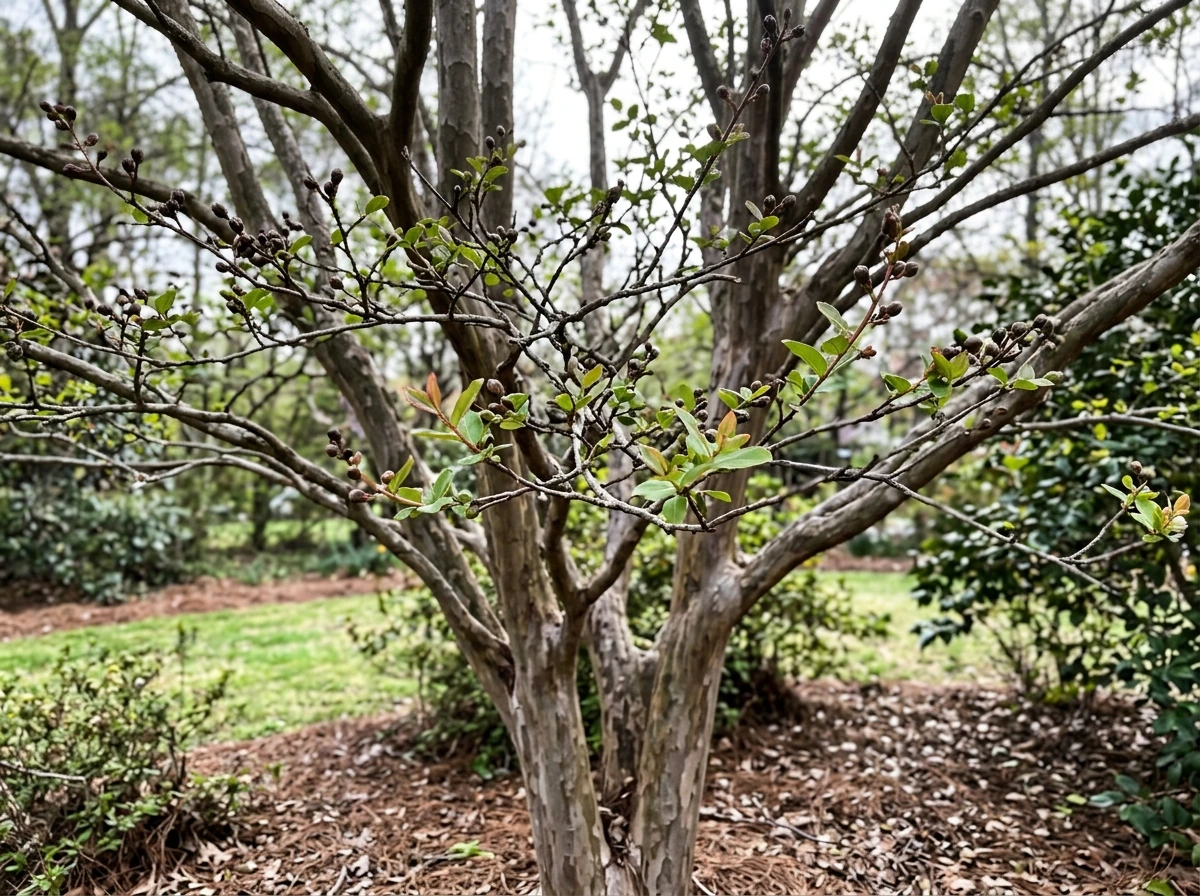
Crepe myrtles grow leaves later in spring than most other ornamentals in your yard, and that's completely normal. Depending on where you live, you can expect leaf-out anywhere from late February in the warmest climates to mid-May in cooler ones. If your tree is still bare right now and you're worried, there's a good chance it just hasn't hit its trigger yet, but this guide will help you figure out for certain what's going on and what to do about it.
When Do Crepe Myrtles Grow Leaves? Timing and Fixes

Marcus Weir
24 Mar 2026
Typical Leaf-Out Timing by Climate and Zone
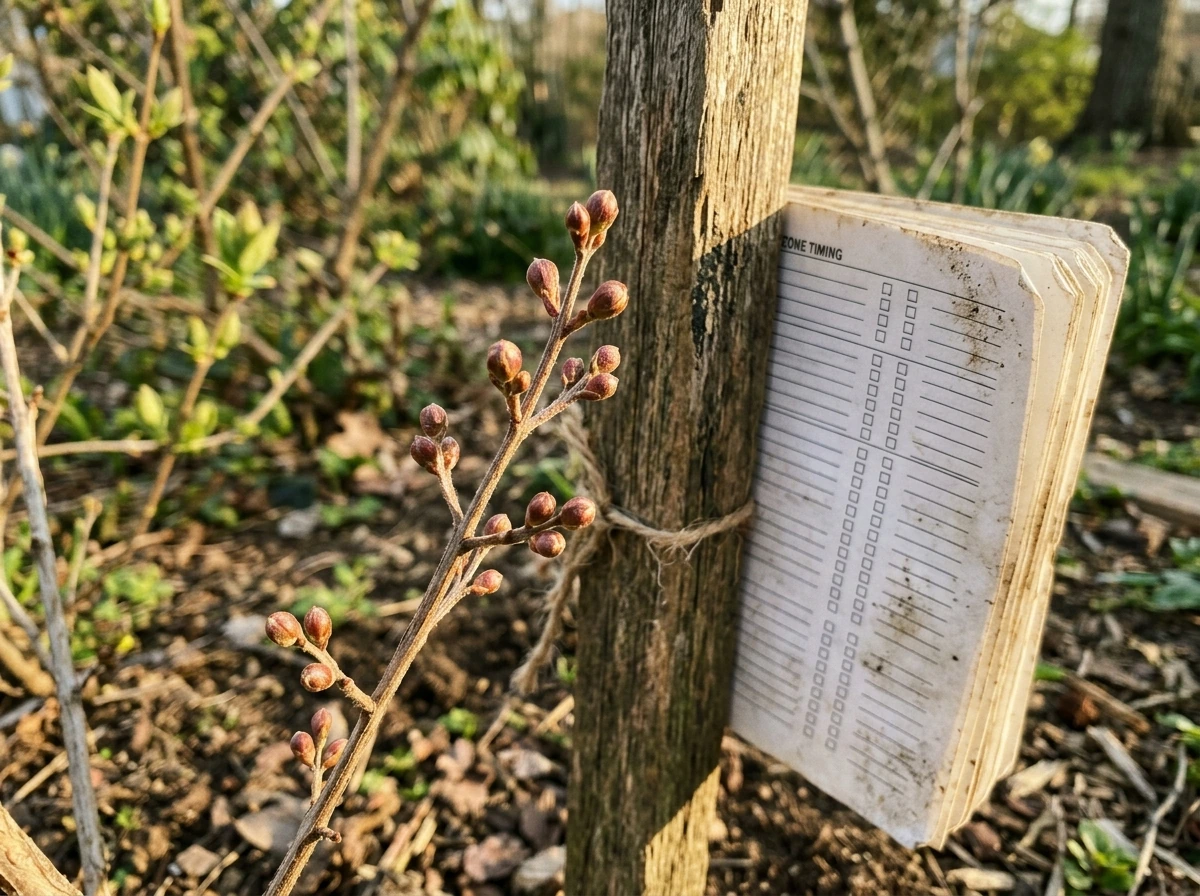
Crepe myrtles are warm-season plants that absolutely insist on waiting until soil and air temperatures are consistently warm before breaking dormancy. That stubbornness is actually a feature, not a bug. It protects tender new growth from a late frost. But it also means that when your neighbor's forsythia is already covered in flowers, your crepe myrtle might still look completely dead, and that's fine.
| USDA Zone | Region Examples | Typical Leaf-Out Window |
|---|---|---|
| Zone 7b–8a | Atlanta, GA / Dallas, TX / Charlotte, NC | Late March to mid-April |
| Zone 8b–9a | Houston, TX / Savannah, GA / Jacksonville, FL | Mid-March to early April |
| Zone 9b–10 | South Florida / Southern California coastal | Late February to mid-March |
| Zone 7a | Northern Arkansas / Southern Virginia / Oklahoma City | Mid-April to early May |
| Zone 6b | Northern edge of crepe myrtle hardiness (borderline) | Late April to mid-May (if it survives winter at all) |
These windows assume a typical winter with no major late freezes. A cold snap in late March or early April can push leaf-out back by two to four weeks even in zones 8 and 9. If you're in the northern range of where crepe myrtles grow (zones 6b to 7a), your tree might look dead until well into May, especially if it died back hard to the roots over winter. That kind of root-level regrowth takes longer, so don't give up on it in April.
What Actually Triggers New Growth
Crepe myrtles don't respond to calendar dates. They respond to a combination of environmental signals that together say 'the danger is over, it's safe to grow.' Understanding those signals helps you predict when your specific tree will leaf out, because conditions vary significantly even within the same town.
- Soil temperature: The ground around the root zone needs to warm to roughly 60°F consistently, not just during the warmest part of the afternoon. Cold soil suppresses root activity even when air temps feel warm.
- Nighttime air temperature: Sustained nights above 50°F are the real trigger. A few warm days mean nothing if nights are still dipping to 40°F.
- Accumulated heat units: Crepe myrtles track cumulative warmth over time, not single warm days. A week of 65°F days does more to push bud break than one 80°F day followed by cool weather.
- Frost risk window: The plant has no concept of the last frost date on a calendar, but it behaves as if it does. It waits until the warm spell is sustained and not just a mid-winter tease.
- Light hours: Increasing day length in spring plays a supporting role, but heat is the dominant driver for crepe myrtles compared to some other trees.
One thing worth knowing: a warm spell in January or February can start the sap rising and buds swelling earlier than is safe. If that warm spell gets followed by a hard freeze, you can get significant dieback of those early-swelling buds and small twigs. The plant often survives but appears more 'late' than usual when spring finally arrives for real. If your area had a warm stretch in late winter followed by a cold snap, that's worth keeping in mind when diagnosing what you're seeing now.
What to Look For as Leaf-Out Gets Close
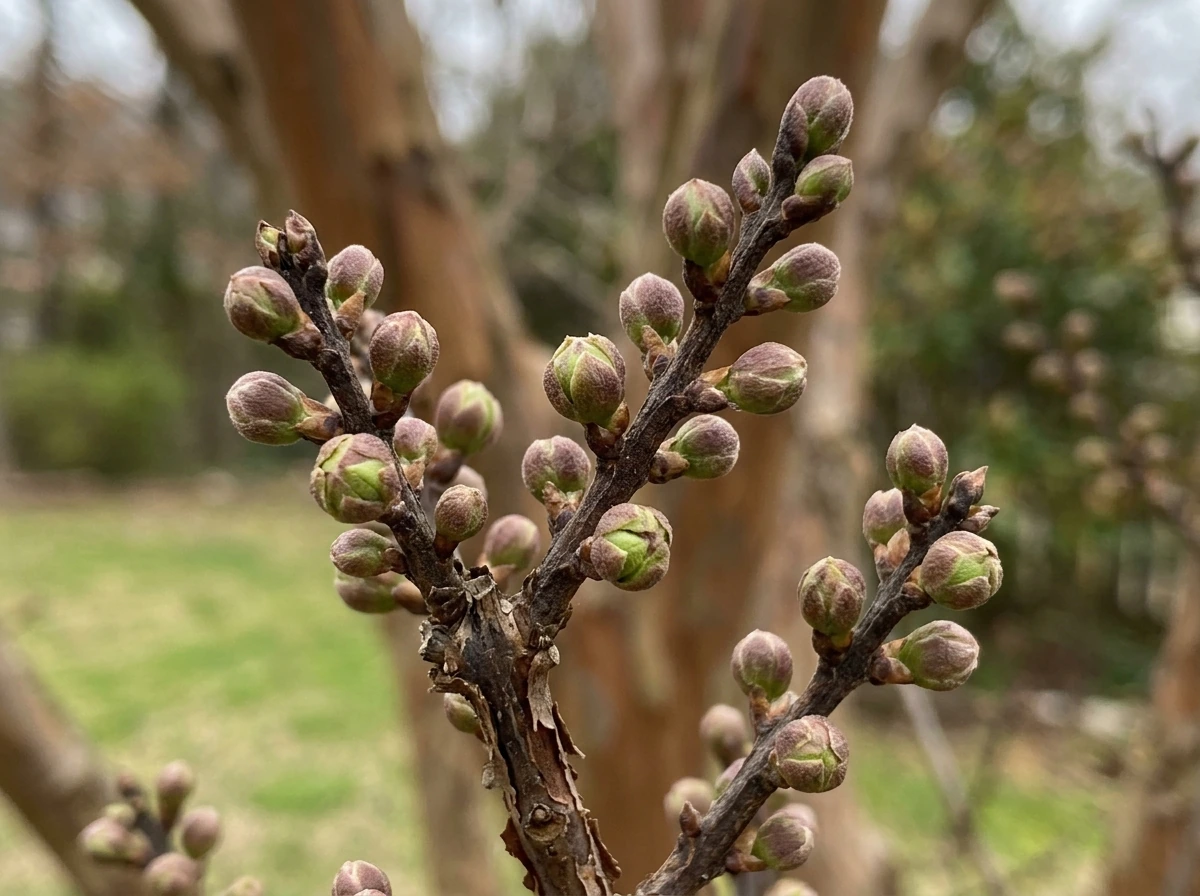
You don't have to just wait and wonder. The plant gives you visible signals about two to four weeks before leaves actually open. Knowing what to look for is genuinely useful, because it tells you whether you're in 'still waiting' territory or 'something is actually wrong' territory.
- Bud swell: Small, tight buds along the branches begin to fatten and round out. They won't look like much, but if you compare them week to week, you'll see the change.
- Bud color change: Dormant buds are usually grayish-brown. As they activate, they shift toward a reddish-brown or burgundy tint, which eventually gives way to a tiny cluster of folded green.
- Twig tip color: The very tips of healthy twigs often take on a faint reddish or greenish tinge as growth is about to push. Gray or tan tips that feel dry and brittle are a sign those tip segments may be dead.
- First leaf clusters: Once conditions are right, the initial leaves emerge as tightly folded clusters, often reddish or bronze in color before they open to green. This is bud break, and once it starts, the tree leafs out fast.
- Base of the plant: If the tree died back significantly, you may see new growth emerging from the lower trunk or even from the ground before you see anything on the upper branches. That's a good sign, not a bad one.
Reasons Leaves Aren't Showing Yet (and How to Diagnose)
If your crepe myrtle should have leafed out by now based on your zone and recent temperatures, here are the real reasons it might be stalling, along with how to figure out which one applies to you.
It's Just Still Dormant (The Most Common Reason)
Crepe myrtles are genuinely one of the last trees to wake up in spring. If the nights have been cool or your soil is slow to warm (clay soils and north-facing spots warm up later), the tree may simply be waiting. If you're asking this question before mid-April in zones 7 to 8 or before early April in zones 8b to 9, the most likely answer is that you're still in the normal waiting window.
Winter Dieback or Freeze Damage
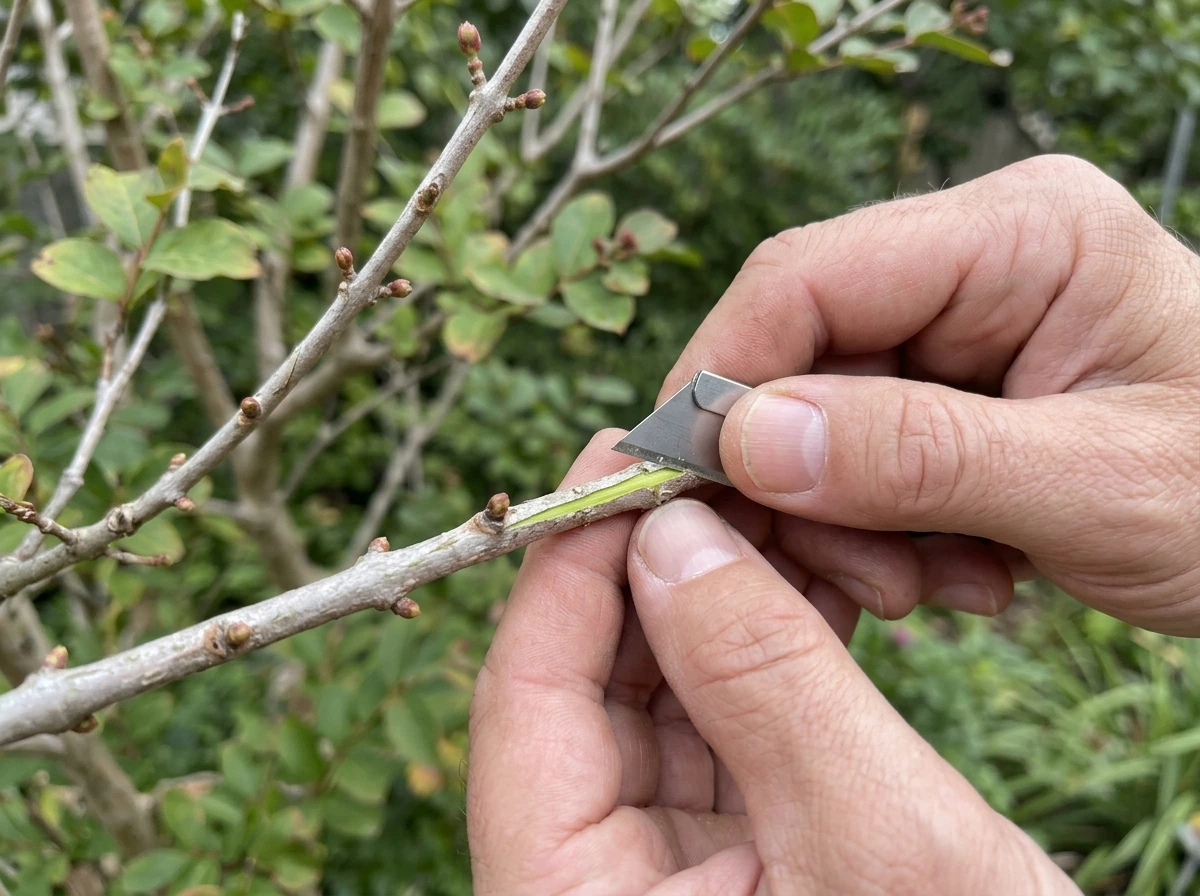
Crepe myrtles commonly experience some tip dieback in winter, even in their preferred zones. The question is whether the dieback stopped at the tips or went deeper. Use the scratch test to find out: take your thumbnail or a pocket knife and lightly scratch the outer bark of a branch. If you see green or white-green tissue underneath, that branch is alive.
If you see brown, tan, or dry tissue, that section is dead. Work your way down the branch toward the trunk until you find where the tissue turns green. Everything above that point is dead, and everything below it still has the potential to grow. A normal amount of tip dieback of a few inches to a foot is nothing to worry about.
Dieback all the way back to the main trunk or to ground level is more serious but still doesn't always mean the plant is gone, especially if the roots are alive.
Drought Stress from Last Season
A crepe myrtle that came into fall in drought stress often leafs out more slowly the following spring. Stressed trees don't build the same carbohydrate reserves that drive early spring growth. If last summer and fall were dry and you didn't water regularly, this could be a factor. A crepe myrtle that came into fall in drought stress often leafs out more slowly the following spring. Stressed trees don't build the same carbohydrate reserves that drive early spring growth. If last summer and fall were dry and you didn't water regularly, this could be a factor. <consistent watering now>, not heavy fertilizing., not heavy fertilizing.
Root Problems: Compaction, Poor Drainage, or Planting Depth
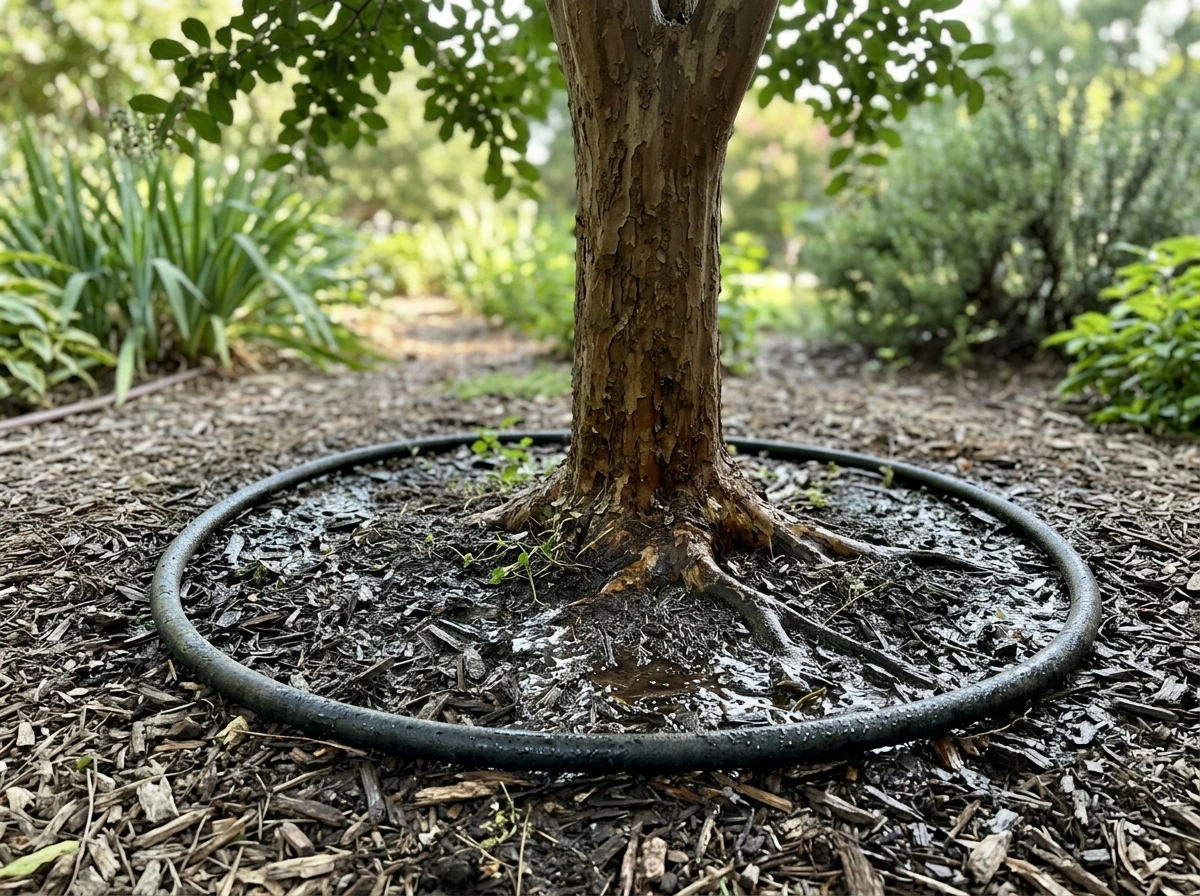
Trees planted too deep, in compacted soil, or in areas with standing water over winter can have compromised root systems that slow spring growth. Check around the base: the root flare (where the trunk widens at the base) should be at or just above soil level. If the trunk goes straight into the ground like a telephone pole, it may have been planted too deep. Soggy soil or a spot that holds water for more than a day after rain can also suffocate roots and delay or prevent leaf-out.
Transplant Shock
If you planted or moved a crepe myrtle in the past year, transplant shock is a real possibility. Newly transplanted trees often leaf out several weeks later than established ones and may look sparse their first spring. This isn't a cause for alarm unless the scratch test consistently shows dead tissue throughout.
Crepe Myrtle Bark Scale
Crepe myrtle bark scale is a pest that has become increasingly common across the South. It looks like white or gray crusty buildup on the bark, and it's often accompanied by black sooty mold from the honeydew the insects produce. Heavy infestations are directly linked to delayed leafing in spring and reduced overall vigor. Look closely at the bark, especially in branch crotches and along the trunk.
If you see waxy white or gray bumps and can crush them to find pink or reddish fluid inside, that's bark scale. This pest doesn't kill a tree outright but weakens it and will keep suppressing growth if left untreated. Applying a horticultural oil during winter at dormant-season rates can be used on the bark to help manage bark scale stages on the tree, according to Texas A&M AgriLife Extension [pink or reddish fluid inside, that's bark scale](https://agrilife. org/extensionento/files/2017/10/Crape-mryrtle-bark-scale-EHT-049.
pdf). Mississippi State University Extension notes that [dormant horticultural oil sprays may help control exposed life stages of crape myrtle bark scale](https://cerberus. ext. msstate.
edu/publications/crape-myrtle-bark-scale-identification-and-control), though dormant oil treatments have not been fully tested against mature females due to the felt covering.
Nutrient Deficiency
Severe nutrient depletion, particularly nitrogen, can slow leaf-out. This is less common in established garden trees than in container plants, but if your tree is in very sandy or depleted soil and hasn't been fertilized in several years, it's worth considering. A simple soil test will tell you what you're dealing with.
What to Do Right Now to Support Healthy Leaf-Out
If your tree is still dormant but alive (confirmed by the scratch test), here's what you can actually do to give it the best conditions for leafing out well. If you're also trying to improve how to grow a crepe myrtle overall, pair this leaf-out check with the right planting, watering, and sunlight basics.
- Water deeply but don't drown it: If the past few weeks have been dry, give the root zone a good soak (enough to wet the soil 12 to 18 inches deep), then hold off until the top few inches dry out before watering again. Crepe myrtles don't want wet feet, but dry soil slows growth.
- Add a fresh layer of mulch: Two to three inches of organic mulch (wood chips, shredded bark) spread a foot or two out from the trunk helps the soil warm faster and hold moisture. Keep it a few inches away from the trunk itself.
- Don't prune until you're sure what's alive: Wait for the scratch test results before cutting anything. Cutting back to live tissue is the right move, but you want to do that with full information, not guesswork.
- Hold off on heavy fertilizing until leaves are actually open: Pushing fertilizer onto a plant that hasn't leafed out yet doesn't help and can stress the roots. Wait until you see at least some leaves open and actively growing before applying fertilizer.
- Check for and address bark scale now: If you see scale, treat it before the tree leafs out. Horticultural oil applied to the bark while dormant is an effective way to knock back scale populations before the growing season begins.
- Don't panic-prune: One of the most common mistakes in early spring is hacking back a seemingly dead crepe myrtle to the stump before giving it time to show what's alive. Give it until at least mid-May in zone 7 or early May in zone 8 before making major decisions.
When to Actually Worry: A Realistic Timeline
Here's a practical guide to when normal waiting ends and real concern begins. Today's date is late March 2026, so use this as your reference.
| Zone | Still Normal to Wait Until | Time to Investigate Seriously | Consider Professional Help |
|---|---|---|---|
| Zone 9b–10 | Early April | Mid-April with no bud movement | Late April with no growth anywhere |
| Zone 8b–9a | Mid-April | Late April with no bud movement | Early May with no growth anywhere |
| Zone 8a | Late April | Early May with no signs of life | Mid-May if scratch test shows all dead |
| Zone 7b | Early May | Mid-May with no bud movement | Late May if scratch test shows all dead |
| Zone 7a and below | Mid-May | Late May with no signs of life | Early June if no growth from roots |
If you've reached the 'time to investigate seriously' point, do a thorough scratch test from the tips all the way to the base of the trunk and even on the main roots just below soil level. If everything above ground is dead but the roots show green tissue when scratched, the plant is still alive and will likely send up new shoots from the base. These root-sprout trees can actually grow into a full shrub form within a single season in warm climates. If the roots show nothing but dead tissue, the plant is gone.
If the tree shows scattered live and dead branches with no pattern, or if you see the sooty mold and scale buildup mentioned earlier alongside weak or missing leaf-out, pest or disease pressure is the most likely culprit and is worth having a local arborist or extension agent evaluate.
Pruning and Fertilizing Around Leaf-Out: Timing Matters More Than You Think
Crepe myrtles have very specific windows where pruning and fertilizing do the most good and the least harm. Getting the timing wrong around leaf-out is one of the most common ways gardeners accidentally slow down or damage new growth.
Pruning
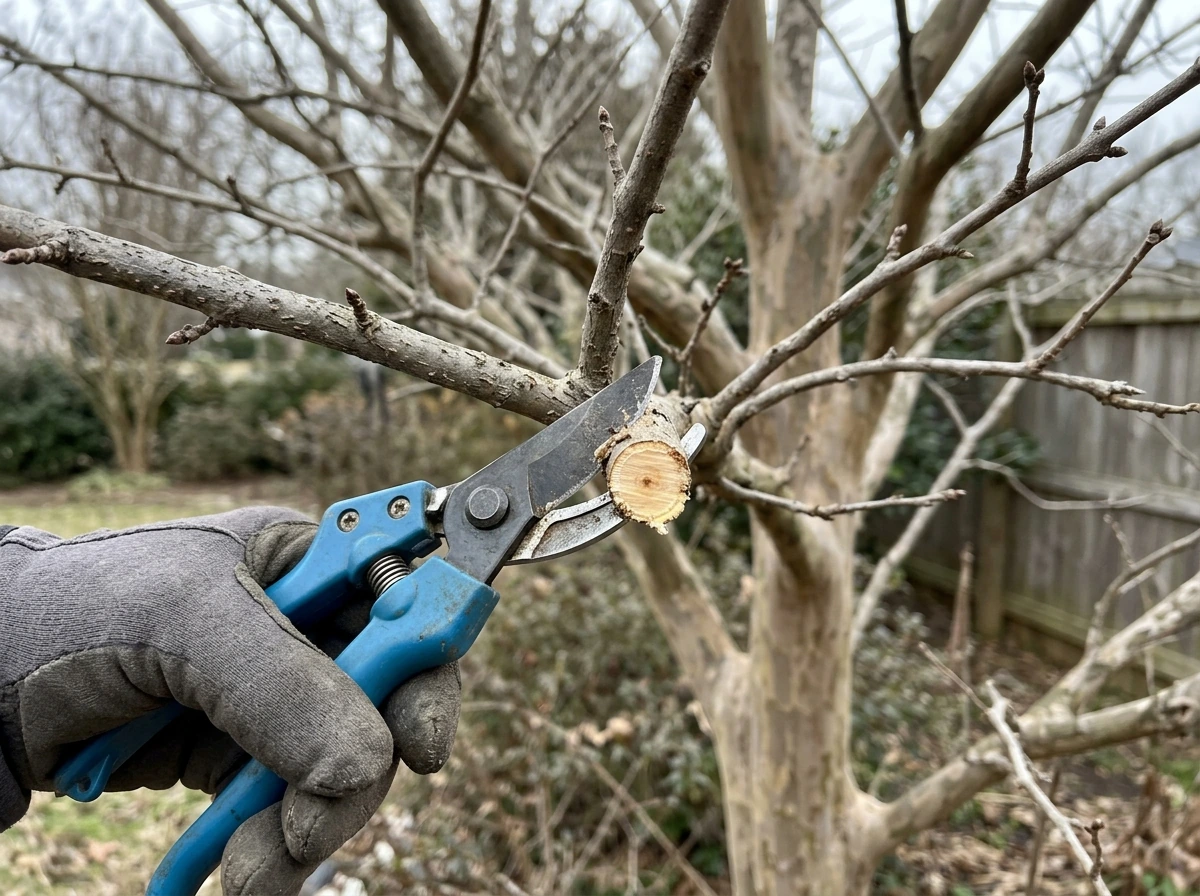
The ideal window for structural pruning is while the tree is fully dormant, typically from December through February. Pruning during this period lets you see the branch structure clearly and doesn't risk stimulating new tender growth that could be hit by a late frost. If you're reading this in late March and haven't pruned yet, you have a narrowing window.
You can still clean up dead wood from the scratch test now, but hold off on any structural cuts if buds are already showing movement, because cutting at that moment wastes the energy the plant just invested in those buds. If your tree is still fully dormant (no bud movement at all), light structural pruning is still acceptable, but keep it minimal. Once leaves are open, restrict pruning to removing dead wood only until after the first bloom cycle.
One timing note worth repeating: pruning too early in late winter can stimulate growth that gets nipped by a late freeze. Pruning too late, after bud break, wastes stored energy and can delay the full bloom season. The sweet spot is the window between the last hard freeze and the first bud movement, which in most years lines up with late February to mid-March in zones 7 to 8.
Fertilizing
The rule with crepe myrtles and fertilizer in spring is: wait for the leaves, then feed. Applying fertilizer before the tree has leafed out doesn't help it wake up faster, and applying a high-nitrogen fertilizer to a still-dormant tree can push roots in the wrong direction or create imbalances. Once you see leaves actively opening and expanding, a balanced slow-release fertilizer applied at the label rate works well for established trees.
If you've been considering a fertilizer specifically formulated for flowering shrubs, that's worth looking into once the tree is actively growing. Using Miracle-Gro on shrubs can be a reasonable option once your crepe myrtle is actively growing, but it is best used at the label rate. For newly planted trees, hold off on fertilizer entirely for the first growing season and focus on consistent watering instead.
If you are wondering whether Miracle-Gro is good for laurels, look for guidance on the right fertilizer type and timing for your particular plant Miracle-Gro for laurels.
The Quick Reference: Is Your Crepe Myrtle Normal or Not?
If you want a fast read on where things stand, this covers the most common scenarios.
- No leaves but buds are swelling and show green when scratched: Normal and on track. Leaf-out is coming within a few weeks.
- No leaves, tips are dead, but lower branches and trunk are green under the bark: Normal winter dieback. Prune the dead tips back to live tissue and wait.
- No leaves, most branches are dead, but base or roots show green: Significant winter dieback but alive. New growth will emerge from low on the plant or from the ground. Be patient.
- No leaves, everything scratches brown or tan all the way to the ground: Plant is dead. Time to replace it.
- Leaves emerging on some branches but others are bare and brown: Could be selective freeze damage, bark scale, or a disease issue. Do a branch-by-branch scratch test and inspect closely for pests.
- Leaves are late and the bark has white crusty buildup and black sooty residue: Bark scale is almost certainly involved. Address the pest before expecting full recovery.
- Newly planted tree is slow to leaf out but shows green tissue when scratched: Transplant stress. Keep watering consistently and give it more time.
FAQ
If my crepe myrtle has no leaves yet, should I try to force it with warm water, heat lamps, or covering it?
Usually no. Crepe myrtles leaf out based on sustained warm soil and air conditions, not quick, local warming. If you apply heat or extra warmth too early, you can swell buds ahead of safety and then lose them to a later cold snap. Focus on checking alive vs dead with a scratch test, then keep watering consistent once drainage is good.
How can I tell whether the branches are dead back to the tips or dead all the way to the trunk?
Do the scratch test progressively. Scratch at the smallest twigs first, then move down toward thicker wood until you find green or white-green tissue. Everything above the last green point is dead. If the trunk or major stems are brown/tan when scratched, prioritize checking for green tissue on main roots just below the soil line before deciding the plant is gone.
My neighbor’s crepe myrtle leafed out weeks ago, mine hasn’t. Does that always mean something is wrong?
Not necessarily. Leaf-out timing can vary by microclimate, even within the same yard. North-facing spots, clay soil, areas shaded early in the day, and slightly lower spots that stay cool longer can delay warming. Also, if yours was drought-stressed the previous season or replanted recently, it can look late without being unhealthy.
If I see scale or sooty mold, will that automatically stop leaf growth, or can it still leaf normally later?
It can still leaf, but growth is often suppressed and delayed when infestations are heavy. Sooty mold is a sign of honeydew from sap-feeding insects, so addressing the underlying bark scale matters for vigor. A helpful practical step is to inspect the trunk and branch crotches closely and check whether new buds remain small or fail to expand after leaf-out should begin.
What watering routine should I use right now if leaf-out is late?
Use consistent moisture that allows oxygen to reach roots. Water deeply, then let the top layer begin to dry slightly, avoid constant sogginess, and ensure water drains within about a day after rain. For dormant or slow-to-wake trees, overwatering can worsen root stress and delay leaf-out further.
Should I fertilize in late winter or early spring to help my crepe myrtle grow leaves sooner?
Skip fertilizing until you actually see leaves actively opening and expanding. Feeding before leaf-out usually does not speed waking up and can create nutrient imbalances. If you suspect a nutrient issue, a soil test is more reliable than guessing, especially for established trees.
When is the right time to prune dead wood if my tree is still bare?
If the tree is fully dormant, you can remove dead wood conservatively, but avoid major structural cuts right when buds are starting to move. The safest timing is during deep dormancy (often winter), while the branch structure is clear and the plant is not ready to surge growth. Once leaves open, limit pruning to dead material only until after the first bloom cycle.
My crepe myrtle was planted recently, and it’s sparse this spring. How long should I wait before I worry?
New transplants often leaf out several weeks later than established plants and may look thin their first spring. If the scratch test shows live tissue and the base and roots are alive, give it at least one full warm season to establish, then reassess. If live tissue is absent across the stems and roots show no green under scratch, that changes the outcome.
If the scratch test shows the roots are alive but the trunk is mostly dead, will it regrow as a single tree or as multiple shoots?
It commonly regrows from the base with multiple shoots, especially if dieback reached high on the stems. In warm climates, root-sprout growth can fill in quickly, and you can later select a few strong stems if you want a more tree-like form. The key is first confirming root survival and not pruning aggressively during the initial flush.
At what point should I bring in an arborist or extension agent instead of troubleshooting on my own?
Consider professional help if you see a mix of live and dead branches with weak or nonexistent leaf expansion, if scale and sooty mold are widespread, or if dieback appears severe beyond normal tip loss. Local experts can assess pests, disease risk, and root health based on your exact growing conditions.
Next Article
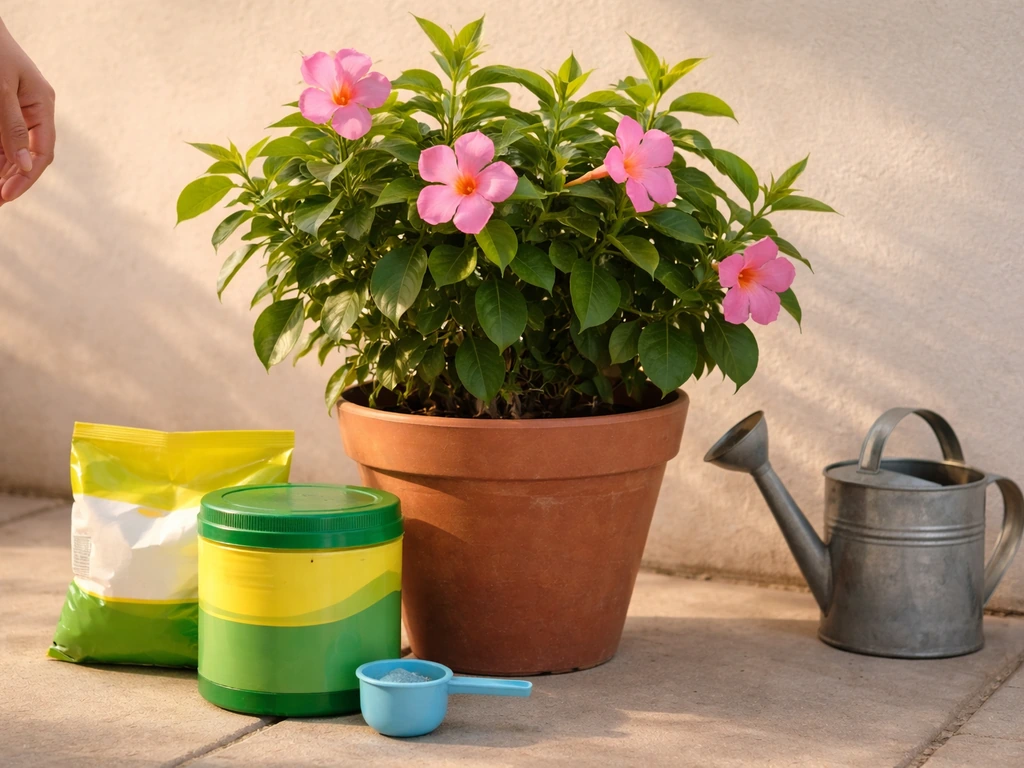
Is Miracle-Gro Good for Mandevilla? How to Feed It Safely
Yes, Miracle-Gro can feed mandevilla safely. Get correct NPK choice, dilution, schedule, and signs to avoid burn.