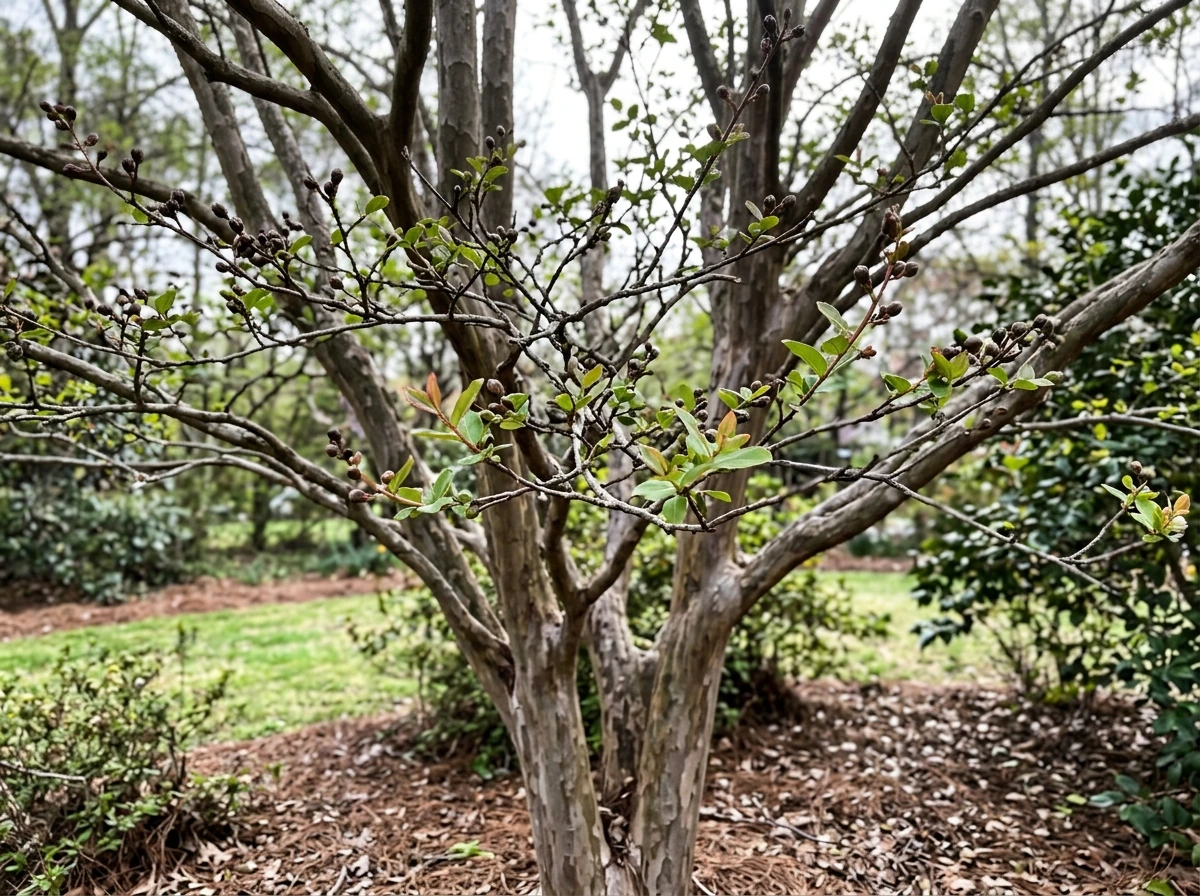
Yes, Miracle-Gro can work well for crepe myrtles, but the answer depends heavily on which product you pick and how you use it. The wrong formulation, or too much nitrogen at the wrong time, can push your tree into a frenzy of leafy growth while killing your bloom display entirely. Used correctly, Miracle-Gro gives crepe myrtles a reliable, affordable nutrient boost that supports strong spring growth and those big summer flower clusters. Here's how to get it right.
Is Miracle-Gro Good for Crepe Myrtles? Safe Feeding Schedule

Marcus Weir
24 Mar 2026
The short answer on Miracle-Gro for crepe myrtles
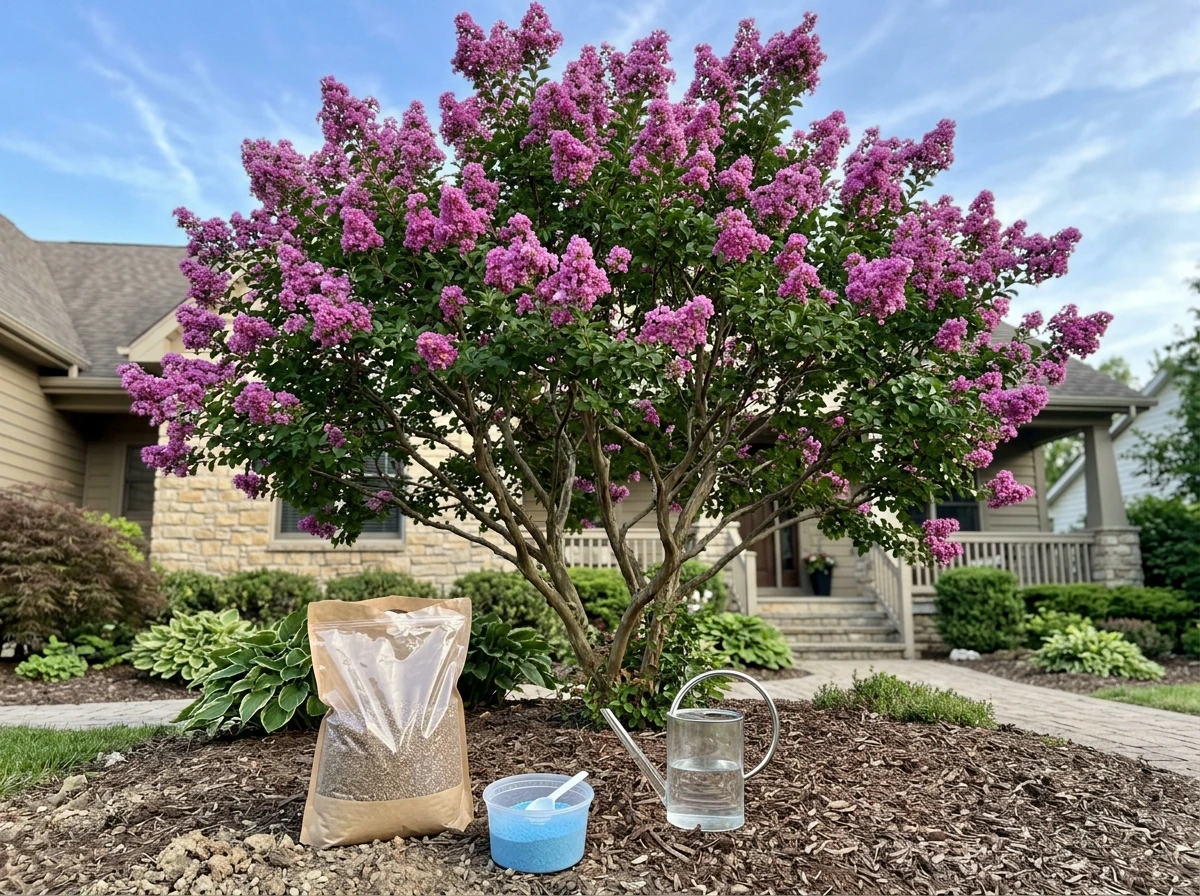
Miracle-Gro is a legitimate option for feeding crepe myrtles, particularly the Shake 'n Feed Flowering Trees and Shrubs formulation (18-6-12), which is purpose-built for flowering woody plants. The standard Water Soluble All Purpose Plant Food also works, but you need to be more careful with frequency and rate because its higher nitrogen ratio is easy to overdo on a bloom-oriented tree. The core risk with any Miracle-Gro product on a crepe myrtle is the same risk you face with any high-nitrogen fertilizer: too much encourages a thick canopy of leaves at the direct expense of flowers. Stick to label rates, feed only during the active growing season, and you'll be fine.
Picking the right Miracle-Gro product
Not all Miracle-Gro products behave the same way, and for a crepe myrtle, the differences matter. There are essentially three formats you'll encounter at a garden center, and each has a different application style, release speed, and risk profile.
Water-soluble powder (Water Soluble All Purpose Plant Food)

This is the classic blue powder you dissolve in water before applying. It feeds immediately because nutrients go straight into the soil solution. One 5 lb container covers roughly 2,000 square feet, and the label calls for reapplication every 7 to 14 days during the growing season. For crepe myrtles, that interval is where things can go sideways. Feeding every 7 days through a long Southern summer means a lot of nitrogen moving through the root zone, and if your tree is already in decent soil, you'll end up with lush foliage and disappointing flowers. I'd use this product at the 14-day interval rather than the 7-day minimum, and stop feeding by late summer.
Liquid concentrate (Miracle-Gro Liquid All Purpose Plant Food)
The liquid concentrate works the same way as the water-soluble powder but is pre-formulated. For in-ground plants, the label instructs you to fill the cap to the first line and mix with 2 gallons of water to cover 20 square feet, repeating every 7 to 14 days. Same cautions apply as the powder: go with the longer end of the interval for crepe myrtles and don't push into late summer.
Granular slow-release (Shake 'n Feed Flowering Trees and Shrubs)
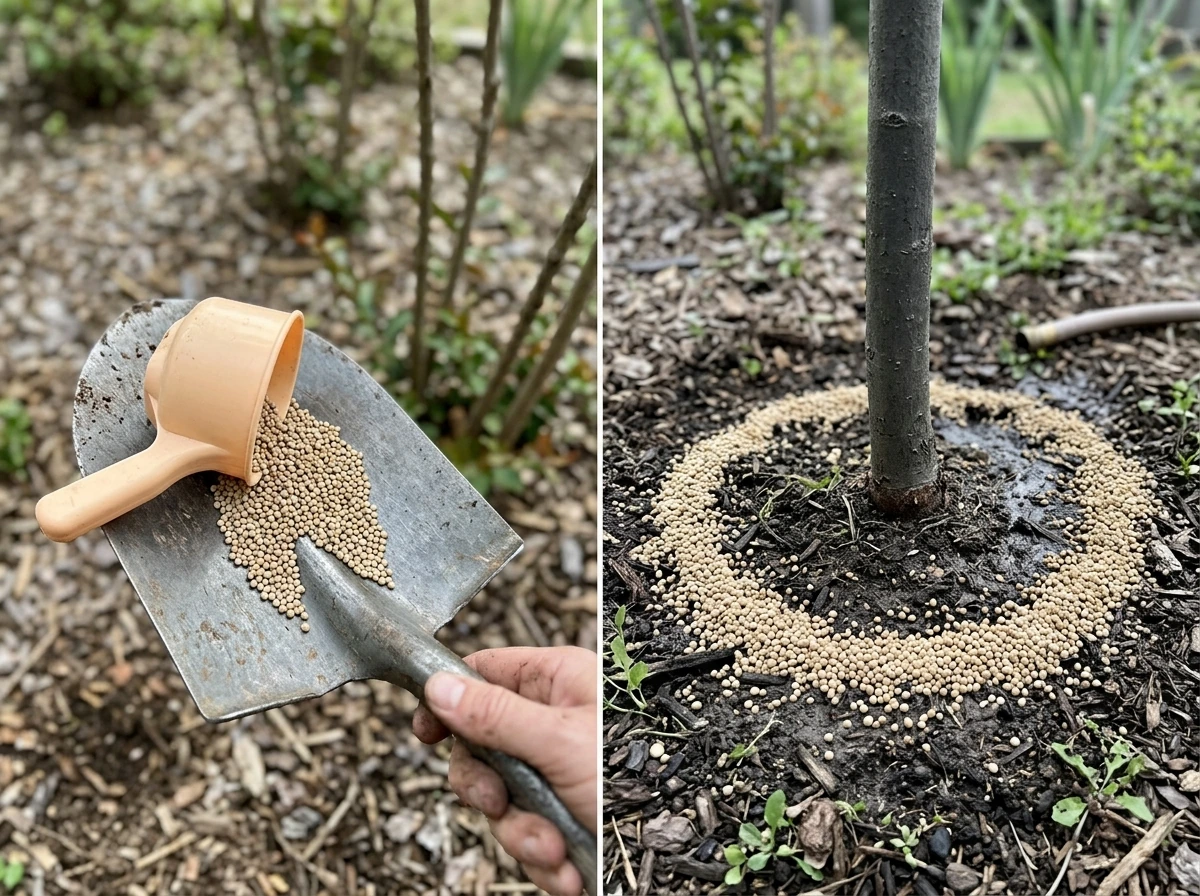
This is the product I'd actually recommend for most crepe myrtle situations. The Shake 'n Feed Flowering Trees and Shrubs formula (18-6-12) is designed for exactly this category of plant. It's a granular, continuous-release product, so nutrients move into the soil gradually over weeks rather than all at once. The application rate is 2 tablespoons per 4 feet of plant height or spread, spread evenly onto the soil within the drip line (the area beneath the outermost branches).
You avoid the trunk and foliage entirely, then water it in. This slow delivery approach dramatically reduces the overfertilization risk that makes liquid feeds tricky on bloom-focused trees. The general Shake 'n Feed All Purpose version (applied at 4 tablespoons per 4 square feet) also works, but the Flowering Trees and Shrubs product is the better fit.
| Product | Type | Application method | Reapplication interval | Best for crepe myrtles? |
|---|---|---|---|---|
| Water Soluble All Purpose | Powder, fast-release | Dissolve in water, drench soil | Every 7-14 days | Works, use 14-day interval |
| Liquid All Purpose Concentrate | Liquid, fast-release | Cap + 2 gal water per 20 sq ft | Every 7-14 days | Works, same cautions as powder |
| Shake 'n Feed Flowering Trees & Shrubs (18-6-12) | Granular, slow-release | Broadcast on soil, water in | Once per season (spring) | Best choice for crepe myrtles |
| Shake 'n Feed All Purpose | Granular, slow-release | 4 tbsp per 4 sq ft, water in | Once per season | Acceptable, less targeted |
When to feed your crepe myrtle
Timing is where most people get this wrong. fertilize crepe myrtles in early spring, just before new growth begins That window is typically late February through March in warmer zones (7 and 8), and March through early April in cooler zones (6 and lower). The University of Arkansas Division of Agriculture agrees, recommending late winter to early spring as the target period to support blooming. An early-spring application fuels the initial growth push and sets the tree up for a strong summer flower display.
Mississippi State Extension suggests that for most ornamental trees, a second optional feeding can happen in early summer if the tree looks like it needs a boost, but emphasizes keeping fertilizer away from late summer and fall. Missouri Extension reinforces this, noting that stimulating new growth late in the season leaves tender tissue exposed to cold damage. For crepe myrtles, the practical schedule is: one main feeding in early spring, and an optional light feeding in early June if growth looks weak. That's it. Do not fertilize after July in most climates.
A simple feeding calendar
| Timing | Action | Product to use |
|---|---|---|
| Late Feb - early March (zones 7-9) | Main spring feeding | Shake 'n Feed Flowering Trees & Shrubs OR water-soluble at 14-day interval |
| March - early April (zones 5-6) | Main spring feeding | Same as above |
| Early June (optional) | Light supplemental feeding if growth looks weak | One application of water-soluble at label rate |
| After July | No feeding | None — stop until next spring |
How much to apply and what too much looks like
For the Shake 'n Feed Flowering Trees and Shrubs product, the label rate is 2 tablespoons per 4 feet of plant spread or height. Measure the drip line area, broadcast evenly, keep it away from the trunk, and water it in. For the water-soluble powder or liquid, follow label dilution rates exactly and use the 14-day interval rather than the 7-day minimum.
UGA Extension recommends a complete balanced fertilizer (such as 8-8-8 or 10-10-10) at 1 pound per 100 square feet as a reference rate for crepe myrtles. Use that as a sanity check: if you're applying Miracle-Gro at rates that translate to significantly more nitrogen than that benchmark, scale back.
Overfertilizing a crepe myrtle has a very recognizable symptom profile. You'll see an unusually dense canopy with deep green, lush foliage, but few or no flowers. The University of Arkansas and University of Maryland both document this clearly: excessive nitrogen redirects the tree's energy toward vegetative growth and delays or eliminates flowering altogether. You might also notice abnormally long, floppy new shoots that look out of proportion with the rest of the tree. If that's happening, stop all fertilizer applications immediately, water deeply to help flush excess nitrogen from the root zone, and wait until next spring to resume feeding at a lower rate.
Signs you've overfertilized
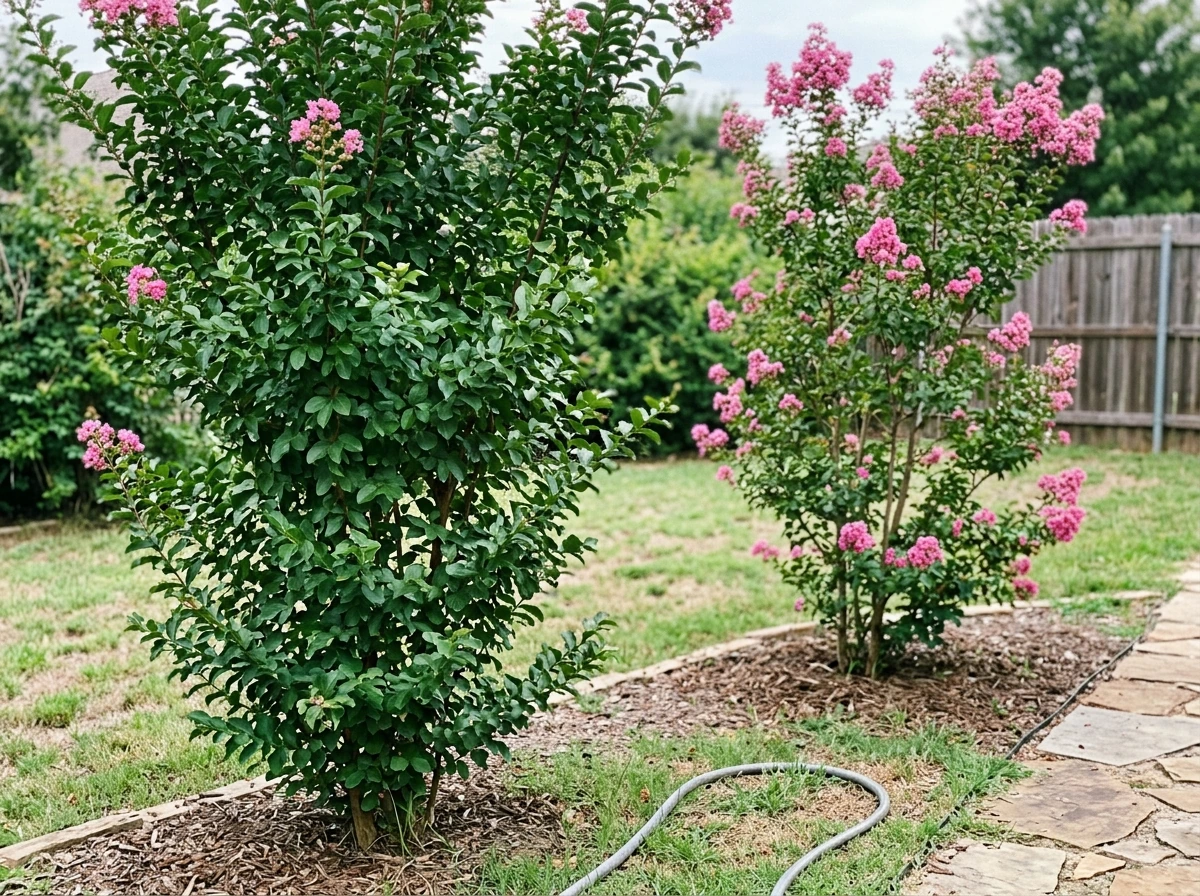
- Lots of dense, deep green leafy growth but few or no flowers
- Long, floppy new shoots growing much faster than normal
- Leaf edges browning or scorching (from salt buildup, especially with liquid feeds)
- Soil around the drip line looks crusty or discolored near granule placement
- Nearby grass is growing unusually fast (a sign nitrogen is spreading beyond the tree)
Where Miracle-Gro actually helps vs. where it won't
Miracle-Gro earns its place in specific situations. If you have a young crepe myrtle (planted within the last one to two years) growing in average or slightly poor soil, a properly timed application of <span>Shake 'n Feed or diluted water-soluble product</span> in spring will support root establishment and early canopy development. New plantings genuinely benefit from a gentle nutritional boost during that first growing season.
For established trees in healthy soil, especially in the Southeast where soils can be reasonably fertile, Miracle-Gro may add more nitrogen than necessary. Crepe myrtles are not heavy feeders. An established tree in decent soil with normal leaf drop and organic matter recycling often doesn't need supplemental feeding every year. If the tree is flowering well, putting on adequate growth (12 to 24 inches per season is normal), and generally looks healthy, fertilizing might do more harm than good.
Drought-stressed crepe myrtles are another situation where you should hold off on Miracle-Gro. Applying any fertilizer, including Miracle-Gro water-soluble products, to a tree that's already stressed from lack of water increases the salt load in the root zone at exactly the wrong time. The roots can't take up nutrients efficiently when water-stressed, and concentrated fertilizer salts near dry roots cause burn. If your tree is drought-stressed, water it thoroughly over several days before you consider feeding it.
Quick decision guide
| Situation | Use Miracle-Gro? | Notes |
|---|---|---|
| New planting (1-2 years old), average soil | Yes | Spring feeding, slow-release preferred |
| Established tree, healthy soil, blooming well | Probably not needed | Skip or use compost instead |
| Established tree, poor/sandy soil, weak growth | Yes | Spring feeding at label rate |
| Drought-stressed tree | No | Water first, fertilize after recovery |
| Tree near heavily fertilized lawn | No | Lawn runoff may already be overloading nitrogen |
| Tree not flowering despite healthy foliage | No | Likely already getting too much nitrogen |
Other fertilizer options worth knowing
Miracle-Gro isn't your only option, and for some gardeners it's not even the best one. UGA Cooperative Extension specifically recommends balanced complete fertilizers like 8-8-8, 10-10-10, 12-4-8, or 16-4-8 for crepe myrtles, applied at 1 pound per 100 square feet. A balanced fertilizer with equal or modest nitrogen relative to phosphorus and potassium is less likely to trigger that excessive vegetative growth problem. If you want a straightforward, inexpensive option, a bag of 10-10-10 from any garden center and a hand spreader is a perfectly reliable approach.
Compost is genuinely underrated for crepe myrtles. A 2- to 3-inch layer of compost spread under the drip line each spring (kept back from the trunk) improves soil structure, slowly releases a balanced range of nutrients, supports beneficial soil microbes, and reduces moisture loss. It won't push the kind of aggressive nitrogen load that causes flowering problems. For established trees in reasonable soil, compost alone is often all the feeding they need.
Before you buy anything, consider getting a basic soil test. Your local cooperative extension service usually offers them for under $20. A soil test tells you exactly what your soil is already providing and what's actually missing, which means you can target the nutrient gap precisely instead of guessing. If your soil already has adequate phosphorus and nitrogen, applying Miracle-Gro is wasted money at best and a bloom-suppressor at worst. Testing is especially worth doing if your crepe myrtle is underperforming and you're not sure why.
Comparing fertilizer approaches
| Fertilizer approach | Nitrogen risk | Cost | Bloom friendliness | Best for |
|---|---|---|---|---|
| Miracle-Gro Shake 'n Feed Flowering Trees & Shrubs | Low-moderate (slow release) | Moderate | Good if label rate followed | New plantings, poor soil |
| Miracle-Gro Water Soluble All Purpose | Moderate-high (fast release) | Low | Risky if overused | Quick correction, healthy trees only |
| Balanced 10-10-10 granular | Low-moderate | Low | Very good | Most established crepe myrtles |
| Compost | Very low (slow release) | Low-free | Excellent | Established trees, soil building |
| No fertilizer (healthy soil) | None | Free | Best possible | Well-established trees in good soil |
How to apply Miracle-Gro to a crepe myrtle today
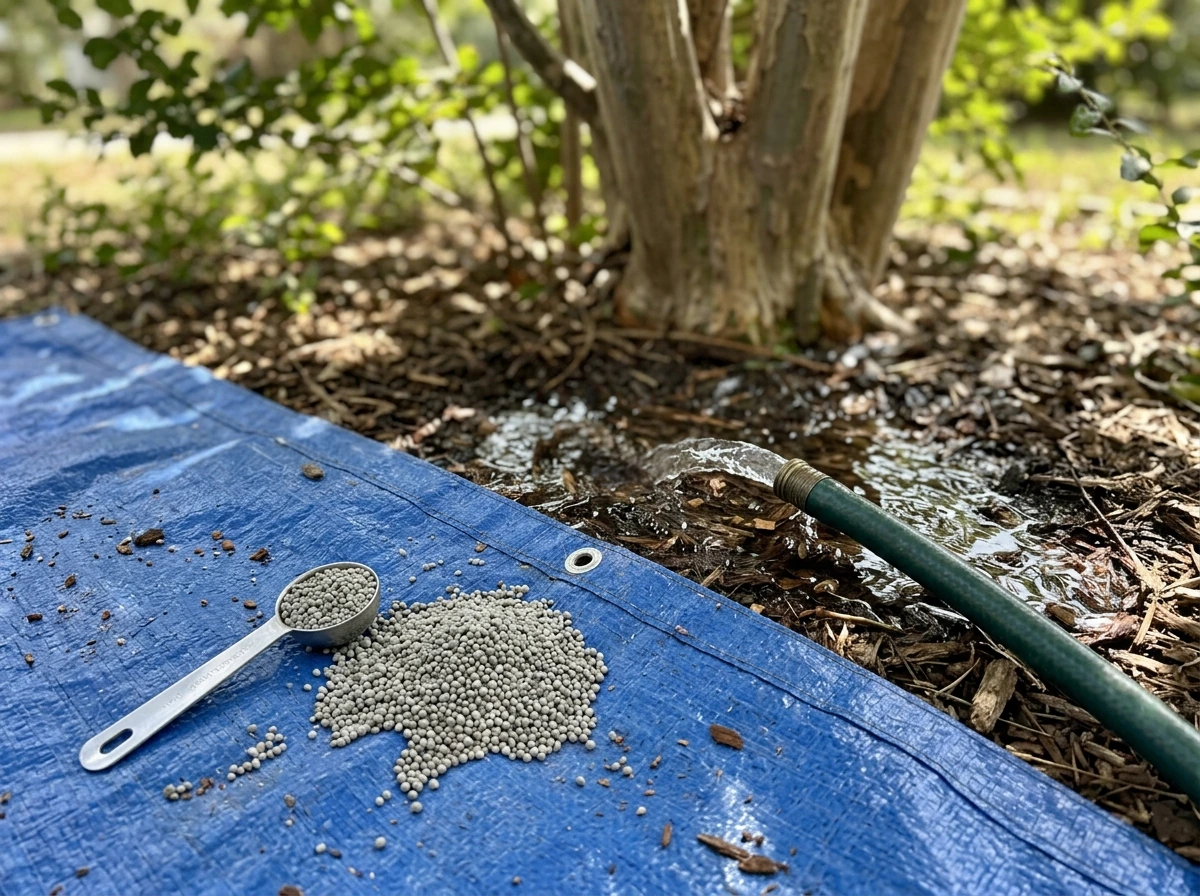
Since it's late March, you're right at the edge of the ideal spring feeding window for most of the country. If your crepe myrtle is just starting to show buds swelling or the first hints of new leaf growth, now is a good time to act. Here's the step-by-step process.
- Water the tree thoroughly the day before you plan to fertilize. The soil should be moist, not soggy, when you apply the product. Feeding dry soil with water-soluble products concentrates salts around roots and risks burn.
- For Shake 'n Feed Flowering Trees and Shrubs: measure the spread of the tree's canopy (the drip line). Broadcast the granules evenly onto the soil within that area at 2 tablespoons per 4 feet of plant height or spread. Keep granules at least 6 inches from the trunk.
- For Water Soluble All Purpose: mix according to label instructions (the liquid concentrate version: fill the cap to the first line, mix with 2 gallons of water to cover 20 square feet). Apply to moist soil, not to leaves. Pour slowly around the drip line.
- Water the area again after applying granules to start the release process. For liquid products, watering in is not necessary since the product is already in solution, but a light follow-up rinse off any foliage that got accidentally splashed is a good idea.
- Note the date. For slow-release granules, you don't need to reapply until next spring (or once more in early June if growth is weak). For water-soluble products, wait at least 14 days before reapplying.
- Watch the tree over the next 3 to 4 weeks. You should see steady new leaf growth and bud development. If new shoots are extremely long and floppy, or if flowering stalls by late June, scale back or stop feeding.
Tools you'll need
- Garden hose or watering can (for pre-watering and post-application rinse)
- Measuring tablespoon or small scoop (for granule products)
- Measuring bucket or watering can for liquid mixing
- Gloves (fertilizer salts irritate skin with repeated exposure)
Common myths worth skipping past
One thing I hear often is that crepe myrtles need lots of fertilizer to flower. They don't. A crepe myrtle that refuses to bloom is almost never suffering from nutrient deficiency. It's usually a light problem (too much shade), a pruning problem (over-pruning removes the flower-bearing tips), or an overfertilization problem. Adding more Miracle-Gro in that situation makes things worse, not better.
Another myth is that fertilizing in fall helps the tree store nutrients for spring. For crepe myrtles specifically, late-season fertilizing is a real risk because it pushes new vegetative growth that hasn't hardened off before cold weather arrives. Stick to spring and, if needed, early summer only.
If you're curious about how crepe myrtles develop their leaf cycles and growth patterns, there's more detail in the related guides on <span>when do crepe myrtles grow leaves</span> and the general crepe myrtle growing guide, both of which cover what normal seasonal development looks like so you know what to expect after you fertilize.
FAQ
How do I know which Miracle-Gro product I have (and whether it’s the right one) for crepe myrtles?
Check the analysis on the front or label, 18-6-12 (Flowering Trees and Shrubs) is typically the safest choice for bloom support. If you only see a general “All Purpose” product with a much higher nitrogen number, use it more sparingly (at the longer interval), because it’s easier to overdo and reduce flowers.
Can I use Miracle-Gro on crepe myrtles in containers or pots?
Be extra cautious, container roots are more sensitive to fertilizer salts. Use a lighter rate than you would for in-ground trees, apply only in early spring, and water thoroughly before and after feeding. If the plant is small or slow-growing, skip feeding the first year and rely on compost or a gentle balanced fertilizer instead.
Is Miracle-Gro safe for newly planted crepe myrtles?
It can be safe only if the planting is already established enough to handle nutrients, typically after the first season or once you see steady new growth in spring. Avoid feeding immediately after transplanting, and never feed if the plant looks wilted or stressed from dry conditions.
Should I fertilize right after pruning, or wait?
Wait until you see new growth starting, early spring is the usual target. Feeding immediately after pruning can encourage tender, fast growth that may not perform as well for bloom and can be more vulnerable to late cold.
What should I do if my crepe myrtle starts leafing out but there are no flowers yet?
First look for overfertilization or nitrogen-driven growth, dense deep-green foliage with few blooms is a common sign. Stop all fertilizer right away, water deeply, and pause feeding until next spring. Then reassess pruning (flowering tips) and sun exposure, since those are frequent causes of poor bloom.
How much is too much nitrogen from Miracle-Gro for crepe myrtles?
A quick sanity check is the balanced fertilizer reference rate mentioned in the article (about 1 pound per 100 square feet at 8-8-8 or 10-10-10). If your Miracle-Gro feeding rate would deliver nitrogen far above what a balanced program would, scale back to the longer application interval or switch to the flowering-specific formula.
Can I combine Miracle-Gro with compost or other fertilizers?
You can, but stacking nutrients is where mistakes happen. If you’re already using a 2- to 3-inch spring compost layer under the drip line, consider skipping Miracle-Gro the same year or using only the lighter, one-time early spring feeding to avoid pushing too much growth.
What if my soil is very rich, should I still use Miracle-Gro?
In rich soils, crepe myrtles often do fine without supplemental feeding, especially if they’re already producing normal growth and flowers. If you fertilize anyway, use the flowering formulation at the recommended rate and timing, or do a soil test first to avoid paying for nutrients you do not need.
My tree is drought-stressed. Can I fertilize anyway and “help it recover”?
No, avoid feeding when the tree is actively drought-stressed. Water deeply first, then reassess within a week or two. Fertilizer salts can worsen root stress and can lead to burn when roots cannot take up water efficiently.
What is the best fallback if I miss the early spring feeding window?
If you missed spring, do not rush into late season. For most climates, the only practical second option mentioned is a light early June feeding if growth looks weak, otherwise wait until next spring. Avoid fertilizing after July.
Next Article
When Do Crepe Myrtles Grow Leaves? Timing and Fixes
Find your crepe myrtle leaf-out window, triggers, and fixes for late or no leaves from frost to drought and root issues.