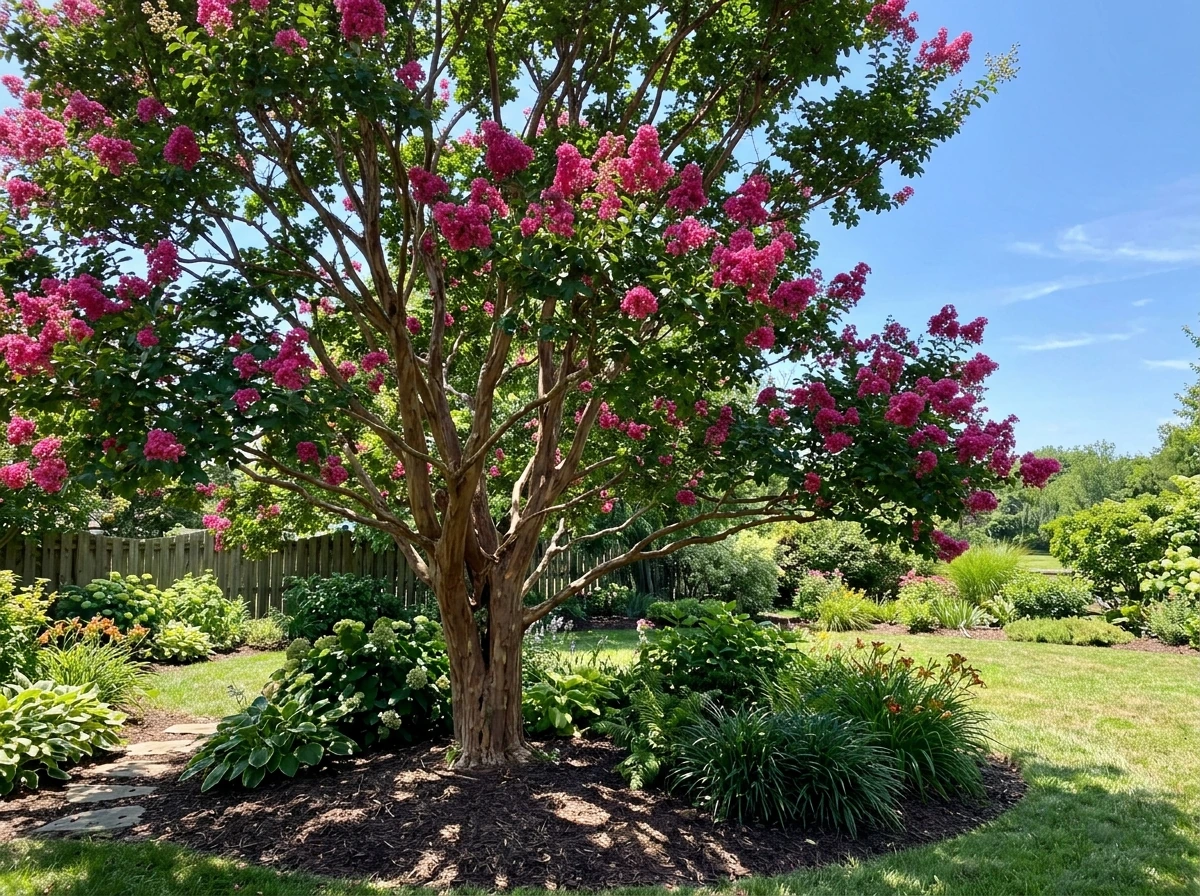
Crepe myrtles are genuinely one of the easiest flowering trees you can grow, but they do have a short list of things they absolutely need: full sun, good drainage, and enough room to grow. Get those three right and you'll have a plant that blooms reliably every summer with almost no fuss. Get them wrong and you'll be troubleshooting leaf spots, poor flowering, and slow growth for years. This guide walks you through the whole process, from checking your yard today to keeping your crepe myrtle healthy season after season.
Crepe Myrtle How to Grow: Step-by-Step Care Guide

Marcus Weir
24 Mar 2026
Quick plant check: site, sun, and drainage
Before you buy anything, go outside and look at the spot you're thinking about. Crepe myrtles (Lagerstroemia indica) need at least 6 hours of direct sunlight every day, and that's a minimum, not a goal. I've seen people plant them in what looks like a sunny spot only to realize it gets shaded out by a fence or a neighboring tree for half the afternoon. Count the hours honestly. Less than 6 hours and you'll get weak growth, fewer blooms, and more disease problems like powdery mildew.
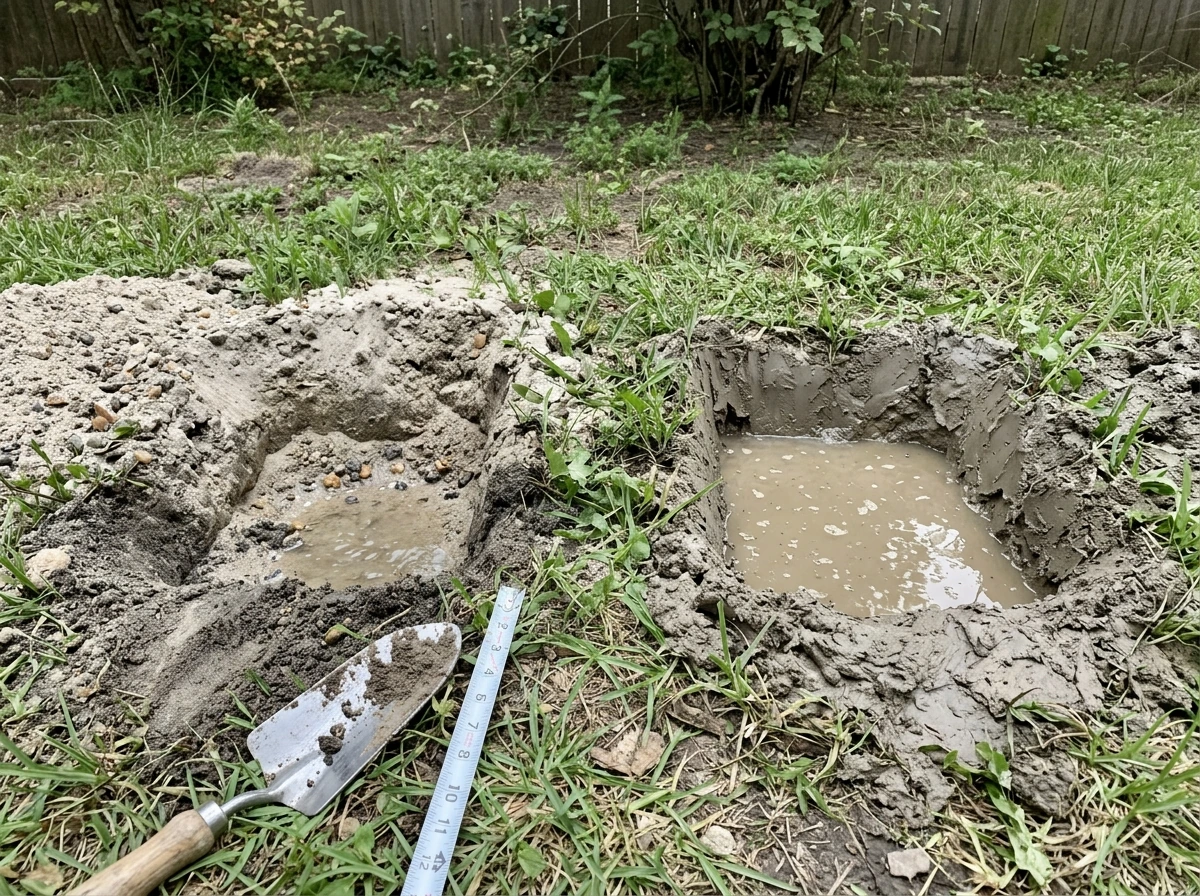
Drainage is the other thing to check right now, and it's easy to test. Dig a hole about 12 inches deep and 12 inches wide, fill it with water, and let it drain completely. Fill it again and time how long it takes the second fill to drain down. You want roughly 1 to 3 inches of water draining per hour. If it's taking much longer than that, say the water is barely moving after an hour, you've got poor drainage and you'll need to address it before planting. Root rot is a real risk in waterlogged soil, and crepe myrtles won't tolerate it.
If drainage is slow, your options are to raise the planting bed by adding amended soil, choose a different spot, or install drainage before you plant. Amending in place with compost can help in mildly compacted soils, but if you're dealing with genuine clay or a low-lying spot that pools after rain, it's better to move the plant than fight the soil.
Choosing the right crepe myrtle and where to plant
The biggest mistake beginners make is buying a crepe myrtle without checking its mature size. There are cultivars that top out at 1 to 2 feet tall (like 'Pocomoke'), mid-size shrubs in the 6 to 10 foot range (like 'Acoma'), and full-sized trees like 'Natchez' that can reach 15 to 20 feet. Planting a 'Natchez' under a power line or right against your house is how people end up feeling like they need to top the tree every year, which is a habit you really want to avoid.
Pick the cultivar that fits the space naturally, then you won't need to fight the plant's natural shape. As a rule of thumb, give larger tree types at least 15 feet of clearance from structures, and shrub types at least their mature width in spacing from other plants or walls.
Crepe myrtles are reliably hardy in USDA Zones 7 through 10. If you're in Zone 6, you can still grow them but they may die back to the ground in harsh winters and regrow from the roots in spring, which means they behave more like a perennial shrub than a tree. In those cooler zones, spring planting when the soil is warming gives them the best chance to establish before winter hits.
| Cultivar | Mature Height | Best Use |
|---|---|---|
| 'Pocomoke' | 1–2 ft | Container, edging, small spaces |
| 'Acoma' | 6–10 ft | Shrub border, foundation planting |
| 'Natchez' | 15–20 ft | Specimen tree, large landscape |
Planting steps: timing, spacing, and planting depth
In Zones 7 to 10, you can plant crepe myrtles in spring or fall. Spring planting, once frost danger has passed, gives the plant a full growing season to establish. In Zone 6 or the cooler end of Zone 7, stick to spring when soil temperatures are warming up. Avoid planting in the heat of midsummer if you can, because establishing roots while the plant is also stressed by heat and drought is a recipe for slow growth.
Spacing depends on the cultivar, but as a general rule, space plants at least as far apart as their expected mature width. For tree types, that typically means 10 to 15 feet between plants. Planting too close together creates competition and reduces airflow, which encourages fungal disease.
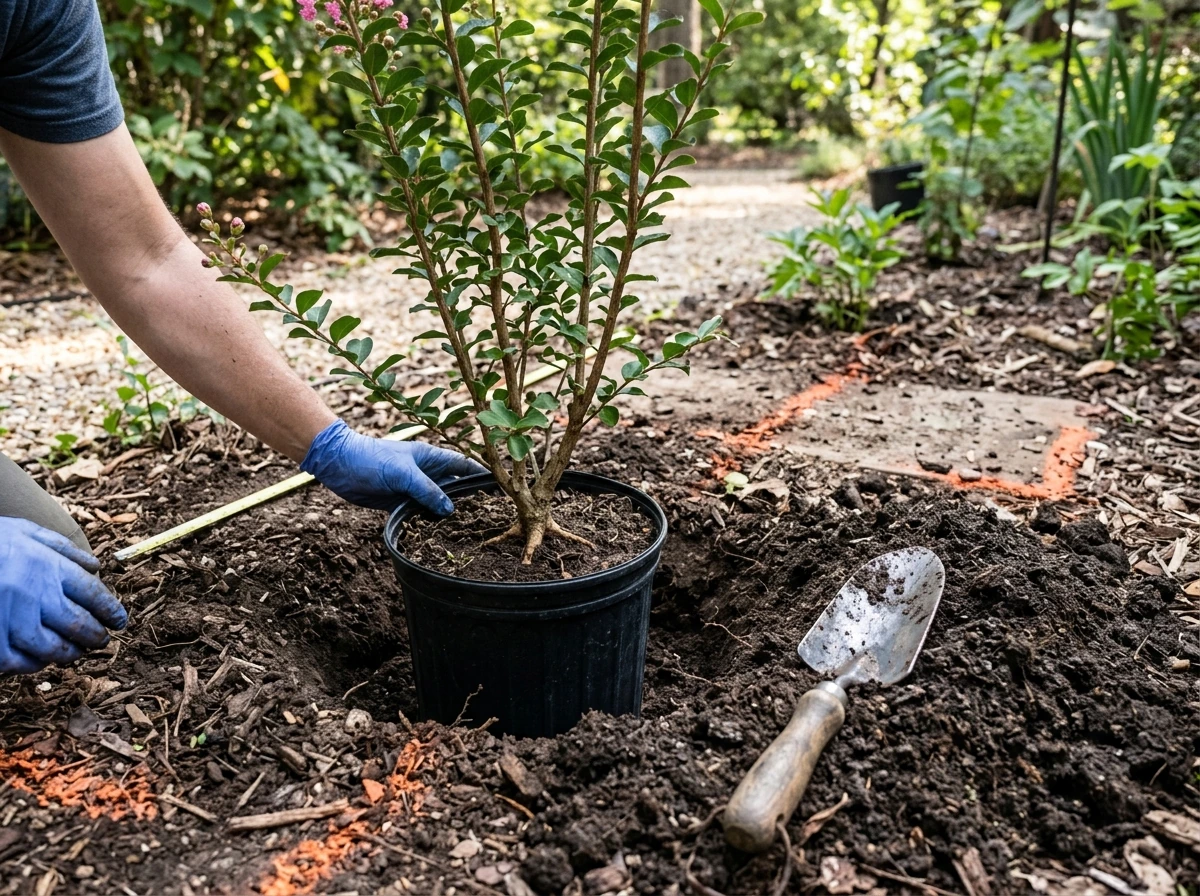
Planting depth is one of those things that sounds obvious but trips up a lot of gardeners. The root flare, that widening point where the trunk transitions into roots, should be right at or just slightly above the surrounding soil surface. If it's buried, the tree is planted too deep. A tree planted too deep struggles with poor gas exchange around the roots and is more vulnerable to rot and disease. When you set the plant in the hole, look for that root flare and make sure it's visible at ground level. The hole should be wide (two to three times the width of the root ball) but no deeper than the root ball itself.
- Dig the hole two to three times as wide as the root ball, but only as deep as the root ball's height.
- Set the plant in the hole and check that the root flare is at or just above grade.
- Backfill with the native soil you removed, tamping gently to eliminate air pockets.
- Water slowly and deeply right after planting to settle the soil around the roots.
- Apply a 3-inch layer of mulch over the root zone, keeping it about an inch away from the trunk.
Watering plan for establishment and aftercare
Newly planted crepe myrtles need consistent, attentive watering for the first growing season. A reliable schedule to follow: water daily for the first two weeks, then every other day from weeks 3 through 12, then every third day for the rest of the first growing season. These aren't quick sprinkles, either. You want to water deeply enough that moisture reaches well below the root ball, which encourages roots to grow downward rather than staying shallow near the surface.
Once established (usually after the first full growing season), crepe myrtles are impressively drought-tolerant but they're not bulletproof. During extended dry spells, even established plants benefit from deep watering once or twice a week when there's been no significant rainfall. Overwatering is the more common problem, though, especially with container-grown plants. If leaves are yellowing and soil feels consistently wet, you're watering too much.
Deep, infrequent watering is always better than shallow, frequent watering. The goal is to wet the soil 8 to 12 inches down, then let it partially dry before watering again. This trains the roots to go deep, which makes the plant more resilient to heat and drought as it matures.
Fertilizing and mulch basics for strong growth
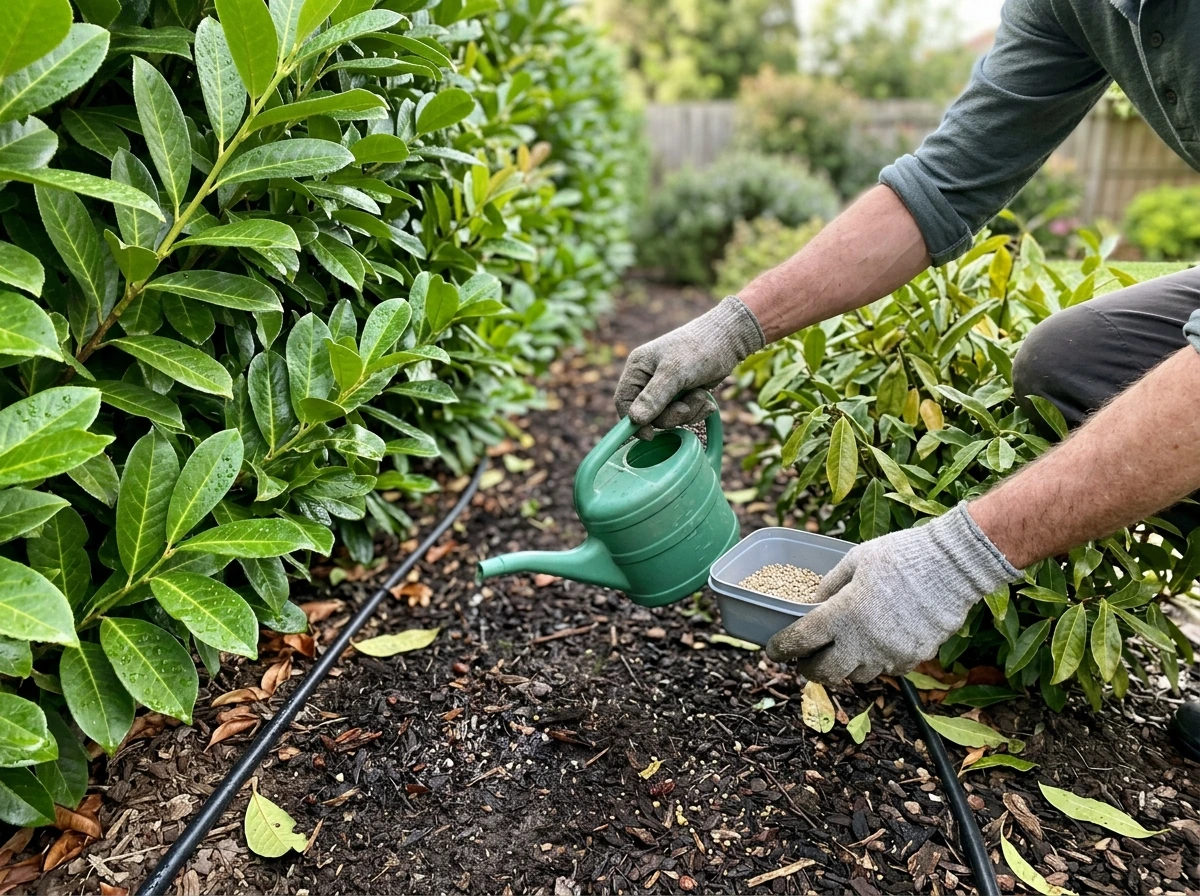
Crepe myrtles aren't heavy feeders, but a modest fertilizing program in the growing season gives them a real boost, especially for young plants. A complete, balanced fertilizer like a 10-10-10 or 16-4-8 formulation works well. For newly planted small (one-gallon size) plants, one teaspoon of fertilizer applied along the drip line monthly from March through August is a reasonable approach. Larger established plants can handle a full general-purpose application in early spring, and then you can assess whether a midsummer boost is needed based on how the plant looks.
Always water after applying fertilizer to move it into the root zone and prevent burn. Don't fertilize in late summer or fall, as that encourages new growth that won't harden off before frost arrives.
Mulch is one of the most underrated parts of crepe myrtle care. Apply about 3 inches of bark mulch or up to 6 inches of pine straw over the root zone, spreading it out in a ring that's at least 3 to 4 feet in diameter around the trunk. Keep it about an inch back from the trunk itself. Never pile mulch up against the bark (what gardeners call a mulch volcano), because that traps moisture against the trunk and invites rot and pest problems. Mulch conserves soil moisture, moderates soil temperature, and suppresses weeds, all of which help the tree establish faster and grow stronger.
Pruning for shape and blooms (when and how)
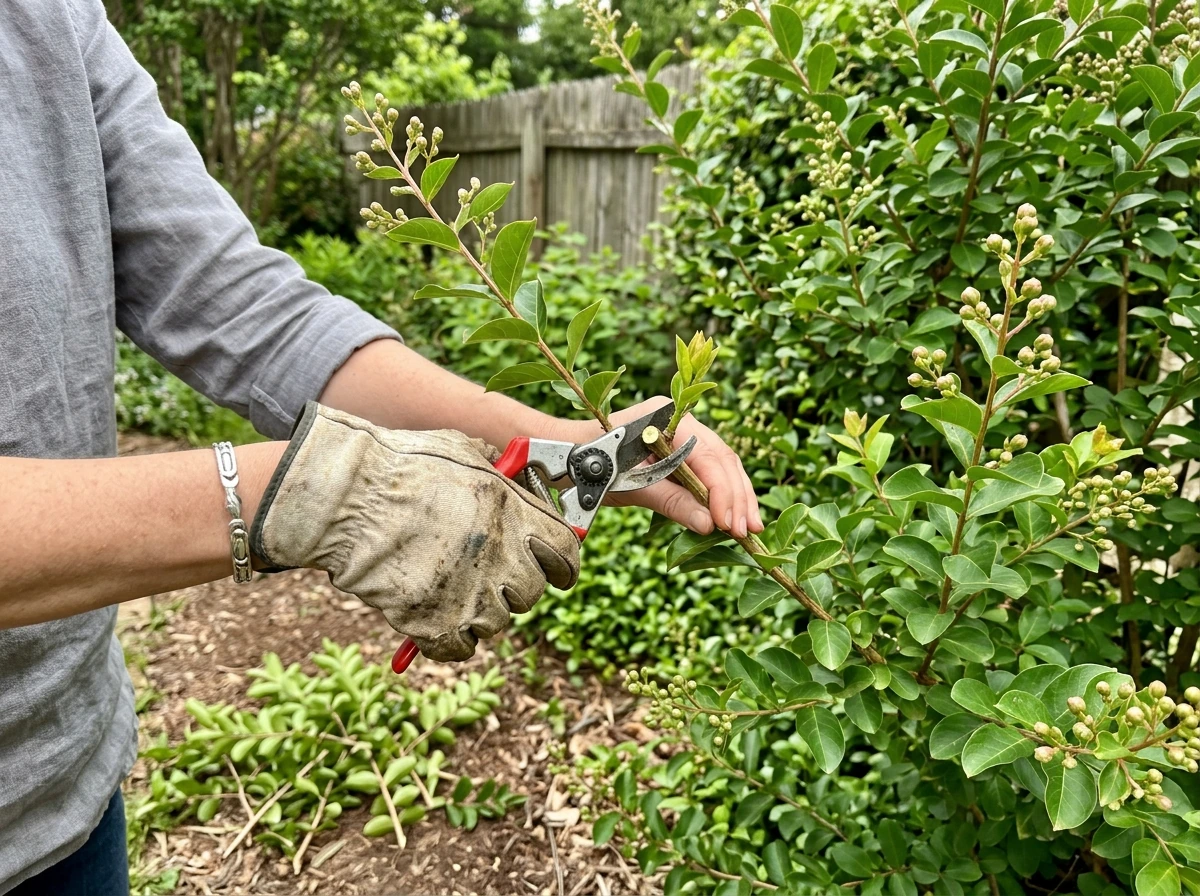
Here's the thing about crepe myrtle pruning: most people do it wrong, at the wrong time, for the wrong reasons. Crepe myrtles bloom on new growth, so the pruning timing rule is straightforward: prune in late winter or very early spring while the plant is still dormant. This gives you clean cuts before new growth starts and avoids removing developing buds. Summer flowering plants like crepe myrtle should absolutely not be pruned in spring or summer after growth has started, because you'll cut off the blooms before they even form.
The practice of topping crepe myrtles (cutting all the main branches back to stubs) has gotten the nickname 'crepe murder' among horticulturists, and it's well earned. Topping doesn't improve flowering. Research from the University of Florida has shown that topped trees actually delay flowering by about a month compared to properly pruned ones. It also leaves ugly, swollen knuckles on the branches that never go away, and it weakens the tree's natural structure.
What you should actually do: remove any dead, crossing, or rubbing branches. Thin out the interior canopy slightly if it's crowded, which helps airflow and reduces disease. Remove any suckers coming up from the base. If the tree is genuinely too large for the space, the real fix is to replace it with a smaller cultivar, not to top it every year.
For young plants in their first couple of years, focus on developing a good structure. Choose three to five strong main stems and remove competing or crossing branches. You're building a framework the plant will grow on for decades.
Troubleshooting common problems and pest/disease fixes
Powdery mildew
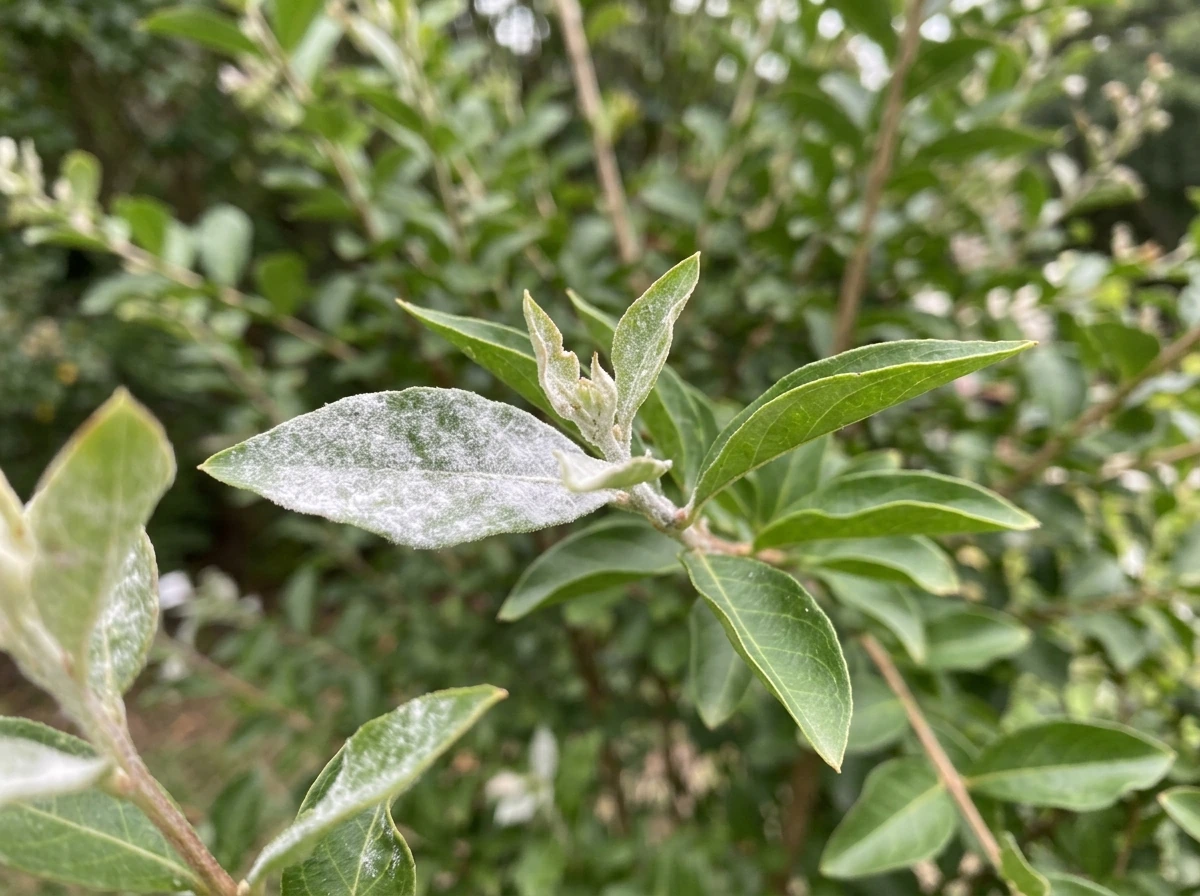
Powdery mildew looks like a white or grayish powder on leaves and new growth. It's one of the most common crepe myrtle problems and it's almost always linked to poor air circulation, shade, or a combination of both. Heavy shade especially makes the problem worse. Don't wait until the whole leaf is covered to act. Treat early with a fungicide labeled for powdery mildew (neem oil is a reasonable organic option), and consider whether the tree is in too much shade or the planting is too crowded. Some cultivars, including many of the National Arboretum introductions like 'Natchez' and 'Acoma,' have been bred for better mildew resistance.
Cercospora leaf spot
Cercospora leaf spot shows up as brown or reddish spots on the leaves, often leading to early leaf drop in late summer. Like powdery mildew, it's a fungal disease that thrives in humid conditions with poor airflow. Keep mulch away from the trunk, avoid overhead watering, and rake up fallen leaves to reduce the source of reinfection. Fungicides labeled for leaf spot can help in severe cases, but improving cultural conditions (sun, spacing, drainage) is the long-term fix.
Sooty mold
Sooty mold is a black coating on leaves that's actually feeding on the sticky honeydew secreted by aphids or scale insects. If you see it, look for the pest that's causing it rather than treating the mold directly. Once you control the insects (insecticidal soap or neem oil work well for aphids), the sooty mold will weather away on its own. Shade makes sooty mold worse too, so more sun exposure helps on multiple fronts.
Slow growth and poor flowering
If your crepe myrtle is growing slowly or not blooming well, run through this checklist before trying anything else:
- Is it getting at least 6 hours of direct sun? This is the number one cause of poor flowering.
- Was it pruned at the wrong time? Pruning in late spring or summer removes the bloom-producing new growth.
- Was it fertilized with too much nitrogen? Heavy nitrogen pushes leafy growth at the expense of flowers.
- Is the soil drainage adequate? Waterlogged roots undermine everything.
Root rot
Root rot typically shows up as wilting or yellowing leaves even when the soil is wet, and it's almost always a drainage problem. If you catch it early, improving drainage and cutting back on watering can help. Severely affected plants often don't recover, which is why getting drainage right before you plant is so important.
Seasonal care calendar and next steps
Having a rough seasonal plan prevents the kind of reactive gardening where you're always responding to problems instead of preventing them. Here's how to think about the year:
| Season | Key Tasks |
|---|---|
| Late Winter (Feb–Mar) | Prune while dormant: remove dead wood, crossed branches, and suckers. Apply a slow-release balanced fertilizer as growth begins. |
| Spring (Mar–May) | Mulch the root zone. Begin regular watering if spring is dry. Watch for powdery mildew on new growth. |
| Summer (Jun–Aug) | Enjoy blooms. Water deeply during dry spells. Monitor for aphids and sooty mold. Do not prune. |
| Fall (Sep–Nov) | Stop fertilizing. Reduce supplemental watering as temperatures drop. Rake and discard diseased leaves. |
| Winter (Dec–Jan) | Plant is dormant. Plan any pruning for late winter. Assess whether mulch layer needs refreshing. |
If you're reading this today and haven't planted yet, your immediate next steps are: check the sun exposure of your intended spot (count the hours), do the drainage percolation test, and decide on a cultivar size that actually fits the space. If you already have a crepe myrtle that's struggling, start with the sun and drainage check before assuming the plant needs fertilizer or treatment. Most crepe myrtle problems trace back to one of those two root causes.
Once you've got the basics locked in, crepe myrtles are genuinely low-maintenance. They bloom reliably through some of the hottest months of the year when most other flowering plants are struggling, and a well-sited, well-chosen plant can thrive for decades with minimal intervention. You may also want to look into whether specific fertilizer products, like Miracle-Gro formulations, are a good fit for your crepe myrtle's feeding routine, since that's a common follow-up question once the plant is in the ground and growing well.
FAQ
Can I grow a crepe myrtle in a container, and how do I handle watering differently?
Yes, but only if you choose a cultivar that stays within your container size and you use drainage that matches what the tree would get in the ground. Use a pot with big drainage holes, keep the root flare at or slightly above the surface of the potting mix, and plan to water more often than in-ground since container soil dries quickly. A common mistake is using garden soil in a container, which compacts and leads to chronic wetness at the roots.
My crepe myrtle is dropping leaves and I’m worried about nutrients, how do I know if it’s leaf spot instead?
If you see leaf drop in late summer with reddish-brown spots, it is often leaf spot rather than a simple nutrient issue. Before you fertilize, check whether the plant is crowded and whether it gets full sun, then avoid overhead watering and rake fallen leaves to reduce reinfection. Fertilizer can help overall vigor, but it usually does not fix the fungal spread that causes leaf spot and early defoliation.
What are the most common reasons a crepe myrtle won’t bloom, and what should I check first?
Start by confirming sun and drainage first, since those two factors account for most “no blooms” cases. If the tree is getting adequate sun, also check pruning timing, since pruning after buds form removes the next season’s flowers. Another edge case is heavy shade plus crowded roots, where the plant grows but rarely sets flowers until airflow improves.
How do I successfully transplant an established crepe myrtle?
Transplant shock can happen even with good care, but you can reduce risk by moving it in early spring (or early fall in mild climates) and keeping as much of the root ball intact as possible. Water deeply right after transplant, then follow a short-term schedule for consistent moisture without keeping the soil constantly soggy. Avoid pruning right after moving, focus on establishing first, and expect slower growth the first season.
If powdery mildew keeps returning, what should I change besides applying fungicide?
For powdery mildew, the best “first move” is correcting the environment, not just spraying. Ensure the tree is in enough sun and, if it’s crowded, selectively thin interior branches for airflow. Also avoid watering leaves, and if you prune, do it in late winter so you are not removing future bloom buds. Repeated sprays without improving airflow often leads to the problem coming back.
When is it too late to fertilize crepe myrtle to avoid messing up blooms or hardiness?
Avoid heavy nitrogen late in the season and avoid cutting off flowering wood. Instead, wait until the plant shows active growth or you identify a true need, then feed early in the growing season with a balanced fertilizer. If your goal is more blooms, prioritize correct sun exposure and pruning timing first, since “more fertilizer” often produces lush leaves with fewer flowers.
How can I tell whether I’m overwatering or underwatering my crepe myrtle?
Watering too frequently is the most common cause of root problems, especially in clay or container soil. Use the soil depth check, if the top few inches feel moist but the soil 8 to 12 inches down is dry, you may need a deep watering rather than more frequent sprinkles. If the soil stays wet for days, reduce irrigation and improve drainage instead of adding fertilizer.
What should I do if I see sticky leaves and black sooty mold on my crepe myrtle?
Yes, aphids, scale, and other sap-feeders can cause sticky residue and the black sooty coating you see on leaves. Treat the insects first with insecticidal soap or neem, and wash off the residue if it’s heavy. If you only target the mold, it can linger until the insects are controlled.
Next Article
Is Miracle-Gro Good for Laurels? What to Use and How
Learn if Miracle-Gro works for laurels, which formula to use, proper timing, and fixes for yellow leaves and scorch.