Yes, Miracle-Gro can work well for Monstera deliciosa, but the product you pick and how you apply it matters a lot. The water-soluble or liquid formulas, used at half strength during the growing season, give Monstera the nitrogen-forward nutrition it needs for those big, glossy leaves without overwhelming the roots. Use it carelessly or year-round and you will end up with crispy leaf edges, salt-crusted soil, and a plant that looks worse than before you started fertilizing. If you are also wondering about ixora plants, the answer depends on which Miracle-Gro formula you use and how you avoid over-fertilizing.
Is Miracle-Gro Good for Monstera Deliciosa? How to Use It

Marcus Weir
12 Jun 2026
What counts as 'Miracle-Gro' here
Miracle-Gro is a brand, not a single product, and the differences between its product lines matter when you are feeding a Monstera. The four you will most likely encounter at a garden center are: the classic Water Soluble All Purpose Plant Food (NPK 24-8-16), the Liquid All Purpose Plant Food Concentrate (NPK 12-4-8), the Shake 'n Feed All Purpose granular (also 12-4-8, slow-release), and the Moisture Control Potting Mix (a bagged soil with a built-in slow-release fertilizer at a very low NPK of roughly 0.21-0.11-0.16). These are not interchangeable, and knowing which one you have changes how you should use it.
| Product | NPK | Form | Frequency |
|---|---|---|---|
| Water Soluble All Purpose Plant Food | 24-8-16 | Powder, mix with water | Every 1-2 weeks (growing season) |
| Liquid All Purpose Plant Food Concentrate | 12-4-8 | Liquid, mix with water | Every 2 weeks (growing season) |
| Shake 'n Feed All Purpose | 12-4-8 | Granular slow-release | Every 3 months |
| Moisture Control Potting Mix | ~0.21-0.11-0.16 | Pre-mixed potting soil | Single application at potting time |
For Monstera specifically, the water-soluble and liquid concentrate formulas give you the most control, which is what you want with a plant that is sensitive to over-feeding. The slow-release Shake 'n Feed is lower risk but also harder to adjust if things go wrong. The potting mix is fine as a soil base but contributes almost nothing nutritionally after the first few months.
What Monstera actually needs to grow well
Monstera deliciosa is a tropical aroid that climbs trees in the wild, where it gets filtered light, warm temperatures, and nutrients from decomposing organic matter around its roots. In your home, it wants bright indirect light (at least 1-2 metres from a south or east window), temperatures between 18 and 29 degrees Celsius, and a chunky, well-draining soil mix that does not stay soggy. Get those three things right and it grows fast. Get them wrong and no fertilizer in the world fixes it.
Nutritionally, Monstera is a moderate feeder that leans toward nitrogen during active growth, which is why fertilizers with a higher first number in the NPK ratio tend to produce the best results in terms of leaf size and stem strength. It also needs calcium and magnesium for healthy cell development, and iron for deep green colour. Most all-purpose fertilizers cover the basics, but they often skip calcium and magnesium, which is why some dedicated aroid fertilizers outperform them long-term. That said, Monstera is not a fussy feeder the way orchids or carnivorous plants are. A balanced mainstream fertilizer applied sensibly will absolutely keep it healthy.
Is Miracle-Gro actually good for Monstera?
The real benefits
- It is widely available and cheap, which means you will actually use it consistently instead of forgetting to buy fertilizer.
- The nitrogen-forward ratio (especially 24-8-16) aligns well with Monstera's leafy growth priorities.
- The liquid and water-soluble forms let you control exactly how much you give, making it easy to dial back if you see stress.
- During the spring and summer growing season, plants fed every two weeks with a properly diluted dose genuinely produce more leaves and larger fenestrations than unfed plants in the same conditions.
The real risks
- Salt buildup: synthetic fertilizers leave mineral salts in the soil over time. In a pot with poor drainage or heavy watering habits, these accumulate and eventually damage roots.
- The 24-8-16 formula is strong. At full strength on an indoor Monstera, it can easily cause fertilizer burn, especially if the soil is dry when you apply it.
- Miracle-Gro does not contain calcium or magnesium. Long-term exclusive use can lead to deficiencies that show up as yellowing between leaf veins or distorted new growth.
- It encourages fast, lush growth that can become soft and weak in lower light conditions, making the plant more susceptible to pests like spider mites.
The bottom line is that Miracle-Gro is a decent tool for Monstera when used correctly. It is not the best fertilizer available for aroids, but it is effective and accessible. If you already have it on the shelf, use it. If you are shopping from scratch, there are better targeted options (covered at the end of this article).
How to use Miracle-Gro safely on Monstera
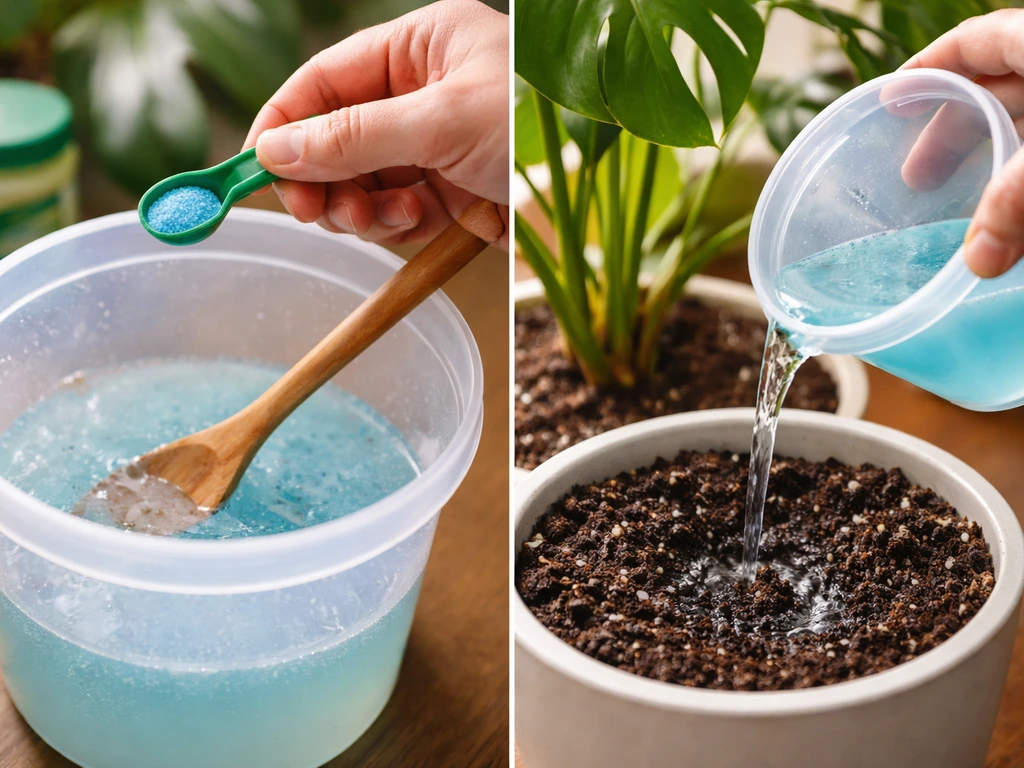
Dilution rates
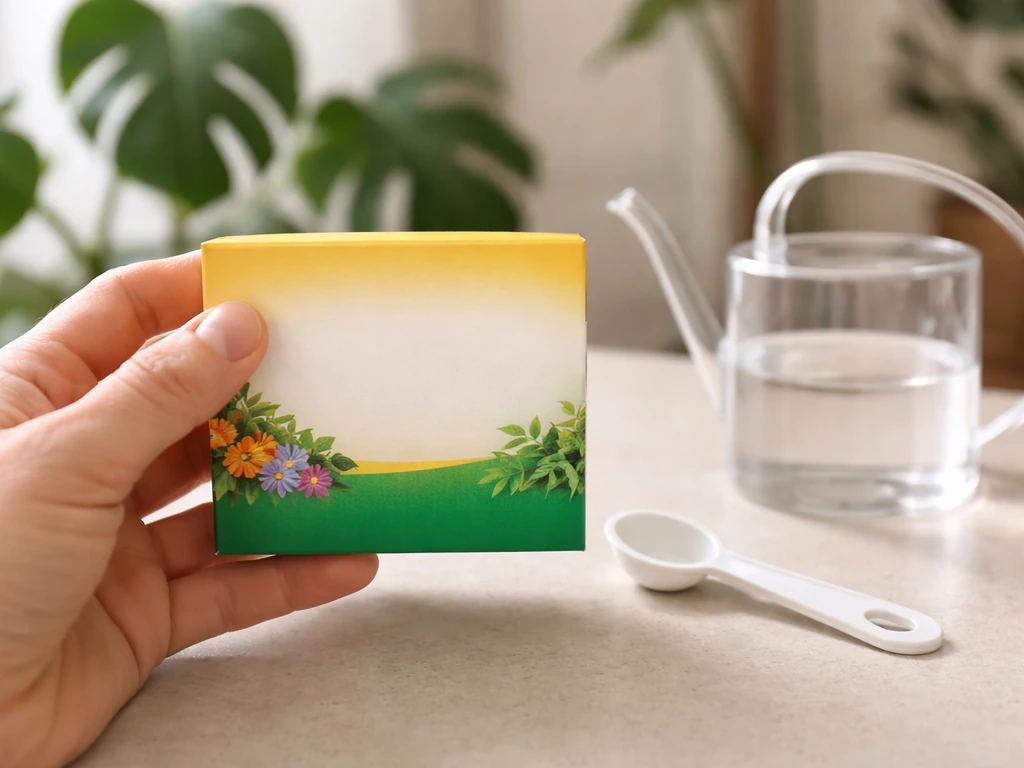
For the Water Soluble All Purpose (24-8-16): Miracle-Gro's own indoor plant directions call for half a teaspoon per gallon of water. For Monstera, I would stick to that half-dose or even go a little lower, around a quarter teaspoon per gallon, especially for younger plants or those in smaller pots. The formula is concentrated enough that half strength is still meaningful nutrition.
For the Liquid All Purpose Concentrate (12-4-8): the label recommends 1 teaspoon per gallon for containers every two weeks. This is already a gentler formula, so you can follow the label dose, but diluting to half a teaspoon per gallon is a safer starting point if your plant is in a small pot or has been recently stressed.
Feeding schedule
- March to September (active growing season): feed every two weeks with a diluted dose applied to moist soil, never dry soil.
- October and November: taper off, feeding once a month or skipping entirely as growth slows.
- December to February: stop fertilizing. Monstera growth nearly halts in low light and cool indoor temperatures, and feeding a dormant or slow plant leads to salt buildup without any growth benefit.
- After repotting: wait at least 6 to 8 weeks before feeding. Fresh potting mix already contains nutrients, and roots stressed from repotting are much more vulnerable to fertilizer burn.
Application tips
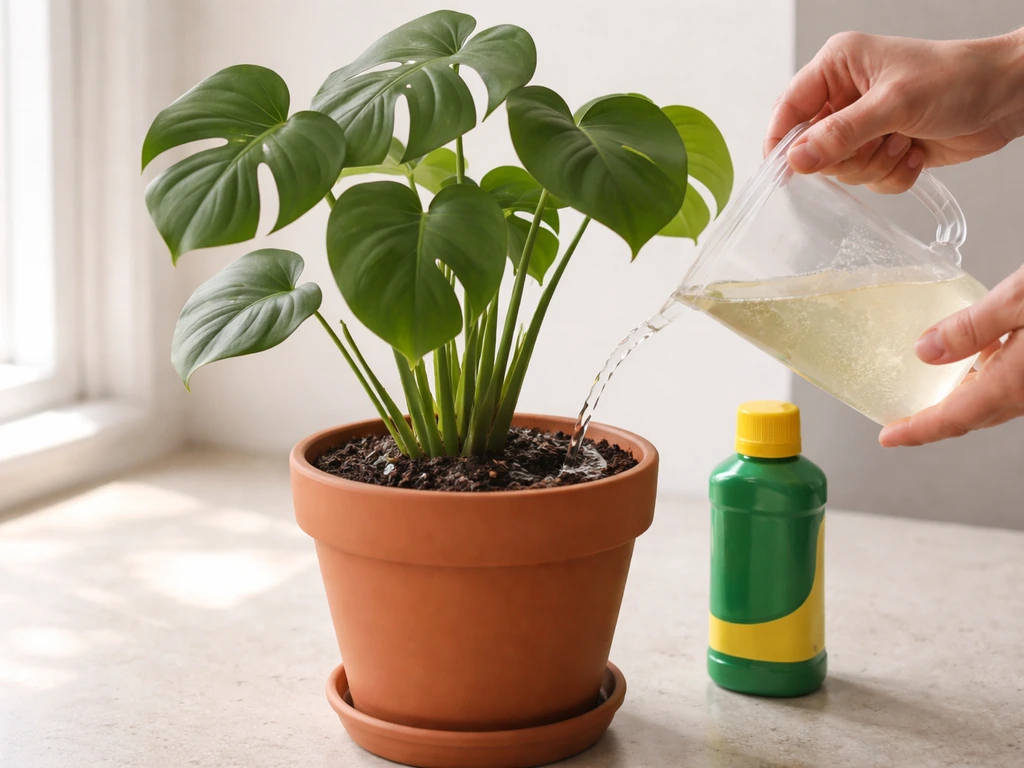
- Always water the plant first, then apply the fertilizer solution. Feeding into dry soil concentrates salts around roots immediately.
- Apply until water flows freely from the drainage holes, which helps distribute nutrients evenly and prevents pooling.
- Every 2 to 3 months, flush the soil thoroughly with plain water by pouring through several times, to wash out accumulated salts.
- If you use the Shake 'n Feed granular, apply a small amount to the top of the soil and water it in. Stick to the every-3-months schedule and do not layer it on top of fresh potting mix that already has fertilizer.
Reading your Monstera: too much, too little, or just right
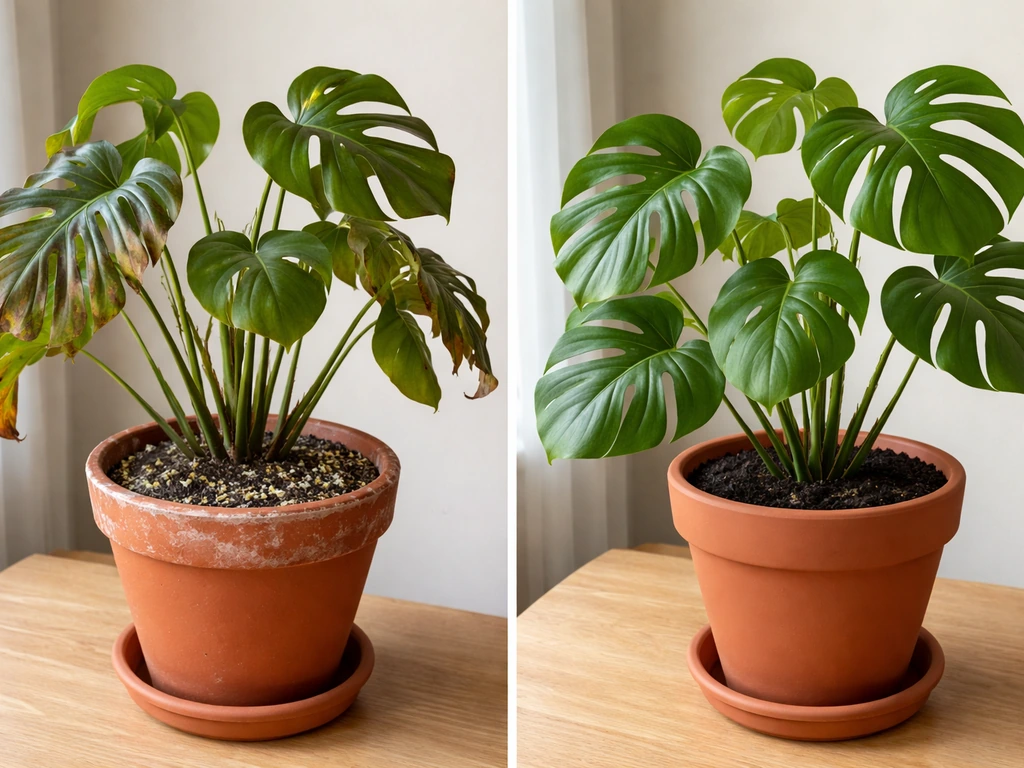
Signs of over-fertilizing
- Brown, crispy leaf edges that appear within a week or two of feeding
- White or yellowish crust forming on the surface of the soil or on the outside of a terracotta pot
- Wilting even when soil moisture seems adequate
- Yellowing of lower leaves combined with a recent increase in feeding frequency
- Roots that look dark brown and mushy at the tips (fertilizer burn)
If you see these signs, stop feeding immediately and flush the pot with plain water three or four times over a few days. Let the soil dry partially between flushes. If root damage is extensive, unpot the plant, trim off blackened root tips with clean scissors, and repot into fresh soil before resuming a lighter feeding schedule in 6 to 8 weeks.
Signs of under-fertilizing
- Very slow growth even in bright light during spring and summer
- Small, pale new leaves without the deep green your plant used to produce
- Older leaves fading to a lighter, washed-out green across the whole plant
- No new fenestrations (splits) developing on mature plants that should be producing them
Before blaming a lack of fertilizer, double-check light levels and watering. A Monstera that is not getting enough bright indirect light will not grow regardless of how much you feed it. If light is adequate, introduce feeding gradually: start with a quarter-strength solution and step up to half strength after a month of healthy response.
Better alternatives when Miracle-Gro is not the right fit
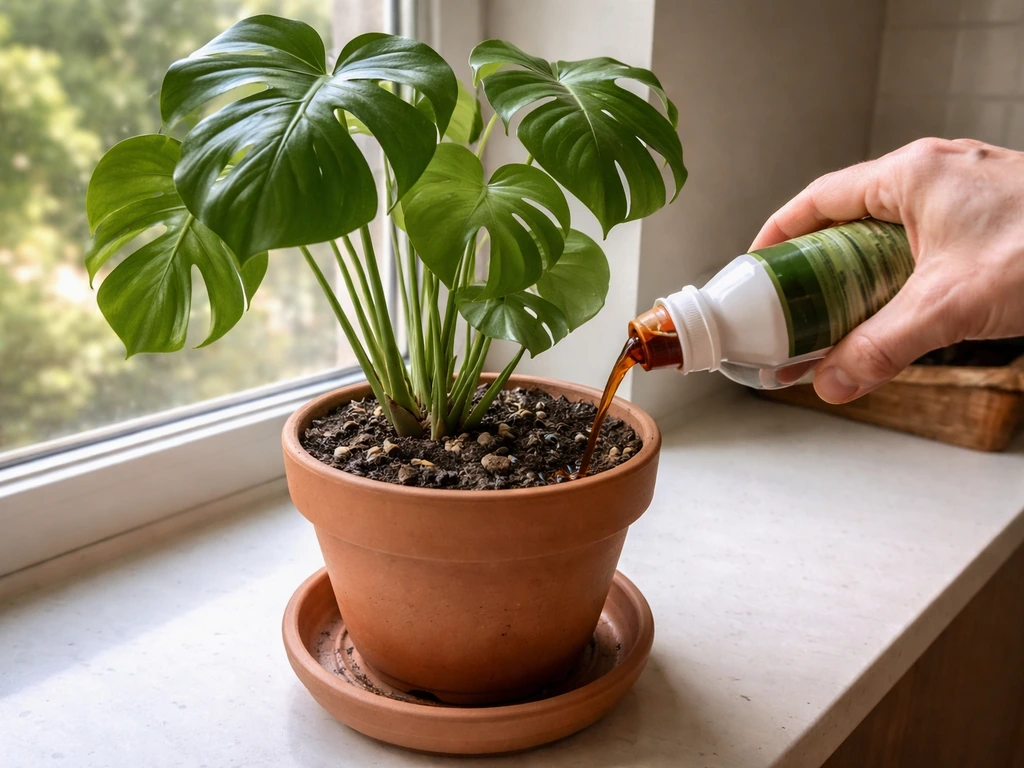
If you have had repeated problems with Miracle-Gro on your Monstera, or if you want a more targeted approach from the start, there are better options for aroids specifically. Miracle-Gro can also be a question when choosing food for mandevilla, so compare feeding needs before you decide. If you are wondering whether Miracle-Gro is good for bougainvillea, the answer depends on the specific formula and how carefully you match the plant’s needs.
- Aroid-specific liquid fertilizers (such as those from Dyna-Gro or brands marketed toward tropical foliage plants): these often include calcium and magnesium alongside the standard NPK, which fills the gap Miracle-Gro leaves. Look for a balanced NPK like 9-3-6 or 3-1-2 ratio products designed for foliage.
- Worm castings worked into the top layer of soil: a gentle, nearly impossible to over-apply organic option that improves soil structure at the same time. Great for growers who have previously burned plants.
- Slow-release pellets formulated for tropical foliage (not the all-purpose Shake 'n Feed, but products specifically listing calcium and magnesium): these reduce the risk of salt spikes because nutrients release gradually with each watering.
- Compost tea or diluted liquid fish emulsion: organic options that feed slowly and also introduce beneficial microbes into the potting mix. They smell bad, but Monstera love them during active growth.
For what it is worth, the same logic applies to other popular houseplants. Pothos and Monstera share similar aroid feeding preferences, so if you are also growing pothos, whatever fertilizer routine you settle on for one will translate well to the other. If you are wondering, is Miracle-Gro good for pothos, it usually depends on using a diluted dose and not overfeeding is miracle grow good for pothos. Fiddle leaf figs, on the other hand, are more finicky about their nutrition, so a Miracle-Gro routine that works for your Monstera may need adjusting before you try it on a fiddle leaf. Fiddle leaf figs, on the other hand, are more finicky about their nutrition, so it is worth checking whether Miracle-Gro formulations fit their needs before you fertilize.
Quick troubleshooting reference
| Symptom | Most likely cause | Fix |
|---|---|---|
| Brown crispy edges after feeding | Fertilizer salt burn | Flush soil 3-4 times, pause feeding for 6 weeks, reduce dose going forward |
| Yellow lower leaves after feeding | Over-fertilizing or root damage | Flush soil, check roots for rot, stop feeding until plant stabilizes |
| White crust on soil surface | Salt buildup from repeated feeding | Flush thoroughly with plain water, scrape off surface crust, consider repotting |
| Pale small leaves in spring | Under-fertilizing or low light | Move to brighter indirect light first, then introduce diluted feeding |
| No new leaves in summer | Could be light, pot size, or nutrition | Check light, check if rootbound, then start gentle feeding at quarter strength |
| Soft, limp new growth despite regular feeding | Too much nitrogen in low light | Improve light conditions, skip fertilizer until growth firms up |
FAQ
Can I use Miracle-Gro on a newly repotted Monstera?
Yes, but only after fresh growth starts. If you fertilize right after repotting, you can stress tender roots, especially with water-soluble products. A safer approach is to wait about 4 to 6 weeks in fresh, nutrient-lean potting mix, then start at quarter strength and increase only if the plant is actively putting out new leaves.
What if my potting mix already has Miracle-Gro fertilizer in it?
If your Monstera is already in a bagged “Moisture Control” style potting mix with built-in slow-release fertilizer, you should not add additional Miracle-Gro for at least the first few months. The built-in feed can overlap with your bottle feed, making it easy to overdo nitrogen. After the initial period, switch to a half dose water-soluble or liquid routine rather than continuing both at once.
How often should I fertilize my Monstera with Miracle-Gro?
It is usually better to fertilize less often than more often. For the water-soluble or liquid types, the article’s half-strength guidance works best in the growing season, then you pause or reduce in cooler months. A practical mistake is “monthly feeding year-round,” which commonly leads to salt buildup and crispy leaf edges.
What should I do if I see salt buildup or crust on the soil?
If you are seeing salt crust on the soil surface, assume either too much fertilizer, not enough drainage, or repeated feeding without adequate watering-through. Flush with plain water until it runs freely from the drainage holes, then restart with a weaker dose and longer intervals. Consistently under-watering between feeds can also concentrate salts, so water thoroughly when you do feed.
Should I fertilize during winter or low-light months?
With Monstera, schedule matters more than exact timing. Fertilize when the plant is warm and actively growing, then stop when growth slows (often in late fall or winter). Feeding during low-light or cool periods tends to cause weak growth and nutrient imbalance because the roots take up less.
Can I fertilize if my Monstera is dry or thirsty?
Yes, but use plain water first and then feed only after the excess fertilizer has been leached out. Fertilizing a bone-dry pot increases the chance of root tip damage. A good routine is to water normally, let the pot drain well, then apply the diluted solution (quarter to half strength) so the roots are hydrated but not sitting in saturated soil.
Does Miracle-Gro work differently in a chunky aroid mix or on a moss pole?
If you plan to use Miracle-Gro with a moss pole or chunkier aroid mix, the bigger risk is still overfeeding rather than “not enough.” Chunky, fast-draining soil can dry quickly, which tempts people to feed more frequently, but nutrient uptake can spike anyway. Stick to diluted doses and avoid increasing frequency until you see steady new leaf growth.
Will I need to add calcium or magnesium if I use Miracle-Gro on Monstera?
Mostly yes. Monstera tends to respond well when calcium and magnesium are present, but many all-purpose fertilizers do not emphasize them. If your leaves stay smaller or look a bit washed out despite careful dosing, consider supplementing with a calcium and magnesium source or switch to an aroid-focused fertilizer that includes those nutrients, then keep Miracle-Gro out of the mix to prevent doubling.
What are the most common mistakes people make when using Miracle-Gro on Monstera?
If you are using a water-soluble or liquid Miracle-Gro, measure accurately and only dilute with water at room temperature. Over-concentration is the most common failure, especially when people mix per-label strength instead of starting lower for smaller pots. Also confirm your container has drainage holes, because without runoff salts accumulate even if you used the correct dose.
How can I tell fertilizer damage from root rot on a Monstera?
If the problem is mainly leaf edge burn or yellowing after fertilizing, flushing and pausing usually helps. But if discoloration is paired with mushy stems or a sour smell, do not assume it is fertilizer. Check roots and adjust watering immediately, because root rot can mimic nutrient stress and Miracle-Gro will only worsen the situation.
Next Article
Is Miracle-Gro Good for Bougainvillea? How to Fertilize
Learn if Miracle-Gro is safe for bougainvillea, which formula to choose, and how to fertilize without root burn.