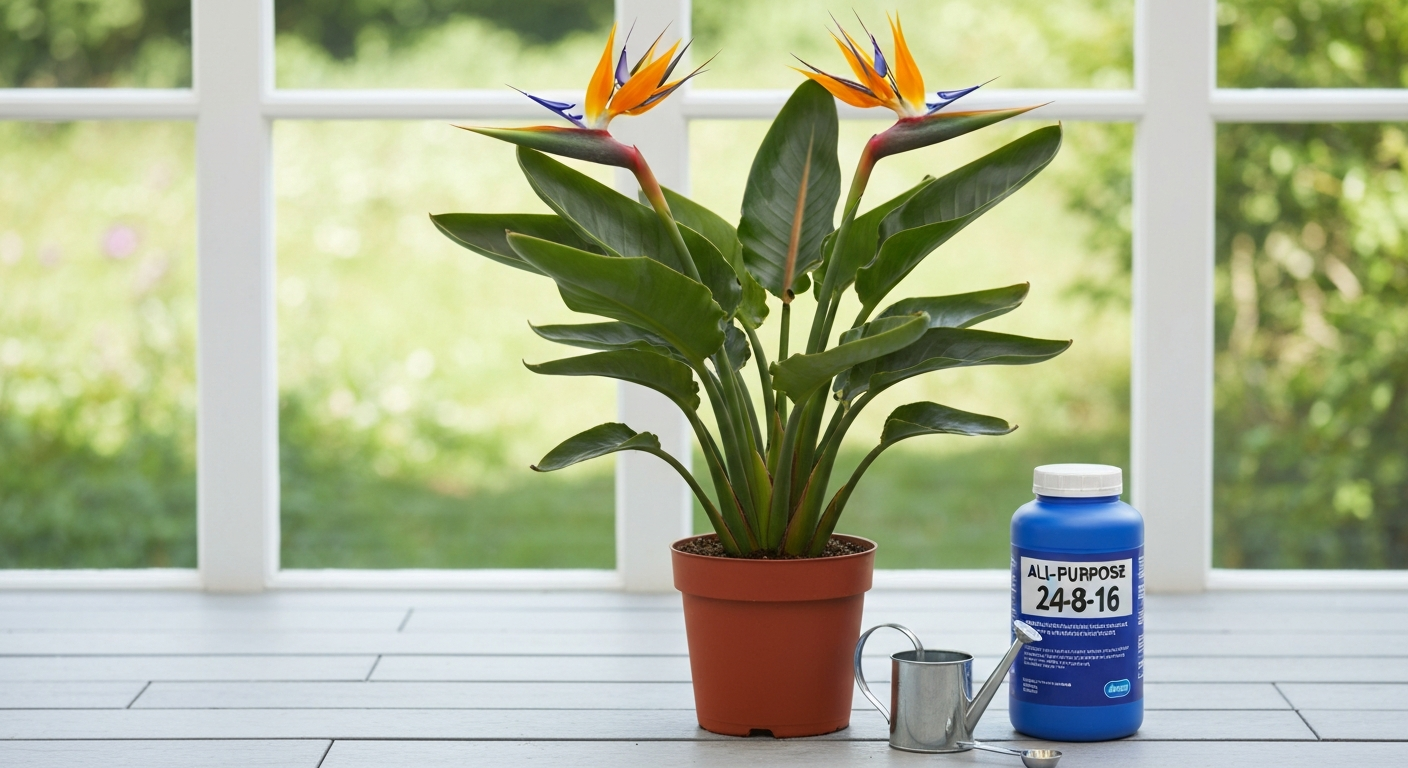
Yes, you can use Miracle-Gro on bougainvillea, but the formulation you pick matters a lot. The all-purpose 24-8-16 formula works in a pinch, especially for young plants that need to establish themselves, but if you want those brilliant bracts (the colorful "flowers" that are actually modified leaves), you are better off reaching for the Bloom Booster 15-30-15 once the plant is actively growing. For canna lilies, it is generally better to use a balanced fertilizer than to rely on Miracle-Gro products that are mainly aimed at getting blooms on other ornamental plants Miracle-Gro for cannas. The high nitrogen in the all-purpose version can push bougainvillea to throw out lush green leaves instead of blooms, which is basically the opposite of what most people want.
Is Miracle-Gro Good for Bougainvillea? How to Fertilize

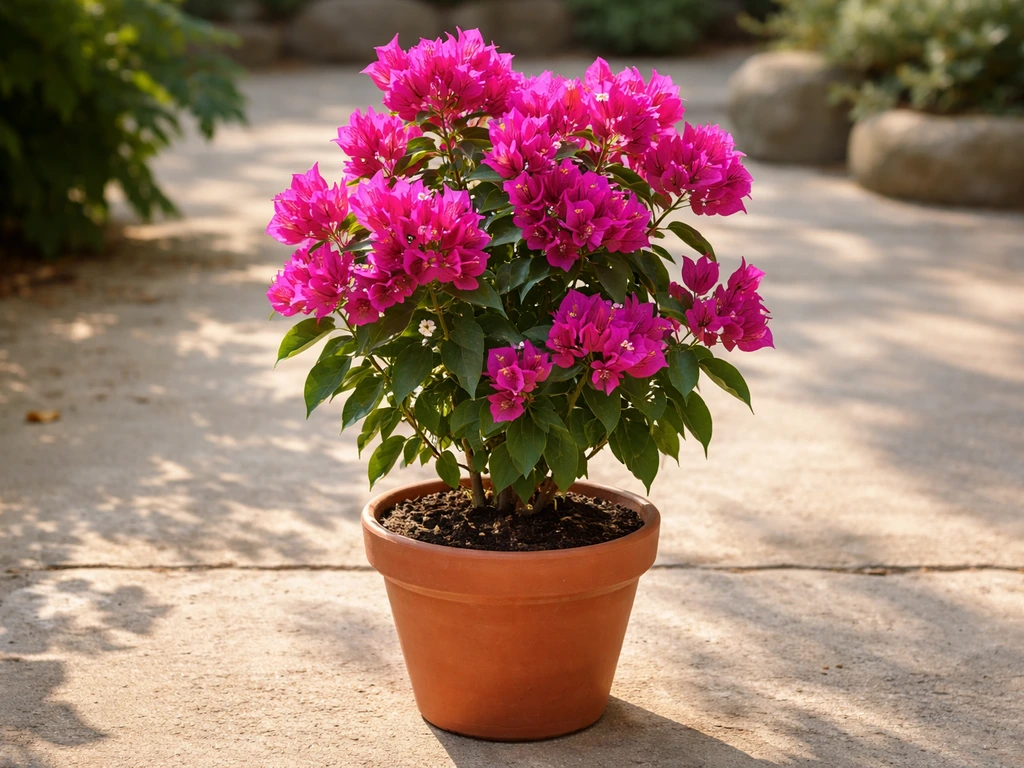
Which Miracle-Gro formulation actually works for bougainvillea
Bougainvillea is a bit of a drama queen about nitrogen. Give it too much and it goes full jungle-mode: big, floppy, dark-green growth with almost no color on display. The plant needs to feel a little stressed to bloom, and a high-nitrogen feed works against that. So your formulation choice is the single most important decision here.
| Product | NPK | Best Use for Bougainvillea | Key Limitation |
|---|---|---|---|
| Miracle-Gro Water Soluble All Purpose (24-8-16) | 24-8-16 | Spring establishment, young plants needing roots | High N can suppress blooming if overused |
| Miracle-Gro Water Soluble Bloom Booster (15-30-15) | 15-30-15 | Active growing season, bloom encouragement | Less useful for newly planted or rootless cuttings |
| Miracle-Gro Shake 'N Feed All Purpose (slow-release) | Varies | In-ground plants needing low-maintenance feeding | Formula may be too N-heavy for bloom focus |
| Miracle-Gro LiquaFeed Bloom Booster | Bloom-focused | Convenient hose-end application every 1-2 weeks | Requires LiquaFeed feeder attachment |
My top recommendation is the Miracle-Gro Water Soluble Bloom Booster Flower Food (15-30-15). That high middle number (phosphorus) is what supports root health and flower bud development, while the lower nitrogen keeps the plant from going all-leaf. If your bougainvillea is brand new or recovering from a move, use the All Purpose 24-8-16 at half strength for the first few weeks to help it settle in, then switch to the Bloom Booster once you see new growth.
How to apply Miracle-Gro without burning your plant
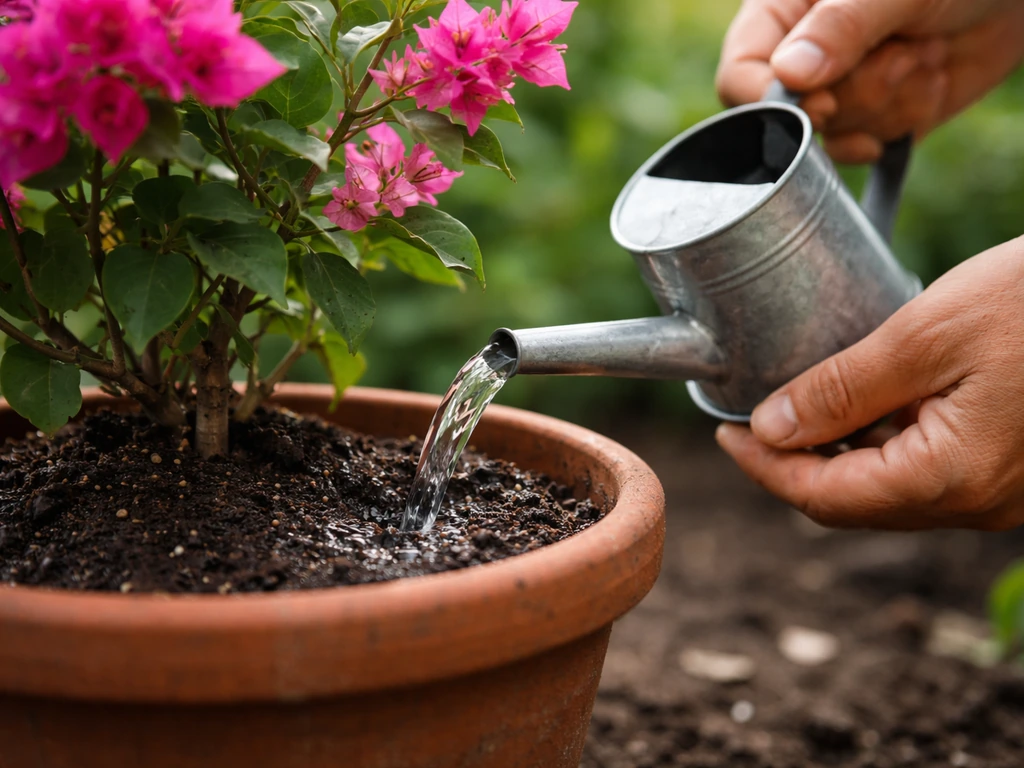
Bougainvillea roots are surprisingly sensitive to fertilizer burn, especially in containers where salts concentrate quickly. Following the label dosing is important, but for bougainvillea specifically I'd go half strength during the early season and full strength only when the plant is in full active growth.
Water-soluble formulas (All Purpose and Bloom Booster)
- For outdoor plants, the standard label rate for Miracle-Gro All Purpose is 1.5 tablespoons per 1.5 gallons of water. For bougainvillea, start at half that rate (roughly 3/4 tablespoon per 1.5 gallons) in early spring.
- For container-grown bougainvillea treated as an indoor or patio plant, use 1/2 teaspoon per gallon of water, which matches the label's indoor rate.
- The Bloom Booster label calls for 1/2 teaspoon per gallon every two weeks. That schedule works well for bougainvillea in active bloom.
- Always water the plant thoroughly before applying liquid fertilizer. Applying to dry soil is the fastest way to burn roots.
- Pour the mixed solution at the base of the plant to soak the root zone, not over the leaves or bracts.
Slow-release granules (Shake 'N Feed)
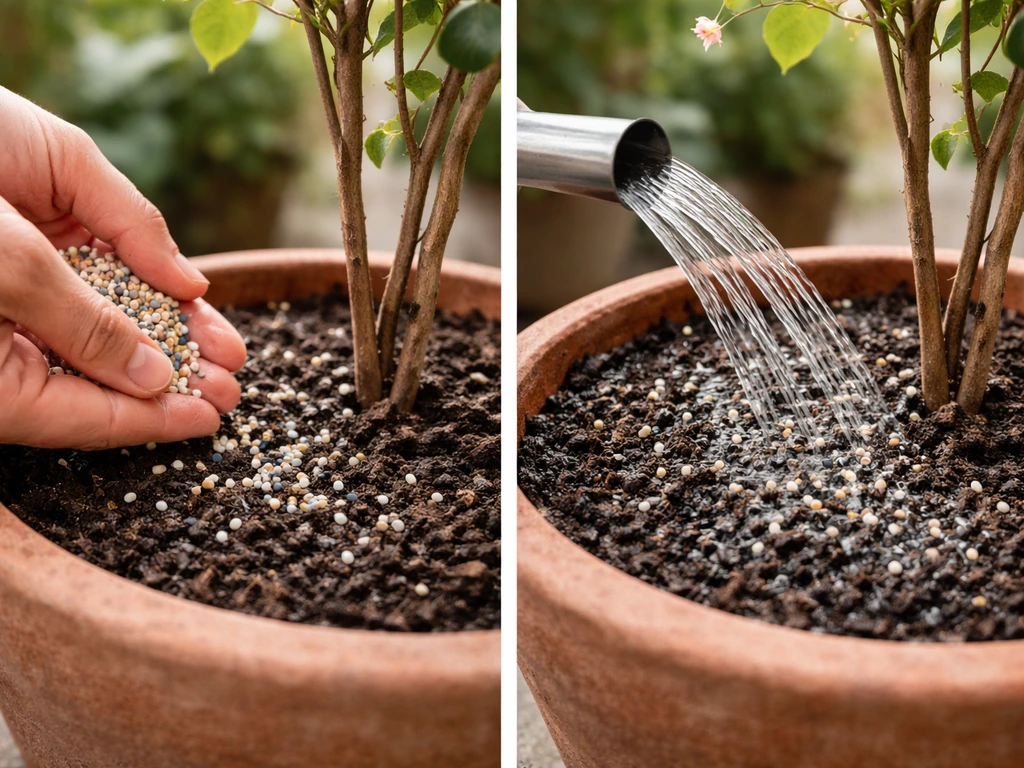
The Shake 'N Feed All Purpose granules are more of a set-and-forget option. Work them into the top 1 to 3 inches of soil around the drip line of the plant, then water well. Reapply every 3 months. This approach is fine for in-ground bougainvillea that you are not trying to push into heavy bloom, but because the formula leans toward all-purpose nitrogen levels, it is not my first choice if maximum flowering is the goal. I would still pair it with occasional Bloom Booster liquid feeds during peak growing season for best results.
Container vs. in-ground: does it change the approach?
Absolutely. Container bougainvillea needs more frequent feeding because watering flushes nutrients out of the pot quickly. Aim for every two weeks with a diluted water-soluble feed during the growing season. In-ground plants in decent soil are more forgiving. You can get away with monthly liquid feeding or a slow-release granule application every 3 months, and the plants often bloom well with minimal intervention once established. In-ground plants also have a bigger root buffer, so fertilizer burn is far less common than in pots.
Timing your feeds around bloom cycles
Bougainvillea blooms in flushes. It puts out color, then rests, then repeats. Your fertilizing schedule should work with that cycle, not against it. Here is how I time it across the season.
- Early spring (March-April): Start with Miracle-Gro All Purpose at half strength every two weeks. This supports new root and shoot growth after winter.
- Late spring through summer (May-August): Switch to Bloom Booster 15-30-15 at full label rate every two weeks. This is your primary blooming window and the most important feeding period.
- After each bloom flush: Keep feeding with Bloom Booster to encourage the next flush. Do not stop feeding just because the color has faded.
- Late summer into fall (September-October): Taper back to once every three weeks, then monthly. Reducing feed signals the plant to slow down for the season.
- Winter: Stop feeding entirely if temperatures drop below 50°F or the plant goes dormant. For plants in frost-free zones that stay active, a monthly half-strength Bloom Booster application is fine.
One thing worth knowing: Miracle-Gro's own guidance recommends waiting about a month after planting before starting a regular fertilizer regimen. Do not skip this. Jumping in with fertilizer right after transplanting stresses already-shocked roots.
Common mistakes and how to fix them
Lots of leaves, almost no blooms
This is the classic nitrogen overload problem. If your bougainvillea is throwing out lush green shoots but the bracts are sparse or nonexistent, switch immediately from any high-nitrogen formula to the Bloom Booster 15-30-15. Stop all All Purpose feeding for at least 6 to 8 weeks. You can also withhold water slightly (not drought stress, just letting the top inch of soil dry out between waterings) to nudge the plant toward flowering mode.
Leaf tip burn or browning after fertilizing
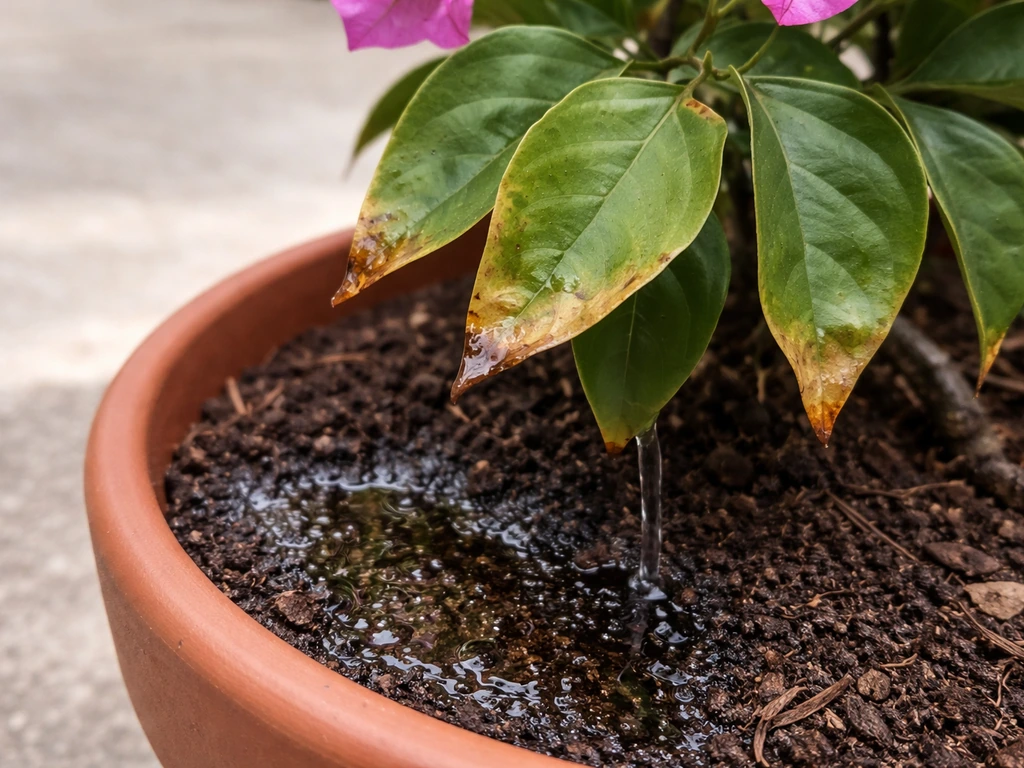
Brown or crispy leaf tips after a feed almost always mean either too-concentrated solution or application to dry soil. Flush the pot or root zone with plain water for a minute or two to dilute accumulated salts, then back off to half the label dose for the next two feeding cycles. The Miracle-Gro All Purpose label does say it will not burn when used as directed, but bougainvillea in containers is more sensitive than average, so erring conservative is smart.
Plant looks pale or yellow despite feeding
If you are feeding regularly and the plant still looks washed out or yellowing, the issue is often pH rather than nutrient availability. Bougainvillea prefers slightly acidic soil (around pH 5.5 to 6.5). At higher pH levels, the plant cannot absorb iron and manganese properly regardless of how much fertilizer you apply. Test your soil or potting mix pH before throwing more feed at the problem.
No improvement after weeks of feeding
If nothing is changing, check the basics: Is the plant getting at least 5 to 6 hours of direct sun daily? Bougainvillea will not bloom reliably in shade no matter what you feed it. Is the pot severely rootbound? A plant that is massively pot-bound may need repotting before fertilizer can make a real difference. Fertilizer is a support tool, not a substitute for good growing conditions.
Adjusting your approach based on plant stage and situation
Where your bougainvillea is in its life cycle changes what it needs from Miracle-Gro. If you are wondering about other tropicals, you might also ask whether Miracle-Gro is good for pothos and how to avoid fertilizer issues is miracle grow good for pothos. One schedule does not fit all.
| Plant Stage / Situation | Recommended Product | Dose & Frequency | Notes |
|---|---|---|---|
| Newly planted (first 4 weeks) | None | None | Let it settle; fertilizing too early stresses new roots |
| Young plant establishing (weeks 4-12) | All Purpose 24-8-16 at half strength | Every 2 weeks | Supports root and shoot development before bloom focus |
| Established plant, pre-bloom | All Purpose 24-8-16 at half strength | Every 2 weeks in early spring | Transition to Bloom Booster as buds form |
| Established plant, active bloom season | Bloom Booster 15-30-15 | Every 2 weeks at label rate | Primary feeding strategy for maximum color |
| Cutting / propagating | None until rooted, then half-strength All Purpose | Every 3-4 weeks once rooted | Cuttings cannot handle fertilizer until roots form |
| Container plant (patio or indoor) | Bloom Booster 15-30-15 | Every 2 weeks, diluted to label or slightly below | Flush pot monthly to prevent salt buildup |
| In-ground established plant | Bloom Booster liquid or Shake 'N Feed granules | Liquid: monthly; granules: every 3 months | Less burn risk; adjust if heavy rains dilute nutrients |
A simple starter plan and when to adjust
If you are standing in the garden right now trying to figure out what to do today, here is the practical version: pick up a box of Miracle-Gro Water Soluble Bloom Booster (15-30-15), mix 1/2 teaspoon per gallon of water, water your bougainvillea first with plain water, then apply the solution at the base. Mix 1/2 teaspoon per gallon of water and apply the Miracle-Gro Water Soluble Bloom Booster Flower Food (15-30-15) every 2 weeks, for indoor plants mix 1/2 teaspoon per gallon and apply every 2 weeks. Repeat every two weeks through the growing season. That is your core program.
- Week 1: Water plant well, then apply half-strength Bloom Booster (1/4 tsp per gallon for new or recently stressed plants, 1/2 tsp per gallon for established ones).
- Week 3: Repeat at same dose. Check for any leaf tip browning or unusual yellowing.
- Week 5: If growth looks healthy and buds are forming, stay at 1/2 tsp per gallon every two weeks. If growth is lush-green but no buds, withhold water slightly and continue Bloom Booster.
- Month 3: Assess bloom output. If blooming well, maintain schedule. If still struggling, check sun exposure and soil pH before adjusting fertilizer.
- Fall: Reduce to once per month, then stop before first frost or when plant slows visibly.
Signs you are feeding too much
- Leaf tips turning brown or scorched-looking shortly after feeding
- Soft, dark-green, floppy new growth with no bract color
- White crusty residue on the surface of container soil (salt buildup)
- Wilting even when soil is moist (root damage from salt stress)
Signs you are not feeding enough
- Pale or yellowing older leaves while the plant is actively growing
- Slow, sparse new growth during the peak growing season
- Few or very short bloom flushes even with good sun and watering
- Small leaves that seem proportionally smaller than usual for the variety
Bougainvillea is genuinely one of the more rewarding plants to feed correctly because the results are so visible. Get the nitrogen down and the phosphorus up, match the schedule to the season, and you will see a real difference in color output within one or two bloom cycles. It is the same logic that applies to other flowering tropicals like mandevilla or ixora: bloom-focused feeding beats all-purpose feeding when color is the goal. If you are also wondering whether Miracle-Gro is good for mandevilla, the key is using a bloom-focused mix rather than pushing extra nitrogen. Ixora also benefits from bloom-focused feeding, so using a fertilizer with more phosphorus than nitrogen can support stronger flowering. If you are wondering whether Miracle-Gro is good for monstera, the same idea applies: choose a balanced, diluted fertilizer rather than overdoing nitrogen. This same idea generally does not mean Miracle-Gro is automatically a great match for fiddle leaf figs Miracle-Gro for fiddle leaf fig.
FAQ
Can I use Miracle-Gro on bougainvillea in winter or during low light?
Yes, but only if the mix is formulated for blooming and you keep it light. Use a bloom-focused water-soluble fertilizer (like 15-30-15) at half the label rate for the first couple of applications, and reduce feeding during cool or low-light weeks so you do not drive more leaf growth when the plant cannot bloom well.
What should I do if my bougainvillea shows leaf growth but no color after using Miracle-Gro?
If you accidentally overfed and the plant looks lush but has few bracts, stop feeding immediately. For containers, flush the pot with plain water until runoff is clear, then wait 6 to 8 weeks before resuming with bloom booster at half strength.
Is it okay to fertilize bougainvillea when the soil is dry?
Do not fertilize on dry soil. Water normally first, then apply Miracle-Gro to the wet root zone, and use a diluted solution (especially for containers). This reduces the chance of crispy leaf tips and salt buildup.
How do I decide between Miracle-Gro All Purpose and Bloom Booster for bougainvillea?
Choose based on the plant stage and your goal. For maximum bract display, bloom booster with higher phosphorus is usually the better choice, while all-purpose can help only when the plant is young, newly planted, or actively pushing new growth.
Where should I apply Miracle-Gro to bougainvillea, soil level or leaves?
Use the fertilizer at the base of the plant, not on the foliage. Splashes on leaves can contribute to spotting, and it also wastes nutrients that would otherwise feed the roots.
Do I have to fertilize bougainvillea every two weeks with Miracle-Gro even when growth slows?
In general, yes, but it depends on the season. In containers you typically feed more often during active growth (about every two weeks with diluted water-soluble feeds). During rest periods or when growth slows, stretch the interval or pause to avoid salt and nitrogen buildup.
How can I prevent fertilizer salt buildup in a pot?
A simple way to avoid salt issues is to ensure deep watering that produces runoff, then occasionally do an extra flush (for example, once every month in hot weather). Pair this with half-strength feeding rather than full label dosing.
My bougainvillea is yellowing even though I switched to bloom booster. What else should I check?
If yellowing happens alongside weak or no bracts and you are already using a bloom-focused fertilizer, check soil or potting mix pH first. Bougainvillea often needs slightly acidic conditions (roughly 5.5 to 6.5) to absorb micronutrients like iron.
Can I mix Miracle-Gro with compost tea or other plant foods for bougainvillea?
Not usually. If you are using Miracle-Gro, you generally should not mix it with other supplements at the same time, because it can create unintentional extra nitrogen or salts. If you want to add compost or organic matter, do it as a separate soil amendment rather than mixing into the same watering.
How soon after transplanting or repotting can I start Miracle-Gro feeding?
Yes, but only when the plant is actively growing again. Wait until you see new shoots or strong recovery after transplanting, then use half-strength all-purpose for a few weeks before moving to bloom booster.
Can I Use Miracle-Gro on Bird of Paradise: Yes, How & When
Yes, use Miracle‑Gro on bird of paradise: which products, exact rates, timing, risks and fixes for gardeners.