
If you're searching for taco fern in 'Grow a Garden,' you're looking for a Divine-rarity crop from the Roblox game, not a real-world botanical species. In the game, Taco Fern was introduced as a limited-time prismatic seed during the Cooking Update event, and it sits at Divine rarity, which is the upper tier of the game's rarity scale.
How Rare Is Taco Fern in Grow a Garden? Sourcing and Tips

Marcus Weir
31 May 2026
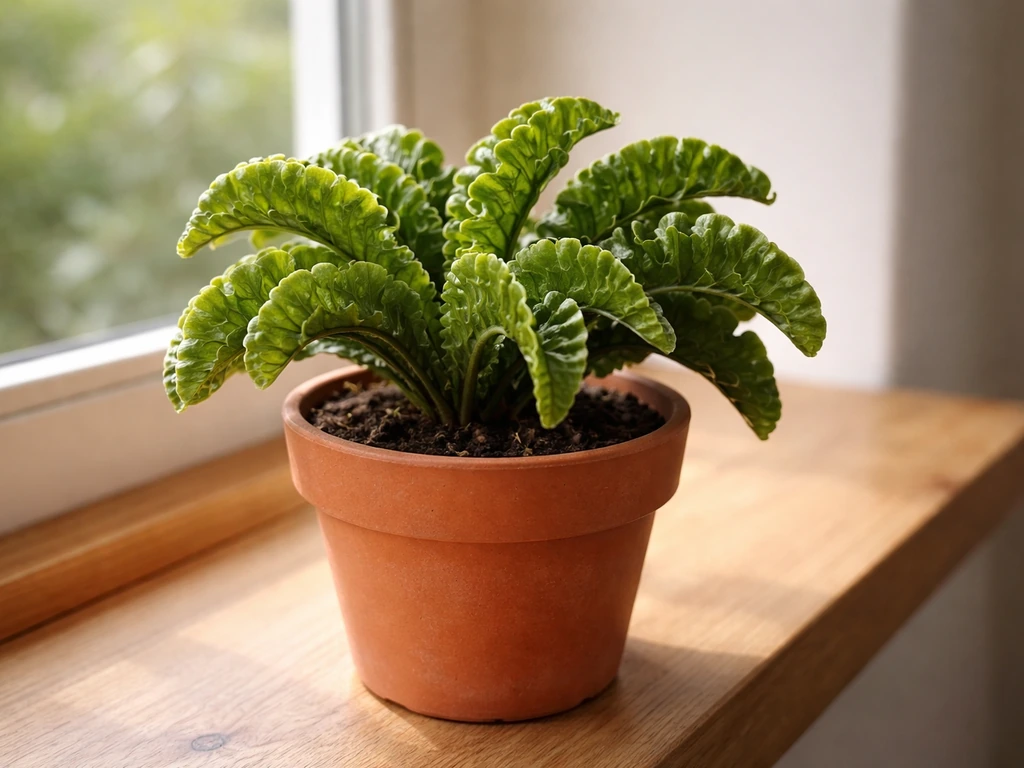
That means getting one depends almost entirely on RNG (random number generation) during specific in-game events, and the odds are genuinely low. If you were hoping to find a real plant called 'taco fern' to grow in your garden or home collection, that specific name doesn't correspond to a recognized horticultural species, though there are real ferns with taco-like leaf shapes worth knowing about.
What taco fern actually is (and isn't)
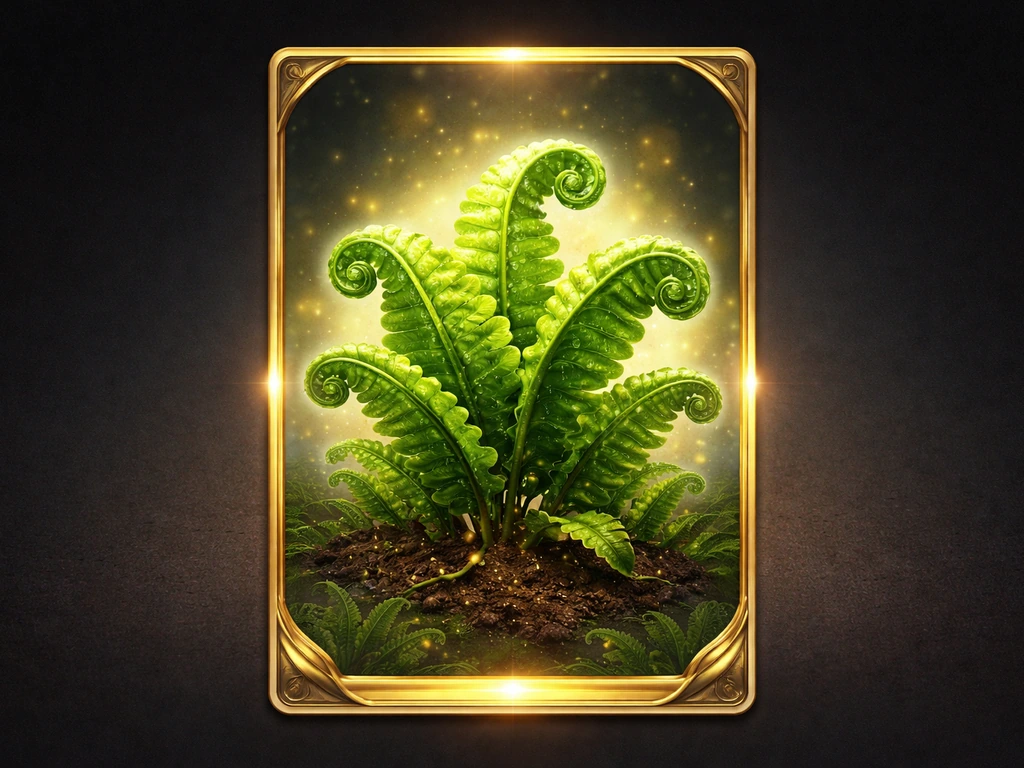
In 'Grow a Garden' (the Roblox game), Taco Fern is a defined in-game crop with specific mechanics. It is categorized as a Divine rarity plant, introduced during a Cooking Event update, and is described as a prismatic seed. Its special trait is that it produces a variable cluster of 2 to 5 ferns from a single plant, meaning each successful grow gives you a burst of output rather than a single crop. That's the in-game payoff for chasing such a rare item.
Outside the game, 'taco fern' is not a recognized botanical name. You won't find it in nursery catalogs or plant databases under that label. Some real ferns do get the nickname informally because their fronds curl or fold in a taco-like shape, but no single species holds the official common name 'taco fern.' The closest real-world candidates with similar visual behavior are certain Boston fern cultivars, Asplenium nidus (bird's nest fern), or Polypodium species where fronds can exhibit cupping or folding. If you're a plant collector who got curious after hearing the game name, those are worth a look.
Why taco fern is rare in the game
The rarity is built into the game's systems, not into any natural scarcity of plant biology. Here's what actually drives how hard it is to get:
- Divine tier placement: Divine is one of the highest rarity tiers in 'Grow a Garden,' meaning the base probability of obtaining the seed through normal gameplay is very low.
- Event-locked availability: Taco Fern was introduced as a limited-time item tied to the Cooking Event update. If that event isn't currently active, the seed may not be obtainable through standard in-game means at all.
- RNG dependence: Whether you receive it during an event depends on random chance, not skill or time invested, which is why community discussions on Reddit reflect real frustration about inconsistent drop rates.
- Prismatic seed classification: Being labeled a prismatic seed suggests it occupies a special category even within rare drops, further restricting how often it appears.
The combination of event-timing and RNG means two players putting in the same amount of effort can have wildly different outcomes. One person gets it on their first event cycle; another grinds through multiple events and never sees it. That's the nature of Divine-tier drops in games like this.
Make sure you're chasing the right thing

Before you spend significant time grinding for Taco Fern in 'Grow a Garden,' it's worth confirming a few things. First, check whether the Cooking Event is currently live in the game. If it isn't, Taco Fern seeds may not be in the active drop pool, and no amount of gameplay will produce one until the event returns. Second, check the game's official wiki or community Discord for the current seed shop rotation, since limited-time items sometimes re-enter the shop temporarily. Third, if someone is offering to trade a Taco Fern, verify its rarity tag in-game before accepting a deal, because mislabeling does happen in player-to-player trades.
This same verification logic applies if you're a real-plant gardener who saw the name 'taco fern' and wondered if it's a real species. It isn't a recognized one, so if a seller is marketing a plant specifically as 'taco fern,' ask for the botanical Latin name before buying. A genuine bird's nest fern is Asplenium nidus; a Boston fern is Nephrolepis exaltata. Get the Latin name and you'll know exactly what you're buying and how to grow it.
How to get taco fern today and what to expect
Within 'Grow a Garden,' your realistic options as of May 2026 break down like this:
| Method | Availability | Difficulty | Notes |
|---|---|---|---|
| Event participation | Only when Cooking Event is live | Medium to hard | Requires active play during the event window |
| Player-to-player trading | Ongoing if players have stock | Depends on trade value | Watch for fair valuation; Divine items trade high |
| Seed shop rotation | Occasional limited restocks | Low effort but luck-based | Check game news and community boards regularly |
| Purchasing in-game currency packs | Available if event is live | Easy but costs real money | No guarantee of Taco Fern specifically |
If you're comparing the effort to chase Taco Fern versus other rare items in the game, it's worth knowing that other Divine or near-Divine crops like certain animal companions (such as red fox or polar bear equivalents in the game's ecosystem) follow similar event-locked logic. The rarity system is consistent across those high-tier items. Exotic items like the toucan or sea otter in the game's catalog sit in overlapping rarity bands, so your strategy for chasing one rare item generally applies across all of them.
Growing taco fern in the game: what the mechanics mean for you
Once you have the seed in 'Grow a Garden,' Taco Fern's core appeal is its cluster mechanic. A single successful grow produces 2 to 5 ferns, which makes it valuable for accumulating crops quickly relative to other plants. Divine-rarity plants typically have longer grow cycles and may require specific in-game conditions (like plot upgrades or fertilizers) to reach their full yield potential. Check the game's current patch notes to confirm whether any grow-time or yield modifiers apply specifically to prismatic or Divine crops in the version you're playing.
If you want to grow a real taco-shaped fern instead
If the game got you curious about actual ferns, here's how real ferns with similar visual appeal grow. If you’re also wondering how rare a sea otter is, that’s a very different situation than finding a real taco-shaped fern. Ferns like Asplenium nidus or Nephrolepis species are not particularly difficult to keep, but they do have consistent care requirements that trip up beginners.
Light and placement
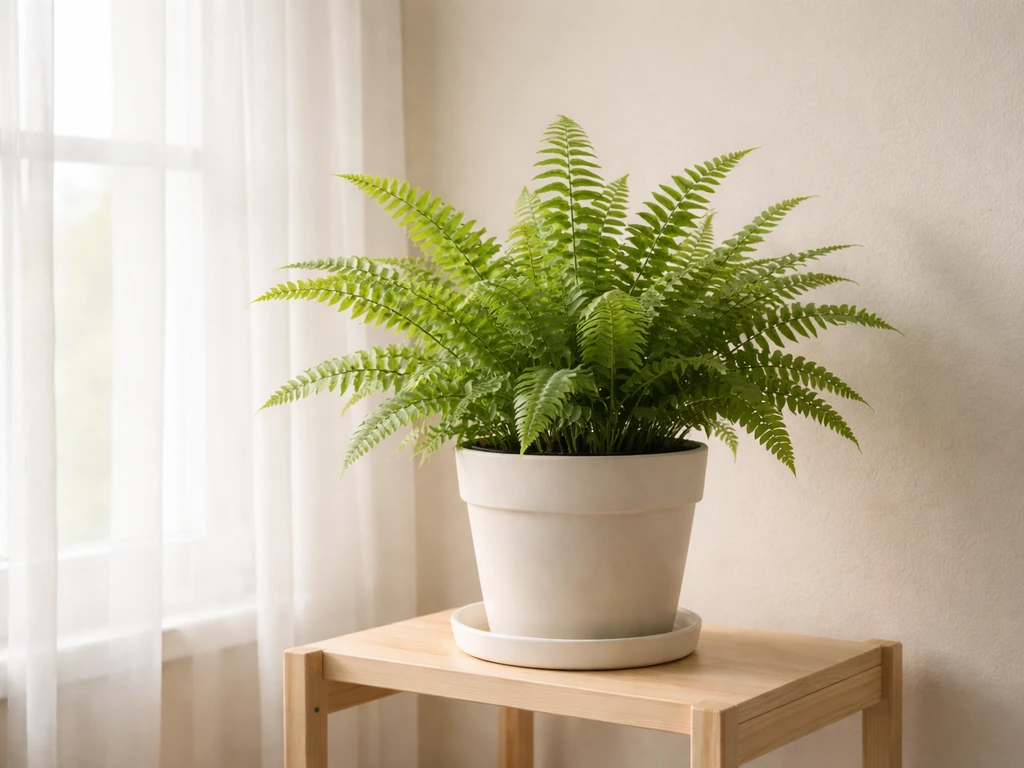
Most tropical and indoor ferns want bright indirect light, not direct sun. A north- or east-facing window is ideal for the majority of species. Loquats are easier to visualize: the fruit is small and round to oval, ripening to golden-orange clusters what does a loquat look like in grow a garden. Direct afternoon sun will crisp the frond edges within days, which is one of the most common beginner mistakes.
Watering and humidity
Ferns want consistent moisture but not waterlogged roots. Water when the top centimeter of soil feels dry, and never let the pot sit in standing water. Humidity is often more critical than watering frequency: most tropical ferns want 50 percent humidity or higher. A pebble tray with water beneath the pot, grouping plants together, or a small humidifier solves most humidity problems in typical homes.
Medium and potting
Use a well-draining, slightly acidic mix. A standard peat or coco coir-based potting mix with added perlite (roughly 70/30) works well. Avoid heavy garden soil, which compacts and suffocates fern roots in containers.
Temperature
Tropical ferns don't like cold. Keep them above 15 degrees Celsius (about 60 degrees Fahrenheit) at all times. Cold drafts from windows in winter are a sneaky cause of browning fronds even when watering and light seem fine.
Common problems and what they mean
| Symptom | Most likely cause | Fix |
|---|---|---|
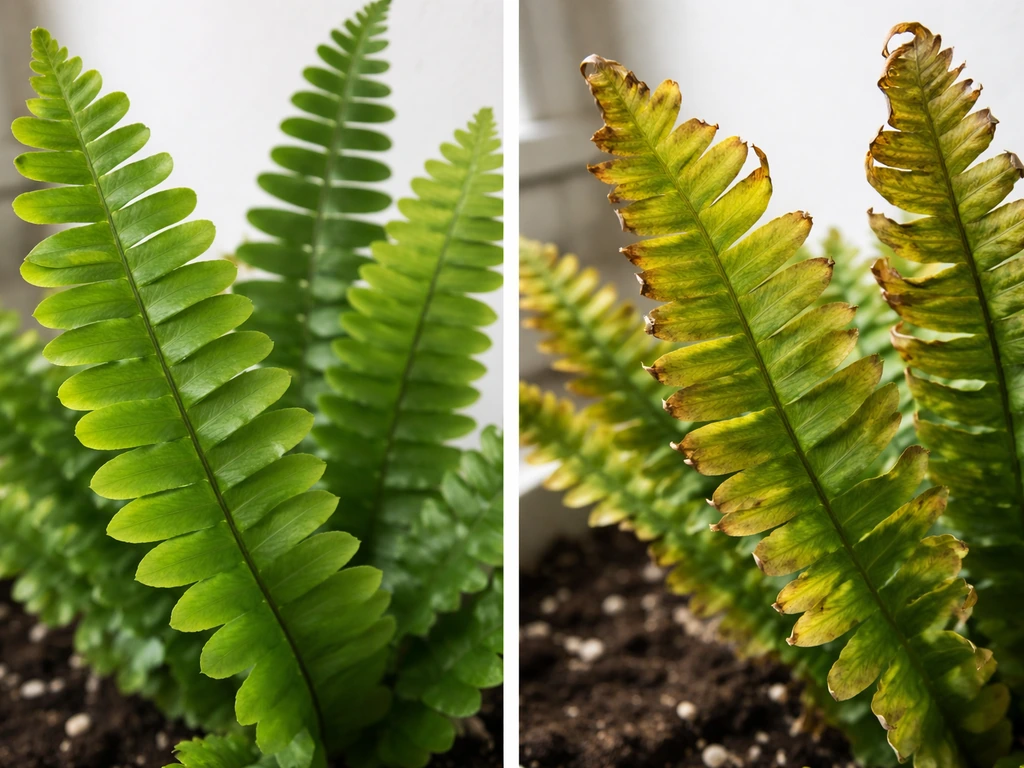
| Yellowing fronds | Overwatering or poor drainage | Reduce watering frequency, check pot drainage |
| Crispy brown edges | Low humidity or direct sun | Move plant, raise ambient humidity |
| Curling or cupping fronds (taco shape) | Underwatering or very low humidity | Water thoroughly, mist or use humidifier |
| Slow or no new growth | Low light or cold temps | Improve light exposure, ensure temps stay above 15°C |
| White cottony spots | Mealybugs | Wipe with isopropyl alcohol on a cotton swab, repeat weekly |
| Fine webbing on fronds | Spider mites (common in dry conditions) | Increase humidity, rinse plant with water, use insecticidal soap |
Worth noting: actual 'taco-shaped' curling in a real fern is almost always a stress signal, not a feature. If fronds that were flat start curling inward like a taco shell, that's the plant telling you it's underwatered or running dry from low humidity. It's not permanent damage if caught early: a thorough watering and a humidity boost usually sees new fronds unfurl normally within a week or two.
Propagating real ferns: what's realistic for most growers
If you end up with a real fern and want more plants from it, you have two main routes: division and spores. Division is by far the more beginner-friendly option. When your fern has grown large enough to have multiple crowns, you can unpot it, gently separate the root mass into sections each with healthy fronds attached, and repot each section individually. This works well in spring when growth is active. New growth typically appears within 3 to 6 weeks of a successful division.
Spore propagation is more involved. Fern spore cases (sori) on the underside of mature fronds release thousands of microscopic spores when ripe. You can collect them by placing a frond on white paper and waiting for the spores to drop, then sow them on the surface of sterile, moist sphagnum or fine potting mix in a covered container. [Keep the temperature above 15 degrees Celsius](https://www.
exoticferngroup. org/propagation) and maintain high humidity inside the container. Germination produces a tiny flat structure called a prothallus (not a fern frond yet), and actual fern plants emerge from there. Total time from spore to a plantable fern: typically 6 months to a year.
It's rewarding but genuinely slow, and it's easy to lose a batch to contamination. Stick with division until you're comfortable with the patience it demands.
Should you chase taco fern now or wait?
If you're playing 'Grow a Garden' and Taco Fern is your target: chase it now if the Cooking Event is currently active, because that's your best window. If the event is over, shift your focus to monitoring community boards and the in-game shop rotation rather than grinding standard gameplay hoping for a drop that may not be in the current pool. If you keep seeing the same question about whether it is polar bear rare in Grow a Garden, the answer is that rarity depends on the event and RNG rather than real-world animals Taco Fern. Trading with other players is your most reliable off-event option, but expect to give up something of comparable Divine value in return.
If you're a real-plant gardener who came here wondering whether 'taco fern' is a rare plant worth hunting down at nurseries: save yourself the search. Loquat is an actual fruit tree, so if you're asking about its rarity in Grow a Garden, the answer will depend on how the game classifies real-world crops versus special event seeds what rarity is loquat in grow a garden. It's not a real species name, so you won't find it in stock anywhere.
What you will find are beautiful real ferns with similar growth character, like bird's nest fern or certain Boston fern cultivars, available at most garden centers for a modest price year-round. If you meant the real-world question, an orange tabby cat's rarity depends on genetics and breeding, not on gardening conditions orange tabby rare. Those are genuinely beginner-accessible, rewarding to grow, and don't require any RNG at all.
FAQ
Does Taco Fern ever appear outside the Cooking Event in Grow a Garden (like as a regular drop)?
Usually no. If the Cooking Event is not running, Taco Fern seeds generally do not belong to the active drop pool. The practical workaround is to check whether it is temporarily added back to a seed shop rotation during that off-event period, or to trade for it after verifying the in-game rarity tag.
Why can two players both “farm the event” and still get totally different results for Taco Fern?
Because Divine-tier items are governed by RNG in the event’s drop logic, not by effort alone. Your best consistency lever is staying aligned with the exact event state, since players sometimes keep farming after the drop pool changes at the next event phase or patch.
What should I check before accepting a Taco Fern trade from another player?
Confirm the rarity label on the item inside your trade screen, not just what the other player says. Mislabeling happens, and sometimes similar-looking prismatic items can be tagged wrong, so always verify the exact rarity tier and item name as shown in-game.
If I find “prismatic seeds” but not Taco Fern, does that mean my luck is broken?
Not necessarily. Taco Fern is tied to a specific event item set, so you may be receiving other prismatic seeds in the same pool. The decision aid is to compare what the event currently lists as available rewards (seed shop rotation or event reward table) and only continue if Taco Fern is explicitly included.
Is Taco Fern’s rarity based on the real world scarcity of ferns?
No, the rarity is a game mechanic. Real ferns are not “rare” in the same RNG-driven way, and “taco fern” is not a recognized botanical species name, so the scarcity you feel comes from the game’s drop system and event scheduling.
I bought a plant listed as “taco fern,” what information should I request to avoid being misled?
Ask for the botanical Latin name (the exact genus and species) and photos of the fronds. A legitimate seller should be able to name it as something like bird’s nest fern (Asplenium nidus) or a Boston fern cultivar (Nephrolepis exaltata), rather than relying only on a nickname.
If a real fern’s fronds curl “taco-like,” does that mean it is a special variety?
Often it is a stress response, not a unique variety. Curling inward usually points to low humidity or inconsistent watering, and the fastest check is to increase humidity and water properly, then monitor whether new unfurling growth resumes normally within 1 to 2 weeks.
Are all “taco-like” fern lookalikes the same to care for?
No. Bird’s nest fern and common Boston fern types are broadly beginner-friendly, but their tolerance for light and humidity can differ. If you know the Latin name, you can tailor care, especially regarding humidity targets and avoiding direct sun, which can crisp fronds quickly.
What is the most reliable way to propagate a real fern if I want more plants like the one I bought?
Division is the most beginner-safe route, as long as the fern has grown large enough to form multiple crowns. If your plant stays small or you cannot identify crowns, focus on getting it to healthy, steady growth first, since dividing too early can set it back.
If I start growing from spores, how can I prevent common batch failures?
Use sterile medium and maintain stable humidity under a cover, avoid letting the surface dry out, and keep temperatures consistently warm (above about 15°C). Contamination is the most common failure point, so work cleanly and do not repeatedly open the container after sowing.
Does Taco Fern produce only 2 ferns when it grows, or can it be more?
It can vary. The grow mechanic described for Taco Fern produces a cluster of 2 to 5 ferns from a single successful grow, so even with the same effort you may see different output amounts depending on the result of each successful grow.
Next Article
How Rare Is a Sea Otter in Grow a Garden?
Sea otter rarity explained: where they live, how often they’re seen, and why a home garden can’t host them. Safety steps