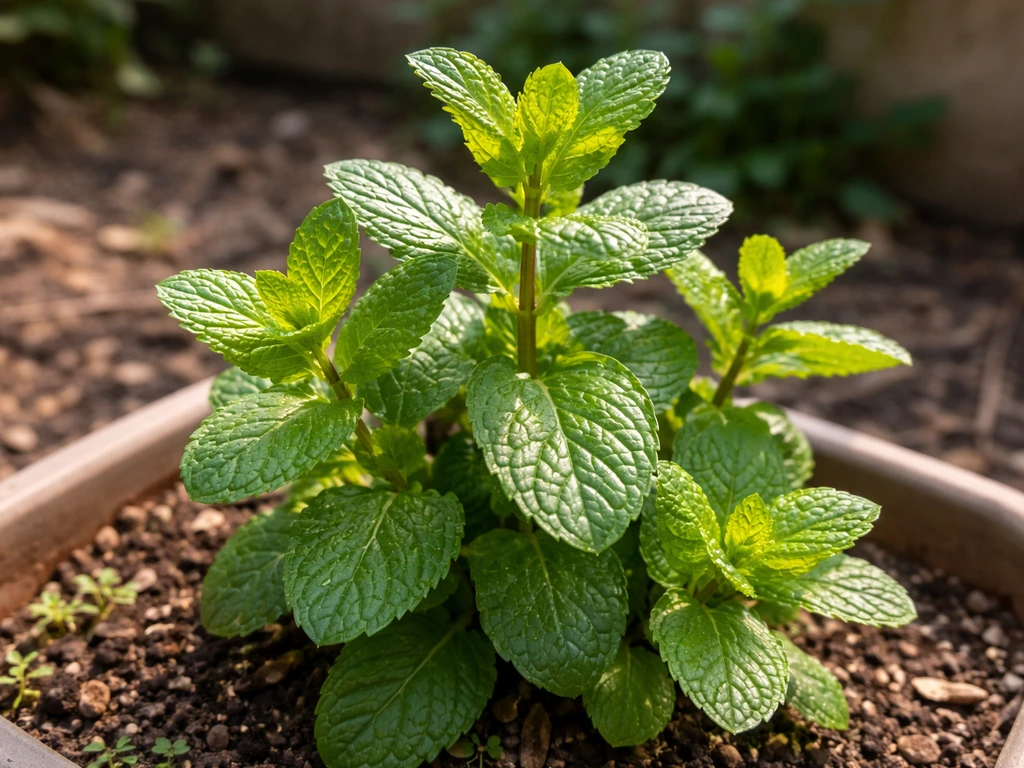
Mint grows actively from spring through fall in most climates, typically kicking into gear once soil and air temperatures climb above 50°F (10°C) and staying productive until the first hard frost. If you're growing indoors under consistent light and temperature, mint can grow year-round without any seasonal pause at all. The exact timing depends on where you live and how you're growing it, so let's break it down practically.
When Does Mint Grow? Seasonal Timing and Start Dates

Marcus Weir
11 Apr 2026
Mint's growing season by climate
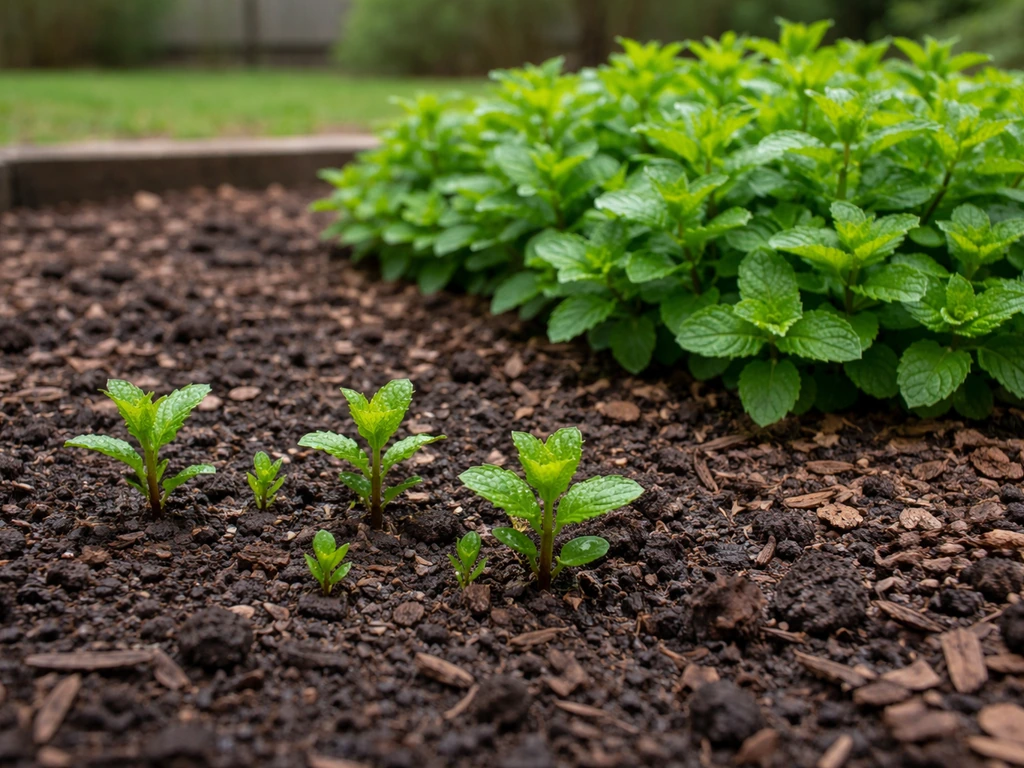
Spearmint (Mentha spicata) is hardy across roughly USDA zones 5 through 11, though some sources push that lower to zone 4 depending on the cultivar and how well the roots are mulched over winter. What that means in practice: if you're in a mild climate (zones 7 and warmer), mint may stay semi-evergreen through winter and resume noticeable growth in late February or early March. In colder zones (4 through 6), the above-ground plant dies back to the roots after frost, and you'll see new shoots pushing up in early to mid-spring, usually sometime in April once soil temperatures begin warming past 50°F.
In hotter climates like zone 9 and above, mint faces a different kind of pause: summer heat stress. Temperatures above 80°F (27°C) can reduce mint's vigor and essential oil production, so in Texas or Southern California, the most enthusiastic growth often happens in spring (March through May) and again in early fall (September through October) once the brutal heat backs off. Think of it as two growing seasons sandwiching a hot, sluggish summer.
The sweet spot for vigorous, quality mint growth is an air temperature range of roughly 59°F to 86°F (15°C to 30°C), with optimal growth happening between 68°F and 77°F (20°C to 25°C). Once you know your average last frost date and typical summer highs, you can map mint's active season onto your local calendar pretty reliably.
When mint grows indoors vs outdoors
Outdoors, mint is completely at the mercy of seasonal temperature swings. It wakes up in spring, grows hard through summer (heat permitting), slows in late fall, and either goes dormant or dies back with frost. That growing window is typically 5 to 7 months in temperate zones. Indoors, those rules largely disappear. If you can keep temperatures between 55°F and 70°F (13°C to 21°C) and provide at least 12 hours of light daily under grow lights, mint will grow continuously regardless of what month it is outside.
A south-facing windowsill can work in spring and summer when days are long, but in winter, natural light through a window usually isn't enough to keep mint actively growing rather than just surviving. If your windowsill mint looks leggy and pale between November and February, that's a light problem, not a temperature problem. Adding a fluorescent or LED grow light on a 12-hour timer makes a real difference. Understanding exactly what conditions mint needs to grow makes this a lot easier to troubleshoot, because light and temperature are the two biggest levers indoors.
Best months to plant mint (seeds, cuttings, or division)
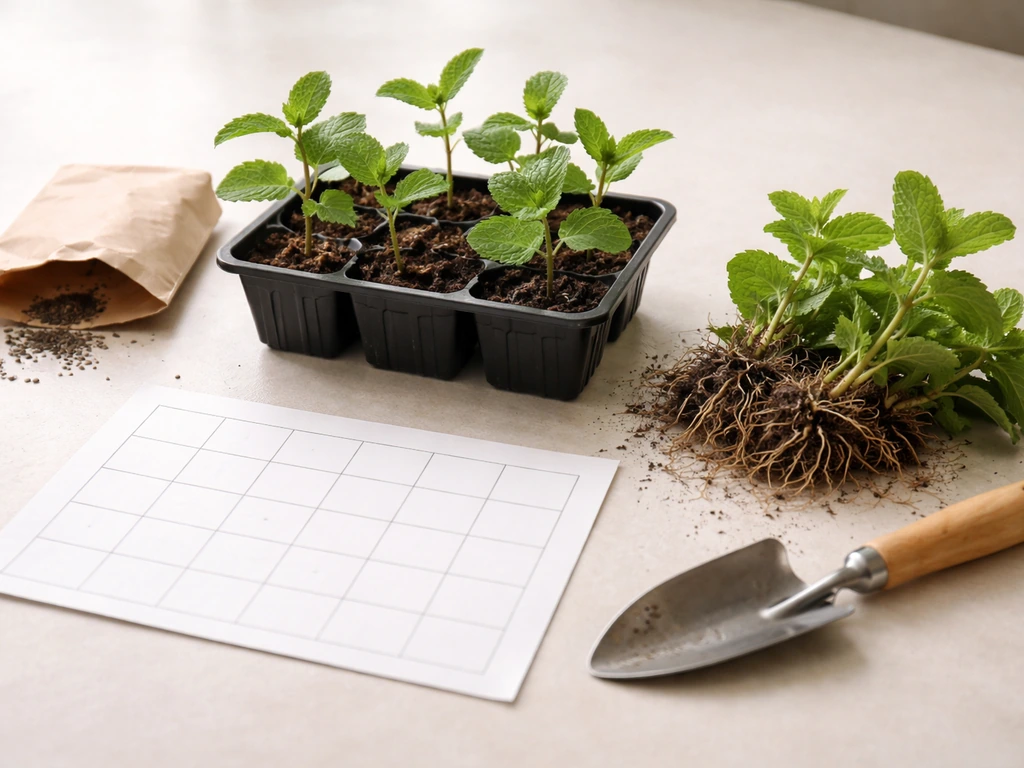
The method you use to start mint affects your timing more than most people realize. Here's how each approach maps to the calendar for outdoor growing in a temperate zone (assume last frost around mid-April for this example).
Starting from seed
Mint seeds germinate best at soil temperatures between 55°F and 65°F (13°C to 18°C), though some commercial growers push soil temps up to 68°F to 72°F for faster emergence. Start seeds indoors 6 to 8 weeks before your last frost date, so roughly late February through early March in most of the northern U. S. Sow seeds shallowly, just 1/8 to 1/4 inch deep, keep the soil consistently moist, and expect germination in 10 to 16 days under good conditions.
One important caveat: seed propagation has a germination success rate of only around 50 to 60%, and seedlings may not be identical to the parent plant. For reliable results, cuttings or division are better bets. Transplant outdoors after the last frost, and make sure to harden seedlings off gradually over 7 to 10 days before leaving them outside full-time.
Starting from cuttings
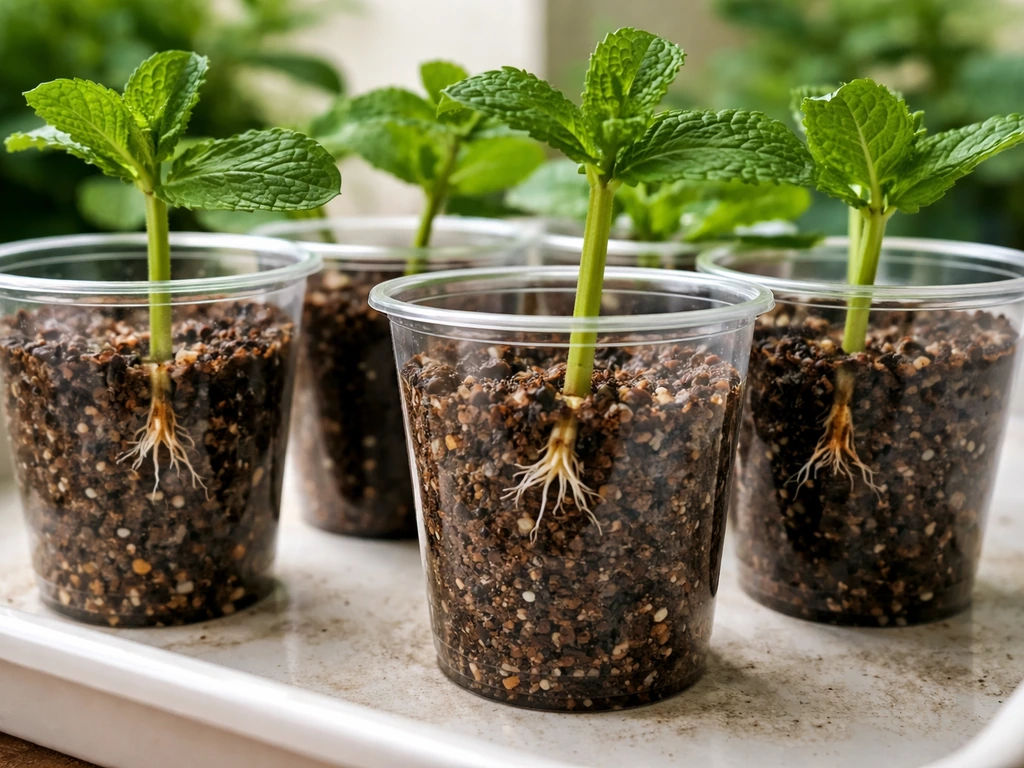
Cuttings root quickly and give you a genetically identical plant. Take 4 to 6 inch stem cuttings from an established plant in spring or early summer (April through June outdoors), place them in water or moist potting mix, and you'll typically see roots in 1 to 2 weeks. Once rooted, plant them out after your last frost. Indoors, you can take and root cuttings any time of year.
Dividing an established plant
Division is the fastest way to get a productive plant. Dig up an established clump in early spring (March through April) just as new shoots are pushing up, separate a chunk of rhizome with some shoots attached, and replant it. The new division usually settles in and starts growing hard within 2 to 3 weeks. You can also divide in early fall (September) in mild climates, giving the roots time to establish before winter.
Signs mint is actively growing (and what slows it down)
Active growth in mint is easy to spot: new leaves are appearing at the stem tips, the plant looks upright and vigorous, and the stems are extending noticeably week over week. Mint in full swing can grow several inches in a week under good conditions. The leaves will be bright green and strongly aromatic when you brush them. Whether mint is also sending up flowers is actually a useful growth-phase indicator: flowering signals the plant is shifting energy away from leaf production, so pinching off flower buds keeps the leafy growth phase going longer.
When growth slows or stops, the signals are just as clear. Stems stop extending, new leaves are small or distorted, older leaves yellow or drop, and the plant looks generally flat. The most common culprits are temperature (too cold or too hot), overwatering, low light, or transplant shock after a move. If mint is in the ground and it's late October in a cold climate, slow growth is just the plant going dormant. If it's July and your mint is sulking, check water drainage and afternoon sun exposure first.
How to keep mint growing year-round
Keeping mint productive year-round is really about managing three things: light, temperature, and water. University of Maryland Extension also recommends using container strategies to manage mint, along with general care guidance for growing mint in home gardens blank" rel="noopener noreferrer">Keeping mint productive year-round is really about managing three things: light, temperature, and water.. Get those right and mint is genuinely one of the easiest herbs to keep going. Giving mint the nutrients it needs matters too, especially for container-grown plants that can deplete soil fertility faster than in-ground ones.
| Factor | Ideal Range | What Happens Outside That Range |
|---|---|---|
| Temperature | 55°F to 70°F (13°C to 21°C) | Below 50°F: growth slows sharply. Above 80°F: stress, reduced oil, wilting. |
| Light (indoors) | 12+ hours per day under grow lights | Under 10 hours: leggy, pale stems, slow growth. |
| Light (outdoors) | Full sun to part shade (4–6 hrs minimum) | Deep shade: weak stems, poor flavor, minimal growth. |
| Watering | Consistent moisture, well-draining soil | Soggy soil: root rot. Dry soil: wilting, leaf drop. |
| Soil | Rich, moist, organic-matter-rich, pH 6–7 | Poor/compacted soil: slow growth, vulnerability to disease. |
For year-round indoor growing, a grow light on a 12-hour timer paired with a consistent room temperature around 60°F to 68°F is the most reliable setup. Mint doesn't need a dormancy period the way some perennials do, so there's no reason you can't harvest from the same plant in January that you started in April, as long as you keep conditions stable. Avoid placing pots near heating vents or drafty windows where temperatures fluctuate suddenly, because those swings stress the plant and stall growth noticeably.
Outdoors, the best thing you can do to extend the season is mulch the root zone heavily before the first frost (4 to 6 inches of straw or shredded leaves works well). This protects the rhizomes and encourages earlier spring emergence. Cut the plant back to near ground level in late fall before mulching. Don't cut too late in the season though: a late hard pruning can leave fresh new growth vulnerable to frost injury before it hardens off.
Common issues that stall mint's growth (and how to fix them)
Most problems with mint growth timing come down to a handful of recurring issues. Knowing which one you're dealing with makes fixing it straightforward.
- Overwatering and soggy soil: This is the number one killer of container mint. Mint wants consistent moisture but needs drainage. If your pot sits in standing water or the soil stays wet for days between waterings, root rot sets in fast and growth stops. Fix: improve drainage, reduce watering frequency, and let the top inch of soil dry slightly between waterings.
- Cold snaps and frost: Even a brief dip below 28°F can damage or kill above-ground growth. If you had a late frost and your outdoor mint looks brown and limp, don't give up. Cut the damaged stems back to healthy tissue and wait. New shoots usually push up from the rhizomes within 1 to 2 weeks if the roots weren't frozen solid.
- Heat stress: Above 80°F (27°C), mint slows down and loses its punch. If you're in a hot climate and mint is struggling in midsummer, move it to afternoon shade and water more frequently. Growth usually rebounds once temperatures drop in fall.
- Inadequate light: Indoors especially, low light is frequently misdiagnosed as a watering problem. If your mint is growing slowly and looks stretched, it needs more light before anything else. Add a grow light or move to a brighter window.
- Transplant shock: Newly transplanted mint often stalls for 1 to 2 weeks while roots establish. This is normal. Keep it consistently watered and shaded from harsh afternoon sun during that window, and resist the urge to fertilize heavily right after transplanting.
- Nutrient depletion: Mint in containers is a heavy feeder over time. If an established plant suddenly slows down and the leaves look pale despite good light and water, a balanced liquid fertilizer every 4 to 6 weeks during the growing season usually fixes it quickly.
One thing worth comparing here: if you grow mint alongside other fast-growing herbs, you'll notice that each has its own timing quirks. Dill's growing conditions and seasonal preferences, for instance, are quite different from mint's, especially when it comes to heat tolerance and root behavior. Understanding those differences helps you plan a productive herb garden rather than expecting all your herbs to behave on the same schedule.
Quick troubleshooting reference
| Symptom | Most Likely Cause | Fix |
|---|---|---|
| No growth in spring (outdoor plant) | Still too cold / dormant rhizomes | Wait for soil temps above 50°F; check for new shoot tips at soil level |
| Leggy, pale indoor mint in winter | Insufficient light | Add grow light on 12-hour timer |
| Wilting despite wet soil | Root rot from overwatering | Improve drainage; reduce watering; repot if roots are brown/mushy |
| Stunted, slow growth in summer | Heat stress (above 80°F) | Move to shade; water more frequently; wait for cooler temps |
| Brown, limp stems after cold snap | Frost damage to above-ground growth | Cut back to healthy tissue; roots usually survive and resprout |
| Growth stalled after transplanting | Transplant shock | Keep moist, avoid direct harsh sun for 1–2 weeks; do not over-fertilize |
| Pale leaves despite good light | Nutrient depletion (common in pots) | Apply balanced liquid fertilizer every 4–6 weeks during growing season |
FAQ
My mint is green in winter, should I worry about it not “growing”?
If your mint is still leafing but not putting out new shoots, it is usually dealing with a season shift rather than dying. In cold climates, mild growth in late fall can continue until true hard frost, then it should die back to the roots. In hot climates, look for heat stress symptoms (small, less aromatic leaves, slow extension) and plan a seasonal strategy (shade during the hottest afternoon hours, then expect renewed growth in early fall).
Why does my mint seem stuck even when the weather feels warm?
For outdoor plants, a good rule is that the real shift is soil temperature, not just air temperature. If daytime air feels warm but nights are still cold, shoots may stall, especially for newly transplanted plants. For indoor growing, sudden changes usually matter more than the average, so avoid placing mint near HVAC vents or cold glass where temperatures swing day to night.
Can I start mint cuttings or divisions outside in summer or winter?
Yes, but timing depends on what you mean by “grow.” Mint cuttings and divisions can be taken anytime, but you will get the fastest establishment when temperatures stay in the mint’s productive range. Outdoors, aim to start cuttings or divide only when you can avoid a cold snap right after planting. For best rooting and recovery, target consistent warmth and moisture for at least 2 to 3 weeks.
How long after transplant should mint start growing again?
Don’t judge mint growth by how fast it makes new leaves the first few days after transplant. Transplant shock can temporarily slow growth for 1 to 3 weeks, particularly if the root system was disturbed. Keep the soil evenly moist, avoid letting the pot dry out completely, and protect from harsh afternoon sun for the first week outdoors.
Should I pinch off mint flowers, and does it change when mint grows?
Yes, flowering can reduce leafy momentum. If you want maximum leaf production, pinch off developing buds as soon as you see them, and do it consistently during warm months. Expect that mint may still flower, especially with higher light and longer daylight, but pinching usually helps it stay in a more vegetative phase.
My indoor mint is pale and leggy in winter, is it a temperature issue?
Mint can survive with lower light indoors, but it often loses vigor. Pale or leggy growth between November and February typically means light is limiting, not that the plant is “out of season.” If you use a grow light, keep the light close enough to prevent stretching and run it on a timer for about 12 hours daily, then re-check within 2 to 3 weeks.
How do I tell if overwatering is the reason mint isn’t growing?
Overwatering is a common reason mint misses its growth window even when temperatures are right. If the soil stays wet or the pot has poor drainage, mint can slow and older leaves may yellow or drop. Use a fast-draining potting mix, confirm drainage holes are open, and let the top layer of soil dry slightly before watering again.
Is mint seed the best way to get consistent growth dates?
For seeds, success varies, and seedlings can look different from the parent. If you want predictable timing and flavor, cuttings or division are more reliable. If you do start from seed, improve odds by keeping soil consistently in the germination range and sowing shallowly, then transplant only after you can protect young plants from cold or heat swings.
What mistakes reduce mint’s spring comeback after winter?
Mulching helps most with survival and earlier spring emergence, but it cannot replace warmth. If you add mulch too late, soil may not warm as early, delaying shoots. If you prune too late and then hit frost, fresh growth can be damaged before it hardens off. Aim to mulch before the first frost and do late-fall pruning early enough that new growth is not actively vulnerable.
How should I position mint outdoors when the weather swings from cold to hot?
Yes, mint is often planted in the “wrong spot” for the season. In cooler seasons it needs enough sun to keep leaves producing, but in hot regions afternoon heat can suppress vigor. If you are in a hot climate, prioritize morning sun with protection from intense afternoon sun, then plan for renewed growth as temperatures cool in late summer or early fall.
Next Article
Is Miracle-Gro Good for Mandevilla? How to Feed It Safely
Yes, Miracle-Gro can feed mandevilla safely. Get correct NPK choice, dilution, schedule, and signs to avoid burn.