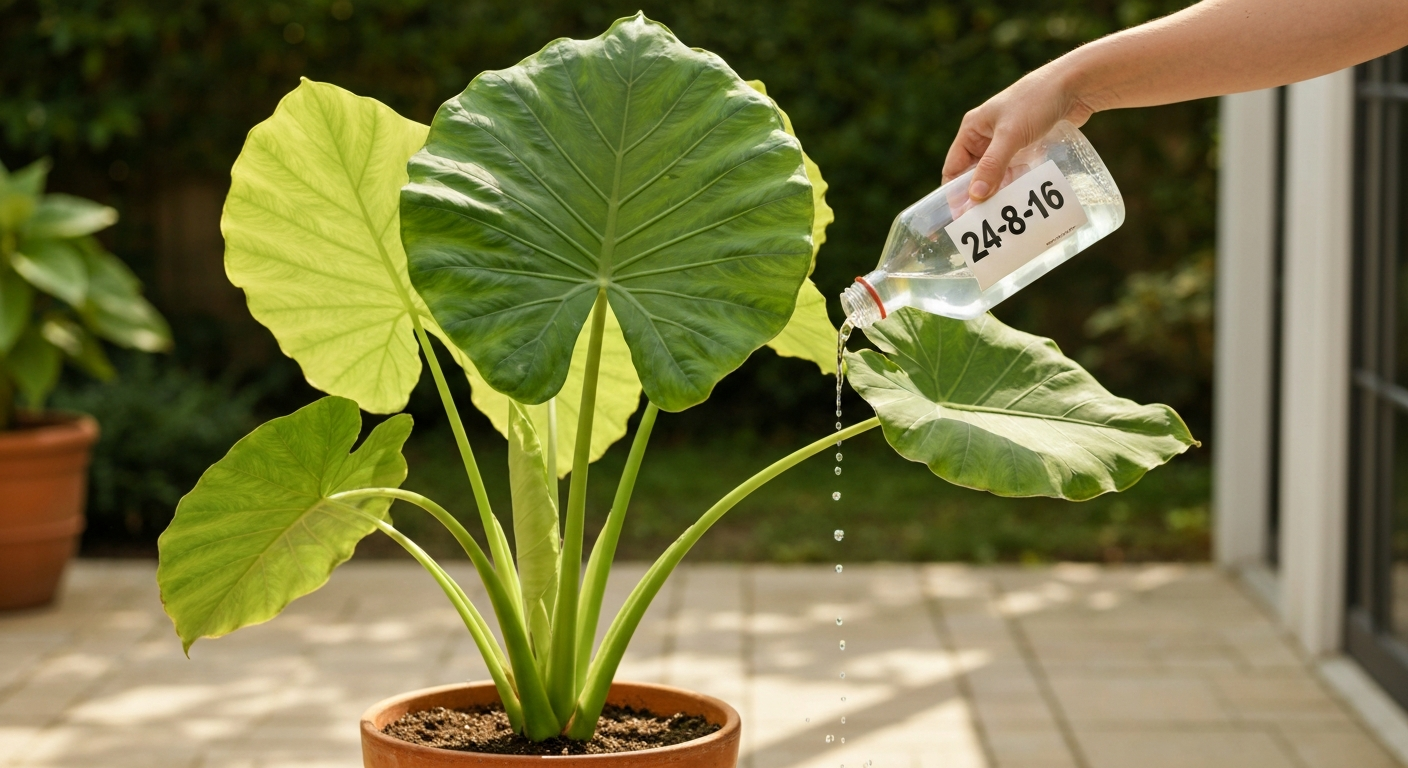
Yes, Miracle-Gro is good for elephant ears, and I use it regularly on my own plants. The water-soluble 24-8-16 formula works especially well during the fast-growth months of late spring and summer, when these plants are pushing out new leaves almost weekly and genuinely need the nitrogen boost. That said, Miracle-Gro is not a one-size-fits-all solution here. The right formulation, the right dose, and the right timing matter a lot, because elephant ears are sensitive to salt buildup in the root zone, and overfertilizing can set them back faster than underfertilizing. Used correctly, Miracle-Gro gives these plants exactly the frequent, nitrogen-forward feeding they crave.
Is Miracle Grow Good for Elephant Ears? Complete Guide

Marcus Weir
27 Jul 2026
Elephant ear basics: Colocasia, Alocasia, and Xanthosoma
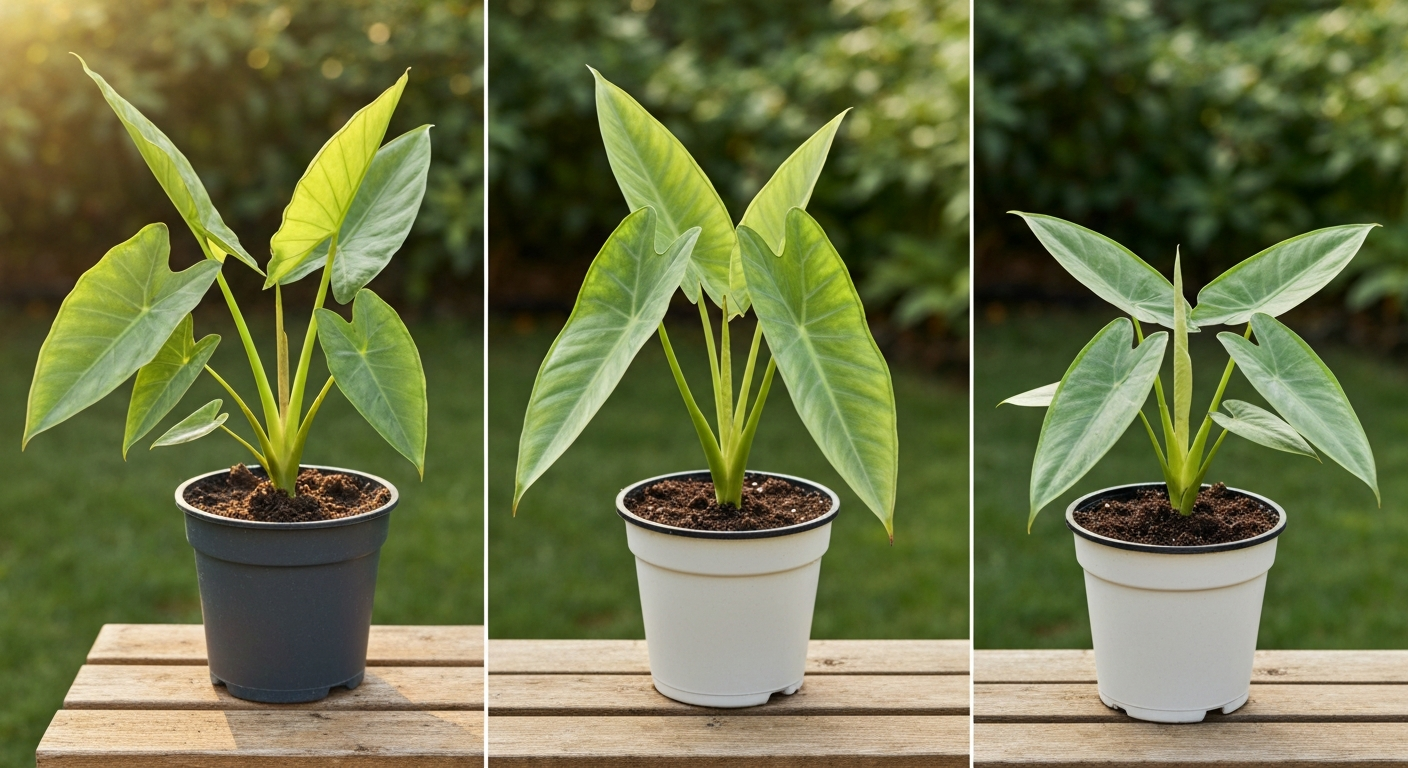
The common name 'elephant ear' covers three distinct genera in the Araceae family: Colocasia, Alocasia, and Xanthosoma. For a concise overview of what type of plant an elephant ear is and how to grow one in a garden, see the related guide titled “What type of plant is elephant ear, Grow a Garden” (ee53bd66-79d7-451a-bde5-4dc42acd0b46) what type of plant is elephant ear grow a garden. They look similar at a glance, but their growth habits differ in ways that affect how you feed them. Colocasia (taro) is the most widely grown and the most forgiving. It spreads aggressively through corms and stolons, tolerates wet feet or even standing water, and puts on the fastest leaf mass of the three. Alocasia stays more compact, holds its leaves upright (the leaf tip points up, not down like Colocasia), and is more sensitive to cold and to fertilizer salt. Xanthosoma is somewhere in between, with arrowhead-shaped leaves and a preference for consistently moist, rich soil.
All three are tropical plants from warm, humid regions, and they behave like it. They want temperatures above 60°F (15°C) to stay actively growing; below 50°F they stall, and frost kills the foliage outright (though Colocasia corms often survive underground in USDA zones 7-8). In terms of light, they do best in bright indirect light or morning sun with afternoon shade. Full summer sun works in cooler climates, but in hot southern gardens, afternoon shade prevents leaf scorch and keeps them pushing new growth faster. In my experience, a plant sitting in too much shade will produce fewer, smaller leaves no matter how well you fertilize it.
What elephant ears actually need to eat
Elephant ears are classified as heavy feeders by university extension programs, including UF/IFAS and the University of Wisconsin, and that classification is earned. They are producing enormous leaves, sometimes 3 feet across on a mature Colocasia, and that leaf tissue requires a steady supply of nitrogen above everything else. Nitrogen drives leaf size and color. Phosphorus supports root and corm development, which matters most at planting and in the weeks after dormancy breaks. Potassium helps with overall cell health and stress resistance, which is particularly useful during heat or drought.
For macronutrients, you want a fertilizer that leans nitrogen-heavy, with a lower middle number (phosphorus) and moderate potassium. A ratio like 3-1-2 or close to it suits elephant ears well during active growth. Micronutrients matter too, especially iron (Fe), manganese (Mn), and magnesium (Mg). Iron deficiency shows up as yellowing between the leaf veins while the veins stay green (interveinal chlorosis), and it is common in alkaline soils or when root zone EC is too high and blocks uptake. If your elephant ear leaves are pale or yellowing despite regular feeding, the problem is often pH or salt buildup rather than a lack of fertilizer.
| Nutrient | Role in elephant ear growth | Deficiency symptom |
|---|---|---|
| Nitrogen (N) | Leaf size, deep green color, overall growth rate | Pale, small leaves; slow new growth |
| Phosphorus (P) | Root and corm development, energy transfer | Purple tint on leaf undersides, weak roots |
| Potassium (K) | Cell strength, heat and stress tolerance | Brown leaf edges, limp stems |
| Iron (Fe) | Chlorophyll production | Interveinal chlorosis on new leaves |
| Magnesium (Mg) | Central atom in chlorophyll molecules | Yellowing between veins on older leaves |
| Manganese (Mn) | Enzyme activation, photosynthesis support | Pale new leaves, slow growth |
Is Miracle-Gro actually a good fit for elephant ears?
Miracle-Gro Water Soluble All-Purpose Plant Food (24-8-16) aligns well with what elephant ears need during their growing season. The high nitrogen content drives the leaf production these plants are known for, and the product is widely available, affordable, and easy to apply through a hose-end feeder or watering can. For container plants especially, liquid feeding every 7-14 days (as the label directs) matches the extension recommendation for biweekly liquid nitrogen applications on heavy-feeding ornamentals in pots. For a concise answer to the common question "Can I use Miracle-Gro on elephant ears?", see the dedicated guidance here. The University of Wisconsin Extension recommends feeding heavy‑feeding ornamentals like elephant ears every one to two weeks with a liquid feed or using slow‑release/continuous‑release products for bed plantings The University of Wisconsin Extension recommends feeding heavy‑feeding ornamentals like elephant ears every one to two weeks with a liquid feed or using slow‑release/continuous‑release products for bed plantings..
The downsides are real though, and worth understanding. Miracle-Gro water-soluble formulas are salt-based, meaning repeated applications raise the electrical conductivity (EC) of your soil or container mix over time. Research on Alocasia specifically shows that growth declines when substrate EC climbs too high, and container plants accumulate soluble salts faster than in-ground beds because there is nowhere for salts to go except down through drainage. I have seen Alocasia leaves develop brown, crispy margins not from drought but from fertilizer salt buildup in the pot, and it is a frustrating mistake to make twice. The fix is straightforward (flushing the pot with clean water), but preventing it requires sticking to label rates and not over-applying.
- Pro: 24-8-16 ratio delivers the nitrogen-forward nutrition elephant ears need during active growth
- Pro: Water-soluble formula gives you precise control over dose and frequency
- Pro: Fast-acting, so you see results (new leaf unfurling, richer color) within 1-2 weeks
- Pro: Widely available and inexpensive relative to specialty fertilizers
- Con: Salt-based chemistry raises substrate EC over time, especially in containers
- Con: Must be applied on a schedule; skipping or doubling up causes problems
- Con: Does not address micronutrient deficiencies like iron or magnesium on its own
- Con: Indoor formulas (1-1-1) are too weak for elephant ears in active growth
The verdict: Miracle-Gro is appropriate for elephant ears when used at label rates, on a consistent schedule, and combined with periodic flushing of container soil. It is less ideal for gardeners who want a set-it-and-forget-it approach, or for Alocasia grown in small pots where salt sensitivity is highest.
Which Miracle-Gro formulation works best
Not all Miracle-Gro products are created equal for elephant ears, and picking the right one for your setup makes a real difference. Here is how the main options compare.
| Formulation | NPK | Release type | Best use case | Notes |
|---|---|---|---|---|
| Water Soluble All-Purpose | 24-8-16 | Immediate | Containers and in-ground during active growth | Most effective option; apply every 7-14 days at label rate |
| Shake 'N Feed All-Purpose (granular) | 12-4-8 | Continuous, up to 3 months | In-ground beds and large containers | Lower N, but steady release reduces salt spikes |
| Indoor Plant Food (liquid) | ~1-1-1 | Immediate | Weak houseplant maintenance | Too dilute for actively growing elephant ears |
| Performance Organics (granular) | 9-2-7 or similar | Slow-release organic | Gardeners avoiding synthetic salts | Gentler on Alocasia; combine with compost |
For most gardeners, the water-soluble 24-8-16 formula is the top choice for elephant ears in pots and the best option when you want to drive big leaf production fast. The Shake 'N Feed granular at 12-4-8 is my preferred pick for garden beds because it feeds steadily for about three months without the need for weekly mixing and application. The indoor liquid formula at roughly 1-1-1 is simply too weak for these heavy feeders and is not recommended unless the plant is dormant and you are just doing a minimal maintenance feed. Avoid applying garden-strength water-soluble Miracle-Gro to very small Alocasia in tight nursery pots without flushing first, as the root zone salts can accumulate quickly.
How to apply water-soluble Miracle-Gro: mixing, strength, and frequency
The standard label rate for Miracle-Gro Water Soluble All-Purpose (24-8-16) for outdoor plants is 1 tablespoon per 1 gallon of water. For indoor or houseplant use, the label drops to 1/2 teaspoon per gallon, but elephant ears grown as houseplants are still heavy feeders and I typically use the outdoor rate at half strength (about 1/2 tablespoon per gallon) to split the difference. Apply the solution by watering the root zone directly, not the leaves. Foliar feeding with macronutrient solutions is not efficient for plants with high nitrogen demand; the leaf surface simply cannot absorb enough N to meet the plant's needs, though foliar spray is useful as a quick fix for micronutrient deficiencies like iron.
- Fill a clean watering can or hose-end feeder reservoir with the correct amount of water
- Add 1 tablespoon of Miracle-Gro water-soluble granules per gallon for outdoor plants (or 1/2 tablespoon per gallon for indoor elephant ears in active growth)
- Stir or shake until fully dissolved; the solution should be clear with no undissolved granules
- Water the root zone thoroughly, soaking the soil or container mix until water drains freely from the bottom
- Repeat every 7 days during peak summer growth; every 14 days in spring or if growth has slowed
- Once every 4-6 weeks, skip the fertilizer solution and water with plain water only, using enough volume to flush the container (approximately twice the pot volume) to prevent salt accumulation
- Stop feeding entirely once nighttime temperatures drop below 55°F and the plant begins to slow down
One thing I cannot stress enough: always water the plant with plain water the day before applying the liquid fertilizer if the soil is dry. Applying concentrated fertilizer to a dry root zone is a reliable way to cause tip burn on elephant ears. Moist soil dilutes the incoming salts and moves them into the root zone more evenly.
How to apply Shake 'N Feed granular and controlled-release prills
Granular and controlled-release options are lower-maintenance than liquid feeding and are particularly good for in-ground elephant ears or very large container specimens where mixing and applying liquid every week becomes tedious. Miracle-Gro Shake 'N Feed All-Purpose at 12-4-8 is the most accessible option in this category.
- For in-ground beds: scatter granules around the base of the plant, keeping them at least 3 inches away from the main stem to avoid contact burn
- Use the label rate as your ceiling, not your starting point: for most products this is roughly 1 tablespoon per square foot of garden bed for established plants
- Rake granules lightly into the top inch of soil and water in thoroughly immediately after application
- For containers: mix the recommended amount into the top 1-2 inches of the container mix rather than just scattering on the surface, which allows even distribution as water moves through the pot
- A single application feeds for up to 3 months per the Shake 'N Feed label; do not re-apply before that window unless growth is visibly stalled and you have confirmed the issue is nutrition rather than light, water, or temperature
- For controlled-release prills (like Osmocote or similar): work them into the potting mix at the time of potting, then top-dress again at the start of the next season
The advantage of granular controlled-release products for elephant ears is that they deliver a slow, steady stream of nutrients without the sharp EC spikes that come from frequent liquid feeding. This is particularly valuable for Alocasia, which research shows is more sensitive to elevated substrate EC than Colocasia. Greenhouse trials on Colocasia esculenta found cultivar‑dependent salt tolerance, with biomass and photosynthesis declining markedly above about 100 mM NaCl (Effects of Salinity on the Growth and Nutrition of Taro, Plants, 2021) Greenhouse trials on Colocasia esculenta found cultivar‑dependent salt tolerance, with biomass and photosynthesis declining markedly above about 100 mM NaCl.. If your Alocasia has been struggling despite regular liquid feeding, switching to a controlled-release granular at a conservative rate is worth trying.
Seasonal feeding schedule: pots vs. garden beds
Elephant ears follow a clear seasonal rhythm, and your fertilizer schedule should follow it too. Feeding a dormant or just-emerging plant at summer intensity is wasteful at best and damaging at worst. Here is how I run my schedule through the year, broken out by whether the plants are in containers or in the ground.
Container elephant ears
- Early spring (soil temps 55-60°F, first shoots visible): Begin with a single, half-strength application of water-soluble Miracle-Gro (1/2 tablespoon per gallon) to gently wake the root system. Do not feed again for 2 weeks.
- Mid-spring through early summer (temps consistently above 65°F, new leaves emerging every 1-2 weeks): Increase to full outdoor rate (1 tablespoon per gallon) every 7-10 days. This is peak feeding season.
- Peak summer (hottest weeks, plant in full active growth): Maintain every 7 days with full-strength water-soluble feed. Flush the pot with plain water every 4-6 weeks to clear salt buildup.
- Late summer (growth beginning to slow, nights cooling below 60°F): Reduce to every 14 days at half strength.
- Fall (nights below 55°F consistently): Stop all fertilizer. Continue watering as needed until the plant goes dormant.
- Winter (plant dormant or overwintering indoors): No fertilizer. Minimal watering only.
In-ground garden beds
- At planting or spring emergence: Work a granular balanced fertilizer or Shake 'N Feed into the top 2 inches of soil around each plant. This sets up the slow-release foundation for the season.
- 4-6 weeks after emergence (plant actively leafing out): Begin supplemental liquid Miracle-Gro applications every 14 days if growth seems slow, or rely on the granular feed if plants are thriving.
- Mid-summer: Assess growth. If the plant is producing large, deep green leaves, the granular feed is sufficient. If leaves are pale or small, add a liquid feeding every 7-10 days through peak summer.
- Re-apply granular Shake 'N Feed once every 3 months per label instructions, or top-dress around mid-season if the initial application has run its course.
- Early fall: Stop supplemental liquid feeding. Let the remaining granular nutrients carry the plant toward dormancy.
- Before mulching for winter: Do not fertilize. Let the plant draw down naturally.
Salt buildup: how to spot it and fix it
Fertilizer salt buildup is the most common Miracle-Gro-related problem I see on elephant ears, and it can be mistaken for underwatering or disease. The classic symptoms are brown, crispy leaf margins (especially on the tips), wilting even when the soil is moist, and a white or pale crusty deposit on the rim or surface of the container. In severe cases, the roots look brown and mushy, which is the point where the plant needs to be unpotted and repotted into fresh mix.
The fix at early stages is simple: stop fertilizing for 2-3 weeks and flush the container thoroughly. Washington State University Extension recommends flushing with a volume of water equal to about twice the pot volume, letting it drain completely. Do this outdoors or in a sink, and do not let the plant sit in the drained water. After flushing, wait a full week before resuming fertilizer, and when you do, start at half the normal rate for the first two applications. In-ground plants rarely develop this problem because salts move downward and sideways through surrounding soil, but in clay-heavy beds with poor drainage, it can happen after repeated liquid applications.
When Miracle-Gro is not enough: other reasons elephant ears fail to grow
If your elephant ear is not responding to Miracle-Gro, fertilizer is probably not the real problem. If you're asking why won't my elephant ear plant grow, see our troubleshooting guide for common non-nutritional causes and fixes. Nutrition is rarely the limiting factor when elephant ears stall; more often it comes down to one of a handful of other issues. I have run into most of these in my own garden and containers at some point.
- Temperature too low: Below 60°F, elephant ears simply stop growing regardless of what you feed them. A pot sitting on a cold concrete floor in early spring will stall even if the air temperature is mild.
- Insufficient light: A plant in deep shade will not use the fertilizer you are giving it. Move it to a brighter spot before increasing feed.
- Tuber or corm damage: Rot in the corm from overwatering or cold storage is the number-one reason newly planted elephant ears fail to emerge or stall after a few leaves. Dig it up and check; a firm, white interior is healthy, brown mush is not.
- Overwatering and root rot: Waterlogged soil prevents oxygen from reaching the roots, which effectively shuts down nutrient uptake even when the soil is full of fertilizer.
- Underwatering: These are tropical, thirsty plants. Consistent dryness causes leaf edges to brown and new growth to be small regardless of nutrition.
- Pests: Spider mites, aphids, and mealybugs can slow or stop growth on Alocasia in particular. Check the leaf undersides if the plant looks off despite good care.
- Soil pH too high: Alkaline soil locks up iron and manganese, causing the interveinal yellowing that looks like nitrogen deficiency but does not respond to more fertilizer.
Organic alternatives worth considering
If you prefer to avoid synthetic salt-based fertilizers, there are effective organic alternatives that work well for elephant ears and carry less risk of EC buildup. Compost is the backbone of any organic approach: working 2-3 inches of finished compost into the soil at planting, or top-dressing containers with an inch of compost in spring, provides a slow release of nitrogen and improves moisture retention. Liquid seaweed or kelp extract is excellent as a supplement, delivering trace minerals and plant growth hormones that encourage root development and leaf size; apply it every 2-3 weeks during active growth. Fish emulsion (typically around 5-1-1) is another strong organic nitrogen source for heavy feeders; it smells unpleasant but elephant ears respond to it well. If you are using organic feeds in containers, an organic slow-release granular like feather meal or blood meal blended into the potting mix at the start of the season reduces the frequency of liquid applications needed.
Mulch, runoff, and a few practical notes
If you are growing elephant ears in a garden bed, mulch is your ally for moisture retention and weed suppression, but it does affect how you fertilize. Granular fertilizers applied over thick mulch may not reach the soil surface before they begin to break down or get displaced. Pull mulch back slightly before applying granules, or use liquid fertilizer that can penetrate straight through to the root zone. A 2-3 inch mulch layer is ideal for elephant ears; too thick and it can impede the large corms from pushing through in spring.
On the topic of environmental responsibility: avoid applying any fertilizer, including Miracle-Gro, immediately before heavy rain is forecast. Both the EPA and state extension services emphasize that applying fertilizer before a rain event sends nutrients directly into stormwater runoff rather than into the plant. With water-soluble products especially, timing your application for a dry period followed by light watering under your own control gives the plant the full benefit of the feed and keeps excess nitrogen out of waterways. Using controlled-release granular products reduces runoff risk compared to liquid applications because nutrients are released slowly over weeks rather than being immediately soluble.
Quick troubleshooting reference
| Symptom | Most likely cause | Fix |
|---|---|---|
| Brown, crispy leaf edges | Fertilizer salt buildup or underwatering | Flush container with 2x pot volume of water; check soil moisture |
| Pale yellow leaves overall | Nitrogen deficiency or overwatering blocking uptake | Apply half-strength liquid Miracle-Gro; check drainage |
| Yellowing between veins on new leaves | Iron or manganese deficiency, often pH-related | Check soil pH (target 5.5-6.5); apply chelated iron foliar spray |
| No new growth despite warm weather | Cold root zone, rotten corm, or poor light | Check corm health; move to brighter, warmer spot |
| Limp leaves despite moist soil | Root rot or salt buildup | Reduce watering; flush container; repot if roots are mushy |
| Small leaves compared to last season | Insufficient nitrogen or light reduction | Increase feeding frequency; assess light levels |
| White crust on pot rim or soil surface | Salt accumulation from fertilizer | Flush immediately; pause fertilizer for 2-3 weeks |
FAQ
Is Miracle‑Gro good for elephant ears (Colocasia, Alocasia, Xanthosoma)?
Yes — used appropriately, Miracle‑Gro products can work well for elephant ears because these aroids are “heavy feeders” during active growth. Choose a formulation and application schedule that matches container vs. in‑ground use and avoid overapplication. Frequent, dilute water‑soluble feeding or an appropriately rated slow‑release granular can both supply the high nitrogen demand for large leaf production; however, because these plants can be sensitive to high soluble salts, monitor for salt buildup and flush or reduce rates if symptoms appear.
Which Miracle‑Gro formulations are best for elephant ears?
Good options: 1) Miracle‑Gro Water‑Soluble All‑Purpose (high N, e.g., 24‑8‑16) — use as a regular diluted liquid feed during the growing season for quick uptake and bigger leaves. 2) Miracle‑Gro Shake ’N Feed All‑Purpose (12‑4‑8 continuous‑release) — use in landscape beds or large containers where steady release for ~3 months is preferred. 3) Lower‑strength indoor liquid formulas (≈1‑1‑1) are appropriate only for small houseplant specimens. For containers, many extension advisors prefer regular diluted liquid feeding or a controlled‑release product applied at label rates to avoid spikes in soluble salts.
Exact application methods and dosages for containers (pots) using Miracle‑Gro water‑soluble fertilizer
Use the manufacturer’s dilution but err on the weaker side for heavy foliage plants: mix at the labeled outdoor rate (for Miracle‑Gro All‑Purpose), then consider reducing to 2/3 to 1/2 strength if you see any sensitivity. Typical label guidance: feed every 7–14 days. Practical routine: 1) Water the pot first so the root zone is moist. 2) Apply the diluted feed as the next watering, thoroughly wetting the medium until some drainage occurs. 3) For continuous use in the season, feed every 7–14 days; if salt accumulation shows (white crust, leaf tip browning), flush the pot with 2× pot volume of water, skip the next feed, and resume at lower strength.
Exact application methods and dosages for garden beds using Miracle‑Gro Shake ’N Feed (granular)
Follow label rate for beds; typical recommendation is to broadcast and lightly work the product into the top 1–2 inches of soil and water it in. Use the labeled per‑area rate (often given as cups/ft² or lb/1000 ft²) and do not exceed it. For heavy feeders like elephant ears: apply at the start of spring growth and again at midseason if using a 90‑ to 120‑day product, or use the product’s single recommended application for the season. Avoid applying granular fertilizer right before heavy rain to reduce runoff risk.
Seasonal schedule for pots and garden beds
Containers: during active growth (spring–summer) feed with diluted water‑soluble fertilizer every 7–14 days OR apply a controlled‑release granular at label rate at potting time and supplement with a weak liquid feed midseason if needed. In ground beds: apply a slow‑release granular (e.g., Shake ’N Feed) in spring when new growth starts and again every 8–12 weeks only if the product label calls for repeat applications. Reduce or stop feeding in late fall as plants go dormant in cooler climates.
How to adjust feeding by species and climate
Colocasia, Alocasia and Xanthosoma all respond to high nitrogen for leaf growth, but sensitivity to salts and temperature differs. In hot, fast‑drying climates or small pots, use lower strength but more frequent liquid feeds. In cooler or slower‑growing periods, cut back frequency. If growing cultivars known to be salt‑sensitive or if you measure rising substrate EC, reduce concentration or switch to slow‑release to avoid salt stress.
Next Article
Why Won't My Elephant Ear Plant Grow? Troubleshoot & Fix
Troubleshoot why your elephant ear plant won't grow: step-by-step checks, fixes, timing, and when to repot or replace.