
Praying mantises are uncommon in most gardens, but not truly rare in the way a four-leaf clover is rare. The honest answer is this: in a typical garden with decent plant cover, no heavy pesticide use, and a warm-to-temperate climate, you have a reasonable chance of hosting mantises, but a low chance of actually seeing one on any given day. They show up at very low densities even when they're present, and the adults you'd most easily recognize are only visible for a narrow window in late summer and early fall. The rest of the year, they exist as eggs or tiny nymphs that most gardeners walk right past.
How Rare Is a Praying Mantis in a Garden? Real Chances

Marcus Weir
20 Apr 2026
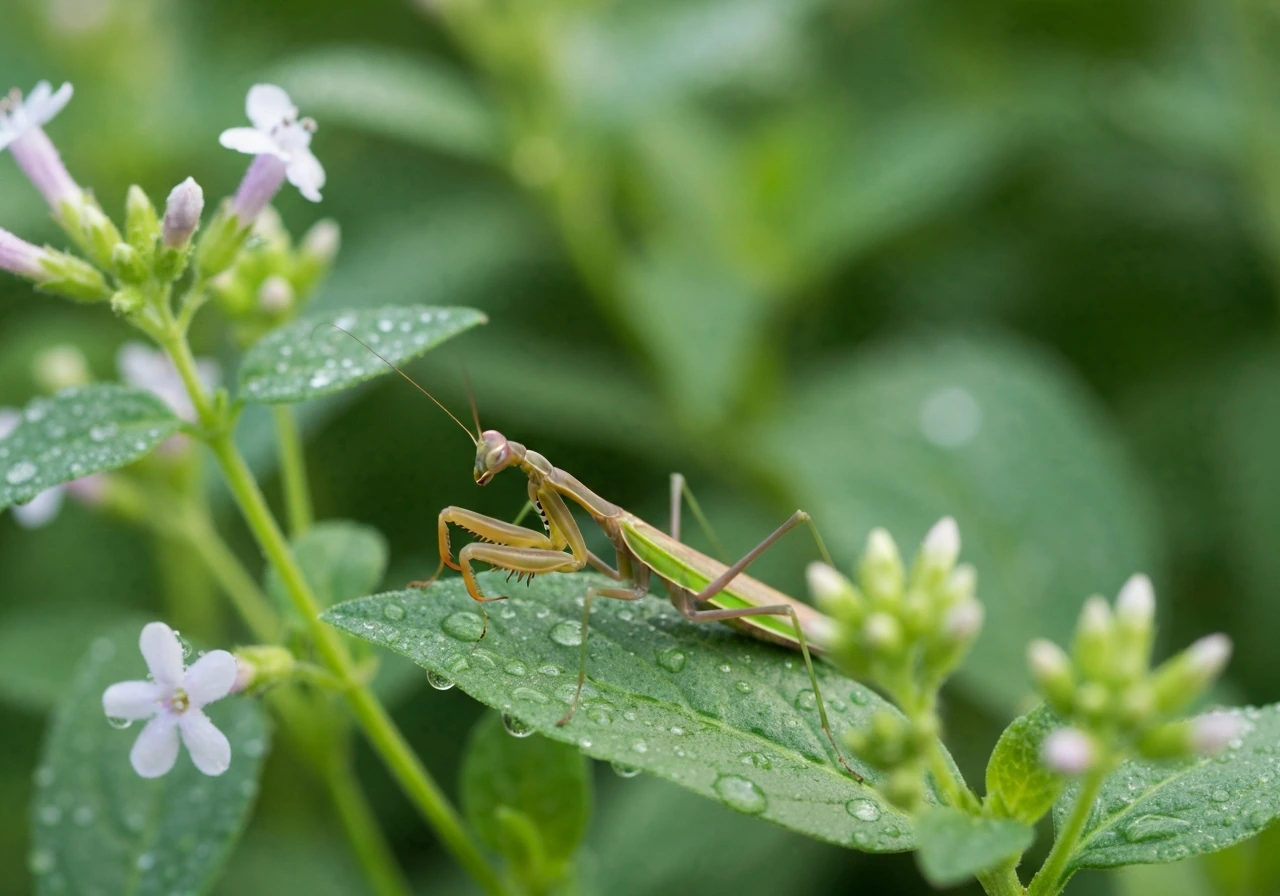
What 'rare' actually means for mantises in a garden
When gardeners ask how rare a praying mantis is, they're usually asking one of three different questions: How likely am I to spot one? How likely is it that they're living in my garden without me knowing? And how likely am I to find an egg case (called an ootheca) or nymphs? The answers to all three are different.
The Carolina mantid (Stagmomantis carolina), one of the most widespread native species in North America, is described by NC State Extension as a 'fairly common predator of insects in landscapes.' But field research tells a more nuanced story: even when Carolina mantids are present in an area, they occur at very low densities, measured by both adult sightings and ootheca counts per area of habitat. So 'fairly common' means they're not endangered or exotic, not that you'll find one every time you go outside. Think of them less like robins and more like box turtles: present in suitable habitat, but easily missed.
For practical purposes, a mantis in your garden is rare as a daily sighting, occasional as a seasonal find, and moderately likely as a sign (egg case or nymph) if your habitat is decent and you know what to look for.
When you're most likely to actually see one
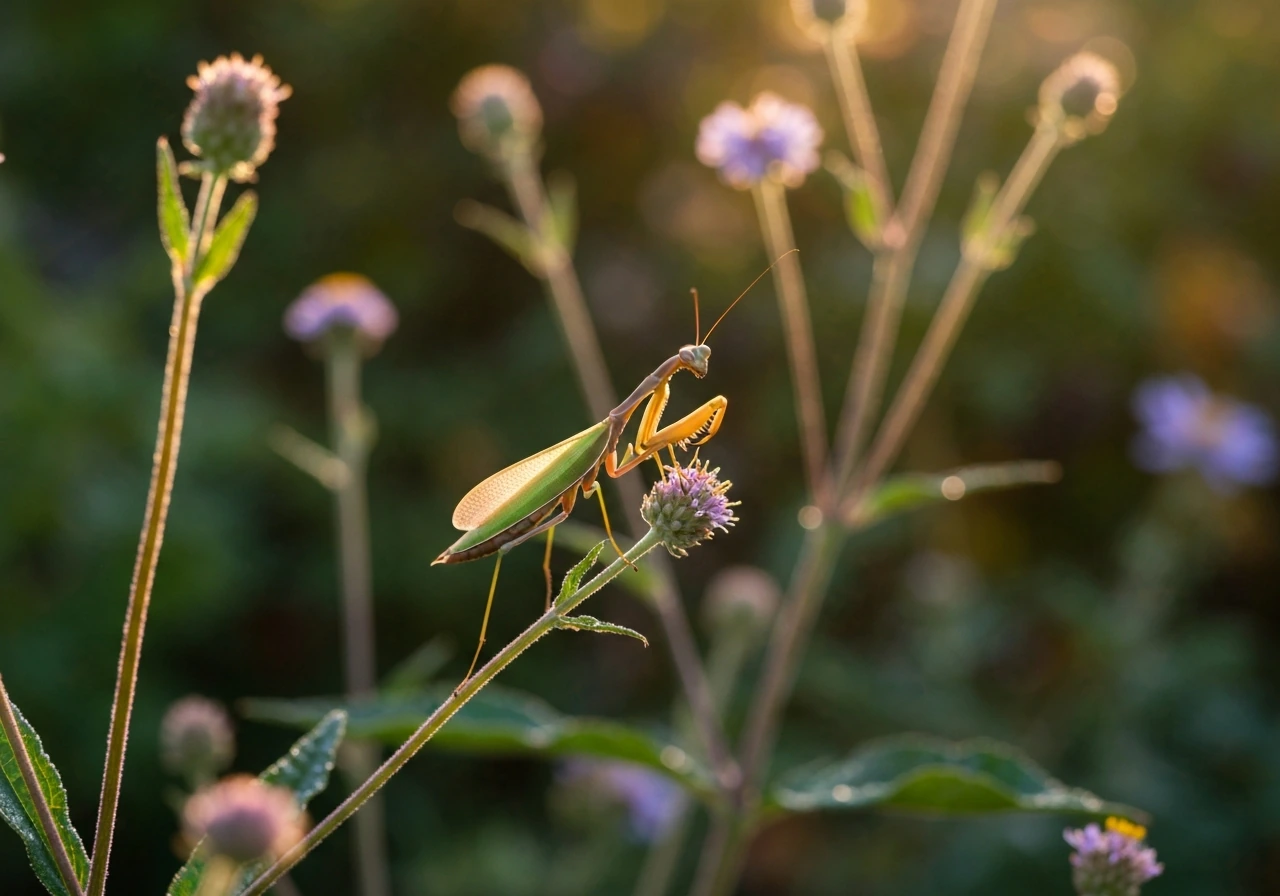
Timing matters more than almost anything else. Mantises overwinter as eggs inside a foam-like egg case attached to plant stems or woody debris. Those eggs hatch in spring once temperatures reliably hit around 70°F, releasing dozens of tiny nymphs that are maybe a centimeter long and nearly impossible to spot. They spend the whole spring and early summer growing through a series of molts, staying camouflaged in vegetation the entire time.
Adults don't fully mature until late summer, typically August through October in most of the United States. That's your best window. A warm August afternoon, with tall grasses or flowering plants nearby, is when you're most likely to come face to face with a full-grown mantis. After that, adults die off with the first frosts, the females having laid their egg cases to carry the population through winter.
| Time of Year | What's Happening | Odds of Spotting |
|---|---|---|
| Winter (Nov–Feb) | Dormant as eggs inside ootheca | Very low (only egg cases visible) |
| Early spring (Mar–Apr) | Nymphs hatching if temps reach ~70°F | Low (nymphs are tiny and cryptic) |
| Late spring to mid-summer (May–Jul) | Nymphs growing, staying hidden in foliage | Low to moderate |
| Late summer to fall (Aug–Oct) | Adults active, hunting, mating, laying eggs | Best window for sightings |
| After first frost | Adults die, eggs overwinter | Very low again |
Why mantises are genuinely uncommon in many gardens
Even in places where mantises should theoretically thrive, several factors push them toward the rare end of the spectrum.
Climate and geography
Mantises need warm temperatures to complete their life cycle. In northern states or at higher elevations, the growing season may be too short for nymphs to reach adulthood. In arid or very cold regions, native mantid populations are sparse or absent entirely. If you're gardening in a cold climate like Minnesota or high-altitude Colorado, seeing a mantis is genuinely rare regardless of what you do.
Habitat structure
Mantises need vertical structure: tall grasses, shrubs, flowering perennials, and woody stems where they can ambush prey and attach egg cases. A lawn-heavy garden with a few annual flower beds doesn't offer much. Tidy gardens where old stems are cut back in fall also eliminate overwintering habitat, since egg cases attached to those stems get removed and discarded.
Prey availability

Mantises eat other insects, including aphids, flies, moths, grasshoppers, and even bees. A garden with low insect diversity doesn't support a stable mantis population. Ironically, a garden that's been aggressively managed for pests is often less hospitable to mantises because it's removed their food supply.
Pesticide use
This is the single biggest driver of mantis absence in suburban gardens. Broad-spectrum insecticides, including many common lawn and garden sprays, kill mantises directly and wipe out the prey insects they depend on. If you or your neighbors spray regularly, mantis populations collapse quickly.
Signs you have mantises even when you can't find one
The adult mantis you'd recognize is only around for a few months of the year. The rest of the time, you need to look for indirect signs.
Egg cases (ootheca)
After adults lay eggs in late summer and early fall, the ootheca (the foamy, papier-mache-looking egg case) stays attached to plant stems, shrubs, or fence posts all winter. This is actually the best time to find evidence, because the leaves are gone and the cases are more visible. They're roughly the size of a large marble to a small walnut, tan or brown in color, with a distinctive ridged texture. NC State Extension and Colorado State University both document the ootheca as the primary season-proof evidence of mantis presence. If you find one in January, you have mantises, full stop.
Nymphs in spring
Once temperatures hit around 70°F in spring, dozens of tiny nymphs emerge from each egg case. They look like miniature adults, maybe 1 cm long, and scatter immediately into surrounding vegetation. You can find them by moving slowly through tall grass or low shrubs on a warm spring morning and looking carefully at leaf surfaces and stem junctions. Most gardeners miss them entirely, but they're there.
- Ootheca on woody stems, fence rails, or garden stakes (best spotted in late fall through early spring)
- Tiny nymphs on leaf surfaces in late April through June, especially in unmowed areas
- Partially eaten insect remains, particularly grasshoppers or large flies, left near plant stems
- A mantis 'freeze pose' when you disturb tall grass in late summer (they go rigid when alarmed)
How to increase your odds of hosting mantises

You can meaningfully improve your chances without a lot of effort. The key is shifting from a manicured garden toward one that gives mantises something to work with.
- Let some stems stand over winter. Hollow or woody stems from perennials, grasses, and shrubs are where females lay egg cases. Cutting everything back in fall removes a generation of mantises before they hatch.
- Plant tall, structural plants. Native grasses (like little bluestem or switchgrass), rudbeckia, goldenrod, and fennel provide the vertical structure mantises use for hunting and shelter.
- Tolerate some pest insects. A small aphid population or a few caterpillars isn't a crisis, it's a food source. Mantises need prey to stay in your garden.
- Stop or reduce broad-spectrum insecticide use. Even a single spray event can clear out local mantis populations and their food supply for weeks.
- Scout in late summer. Set aside 20 minutes on a warm August evening to slowly walk through tall vegetation near the edges of your garden. Adults are most visible then.
- Scout for egg cases in late fall and winter. Walk fence lines, look at woody shrub stems, and check plant stakes. Knowing you have cases means you know spring nymphs are coming.
If you want to introduce mantises, you can buy ootheca from garden suppliers. One case typically holds 50 to 200 eggs. Place it in a sheltered spot (attached to a stem at least 30 cm off the ground) in late winter so it's in position when spring temperatures warm up. Keep in mind that introduced Chinese mantids (Tenodera sinensis), which are the species most commonly sold, are larger than native species and will eat anything, including native beneficial insects.
University of Georgia Extension notes that mantids are comparatively large insects and provides guidance on mantids and ootheca visuals for identifying them in the landscape pests and beneficial insects context introduced Chinese mantids (Tenodera sinensis).
If you're gardening with ecology in mind, supporting native mantid populations through habitat is a better long-term approach.
What not to do if you want mantises around
A few common gardening habits actively push mantises out, and they're worth naming directly.
- Don't use broad-spectrum insecticides, including pyrethroids, organophosphates, and most 'general insect killer' sprays. These kill mantises on contact and eliminate their prey base.
- Don't cut back all stems and stalks in fall cleanup. It feels tidy, but you're removing overwintering egg cases.
- Don't mow every edge and margin of your property. Unmowed borders and meadow patches are prime mantis habitat.
- Don't relocate egg cases to indoor spaces, even unheated garages. The warmth causes premature hatching with nowhere for the nymphs to go.
- Don't expect to introduce mantises and then maintain a perfectly pest-free garden. They need living insects to survive.
Check your garden for mantises today: a quick action list
Since today is mid-April, you're in the right window to start looking for nymphs if temperatures in your area have been hitting 70°F consistently. Here's what to actually do right now.
- Walk your garden perimeter and check any remaining woody stems, plant stakes, or fence rails for egg cases. Look for tan, foam-textured oval masses roughly the size of a large grape.
- If you find an egg case and it has a split or opening along the ridged edge, it has already hatched. That's good news: nymphs are somewhere in nearby vegetation.
- Crouch down and slowly scan leaf surfaces and stem junctions in any tall grass or perennial beds. Look for tiny green or brown insects with triangular heads.
- Check your spray cabinet. Identify any broad-spectrum insecticides and commit to not using them in areas where you want mantises to establish.
- Note which sections of your garden have the most structural vegetation (tall grasses, dense perennials, shrubs). These are your most likely mantis zones. Focus your monitoring there.
- If you're in a warm climate and haven't seen any signs yet, set a reminder to scout again in August when adults are easiest to find.
Mantises share habitat needs with a lot of other beneficial wildlife. If you've been reading about other animals that show up in gardens, like the capybara or scarlet macaw in game-style garden setups, the same principle applies: presence depends heavily on whether the environment supports them. The same goes for the scarlet macaw: its rarity in a “grow a garden” style setup depends on whether your climate and habitat can actually support it.
Orangutans are far rarer in home gardens than mantises, since they only live in parts of Southeast Asia’s rainforests. In a garden ecosystem, capybaras are usually extremely uncommon unless you live in the right climate and have a suitable setup that can support them. For mantises in a real outdoor garden, the environment you create matters more than luck. Give them structure, prey, and no pesticides, and your odds shift from rare to occasional quite quickly.
Elephant ears are a specific plant with their own growing preferences, so how rare they seem in “grow a garden” depends on local conditions and what varieties are available how rare is elephant ears in grow a garden.
Elephant ears are a specific plant with their own growing preferences, so how rare they seem in “grow a garden” depends on local conditions and what varieties are available how rare is elephant ears in grow a garden, and the same idea applies when you wonder how rare the ostrich is in a “grow a garden” setup how rare is the ostrich in grow a garden.
FAQ
If I saw a mantis once, does that mean a population is established in my garden?
Not necessarily. One sighting can come from a mantis passing through or hunting temporarily. A stronger sign of establishment is finding an egg case on nearby stems or seeing multiple nymphs across different spots over a few warm mornings in spring.
What’s the difference between spotting a mantis and knowing whether it’s breeding in my garden?
You can spot adults only during a short late-summer to early-fall window, and at low density. Breeding evidence comes from ootheca in winter (or multiple nymphs emerging in spring). If you never find ootheca, adults may be visitors rather than residents.
Are ootheca safe to leave in place, or should I relocate them?
Best to leave them where they are. Moving an ootheca can damage it or place it in a spot that dries out or falls to the ground, reducing hatch success. If it must be relocated, reattach it to a stable vertical stem in a sheltered area at least about 30 cm off the ground.
Do mantises survive if my garden is neat and I remove old stems in fall?
Tidy fall cleanup is one reason mantises stay rare. Egg cases attach to stems and woody debris, so cutting everything back before winter can remove the overwintering structure. A practical compromise is leaving some seed heads and a few sturdy stems or offering a small brushy corner.
How can I check whether insecticides are the real reason mantises are missing?
Look for a mismatch between habitat and sightings. If you have tall plants and flowering perennials but never see nymphs in spring or ootheca in winter, frequent broad-spectrum sprays (or neighborhood-wide treatments) are likely reducing both mantises and their prey. Switching to lower-impact pest control and spot-treating can help.
Will lighting at night affect mantises or make them harder to spot?
Yes, indirectly. Bright outdoor lights attract many insects, which can bring mantises near, but they can also change the prey mix and make mantises behave less like ambush predators in the daytime. If you want natural behavior for observation, reduce unnecessary night lighting or check at dusk and then again on sunny mornings.
Can I attract mantises if my garden has lots of flowers but no tall vegetation?
Flowers help with insect diversity, but mantises also need vertical structure to ambush and to attach egg cases. Add a few tall perennials, unmanaged patches, or some standing stems, and avoid trimming everything flush during fall.
Is it better to buy an ootheca than to rely on native mantids?
It can work, but it’s not always the best long-term strategy. Store-bought ootheca are often from the larger Chinese mantis, which can eat beneficial insects as well as pests. If your goal is ecological balance, improving native habitat and reducing pesticide exposure usually supports native mantids more sustainably.
If I find an ootheca in winter, what should I do in early spring?
Avoid disturbing the attachment point when plants start to grow. In early spring, focus on observation rather than weeding around it aggressively, since nymphs emerge once temperatures climb to around 70°F and scatter into nearby vegetation.
Why don’t I see mantis nymphs even when temperatures reach around 70°F?
Two common reasons are timing and height of search. Nymphs emerge only briefly around warm spells and they stay on leaf surfaces and stem junctions in tall, camouflaging vegetation, often within the first few hours after warming. Try warm spring mornings, move slowly through low shrubs or grasses, and check multiple micro-sites rather than just the most obvious plants.
Next Article
How Rare Is Elephant Ears in Grow a Garden Today?
How rare are elephant ears in Grow a Garden today? Find availability tips, season timing, and substitutions if scarce.