The best plants every witch should grow are rosemary, lavender, garden sage, chamomile, calendula, basil, mint, and garlic. These eight cover the full range of a working witch garden: culinary herbs you'll actually use in the kitchen, medicinal folk-use plants with real documented history, and ornamentals tied to protective, cleansing, and luck-drawing traditions. Every single one is beginner-friendly, widely available as garden starts, and productive enough to harvest within the same growing season you plant them.
Plants Every Witch Should Grow: Starter Guide to Cultivate

Marcus Weir
7 Jul 2026
What a witch garden actually is (and why it matters for growing)
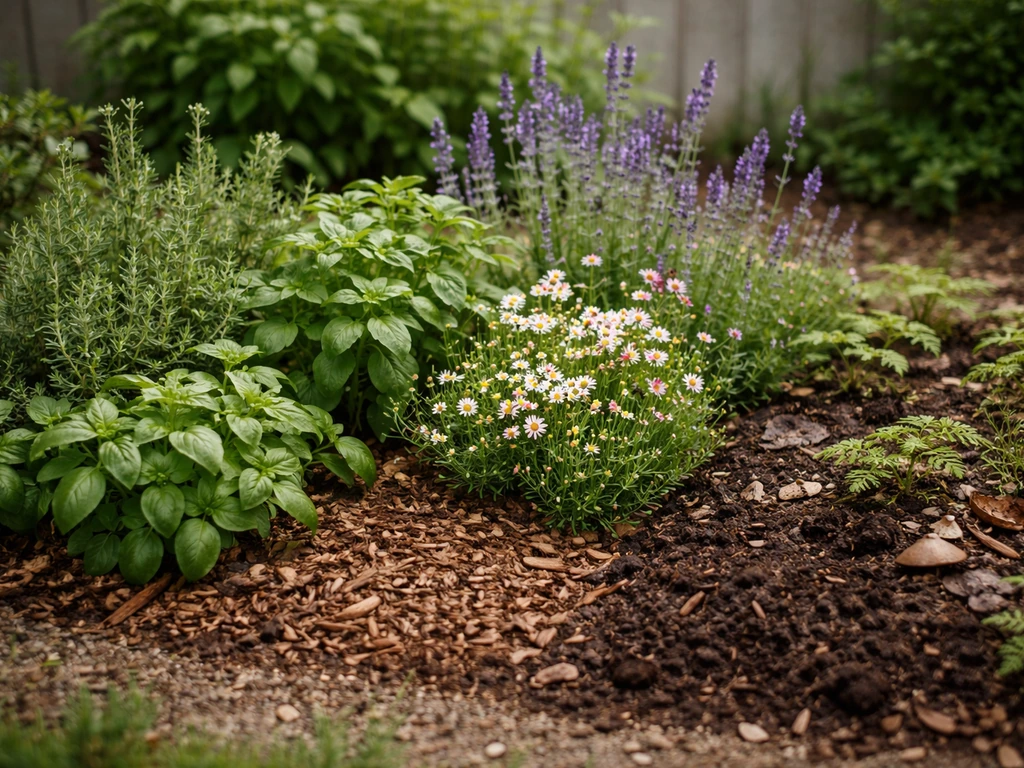
A witch garden isn't one fixed thing. In practice it blends three overlapping garden types: a kitchen/culinary herb garden, a medicinal and folk-use herb garden, and an ornamental planting built around plants associated with witchcraft themes like protection, cleansing, love, and luck. The overlap between those three categories is huge, which is why plants like rosemary and lavender show up in all of them. Understanding this helps you make real growing decisions because each type pulls in slightly different directions. A kitchen herb garden prioritizes harvest frequency and proximity to your back door. A medicinal garden prioritizes drying and storage space. An ornamental witch garden leans into height, texture, fragrance, and bloom timing. A well-designed witch garden does all three at once, and the plant list in this guide is chosen specifically because every plant earns its spot in at least two of those categories.
The core beginner starter list
These eight plants are your foundation. They're available at almost any nursery or home improvement garden center from spring through early summer, they tolerate beginner mistakes, and they're versatile enough to grow indoors or out depending on your setup.
| Plant | Garden Role | Indoor or Outdoor | USDA Zone (perennial outdoors) | Ease for Beginners |
|---|---|---|---|---|
| Rosemary | Culinary, protective, cleansing | Both | Zones 7–10 (container indoors colder zones) | Easy from a potted start |
| Lavender (English) | Ornamental, cleansing, love | Outdoor preferred | Zones 5–10 | Easy from a garden start |
| Garden Sage | Culinary, cleansing, protective | Both | Zones 4–8 | Easy from start or seed |
| Chamomile (German) | Medicinal, luck, calming | Outdoor/indoor windowsill | Annual (self-seeds freely) | Very easy from seed |
| Calendula | Ornamental, healing, protective | Outdoor/cool window | Annual (cool-season) | Very easy from seed |
| Basil | Culinary, love, prosperity | Both | Annual (frost-tender) | Easy from start or seed |
| Mint | Culinary, protective, cleansing | Container (keep contained) | Zones 3–8 | Extremely easy |
| Garlic | Culinary, protective | Outdoor | Zones 3–9 | Easy from cloves in fall |
One honest note on sourcing: for rosemary especially, buy a potted plant rather than starting from seed. It germinates slowly and unevenly, and a $4 nursery start gets you a full season ahead. Lavender is the same story. For chamomile, calendula, and basil, direct seeding is fast and cheap. For garlic, always buy seed garlic from a reputable garden supplier rather than grocery store bulbs, which are often treated and may carry disease.
Setting up your growing space so these plants actually thrive
Soil first, everything else second
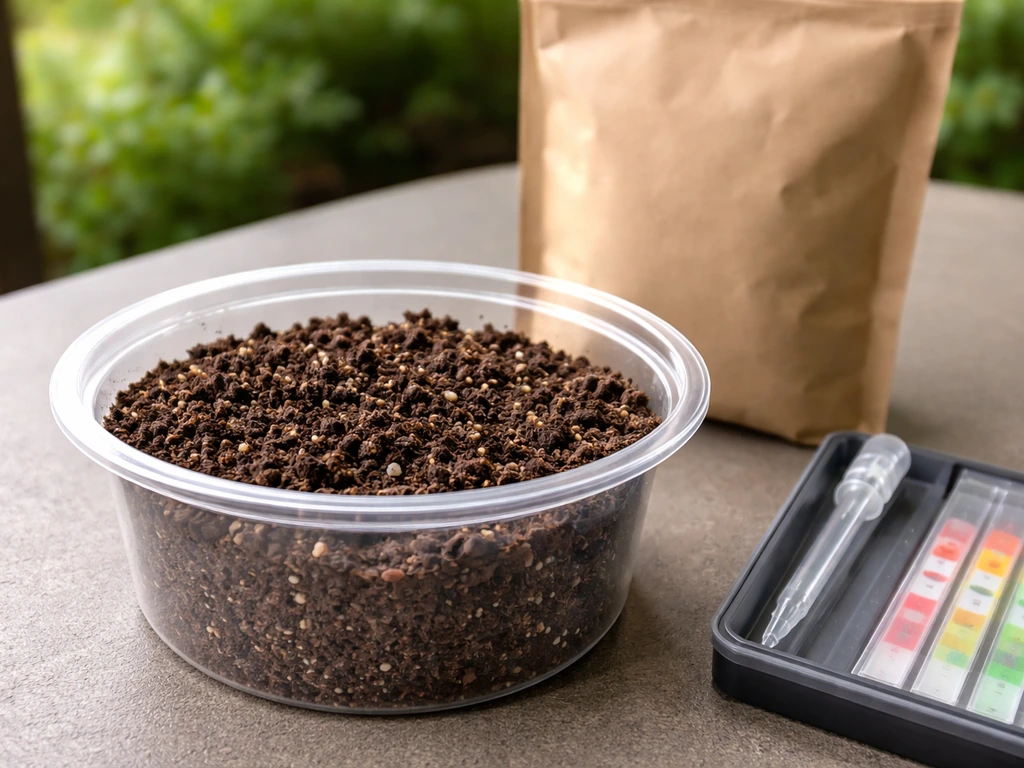
Before you plant anything, get a soil test if you're going in-ground. Your local Cooperative Extension office offers them inexpensively, and the result tells you pH and nutrient levels so you can correct problems before they show up as yellow leaves or stunted growth. Most witch garden plants want a soil pH between 6.0 and 7.0. Lavender is slightly more tolerant, doing fine up to about 7.5. Rosemary wants 6.5 to 7.0. Garlic performs best at 6.0 to 7.0. The common thread across all of them is well-drained soil. These are mostly Mediterranean-origin plants that hate sitting in soggy ground. If your native soil is heavy clay, work in compost and consider raised beds or containers.
Light requirements
Almost everything on this list wants full sun, meaning at least 6 hours of direct sunlight daily. Rosemary, lavender, basil, calendula, and garlic are all full-sun plants. Rosemary, lavender, basil, calendula, and garlic are all full-sun plants calendula full sun. Sage and chamomile will tolerate a bit of afternoon shade, especially in hot climates. Mint is the most shade-tolerant of the group and can get by with 4 to 5 hours. Indoors, a south-facing window is your best shot. If natural light is limited, a simple grow light (6 to 8 hours per day on a timer) handles the gap for basil, mint, and chamomile especially well.
Containers vs. in-ground
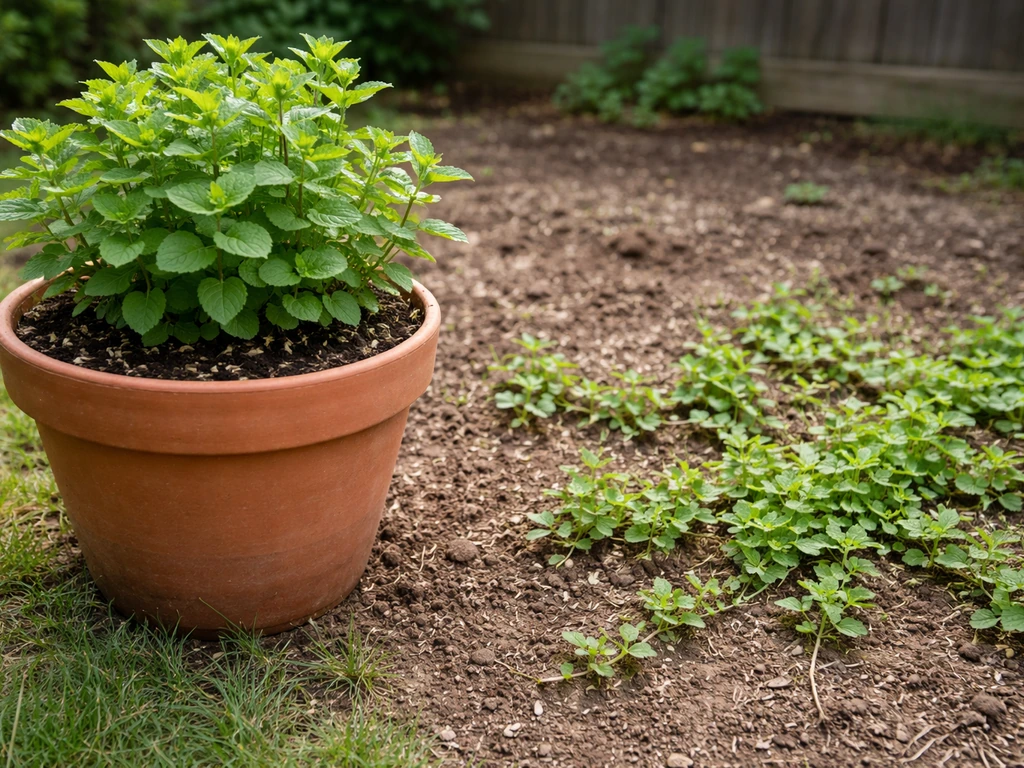
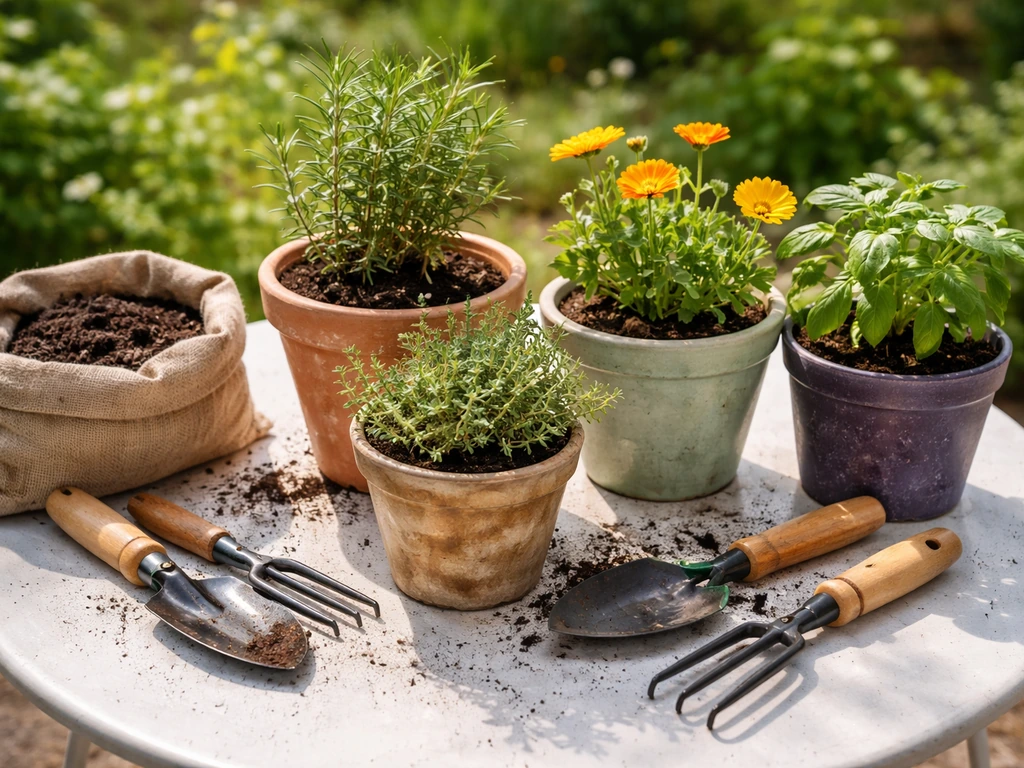
Mint must be grown in a container. It spreads aggressively via underground runners and will crowd out everything else in a bed within two seasons. Use at least a 12-inch pot. For rosemary, lavender, and sage in cold climates (zones below 7 for rosemary, below 5 for lavender), containers let you bring them inside before first frost and overwinter them near a sunny window. Every container must have drainage holes. No exceptions. Without drainage, even drought-tolerant plants like rosemary will develop root rot within weeks. For watering in containers, basil, mint, parsley, and chamomile like consistently moist roots. Rosemary, lavender, and sage prefer to dry out between waterings. Grouping plants by their moisture needs in the same container makes life much easier.
Planning your layout
When placing plants, work from tallest to shortest from north to south so shorter plants don't get shaded out. Rosemary and sage can reach 2 to 4 feet. If you are wondering where to grow large plants like the ones in a Hogwarts-inspired garden, focus on plenty of full sun, airflow, and space for roots where to grow large plants hogwarts. Lavender typically hits 18 to 24 inches and needs that same spacing between plants for good air circulation. Calendula grows upright to about 12 to 18 inches. Chamomile and basil stay in the 12 to 18-inch range. Mint sprawls low. Garlic fits neatly in rows 3 to 6 inches apart. Sketching a simple diagram before you dig saves a lot of rearranging later.
How to grow each category: herbs, roots, flowers, and fungi-friendly habitats
Kitchen and protective herbs (rosemary, sage, basil, mint)
Rosemary and sage are drought-tolerant once established. Water them deeply once a week during their first growing season, then back off. Both prefer well-drained soil and full sun. In zones 7 and warmer, rosemary stays outdoors year-round. In colder zones, pot it up before the first hard frost. Sage is hardier (zones 4 to 8) and comes back each spring if mulched. Basil is the most heat-sensitive in a useful way: it loves warm soil (above 60°F) and bolts (goes to flower and turns bitter) when it gets too cold or stressed. Pinch flower buds off as soon as they appear to keep leaves productive. Plant basil outdoors only after your last frost date. Mint is the low-maintenance overachiever of the group. If you want to add morning glory too, check when to grow morning glory in your area so it gets the right warm-season timing. Water it regularly, keep it in a container, and it essentially takes care of itself.
Roots and rhizomes (garlic)
Garlic is a fall-planted crop in most climates. Break a bulb into individual cloves and plant them pointy-side up, 1 to 2 inches deep, spacing 3 to 6 inches apart in rows. In most of the US, mid- to late-October is ideal, though timing shifts earlier in colder northern zones and later in milder southern zones. Garlic's roots are shallow, so consistent moisture matters more than most people expect. Aim for about 1 inch of water per week during the growing season. Mulch the bed after planting to moderate soil temperature and retain moisture through winter. Harvest the following June or July when about half the lower leaves have turned brown.
Flowers (calendula and chamomile)
Calendula is a cool-season flower that performs best in spring and fall, fading in midsummer heat before bouncing back when temperatures drop. Direct sow seeds outdoors after the last frost, or even 2 to 4 weeks before it in mild climates because it tolerates light frosts. If you want to grow candy blossom (a Calendula-type) from seed, direct sow outdoors after your last frost, or a few weeks earlier in mild climates Direct sow seeds outdoors after the last frost. It prefers fertile, well-drained soil with a pH around 6 to 7 and full sun to part shade. In midsummer it wants about 1 to 1.5 inches of water per week to stay productive. Deadhead spent blooms regularly to keep it flowering. German chamomile is even easier. Direct sow on the soil surface in early spring (don't cover the seeds, they need light to germinate), thin to about 6 inches apart, and let it do its thing. It self-seeds prolifically, meaning once you have it established you may never need to buy seeds again.
Creating a fungi-friendly corner
Fungi aren't plants, but a witch garden that ignores the soil biology underneath is missing a big piece of the picture. You don't need to actively cultivate mushrooms to build a fungi-friendly habitat. The basics are: add organic matter (compost, wood chip mulch, leaf litter) to build soil structure, minimize tilling which disrupts fungal networks, and plant a mix of perennials and annuals to give mycorrhizal fungi a stable root network to work with. If you want to go further, a shaded corner with hardwood logs inoculated with oyster or wine cap mushroom spawn creates a low-maintenance productive patch that genuinely bridges the plant and fungi worlds. Keep it moist and out of direct afternoon sun.
Harvesting, drying, and storing your plants
When to harvest
Timing your harvest correctly makes a bigger difference in quality than almost anything else. For leafy herbs like sage, rosemary, basil, and mint, harvest in the morning after dew has dried but before the heat of the day. Essential oil content peaks just before the plant flowers. For chamomile, harvest individual flowers when the petals are fully open and horizontal, not yet drooping back. For calendula, pick fully open blooms every few days to keep the plant producing. For garlic, wait until about half the foliage has died back, then cure the bulbs in a dry, well-ventilated spot for 3 to 4 weeks before storage.
How to dry and store
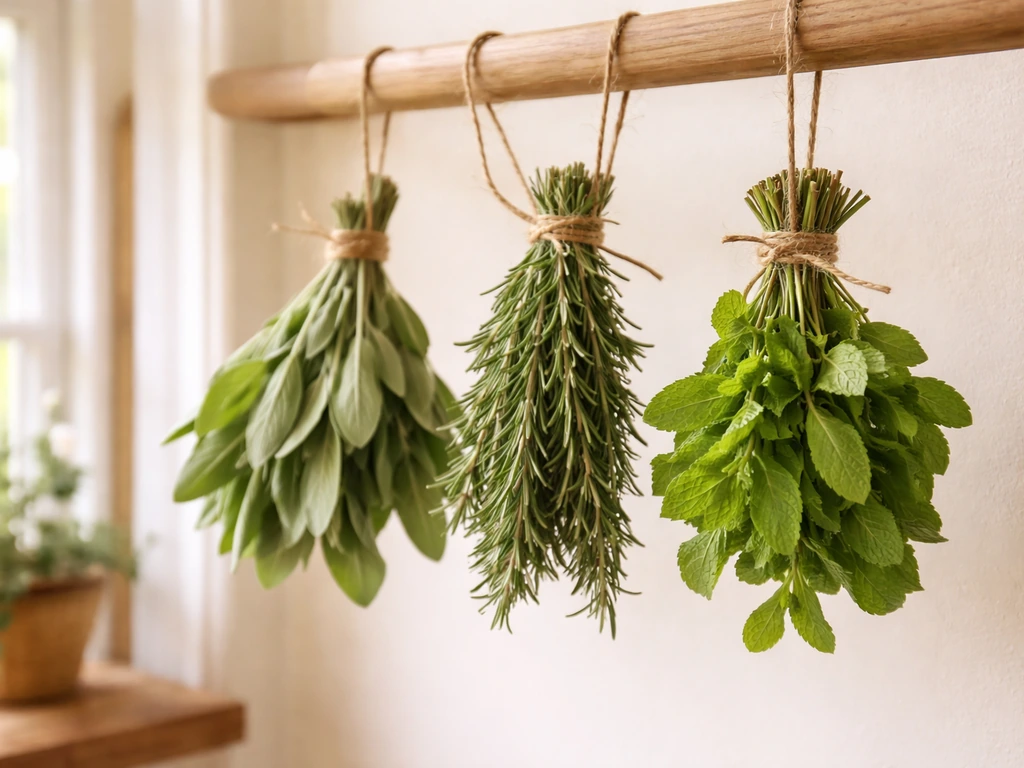
Air drying is the simplest method and works well for most of these plants. Bundle stems loosely (smaller bundles dry more evenly) and hang them upside down in a warm, dry, well-ventilated spot out of direct sunlight. Direct sun bleaches color and degrades volatile compounds. Most herbs are dry enough in 1 to 2 weeks when the leaves crumble easily between your fingers. Calendula and chamomile flowers dry well on a mesh screen laid flat. Once dry, strip leaves from stems and store in airtight glass jars away from heat and light. Properly dried and stored herbs stay potent for 1 to 2 years, though most lose noticeable fragrance and flavor after the first year. Label everything with the plant name and harvest date. You will forget which unlabeled jar is sage and which is oregano.
Safety notes you shouldn't skip
A few practical cautions that matter. Mint, while culinary for humans, is potentially toxic to cats and dogs. The ASPCA lists it as a pet-safety concern, so keep dried mint stored out of reach if you have animals. Chamomile has a low but real potential for interactions with certain medications, particularly blood thinners. If you're using it medicinally rather than just as tea, check with a healthcare provider first. Calendula is generally well-tolerated topically and internally but can cause reactions in people with ragweed or daisy family allergies (it's in the same Asteraceae family). When in doubt about any plant's safety for a specific use, consult the NCCIH (National Center for Complementary and Integrative Health) herb database or a qualified herbalist.
Seasonal growing calendar
Here's how the witch garden moves through the year in a temperate climate (adjust forward by 4 to 6 weeks for warmer zones like the deep South or Pacific Coast, backward 2 to 4 weeks for northern zones).
| Season / Month Range | What to Do |
|---|---|
| Late Winter (Feb–Mar) | Start chamomile, calendula, and basil seeds indoors under lights. Order seed garlic for next fall. Plan bed layout and get a soil test. |
| Spring (Apr–May) | Direct sow chamomile and calendula outdoors after last frost. Transplant basil starts once soil is reliably above 60°F. Buy and plant rosemary, lavender, sage, and mint starts. Begin regular watering schedules. |
| Early Summer (Jun) | Begin harvesting sage, mint, and rosemary as plants establish. Harvest chamomile flowers. Harvest garlic when foliage begins dying back. Begin curing garlic bulbs. |
| Midsummer (Jul–Aug) | Harvest basil frequently to prevent bolting. Deadhead calendula every few days. Water calendula 1–1.5 inches/week. Dry and store first harvests. |
| Fall (Sep–Oct) | Plant garlic cloves in mid- to late-October. Harvest and dry remaining herbs before first frost. Pot up rosemary and lavender for indoor overwintering in cold zones. Mulch perennial beds. |
| Winter (Nov–Jan) | Overwinter potted herbs indoors near a south-facing window. Review what worked, plan additions. Start fresh chamomile seeds late January for early spring transplanting. |
Troubleshooting common witch garden problems
Pests
- Aphids on basil and sage: blast them off with a strong stream of water, or apply insecticidal soap. Check the undersides of leaves where they cluster.
- Spider mites on indoor rosemary and lavender: caused by low humidity. Increase airflow, mist sparingly (lavender doesn't love wet foliage), and use neem oil as a first treatment.
- Mint rust (orange pustules on leaves): a fungal issue worsened by overhead watering. Water at the base, improve airflow, and remove affected leaves promptly.
- Caterpillars on calendula: hand pick, or apply Bt (Bacillus thuringiensis) spray, which targets caterpillars without harming beneficial insects.
Diseases and root problems
- Root rot in rosemary or lavender containers: almost always caused by overwatering or poor drainage. Let the soil dry significantly between waterings. If the plant is salvageable, repot into fresh, gritty, fast-draining mix.
- Damping off in seedlings (they fall over at the soil line shortly after germinating): caused by a fungal complex in overly wet, poorly ventilated conditions. Use a sterile seed-starting mix, don't overwater, and run a small fan near seedlings.
- Garlic with yellowing, stunted growth: check for onion white rot (a soilborne fungus). Don't replant alliums in the same bed for several years if confirmed.
- Leggy, pale basil or chamomile indoors: insufficient light. Move closer to a window or add 2 to 4 more hours of grow light daily.
Germination and transplant failures
- Chamomile seeds not germinating: they need light to germinate, so don't cover them with soil. Press them gently onto the surface and keep consistently moist.
- Basil transplants wilting after planting out: soil temperature was too cold, or they got hit with a cold night. Harden off transplants for 7 to 10 days before planting by gradually exposing them to outdoor conditions.
- Lavender not thriving despite good light: check drainage first, then soil pH. Lavender fails in acidic, compacted, or waterlogged soil before it fails for any other reason.
- Rosemary growing slowly indoors: it needs more light than most indoor spaces offer. A south-facing window plus a grow light supplement is often the fix.
Your next steps this week and this month
If you're reading this in summer (July 2026), here's exactly what to do right now. This week: visit a local nursery and pick up starts for rosemary, garden sage, lavender, and mint. Plant the mint immediately in its own container. Get the others in the ground or in well-draining containers with full sun exposure. Direct sow chamomile and calendula seeds if you can still get 60 to 90 frost-free days before your first fall frost. Within the next month: order seed garlic to have it ready for fall planting in October. Get a soil test if you're establishing a new in-ground bed. Begin harvesting rosemary and sage lightly once plants have had two to three weeks to settle in, taking no more than a third of the plant at a time. Set up a drying rack or hang the first small bundle to dry. That's your witch garden started. The rest comes from paying attention to what each plant tells you as the season moves.
One last thing worth knowing: if you're curious about expanding beyond these eight plants, morning glory is a classically witchy ornamental worth exploring for its symbolism and easy annual growth habit. If you are curious about other oddball fruits for a witch garden, research whether amber spine is a prickly fruit before planting anything new is amber spine a prickly fruit in grow a garden. And if you're interested in the fungi-friendly habitat side of things, there's a lot to learn about how soil biology connects the underground and above-ground worlds of a garden like this.
FAQ
Can I grow several of these herbs in one pot or container together?
Start with one container per spreading plant. Mint must have its own pot, 12 inches wide minimum, and consider elevating the pot slightly so drainage never sits in a saucer. If you want basil and chamomile close together, pair them only if you can keep the same watering rhythm for both, since basil likes steadier moisture while chamomile prefers more intermittent drying.
Which of the witch garden plants can handle partial sun or indoor light the easiest?
Yes, but only if you design around the plants that need the most sun. In low light, mint and chamomile can survive indoors, but rosemary and lavender typically decline without strong, consistent light. Use a south-facing window only as a supplement, then run a grow light on a timer (6 to 8 hours) and watch for leggy growth, which is your cue to increase light.
What should I do if my planted garlic starts growing too early?
If garlic cloves sprout after you plant, don’t panic. A few early sprouts in mild winters can be normal, but if heavy growth appears and you’re getting regular above-freezing warmth, you may need to mulch thicker to protect growth and slow the plants down. In containers, keep soil evenly moist but never waterlogged, and ensure drainage holes are clear.
My herbs look pale or yellow. What common cause should I check first?
For most herbs in this list, the fastest “fix” for yellow leaves is usually drainage and nutrition rather than more fertilizer. Check that the soil drains freely, then confirm you’re not overwatering. If you have a soil test result, follow it, since an unnecessary nitrogen boost can make sage and rosemary flop and reduce essential oil intensity.
How do I prevent root rot in rosemary and lavender?
For rosemary and lavender, root rot is the main beginner failure. Make sure the pot has drainage holes, use a fast-draining potting mix, and water only when the top inch of soil is dry. Avoid misting as a substitute for watering, and never let containers sit in a cache pot or saucer of water.
How often should I pinch basil flowers to keep it productive?
Pinch basil only when flower buds are small and just starting to form. As soon as you see the first buds, remove them promptly to keep energy in leaves. If the plant is already stressed from cold or underwatering, pinching may slow but won’t fully stop bitterness, so warm soil and regular watering matter first.
Will calendula or chamomile take over my garden, and how can I control it?
Calendula and chamomile can self-seed, but you may not want that everywhere. If you want controlled spread, remove spent blooms before seeds fully mature, then harvest regularly during the flowering period. For a “set-and-forget” patch, leave a portion to go to seed and keep that patch in a designated area.
Do I need to mulch, and what changes for overwintering in pots versus in-ground?
In fall, mulch is not optional for garlic and it helps for rosemary in cold zones too. For garlic, apply mulch after planting to stabilize temperature and moisture through winter. For container herbs overwintering indoors, you can reduce watering, since growth slows, but keep an eye out for dry, crispy edges that suggest the root ball is drying out too much.
What’s the best way to preserve the essential-oil quality after drying herbs?
Scent strength matters most during harvest timing, but storage conditions control how long it lasts. After drying, keep jars sealed, store away from heat and direct light, and minimize temperature swings. If you notice the aroma fading quickly, the usual causes are overdrying in direct sun, not drying fully before sealing, or exposure to humidity.
Are any of these plants especially risky around pets, and how should I store them safely?
Cats and dogs are the special case, mint is the plant to be strict about. Even though many witches grow mint for tea and cooking, store dried mint like medicine (labeled, closed containers, out of reach). If you have pets that chew plants, consider placing all culinary herbs in a fenced area or using elevated containers.
Next Article
Amber Spine vs Lingonberry: Grow a Garden Guide
Compare amber spine and lingonberry for your garden: traits, hardiness, care needs, timing, and a simple planting plan.