Spruce tips start growing in spring, typically between late March and late May depending on where you live and which species you're growing. In warmer zones (USDA 6–7), you might see buds swell as early as late March. In colder northern or high-altitude zones (USDA 3–4), mid-May or even early June is normal. The trigger is soil thaw plus a sustained run of warm days, not the calendar date. If your spruce hasn't pushed new growth yet and it's late May in a cold climate, that's probably still fine. If it's June and you see nothing, it's time to investigate.
When Do Spruce Tips Grow? Timing Guide for Fresh Shoots

Marcus Weir
22 May 2026
What 'spruce tips' actually means
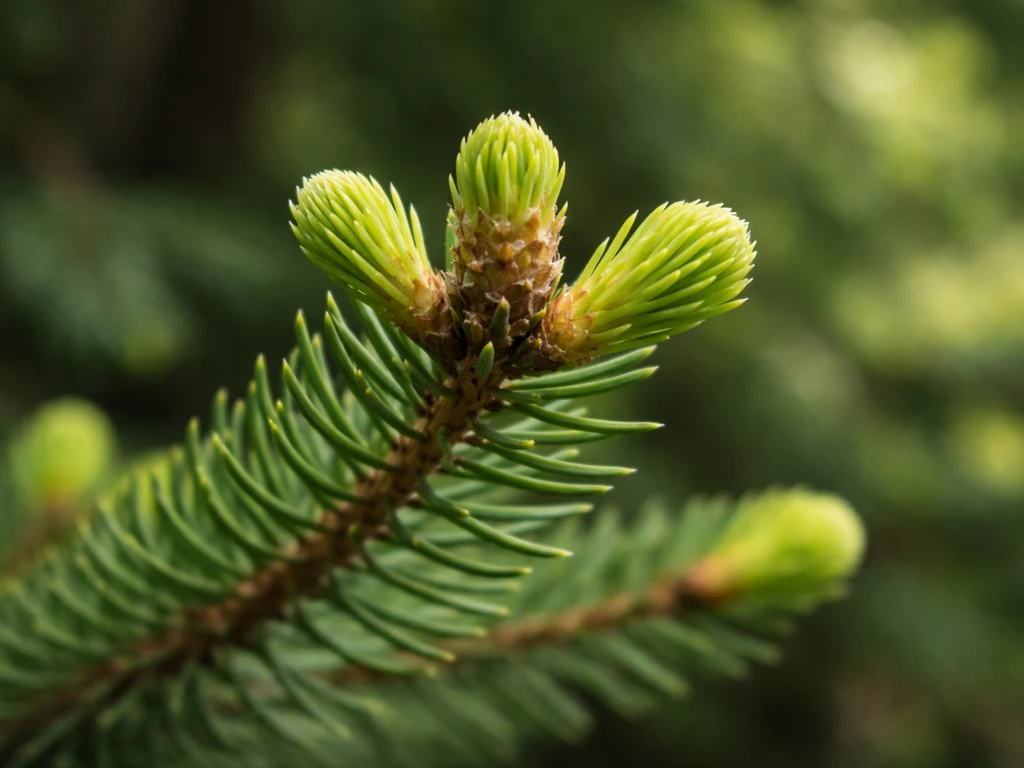
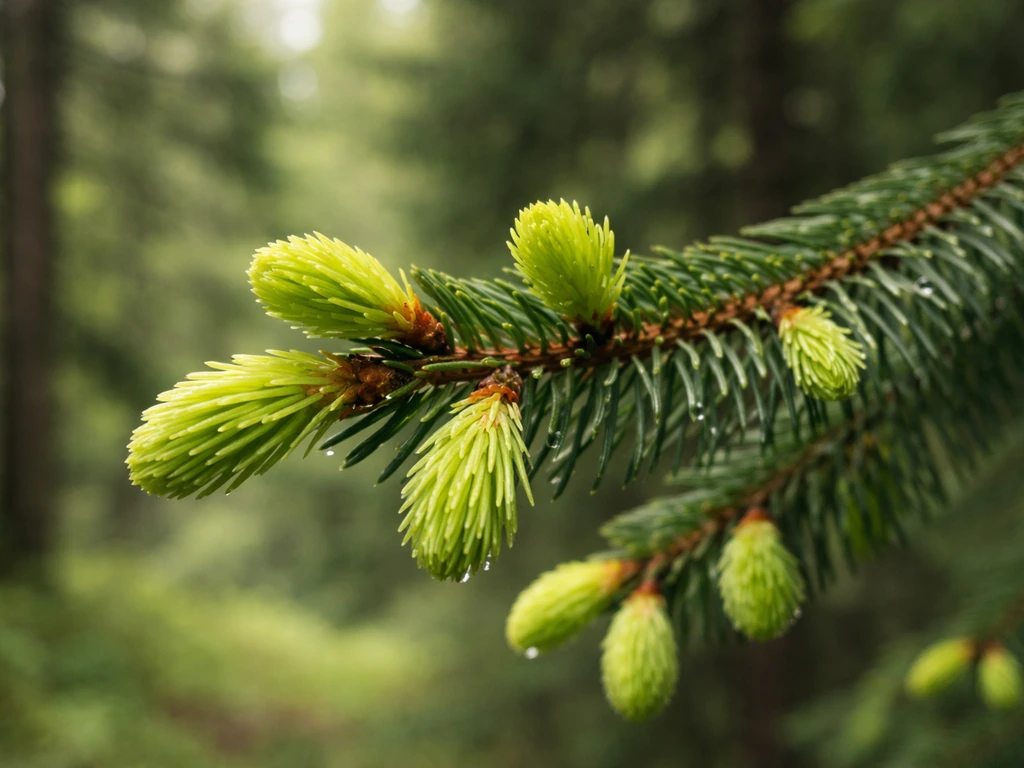
Spruce tips are the new terminal shoots that emerge from the apical buds at the end of each branch. These buds form the previous season and spend winter dormant, sealed under protective scales. In spring, those buds swell, split, and push out a cluster of fresh, lime-green needles. That soft, bright growth is what people mean when they say 'spruce tips.' It's distinct from the darker, older needles that have been on the tree for a year or more.
Here's the structural detail that matters: almost all of next spring's shoot length is already preformed inside the apical bud before winter even starts. The bud isn't creating new tissue from scratch in spring. It's releasing and extending tissue that was built during the previous growing season. That's why a stressed or drought-damaged tree in August can show noticeably shorter tips the following spring, even if conditions that spring are perfect.
You'll sometimes hear people confuse 'tips' with general new needle production or with the edible young shoots used in cooking and foraging. They're the same thing, just described from different angles. The culinary world values them for their bright, citrusy flavor right when they're first pushing out. The forestry world tracks them as bud break stages. For our purposes, a 'spruce tip' is that fresh, pale-green terminal shoot emerging in spring.
When spruce tips grow: a seasonal and climate breakdown
The short version is this: spruce tips emerge after the soil thaws, daytime temperatures hold consistently above 50°F (10°C), and day length crosses a certain threshold. In practice, that maps out like this across North American climates:
| Climate / USDA Zone | Typical Bud Break Window | Notes |
|---|---|---|
| Zone 3 (e.g., northern MN, Canada) | Mid-May to early June | Snow may still be on ground; wait for soil thaw |
| Zone 4 (e.g., northern WI, MT) | Late April to mid-May | Late springs can push this to late May |
| Zone 5 (e.g., southern WI, New England) | Early to mid-April | Variable; watch for late frosts |
| Zone 6 (e.g., mid-Atlantic, PNW) | Late March to mid-April | Warmer winters mean earlier, faster bud break |
| Zone 7 (e.g., parts of OR, WA coast) | Mid-March to early April | Some species may break earlier in sheltered spots |
| High altitude (any zone) | Add 2–4 weeks vs. valley floor | Elevation delays bud break significantly |
Spruce trees don't respond to a single warm day. They accumulate what foresters call 'heat units' or degree-days above a base temperature (usually around 41–50°F). Spruce tips often grow the most during the middle of the bud break period, when enough heat has accumulated to drive rapid elongation heat units. A week of 60°F days moves the process along faster than a single 75°F day. That's why an early warm spell in February rarely triggers bud break, but a steady run of 55–65°F days in April can push a tree from closed bud to full tip extension in under two weeks.
In a late spring like some we've seen in recent years, growth can shift two to three weeks later than average. That doesn't mean something is wrong with your tree. It means the tree is doing what it should: waiting for reliable warmth before committing its resources.
How to tell right now if your spruce is ready to grow
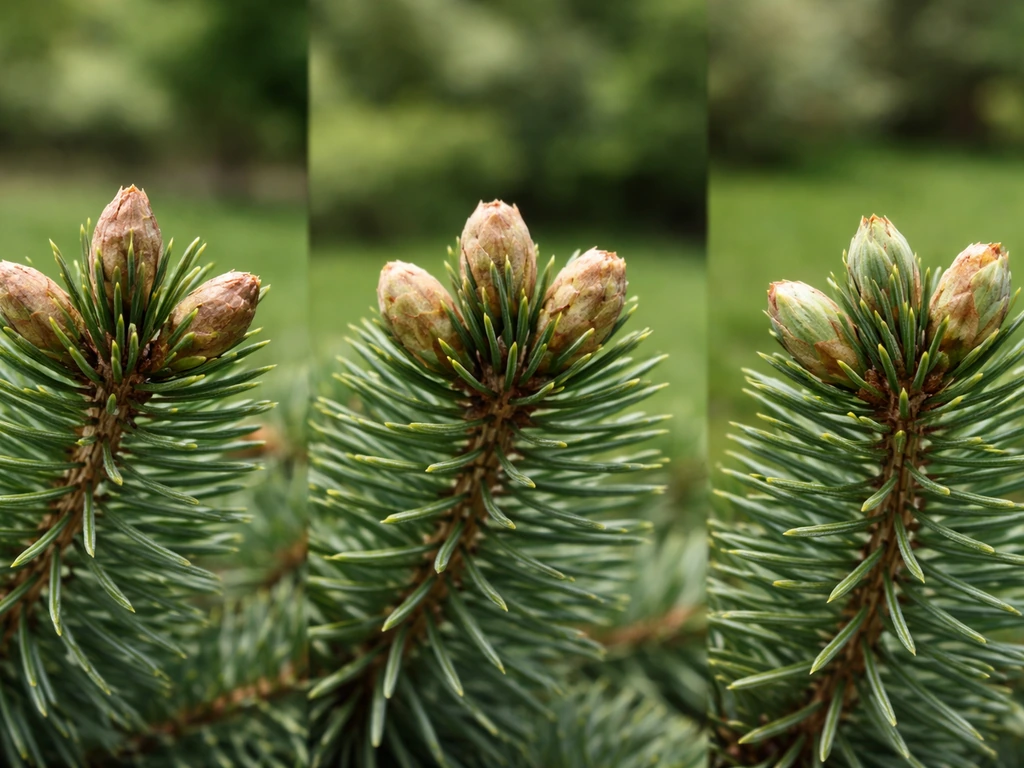
Walk out to your tree and look at the tips of the branches, especially at eye level where you can get a close look. Here's what you're looking at through the stages of bud break, using the standard visual progression researchers have documented for white spruce: A field guide for identifying white spruce apical bud break stages lays out a visual sequence from “STAGE 0 CLOSED BUD” through “STAGE 6 EXPOSED SHOOT,” with increasing needle visibility during leader and terminal growth blank" rel="noopener noreferrer">standard visual progression researchers have documented for white spruce.
- Closed bud: Tight, papery bud scales pressed flat. The bud looks dry and compact. No growth happening yet.
- Open bud: Scales begin to loosen and lift slightly. The bud feels slightly softer if you pinch it gently.
- Swollen bud: Noticeably fatter and rounder. Often takes on a slight sheen. You're getting close.
- Translucent bud: The bud looks almost waxy or glassy. You might see a faint green through the scales.
- Split bud: Scales have separated and you can see pale green tissue pushing through.
- Exposed shoot: The new growth is visible as a cluster of soft needles, initially wrapped tight, then fanning out. This is the 'tip' stage most people recognize.
For Norway spruce specifically, researchers track bud break as the moment when individual needle bundles within the new shoot become separately visible, not just the first hint of green. That distinction matters if you're foraging: harvest too early and you get a hard, resinous nub. Wait until the needles in the bundle are clearly distinct and the shoot is soft and bright green, and you're in the prime window.
If today is late May and you're in zone 4 or 5, check multiple branch tips at different heights and sun exposures. South-facing tips in full sun will almost always be a full stage ahead of tips on the shaded north side of the same tree. This is normal. If the south-facing tips are already at exposed-shoot stage but north-facing ones are still swollen buds, your tree is growing fine.
What changes the timing: species, weather, and conditions
Not all spruce trees break bud on the same date, even in the same yard. A few variables that shift the window significantly:
Species differences

Norway spruce (Picea abies) tends to be an earlier mover, often breaking bud a week or two ahead of Colorado blue spruce (Picea pungens) in similar conditions. White spruce (Picea glauca) is often later and more conservative, which makes sense given its origin in cold boreal climates. Black spruce (Picea mariana) can be among the latest, sometimes holding tight well into May in northern zones. If you're comparing trees in your neighborhood, species identity matters more than most people expect.
Temperature and heat accumulation
Consistent warmth above 50°F is the main driver. A string of nights dipping below freezing followed by warm days slows the process down. An unusually warm March can pull bud break forward by two weeks, but it also risks frost damage to the new tissue. I've seen spruce tips that pushed early in a warm March get nipped by an April frost, leaving those particular tips brown and stunted while everything that hadn't broken yet came out fine later.
Day length and light exposure
Spruce trees use photoperiod (day length) as a backstop against false springs. Even if temperatures are warm, they won't fully commit to bud break until day length hits a certain threshold, typically somewhere around 12–13 hours for most species. That's why February warm spells rarely trigger real growth. Trees planted in shadier spots also break bud slightly later because they accumulate less heat from direct solar radiation.
Soil moisture and watering
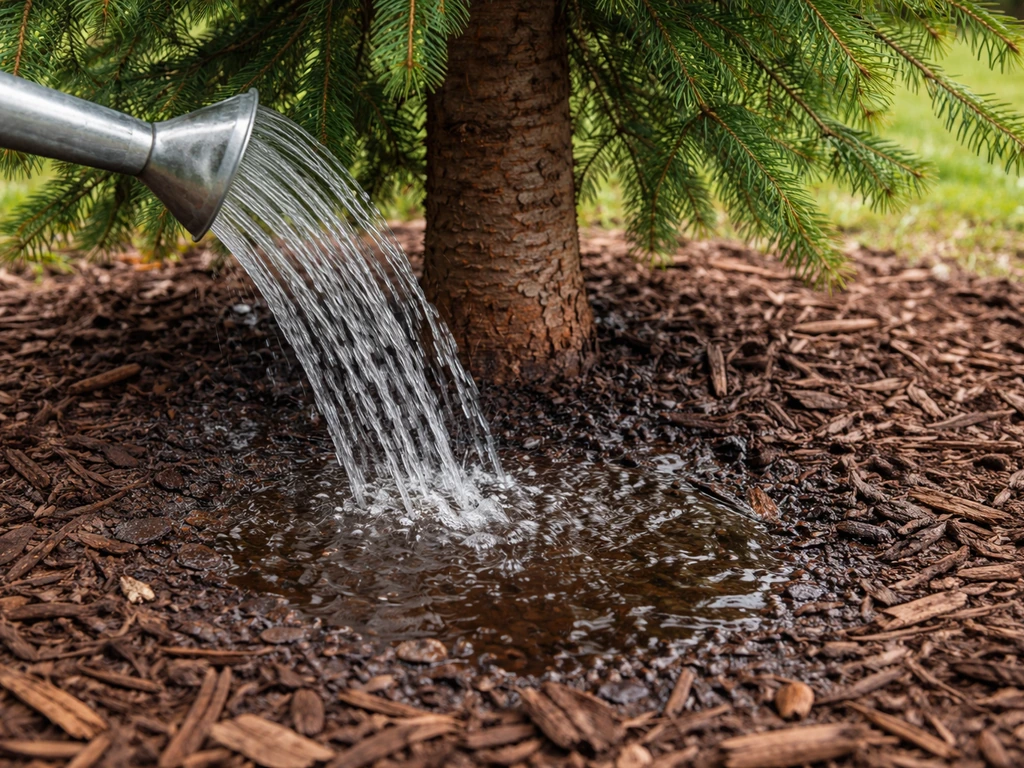
Adequate soil moisture in spring is necessary for the tree to extend its shoots. A tree coming out of a dry fall or winter with insufficient snowpack can have swollen buds that stall before fully pushing out. If your soil is dry and sandy, or if you're growing in a container, getting moisture into the root zone before bud break starts helps the tree follow through on the growth it has already preformed in the bud.
Pruning and stress history
A tree that was heavily pruned late in the previous season, transplanted in fall, or stressed by drought or pest damage may push shorter tips or have scattered bud break timing. Because the shoot length for next spring is set by what's preformed in the bud, anything that interrupted bud formation during late summer or early fall will show up in the following spring's growth.
When growth seems delayed: what to check
If it's late May or early June, you're in a zone where growth should have started, and the buds still look closed or are barely swollen, run through this checklist before assuming the worst:
- Cold injury: If you had a late hard frost (below 28°F) after buds started to swell, those buds may have been killed. Check by gently scratching the bud with a fingernail. Healthy tissue is green and slightly moist inside. Dead tissue is brown, dry, or mushy.
- Drought stress: Squeeze the soil near the root zone. Bone-dry soil in spring can stall bud extension even after the bud has opened. This is especially common for newly planted trees that haven't established a wide root zone.
- Poor drainage: Soggy, waterlogged soil keeps roots cold and oxygen-deprived. A tree sitting in standing water after snowmelt may be slower to push new growth because its roots aren't functioning well.
- Nutrient deficiency: Nitrogen-poor soil can slow tip extension. If older needles are pale yellow-green and the tree looks generally tired, nutrition may be part of the problem.
- Transplant shock: A spruce planted in the past 12–18 months may simply be slower to push growth while it rebuilds root mass. This is normal and usually resolves in the second or third spring.
- Pest or disease damage: Spruce gall adelgids and spruce spider mites can damage buds before they open, leaving them stunted or dead. Look for small, cone-like galls at branch tips, webbing, or stippled/bronzed older needles nearby.
- Root damage: Construction disturbance, soil compaction, or grade changes near the root zone can cause delayed or weak bud break that looks like a disease problem but is actually mechanical.
The general rule: if one or two branches are lagging but the rest of the tree is growing, you're probably looking at a local issue like shade, cold injury on an exposed branch, or mechanical damage. If the whole tree is dormant or very slow across all branches, dig into root zone conditions, past stress, and pest history. If you are wondering whether buds can grow without fan leaves, that relates to how the plant uses stored buds and growing conditions rather than leaf presence can buds grow without fan leaves.
What to do right now while you're waiting
If your spruce hasn't pushed tips yet and you're in the normal window, here's what's actually helpful versus what can cause harm:
- Water deeply if the soil is dry. Aim for moisture reaching 8–12 inches deep. A slow soak works better than a quick spray. Do this every 7–10 days in the absence of rain during the spring growth period.
- Apply 2–3 inches of bark mulch in a ring around the tree (keeping it away from the trunk) to hold soil moisture and moderate soil temperature. This is one of the highest-value things you can do right now.
- Do not prune. Late pruning in spring stimulates growth in the wrong places and can redirect the tree's energy away from tip production. Wait until tips have fully hardened off in summer before doing any shaping.
- Do not fertilize with high-nitrogen fertilizer until buds are visibly moving. Pushing nitrogen into a dormant tree does little good and can burn roots if the soil is dry.
- Scout for pests early. Check branch tips and the undersides of older needles for mites, adelgids, or scale insects. Catching infestations before tips emerge is the best time to treat.
- Be patient with new transplants. A spruce planted last fall or this past spring may push growth two to four weeks later than an established tree nearby. That's normal.
Supporting healthy tips once growth starts
Once you can see the tips pushing out, that's when your care actually translates directly into tip quality. Here's what to focus on:
Watering rhythm
Consistent moisture during tip elongation (usually a 3–6 week window in spring) has a direct effect on how long those tips extend. This is the one period where drought stress is most visibly damaging. Water deeply and regularly. Young trees (under 5 years) need more attention here than established ones. Sandy soils may need watering every 5–7 days; clay soils every 10–14 days.
Fertilizing
If your soil is reasonably good, established spruce trees don't need much fertilizing. If you want to give a boost, apply a balanced slow-release fertilizer (something like 10-10-10 or a dedicated evergreen formula) in early spring before bud break, so nutrients are available when the tree needs them. Avoid late-season fertilizing after July, which can push soft growth that doesn't harden off before frost.
Protecting new tips from browse
Deer and rabbits find fresh spruce tips particularly attractive in spring. If you've had browse damage before, put physical barriers (wire cages or deer netting) around vulnerable young trees before tips emerge. Repellent sprays can help but need reapplication and aren't reliable during rain. For new transplants or Christmas tree farm seedlings, physical protection is the more dependable choice.
Late frost protection
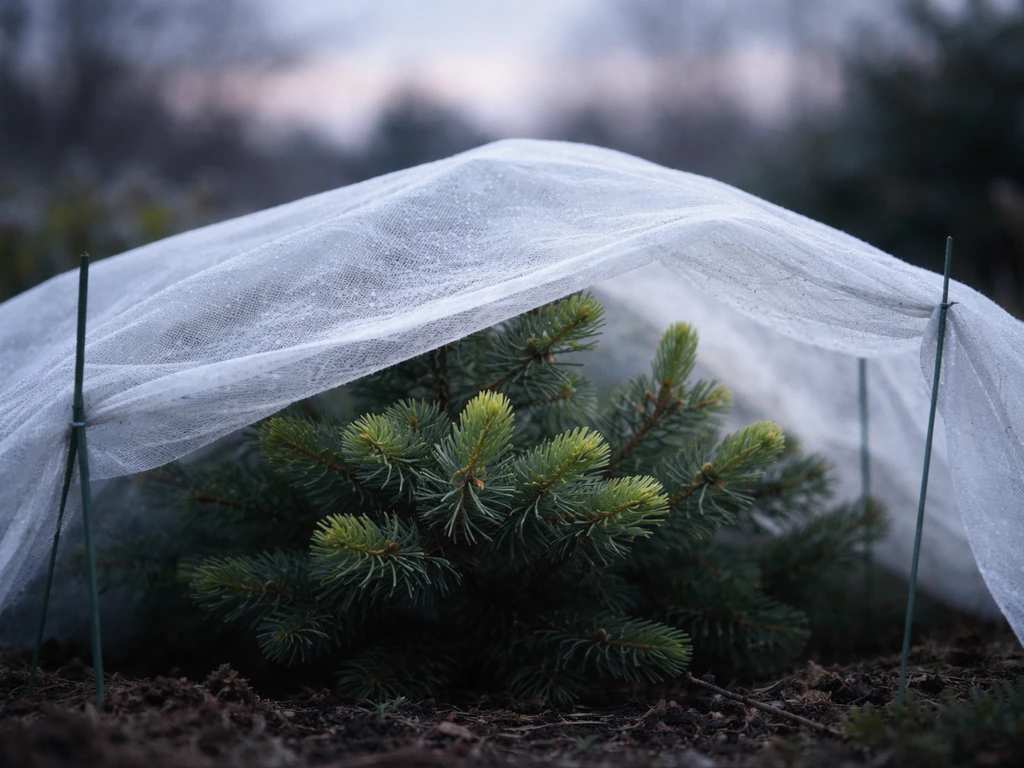
Once tips are in the exposed-shoot stage, they are frost-sensitive. A late freeze below 28°F can kill that year's new growth on exposed tips. If a hard frost is forecast after your tree has broken bud, a light frost cloth draped over young or smaller trees overnight can save the new growth. For large established trees, there's little practical protection possible, but healthy trees often push a second flush of shorter growth from lateral buds if primary tips are frost-killed.
Do buds still grow during flushing if you’re still seeing new bright-green tip extension? It usually depends on whether the tree has moved into active elongation. Spruce tips can also extend in different growth directions, including whether can hops grow horizontally, depending on conditions and structure.
The bottom line: spruce tips are on a reliable seasonal schedule, but that schedule is local, not universal. If you are also wondering about hops, do hops grow wild in your area, because wild hop growth depends heavily on local conditions and nearby support plants. Check your buds now using the visual stages, cross-reference your climate and recent weather, and focus your energy on moisture and pest monitoring rather than intervention.
If you're in the normal window and the buds are at swollen or translucent stage, you're days away from seeing those bright green tips push out. If you are trying something totally different, you can also explore whether you can grow poppies hydroponically instead of relying on soil can you grow poppies hydroponically. If you're past the normal window and the tree looks genuinely stuck, start with soil moisture and cold injury as your first suspects.
In general, late growers do not necessarily grow taller, but the timing of bud break can affect how much usable shoot length they get before the season ends do late growers grow taller.
FAQ
If I get a few warm days, can spruce tips start growing and then stop later?
Yes, but only in the sense that higher daytime warmth can accelerate heat-unit accumulation. Night freezes after buds have begun elongating are the main problem, because exposed tips can die back even if daytime temperatures look fine. If you are seeing pale-green growth yet temperatures are forecast to drop below about 28°F, treat it as frost risk, not normal delay.
My spruce has no tips, is that ever just normal?”
A big “no.” Sparse or patchy bud break often comes from localized branch issues, but a complete absence of tip activity across the whole tree by early June in a typical climate suggests something more serious, like dry root-zone conditions after a low-snow winter, root disturbance from transplanting, or winter cold injury that damaged the apical buds. Check multiple branches at different heights before concluding the entire tree is stuck.
When is the best stage to harvest spruce tips for cooking or foraging?
For edible use, timing is mostly about tenderness, not just color. The prime window is when the new shoot is still soft and the needle bundles are clearly separating, if you wait until the tips look more resinous or firm you can get tougher material with stronger bitterness. If you cut too early, you can also reduce the tree’s ability to extend that current season’s terminal growth.
How can it be late spring but my spruce still looks dormant if the forecast is warm?
Don’t rely on the air temperature alone. Soil temperature and root-zone moisture lag behind the weather, especially in late spring after a cold, wet period or in shaded yards. A tree can look “late” even when the forecast says it should be growing, if the ground is still cold or waterlogged and roots are not functioning well.
Why do some branches grow spruce tips earlier than others?
Bud break can occur later on the same tree because of sun and microclimate. South-facing tips usually run ahead, and the most shaded interior branches often stay at swollen-bud stage longer. Compare branches on the same height first (same sun exposure), then decide whether it is truly whole-tree delay.
If the main tips die after a late frost, will my spruce still grow later?
Yes. If the apical buds were damaged in late winter or early spring, you may see no extension at the top, but lateral buds can still push later as a shorter “second-best” flush. In that case the tree is not necessarily dead, but the usable terminal tip length will likely be reduced for that season.
How often should I water spruce when tips are growing, and what counts as too much?
Overwatering is usually less risky than letting the root zone dry out during elongation, but waterlogged conditions can also stall growth. The practical approach is deep watering only when the top few inches of soil feel dry, and improve drainage if you have consistently soggy ground or compacted clay. In containers, ensure fast drainage because containers dry and also rot faster.
Can I prune spruce while the tips are growing without ruining the next flush?
Avoid cutting off “just a little” from many tips repeatedly during the elongation window. Light pruning for dead-needle cleanup is different from frequent tip removal, because removing terminal bud activity can shift energy into side buds and reduce the length and uniformity of the next growth flush. If you need to thin, do it after the flush finishes, so the tree can complete that season’s extension.
Should I fertilize my spruce in spring if I want longer tips?
Fertilizer is generally not urgent for established spruces, but timing matters if you do use it. If you fertilize after July, you may encourage soft growth that does not harden off before fall frost. For a small boost, apply in early spring before bud break starts so nutrients are available during elongation.
What can I do about late freezes besides waiting it out?
Slightly, yes, but don’t treat it as a guaranteed solution. You can’t change day length, but you can reduce local cold exposure using wind protection and frost cloth for small trees, placed overnight only when a hard freeze is forecast. This helps new exposed tips during the vulnerable elongation stage, not the earlier bud swelling stage.
Next Article
Is Miracle-Gro Good for Mandevilla? How to Feed It Safely
Yes, Miracle-Gro can feed mandevilla safely. Get correct NPK choice, dilution, schedule, and signs to avoid burn.