If your ayahuasca vine (Banisteriopsis caapi 'Purple') isn't showing the rich burgundy-purple stems and leaf tips you're expecting, the fix usually comes down to three things: not enough bright light, temperatures that are too stable and warm, and genetics that aren't expressing under your current conditions. Get those three variables right and the purple deepens noticeably within two to four weeks. Everything else, from soil mix to feeding schedule, either supports or undermines that foundation.
Ayahuasca Purple Grow Tips: Troubleshoot and Optimize Growth

Marcus Weir
9 Jun 2026
Quick reality check: what 'purple' actually depends on
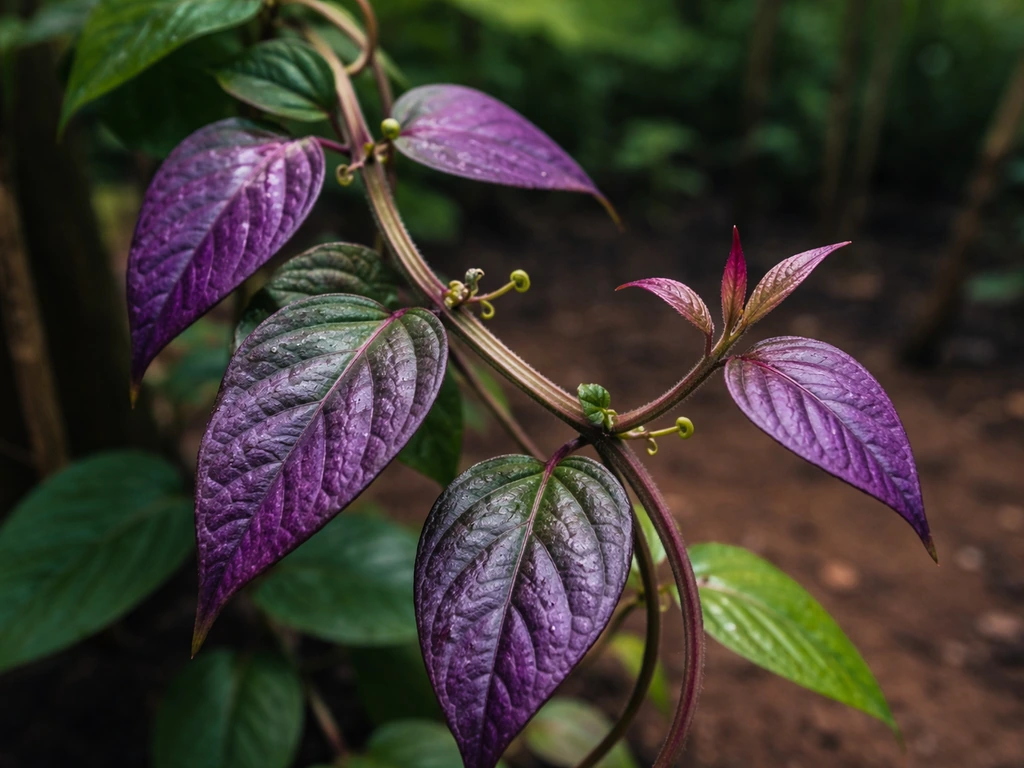
The purple color in Banisteriopsis caapi is produced by anthocyanins, the same pigments that make red cabbage red and autumn leaves turn. Here's the critical thing to understand: anthocyanins are not always 'on. ' They accumulate in response to specific environmental triggers, meaning your plant's genetics set the ceiling for how purple it can get, but your growing conditions control whether that ceiling is ever reached.
In Arabidopsis, phytochrome/photoreceptor signaling regulates this light- and stress-induced anthocyanin accumulation, and mesophyll-localized phytochromes help gate whether anthocyanins build up under combined environmental conditions [Anthocyanin accumulation in response to light/stress is regulated by environmental cues including light and temperature](https://www. ncbi. nlm. nih.
gov/pmc/articles/PMC4091247/). Research into anthocyanin regulation across plant species consistently shows that light intensity, light spectrum (particularly UV and blue), temperature fluctuations, and even mild stress like slight drought are the primary 'switches' that activate these pigments. A caapi cutting sourced from a genuinely purple variety can look almost green under weak light and warm, humid indoor conditions. That same cutting, given high light and cooler nights, will often show strong purple stems and flushed leaf tips within weeks.
The other piece of the reality check is sourcing. Not all plants sold as 'ayahuasca purple' are the same. There are multiple caapi varieties with different baseline pigmentation, and some plants labeled 'purple' have weak anthocyanin genetics that will never produce dramatic color no matter what you do. If you've had your plant for three or more months, given it good conditions, and it's still showing almost no purple tint, consider whether your starting genetics are actually a high-expression purple variety. Brazilian research on caapi morphology has confirmed that environment changes expressed traits, but it can't override poor genetics entirely.
Environment setup: light, temperature, humidity, and airflow
Light
This is the single most important lever for both growth rate and purple expression. For a broader perspective on getting the fastest results with container plants, you can also look at top buxus grow routines for light and feeding consistency. Banisteriopsis caapi is a vigorous rainforest vine that in the wild climbs into the upper canopy, so it tolerates and actively benefits from high light levels.
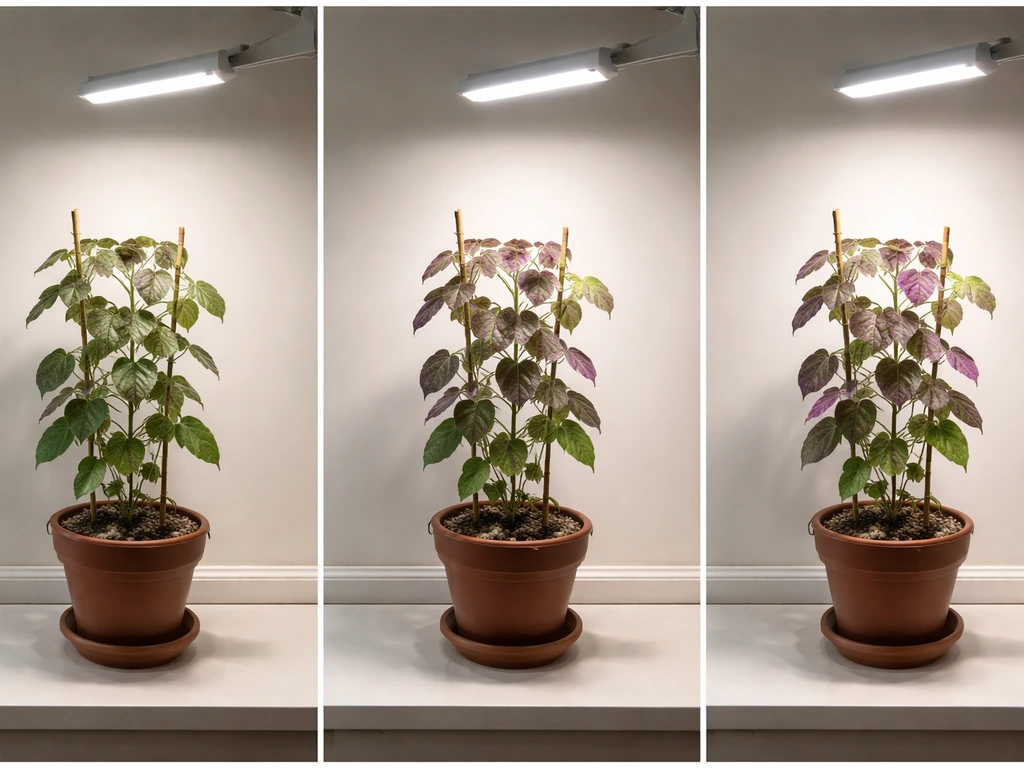
Indoors, aim for at least six hours of direct sun if growing near a south- or west-facing window, or use a grow light delivering 400 to 600 micromoles of PAR (roughly 30,000 to 50,000 lux) for 14 to 16 hours per day.
If you’re looking to grow more than just the color, focus on setting up proper light, temperature swings, and a well-draining soil like a botany manor springdance shrub style care plan botany manor springdance shrub how to grow. If you are trying to hit a maui good 2 grow style setup, focus on consistent grow-light exposure and adjust intensity until the purple starts appearing faster grow light.
Aubrieta Whitewell gem plants have their own light and temperature needs, so match those specifics alongside the caapi setup Aubrieta Whitewell gem how to grow. For purple expression specifically, a broad-spectrum LED that includes some UV-B and a strong blue component (around 400 to 450 nm) will trigger anthocyanin production more effectively than a red-heavy HPS or warm white light.
I've watched the same cutting go from lime green to noticeably purple within three weeks simply by moving it from a dim windowsill to directly under a full-spectrum LED at 18 inches.
Temperature
Caapi prefers daytime temperatures of 24 to 30°C (75 to 86°F) for strong growth. The purple trick, though, involves a night drop. Dropping temperatures to 16 to 18°C (61 to 64°F) overnight creates the kind of thermal stress that ramps up anthocyanin production without damaging the plant. Think of how grape vines produce more color in cooler climates. You don't need to do this every night indefinitely, but pushing for a 10°C night drop for two to three weeks can meaningfully deepen color. Outdoors in a climate with warm days and genuinely cool nights (spring or autumn in temperate zones, or high-altitude tropical areas), this happens naturally.
Humidity and airflow
Caapi likes humidity in the 60 to 80% range, consistent with its tropical origin. Below 50% and you'll see leaf curl and tip scorch, especially on young growth. Above 85% with poor airflow and you're inviting mold and fungal issues on the stems. Run a small fan on a gentle setting to keep air circulating, and if you're growing indoors in a dry climate, a humidifier near the plant makes a real difference. Don't mist the leaves directly in still air because that's an easy path to botrytis on the stems.
Soil and pot strategy: drainage, media, and root health
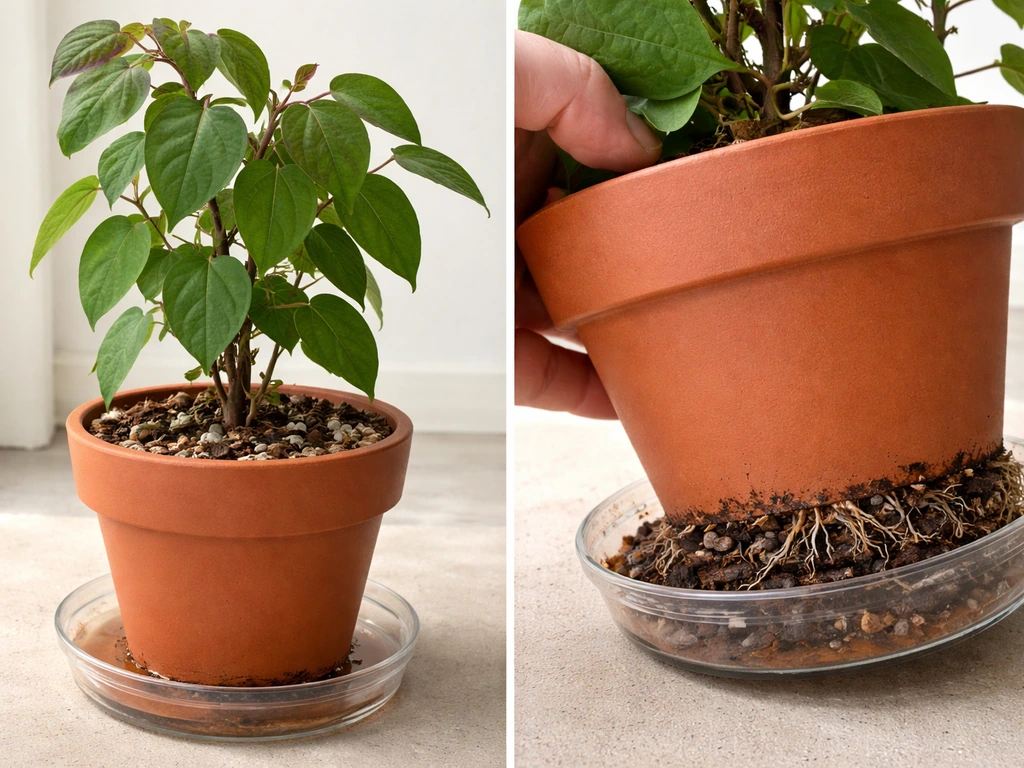
Root health drives everything else. A caapi vine that's sitting in waterlogged soil will stall, show yellowing lower leaves, lose its purple color, and eventually rot at the base, and it'll happen slowly enough that you might not connect it to the soil until you check the roots. Use a well-draining mix that holds some moisture but never stays soggy. A reliable recipe is two parts quality peat or coco coir, one part perlite, and one part aged compost or worm castings. This gives you water retention, drainage, and enough nutrition for early establishment. Avoid cheap potting mixes that compact over time, they turn into a wet brick and suffocate roots.
For pot choice, start rooted cuttings in a 1 to 2 liter pot and step up to a 5 to 10 liter pot once the vine is actively growing and roots are showing at the drainage holes. Caapi is a vigorous grower and will become root-bound faster than you expect. If you want the purple vine to grow larger over time, focus on strong light, consistent root space, and a night temperature drop become root-bound faster than you expect.
Root restriction slows the vine dramatically and reduces new shoot production, which is where the most vivid purple expression usually appears. If you're growing outdoors in a warm climate (zones 10 to 12), planting directly in-ground is ideal because the unrestricted root run produces the fastest vine growth. Use raised beds with amended soil if your native soil is heavy clay.
For a trellis, put it in place before the vine needs it. Caapi climbs by twining its stems around supports, and if it has nothing to grab it'll just sprawl or collapse on itself, which stresses the stems and can cause mechanical damage to young growing tips. A simple bamboo stake at first, transitioning to a mesh panel or wire trellis as the vine lengthens, works well. Train the main stem upward and allow side shoots to develop, those lateral shoots are where you'll get the best new purple growth.
Watering and feeding: timing it for vigorous vine growth
Watering cadence
Water when the top 2 to 3 cm (about an inch) of the soil surface has dried out. Stick your finger in, if it's still damp, wait. In a warm, bright environment with a well-draining mix, this usually works out to every four to seven days indoors, more frequently outdoors in hot weather. Water thoroughly each time, until water runs from the drainage holes, then let it drain completely. Never let the pot sit in standing water. Underwatering and overwatering both stall growth, but overwatering is by far the more common mistake and the one that causes root rot.
One practical note on anthocyanins: mild, short-term water stress (letting the soil get slightly drier than usual for a day or two before watering) has been shown to trigger anthocyanin accumulation in multiple plant species. You can use this deliberately once the plant is healthy and established, cycle to slightly drier conditions for a week, then water normally. Don't push this with a stressed or recently transplanted plant.
Feeding schedule
For the first four to six weeks after transplanting or rooting a cutting, hold off on heavy feeding. Let the plant establish in a nutritious mix. After that, feed every two weeks during active growing season (spring through summer in temperate climates, year-round in tropical ones) with a balanced liquid fertilizer at half the recommended dose.
If you're also trying to push the best color and growth in Mimosa x Orange Punch, the approach is similar in that light intensity, consistent temps, and careful watering schedules make a big difference mimosa x orange punch grow tips. Something like a 5-5-5 NPK or a diluted fish emulsion works well for general establishment.
Once the vine is growing strongly, shift to a slightly lower nitrogen, higher potassium formula (something like 3-5-7 NPK) to support stem strength and encourage the plant to put energy into secondary metabolites like anthocyanins rather than just producing green leaf mass. Potassium specifically supports anthocyanin biosynthesis pathways in many plants. Avoid over-fertilizing with nitrogen, it pushes lush green growth and can actually suppress purple expression.
How to promote purple coloration: practical levers to try
Think of purple expression as a dial, not a switch. Here are the concrete adjustments that move that dial, roughly in order of impact:
- Increase light intensity first. Move the plant closer to your grow light or into a brighter outdoor position. This is the fastest and most reliable lever.
- Introduce a cool night temperature drop to 16 to 18°C for two to four weeks. Even moving the plant near a cooler window or onto an outdoor patio on cool spring nights can trigger visible color change.
- Add UV exposure. If you're growing indoors, a few hours of unfiltered outdoor sun (or a UV-B supplement light for two to three hours daily) will deepen anthocyanin production quickly.
- Dial back nitrogen and push potassium slightly. Switch to a lower-N, higher-K fertilizer during the period you're trying to intensify color.
- Use controlled mild water stress. Let the soil dry out a bit more than usual for a week while keeping the plant in high light.
- Phosphorus support. A diluted phosphorus supplement (like a 0-10-10 bloom booster at quarter dose) can support anthocyanin enzyme pathways if your soil is phosphorus-deficient.
- Watch new growth closely. Purple expression is strongest in actively growing shoot tips. If your vine isn't putting out new growth, focus on root health and environment first before trying color-promotion techniques.
Timing matters here. Mid-spring to early summer, when light intensity naturally increases and nights are still cool, is the easiest window to get vivid purple expression without any intervention. If you're in that window right now (June 2026 in the northern hemisphere), take advantage of it by getting the plant outdoors into morning sun and cool nights where possible. If you want the most reliable nemesia how to grow results, you can apply the same approach of controlling light and temperature to match each plant’s triggers.
Troubleshooting: slow growth, yellowing, leaf drop, mold, and pests
| Problem | Most likely cause | What to do now |
|---|---|---|
| Slow or stalled growth | Root-bound pot, low light, cold soil, or overwatering | Check roots, repot if bound, increase light to 400+ PAR, ensure soil temp above 20°C |
| Yellowing leaves (lower) | Overwatering or root rot | Let soil dry out, check roots for brown/mushy sections, improve drainage immediately |
| Yellowing leaves (new growth) | Iron or magnesium deficiency, or pH too high | Test soil pH (aim for 5.8 to 6.5), apply chelated iron or Epsom salt at 1g/L |
| Leaf drop | Temperature shock, cold draft, overwatering, or sudden light change | Stabilize environment, avoid cold drafts below 15°C, reduce temperature swings |
| Mold on stems or soil surface | High humidity with poor airflow, overwatering | Increase airflow with a fan, reduce watering frequency, apply diluted neem oil to soil surface |
| Spider mites (fine webbing, pale stippling) | Hot, dry conditions indoors | Increase humidity, apply insecticidal soap or neem oil spray every 5 days for 3 cycles |
| Mealybugs (white fluffy clusters) | Common on new growth and stem joints | Remove manually with rubbing alcohol on a swab, then spray neem oil weekly |
| Fungus gnats (tiny flies from soil) | Overwatered, organically rich soil | Let soil dry more between waterings, use yellow sticky traps, apply Bacillus thuringiensis israelensis (BTi) to soil |
| No purple color developing | Low light, too-warm nights, nitrogen excess, or weak genetics | Run through the color-promotion checklist above; if no response after 6 weeks, assess plant source |
Propagation, pruning, and seasonal adjustments
Taking cuttings
Caapi propagates reliably from stem cuttings, and this is the most practical way to multiply a plant with good purple genetics. If you want even more practical guidance, use a step-by-step botany manor ash plume how to grow checklist to match your light, pot size, and watering habits stem cuttings. Take cuttings in spring or early summer when the vine is in active growth.
Choose a semi-hardwood stem, not the very newest soft tip growth and not fully woody old stem, but the middle section that has two or three nodes and is starting to firm up. Cut to a length of 15 to 20 cm (6 to 8 inches), remove the lower leaves, and dip the cut end in rooting hormone powder or gel.
Place in a mix of 50% perlite and 50% coco coir, keep warm (24 to 27°C), humid (cover with a clear bag or dome), and in bright indirect light. Roots typically appear in four to eight weeks. Don't let the cutting sit in direct harsh sun while rooting, that stresses the cutting before it has roots to support recovery.
Pruning and training
Pruning caapi serves two purposes: it shapes the vine on its trellis and stimulates bushier, more vigorous new growth (which is also where purple coloration is most vivid). Prune in late winter or early spring before the main growing push. Cut back by a third to a half, always cutting just above a node. The vine will respond with multiple new shoots from below the cut, and those fresh shoots often show the best purple color.
During the growing season, pinch back runaway lateral shoots to keep the plant on its support structure and encourage denser growth lower down. Don't prune heavily in autumn or winter if your plant is in a climate with cold winters, it needs that top growth for energy storage.
Seasonal adjustments
In temperate zones, caapi will slow significantly or go semi-dormant in winter. Reduce watering frequency by about half, hold off on fertilizing from late October through February, and make sure the plant stays above 10°C minimum. Indoors, supplement with grow lights during the short days of winter if you want to maintain some growth. When spring arrives (late February to March in the northern hemisphere), resume feeding, increase light, and watch for the first flush of new growth, which is often the most intensely purple of the year. That spring flush is also the best time to take cuttings or do major pruning.
If you're growing outdoors in a frost-free climate, caapi can grow nearly year-round with only a slight slowdown in the coolest months. The main seasonal adjustment there is managing water during dry seasons and protecting from extreme heat above 38°C (100°F), which can cause rapid leaf drop. Mulch heavily around the base to keep soil temperature and moisture stable during summer heat, similar to the approach you'd take with other vigorous tropical vines.
Common myths worth clearing up
- Myth: Purple color means the plant is stressed and struggling. Reality: Anthocyanin production is a normal response to light and temperature, not a sign of serious stress. A healthy plant can be vibrantly purple.
- Myth: More fertilizer means faster growth. Reality: Excess nitrogen pushes green leaf mass and can suppress purple expression and stem quality. Less is more, especially with nitrogen.
- Myth: Caapi needs shade because it's a rainforest plant. Reality: In the wild it climbs into high-light canopy positions. More light almost always means better growth and more purple color.
- Myth: Any cutting will produce a purple plant. Reality: Genetics matter significantly. A cutting from a weak-expression plant will always underperform compared to one sourced from a genuinely vivid purple variety.
- Myth: You need to buy special purple-promoting supplements. Reality: The main drivers are light intensity, cool nights, and a balanced low-nitrogen feed. Most marketed 'purple boosters' are just potassium-heavy fertilizers you can replicate cheaply.
FAQ
My ayahuasca purple grow tips look green for months, should I keep trying or assume the plant will never get purple?
If you have already dialed in bright light, cooler nights, and correct watering, but there is still almost no purple after about 8 to 12 weeks, it often points to genetics that express weak anthocyanins. At that point, focus on confirming light levels and root health first, then treat it as a low-expression line and plan a new cutting from a more vividly purple parent.
How close should I place a full-spectrum LED to get purple without burning the leaf tips?
Start by keeping the LED far enough that the plant is comfortable and can be moved gradually closer. Use a conservative first step, then adjust, aiming for strong blue and some UV-B, but watch for dry, crispy edges on the youngest tips. If tip burn appears, back the light off and increase the night drop instead of pushing light intensity further.
Is a night temperature drop required every night to deepen purple?
No. You get the best results by creating a meaningful day-night swing (about a 10°C drop) for 2 to 3 weeks while the plant is actively growing. After color improves, you can scale back to a lighter fluctuation schedule to avoid unnecessary stress.
Can I mist the plant to raise humidity and prevent leaf curl?
Avoid misting leaves in still air. It can increase the chance of stem and leaf rot, especially in tight indoor setups. Instead, raise humidity with a humidifier, keep airflow gentle with a small fan, and use humidity targets as the guide (roughly 60 to 80%).
What should I do if humidity is high but the plant starts getting fuzzy growth or stem issues?
High humidity with poor airflow is a common trigger for fungal problems. Increase gentle air movement, reduce how wet the soil stays between waterings, and check that the pot is draining fully. If you see signs on stems, improve airflow immediately and avoid any leaf misting.
How do I tell whether yellowing is from overwatering or from too much nitrogen?
Overwatering usually comes with consistently wet soil, stalled growth, and yellowing that starts lower and progresses along with a heavy, slow pot. Too much nitrogen often produces very fast, lush green growth but less purple, with more uniform overall vigor. If the soil stays damp beyond the top 2 to 3 cm drying rule, prioritize drainage and watering frequency before changing fertilizer.
Do I need a specific fertilizer ratio to trigger purple, or is it mostly light and temperature?
Light and temperature drive anthocyanin activation, fertilizer mainly supports how much the plant can “afford” to express. Use lower nitrogen once growth is established, then keep potassium relatively higher (example guidance in the article, like a 3-5-7 NPK style approach). If you see lush green growth with weak purple, reduce nitrogen rather than increasing overall feeding.
When is the best time to do a controlled mild water stress to boost purple?
Only do it after the plant is healthy and established. A short cycle where the soil is allowed to dry slightly more for 1 to 2 days, then you return to normal watering, is safer than stretching long dry periods. Avoid using water stress during or right after transplanting/rooting.
Should I up-pot immediately after rooting, or wait before moving to a larger container?
Wait until roots are actively showing at drainage holes or the plant is clearly pushing new growth. Jumping to a much larger pot too early keeps soil wet longer and increases the odds of root problems, which can stall growth and reduce purple expression.
Why does my caapi stop putting out new purple tips after pruning?
If pruning was heavy or done at the wrong time, new shoots may take longer to appear and the plant may prioritize recovery. Prune just above a node and time major cuts for late winter or early spring so the next flush can develop under stronger light conditions.
I see purple stems but the leaf tips stay green, what’s the most likely cause?
That pattern usually means anthocyanins are starting but the newest growth is not getting enough of the trigger, often due to insufficient light intensity or spectrum, or nights not cool enough. Check that your brightest exposure reaches the top where new tips emerge, then reassess the day-night temperature swing.
Can I grow caapi outdoors and still get vivid purple year-round?
In frost-free climates you can keep it active longer, but color intensity still depends on light strength and night temperatures. If nights stay warm for long stretches, purple often fades, so prioritize morning sun, use mulch to stabilize root zone conditions, and shelter from extreme heat above about 38°C (100°F).
Next Article
Botany Manor Ash Plume How to Grow Step by Step
Step-by-step guide to grow Ash Plume in Botany Manor, with placement, soil, watering, feeding, timeline, and fixes.