Tarantula hawks are not common garden visitors for most people in the U.S. and they are outright absent in large parts of the country. If you live in the arid Southwest, parts of California, Texas, or the southern Great Plains, you have a real chance of seeing one during summer. Everywhere else, spotting one would be genuinely unusual. Whether one shows up in your garden specifically depends on where you are, what season it is, and whether your yard has the conditions they need.
How Rare Is a Tarantula Hawk in Your Garden

Marcus Weir
11 Jun 2026
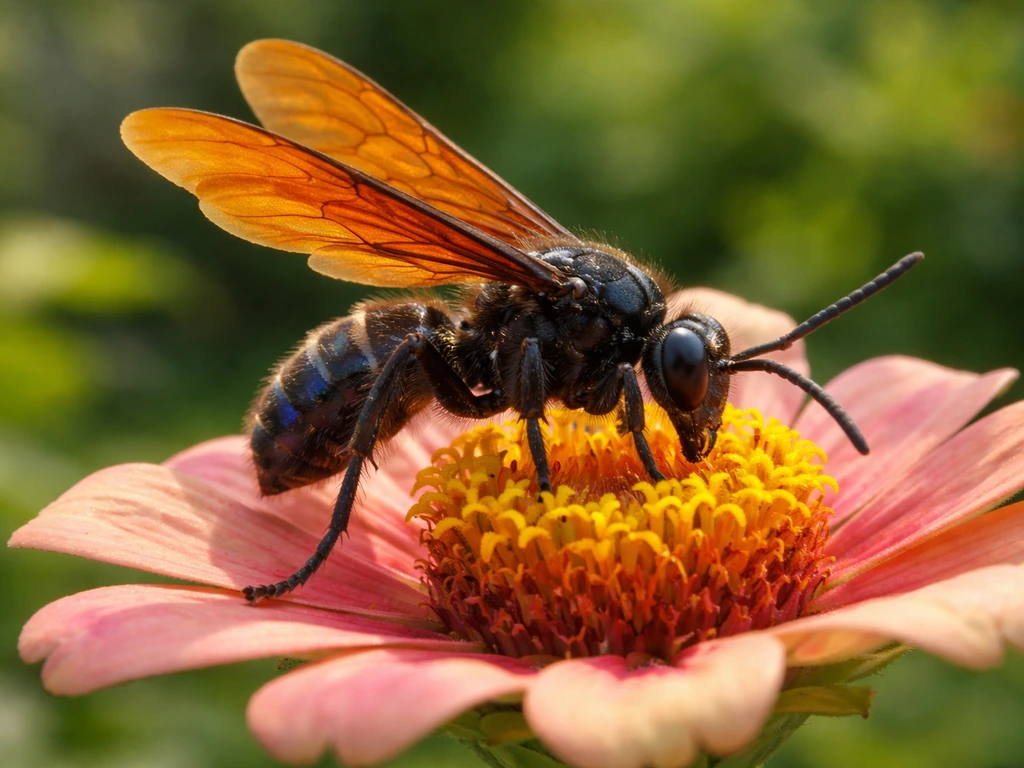
What a tarantula hawk actually is in a garden context
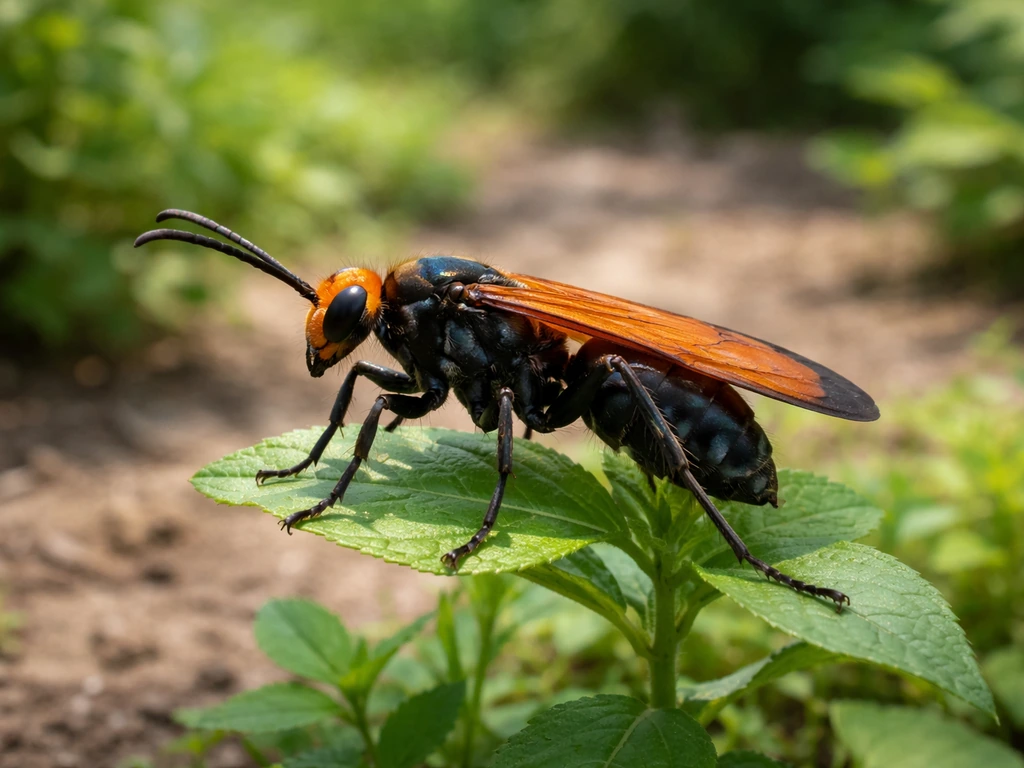
A tarantula hawk is a large spider wasp, not a hawk and not a true hornet or yellow jacket. The name covers wasps in the family Pompilidae, mainly the genus Pepsis in North America (and a closely related genus, Hemipepsis, that looks very similar). These are the insects you may have seen described as having a dark blue-black body with bright rust-orange wings. That vivid coloring is the most reliable field clue. If the body looks grayish-black rather than blue, you may actually be looking at a Hemipepsis rather than a Pepsis, since blue body coloring is one of the key markers that separates the two.
In a garden context, these wasps show up not because they are after your plants or produce. They are hunting tarantulas. A female tarantula hawk paralyzes a tarantula, drags it to a burrow, lays a single egg on it, and seals it up. The larva feeds on the still-living spider. So the only reason one is in your yard is because it is either hunting, nectaring on flowers, or looking for a suitable burrow site. They are occasional garden visitors, not garden pests.
How common they are depends almost entirely on where you live
Tarantula hawks have a strong geographic pattern. In the U.S., they are most concentrated in the Desert Southwest: Arizona, New Mexico, Nevada, Utah, and parts of Southern California. The National Park Service specifically notes that blank" rel="noopener noreferrer">Pepsis thisbe is a common local species at the Grand Canyon. If you garden in that region, a tarantula hawk sighting is not rare at all during the right season. As you move into the Southeast, the Midwest, or the Northeast, sightings become genuinely uncommon, and in the Pacific Northwest or New England they are essentially absent.
| Region | Likelihood of seeing one | Notes |
|---|---|---|
| Desert Southwest (AZ, NM, NV, UT) | High | Core range; multiple species; common in summer |
| Southern California | Moderate to high | Present in drier inland areas more than coastal |
| Texas (especially west and central) | Moderate | Present where tarantulas are found |
| Southern Great Plains (OK, KS, CO foothills) | Low to moderate | Occasional sightings; range edge |
| Southeast (FL, GA, AL) | Low | Rare; a few records but not expected |
| Midwest and Northeast | Very low | Essentially absent; vagrant records only |
| Pacific Northwest | Absent | Outside their range |
One common confusion worth flagging: other large wasps such as cicada killers (Sphecius speciosus) are far more widespread across the U.S. and are regularly mistaken for tarantula hawks. If you're in Ohio or Virginia and think you spotted one, it was almost certainly a cicada killer. The easiest way to separate them is wing color: tarantula hawks have those distinctive orange-rust wings, while cicada killers have yellow-banded abdomens and brownish wings.
When to expect them: seasonality and timing
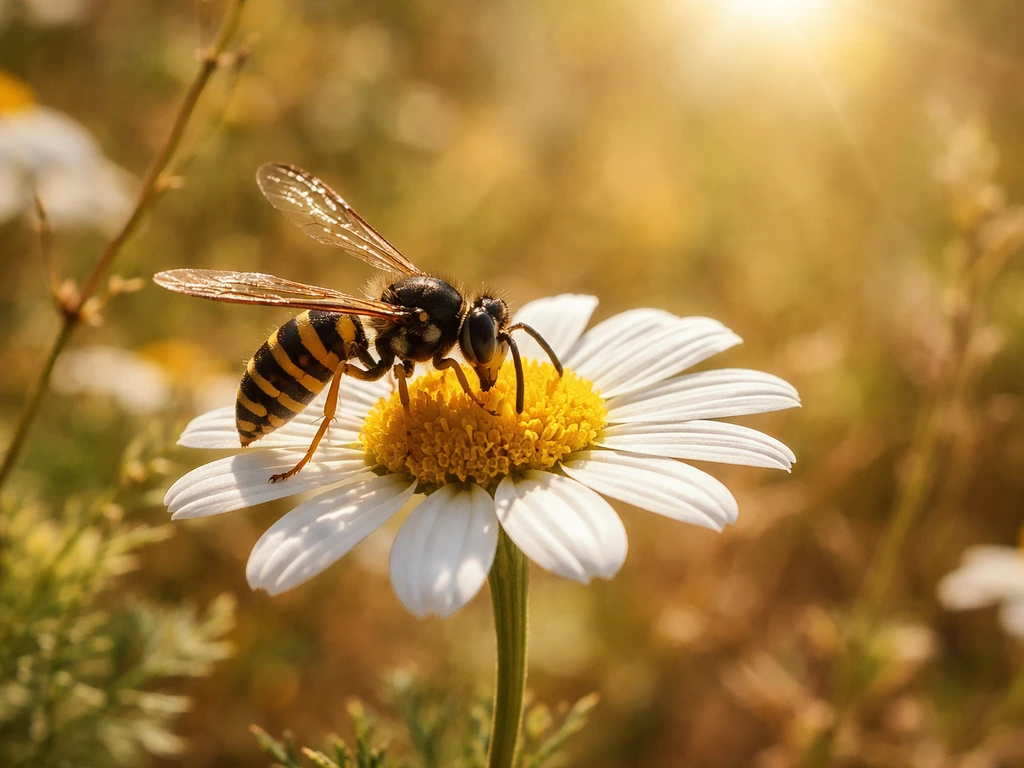
Tarantula hawks are warm-weather insects. In their core Southwestern range, adults are most active from June through September, with peak activity in July and August when temperatures are highest. This lines up with tarantula activity, which also peaks in late summer, especially around the monsoon season in Arizona and New Mexico when male tarantulas emerge to wander in search of mates. That wandering makes them more vulnerable to tarantula hawks.
You are most likely to spot a tarantula hawk in the heat of the day, often nectaring on flowers like milkweed, mesquite blooms, or other open-faced flowers. They are not aggressive, and a nectaring wasp is generally moving slowly and calmly. Early morning or late afternoon sightings are less common; peak activity is midday in hot weather.
Garden conditions that make a sighting more or less likely
If you garden in the right region and want to understand why you might be seeing one (or why you might attract them), it comes down to a few factors. The biggest one is whether tarantulas live in or around your yard. No tarantulas, no tarantula hawks. Loose, sandy, or sandy-loam soil that supports tarantula burrows is the key habitat driver. Rocky desert gardens, dry grassland edges, and open scrubland adjacent to your yard dramatically increase the odds.
- Sandy or loose soil that supports tarantula burrows nearby
- Flowering plants that provide nectar (milkweed, desert willow, mesquite, globe mallow)
- Open, sunny, warm ground: raised beds in full sun in arid zones can attract ground-nesting insects broadly
- Proximity to undisturbed scrubland, desert washes, or grassland edges
- Presence of tarantulas in the area (the single strongest predictor)
Dense, well-mulched vegetable gardens in suburban areas are not particularly attractive habitat. You are more likely to see a tarantula hawk at the edge of a xeriscaped yard or in a garden that borders open desert than in a lush, irrigated raised-bed setup. If you want to attract birds to your yard, comparing species like the hyacinth macaw vs scarlet macaw can help you plan the right plants for the conditions they prefer.
How to quickly check if they're rare where you are

You do not need to guess. There are a few fast, reliable ways to check local rarity right now. If you are wondering how rare the honey sprinkler is in Grow a Garden, you can use the same local rarity checks and citizen-science style information to judge what is genuinely uncommon where you live honey sprinkler in Grow a Garden.
- iNaturalist.org: Search 'Pepsis' or 'tarantula hawk' and filter by your state or county. The map of verified observations will immediately show you whether they've been recorded locally and how recently. This is your fastest single step.
- BugGuide.net: Search the genus Pepsis and use the Data tab to filter by state. It shows verified specimen records and photo observations with geographic detail.
- Your state's cooperative extension service: Search '[your state] extension tarantula hawk' or call your county extension office. In Arizona, New Mexico, and Texas, extension entomologists are familiar with these wasps and can confirm local presence.
- eBug and GBIF (Global Biodiversity Information Facility): More technical, but gbif.org gives you global occurrence maps and lets you zoom into your county for verified records.
- Local Facebook or Reddit nature groups: Search your city name plus 'tarantula hawk.' In Arizona especially, there are active communities posting sightings weekly in summer.
This same approach works well for checking the rarity of other unusual garden visitors, including things like spotted deer or other wildlife that gardeners sometimes encounter and wonder about. Because spotted deer are also regional wildlife, local sightings and rarity can vary a lot by habitat and season. The citizen-science databases are genuinely useful and surprisingly up to date.
What to do if one shows up in your garden
The most important practical advice: leave it alone. Tarantula hawks are not aggressive and will not bother you unless you grab one or step on one. If you see one nectaring on a flower or walking across the soil, it is doing its job and will move on. There is no reason to spray, swat, or otherwise interfere.
If you find one dragging a tarantula across your garden, that is actually a remarkable thing to observe. The female has already stung and paralyzed the tarantula and is moving it to a pre-dug burrow. This can take a while and the wasp will be focused on its task, not on you. Keep kids and pets back, watch from a few feet away if you want, and let it finish.
If you want to reduce the likelihood of future encounters (especially if you have small children who might accidentally disturb one), the most practical steps are:
- Fill in any large ground-spider burrows in your yard to reduce available habitat for tarantulas (and by extension, tarantula hawks)
- Avoid leaving undisturbed, open sandy areas in your yard where tarantulas might take up residence
- Wear closed-toe shoes when gardening in the Southwest during summer, as a general precaution with any ground-dwelling insects
- Keep flowering plants that attract large wasps away from high-traffic play areas if you are in a region where these wasps are common
Sting risk and how to behave around them safely
The tarantula hawk sting is genuinely painful. Entomologist Justin Schmidt, who created the Schmidt Sting Pain Index, rated it a 4 out of 4, describing the pain as immediate, electrifying, and overwhelming, lasting roughly 3 minutes. That sounds alarming, but here is the important context: tarantula hawks almost never sting people. They are docile when left alone. The sting is a weapon for paralyzing tarantulas, not for defending against humans. Unless you physically grab one or accidentally compress one against your skin, a sting is very unlikely.
If you are stung, the advice from most entomologists and medical sources is to lie down and let the intense pain pass. It peaks fast and fades within a few minutes in most cases. Clean the site with soap and water. Cold compresses help. Serious allergic reactions are rare but possible, as with any stinging insect: if you experience throat swelling, difficulty breathing, or widespread hives, treat it as an allergic emergency and seek medical care immediately.
Only female tarantula hawks sting. Males have no stinger. If you can observe the wasp closely enough (without getting close enough to risk contact), males are often seen nectaring on hilltops or flower clusters as territorial behavior. But honestly, there is no practical reason to try to sex-identify a wasp in your garden before deciding how to act. The rule is the same for both: give them space and they will give you none.
Common myths worth clearing up
- Myth: Tarantula hawks are everywhere in the U.S. Reality: They are primarily a Southwestern species and genuinely absent from most of the country.
- Myth: If you see a large dark wasp with orange wings, it must be a tarantula hawk. Reality: A few other large wasps can look similar. Body color matters: blue-black body points to Pepsis; grayish-black body may be Hemipepsis or another species entirely. Use iNaturalist to submit a photo for community ID.
- Myth: They will sting you if they see you. Reality: They are non-aggressive unless physically handled or trapped.
- Myth: You need to treat or spray your yard if you find one. Reality: No treatment needed; they are beneficial predators and pollinators.
- Myth: A tarantula hawk in your yard means you have a tarantula problem. Reality: It means tarantulas live in or near your yard, which is ecologically normal for the Southwest and not a cause for concern in most cases.
FAQ
How can I tell if a large wasp in my garden is really a tarantula hawk or a cicada killer?
Look for the wing and body pattern: tarantula hawks typically show vivid orange to rust-colored wings and a blue-black body, while cicada killers usually look more yellow-banded on the abdomen and have brownish wings. If the “orange-wing” feature is not obvious from a safe distance, assume it is not a tarantula hawk.
If I see one, does that mean tarantulas live in my yard?
Often yes, because the females need active tarantula burrows, but not always immediately in your yard. A wasp may be hunting near you and can travel to a nearby edge or vacant lot, so check for signs of burrows in dry, loose soil around fences, paths, or less-irrigated borders rather than assuming the center of a watered lawn is the source.
Why did I see one at midday, but not early morning?
In hot weather, these wasps are most active when conditions maximize hunting and nectaring, so midday sightings are more typical than dawn or dusk. If your location has cooler mornings or heavy shade in the yard, you may simply miss the short daily activity window.
What should I do if a tarantula hawk is dragging a tarantula across the yard?
Do not try to move it or get closer for photos. Keep pets and children back, keep foot traffic away, and give it time to reach the pre-dug burrow. Movement can look slow and deliberate, but the wasp is likely focused and may continue until the job is done.
Do male tarantula hawks sting, and should I handle them differently?
Male tarantula hawks do not have a stinger, so stinging risk from a male is essentially not a concern. Still, you should not handle or trap any wasp, because close contact can lead to accidental grabbing and compression against skin.
Are tarantula hawks aggressive if I walk near them?
They are generally calm and will not bother you during normal garden activity. The main trigger for defensive behavior is physical contact, such as grabbing, swatting, or accidentally pinning the wasp against your body.
What is the safest way to confirm rarity locally without bothering wildlife?
Use local citizen-science sighting records and search by your county or nearby region, then compare the dates to the typical June through September window. If you find few records for your area in those months, your sighting is likely genuinely unusual even if the species is common elsewhere.
If I want fewer encounters, what habitat changes actually help?
Target the burrow-supporting conditions near the edges of the yard: reduce loose, sandy, or sandy-loam patches in sunny borders, and increase ground cover where appropriate. Dense, well-mulched garden setups and less open scrubland usually reduce the “right habitat” for tarantulas, which indirectly reduces tarantula hawks.
I have pets and kids, should I be worried even if I leave it alone?
The sting is very unlikely if nobody touches or crushes the wasp, but risk increases when people run barefoot, kneel, or try to catch insects. Create a temporary no-play zone around the wasp and supervise outdoor time until it leaves the immediate area.
What should I do if someone gets stung?
Wash with soap and water, use a cold compress for comfort, and monitor for allergic symptoms. Seek urgent care immediately if there is throat swelling, trouble breathing, widespread hives, or symptoms that escalate beyond the intense but localized pain that usually peaks within minutes.
Next Article
Hyacinth Macaw vs Scarlet Macaw Grow a Garden Guide
Hyacinth vs scarlet macaw garden planning: plant picks, layout, safe perches, and avoid toxins pests for bird friendly g